Chest Dip
advanced strength exercise · body weight · targets pectorals
- Body part
- chest
- Primary target
- pectorals
- Equipment
- body weight
- Difficulty
- advanced
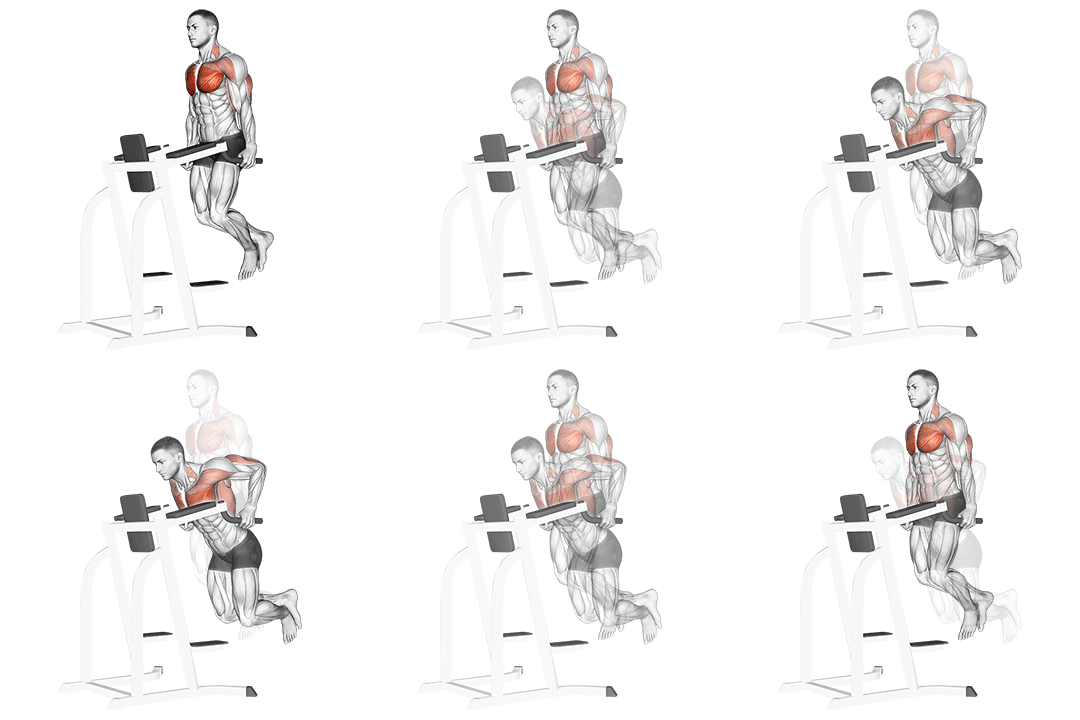
The chest dip is the parallel-bar version of the dip — performed with hands gripping two bars at hip width or slightly wider, body suspended between them, you bend the elbows to lower the chest toward the bars and press back up. With the body leaned slightly forward, the exercise shifts emphasis from the triceps (in a vertical-torso dip) to the chest, particularly the lower portion of the pectorals. This is the version of the dip that calisthenics athletes consider the 'real' dip — full body weight on the arms, no bench supporting the legs, no escape. Achieving 8-10 strict chest dips with proper form is a meaningful upper-body strength milestone, comparable to a clean pull-up. The combined demand on chest, shoulders, triceps, and serratus makes it one of the highest-leverage upper-body bodyweight exercises available. Reaching the first strict chest dip from a base of standard bench dips usually takes 4-12 weeks of dedicated progression, depending on starting strength and body weight. The path runs through reverse dips (feet elevated), assisted parallel-bar dips (with a band or low surface), and negative chest dips. Like all advanced bodyweight pressing, rushing the progression is the top cause of shoulder injury — patient progression pays off both in long-term strength and joint health.
Why train the Chest Dip?
- Loads the lower chest more directly than almost any other bodyweight exercise.
- Builds genuine pressing strength comparable to a moderate-weight bench press.
- Develops shoulder stability through full body-weight loading in the descended position.
- Carries over to bench press, push-ups, and most pressing work.
- Provides clear progression milestones (assisted, partial, full, weighted) for years of training.
- Once mastered, scales infinitely with added weight (vest, dip belt) — same exercise serves beginners and advanced athletes.
How to do the Chest Dip: step by step
- 1Position yourself on parallel bars with your arms fully extended and your body straight.
- 2Lower your body by bending your elbows until your shoulders are below your elbows.
- 3Push yourself back up to the starting position by straightening your arms.
- 4Repeat for the desired number of repetitions.
Muscles worked
Primary
pectorals
Secondary
triceps, shoulders
Common mistakes to avoid
Not leaning forward to engage the chest
If your torso stays vertical throughout the dip, you're doing a tricep-focused dip, not a chest dip. Lean the chest forward at roughly 30-45 degrees from vertical to shift load onto the chest — this is the defining form difference.
Going too deep at the bottom
Lowering until the shoulders dip below the elbows concentrates extreme load on the anterior shoulder capsule. Stop when the upper arms are roughly parallel to the floor — this is full range without the joint stress of going further.
Letting the shoulders shrug to the ears
When fatigue hits, the shoulders ride up toward the ears, which loads the upper traps instead of the chest and triceps. Pack the shoulders down (drive them away from the ears) and maintain that position throughout the rep.
Skipping prerequisite work
Most failed chest dip attempts come from people who couldn't yet do clean reverse dips or assisted parallel-bar dips. Don't attempt full chest dips until you have those prerequisites — rushing is the top cause of anterior shoulder strain in calisthenics.
Bouncing out of the bottom
Using momentum to rebound from the bottom puts shock on the elbow and shoulder ligaments. Pause for half a second at the bottom of every rep — that pause separates strength training from a momentum drill.
Easier and harder variations
Easier
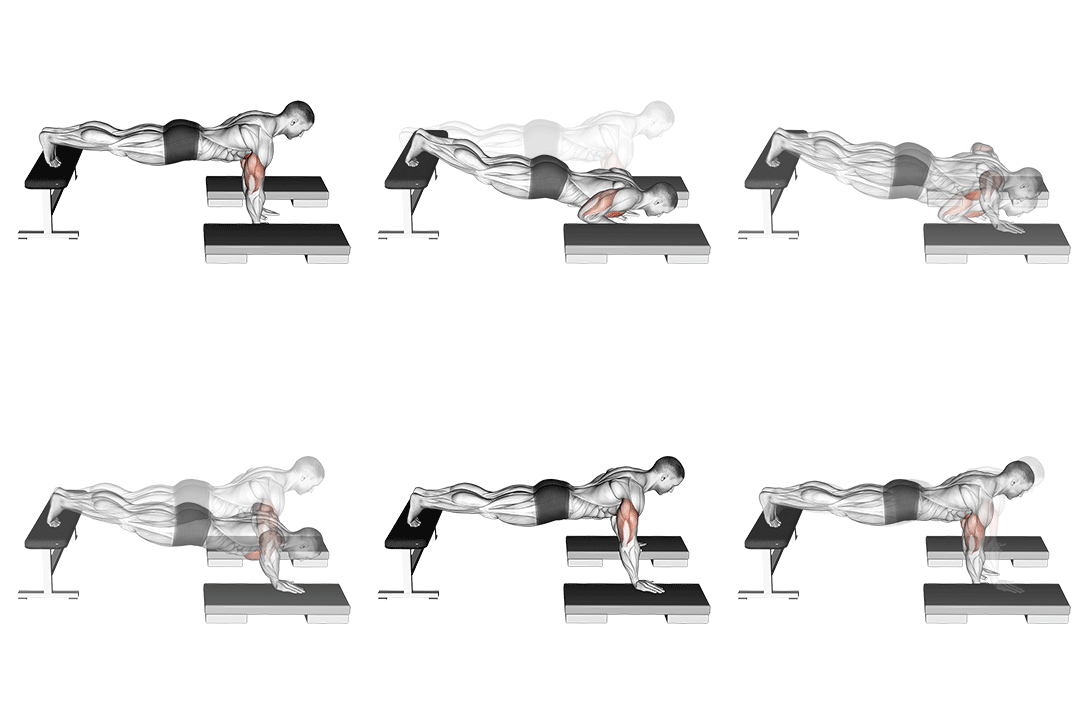
Reverse dips (feet elevated on a second bench, hands on the original bench) build the necessary strength with less load. Assisted parallel-bar dips with a resistance band looped around the bars and a foot in it. Or negative dips: jump or step to the top, lower slowly for 3-5 seconds.
Harder
Add weight (a vest or weight belt with a plate). Slow the tempo (3 seconds down, 1-second pause, 1 second up). Or progress to ring dips, weighted ring dips, or eventually one-arm dip work.
Alternative exercises
Reverse dip
Standard regression. Feet elevated on a second bench, hands on a separate bench. Builds the strength foundation for chest dips.
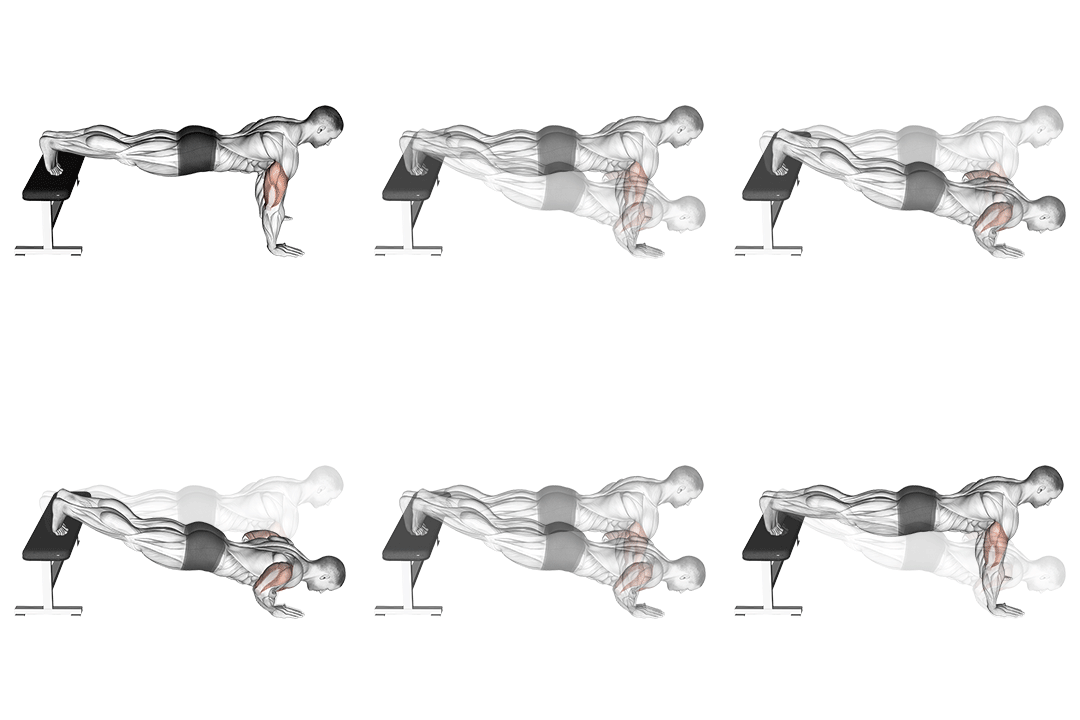
Triceps dip (bench)
Vertical torso dip on a single bench. Triceps-emphasis instead of chest, easier to perform without parallel bars.
Korean dip
Performed on a straight bar instead of parallel bars, with hands behind the body. Different angle and even more demanding shoulder mobility.
How to program the Chest Dip into your training
Chest dips work as either the primary horizontal pressing movement or a secondary push after heavier work. They scale better than push-ups in the long term — once push-ups become too easy, dips become the next progression. Sets and reps: 3-4 sets of 6-12 reps with 90-120 seconds rest. Total weekly volume of 30-80 reps drives most strength and size adaptations. In a balanced upper body session: 4 sets of 8 chest dips (main press), 4 sets of 8-10 pull-ups (main pull), 3 sets of 8-10 push-ups (additional press volume), 3 sets of 30-second hollow holds (core). Done twice per week. For chest hypertrophy focus, run a 6-8 week dip block with 2 sessions per week, progressing from 3 sets of 6 to 4 sets of 12. Once you hit 4 sets of 12 with strict form, add weight (a small plate in a vest or weight belt) rather than continuing to add reps. For advanced trainees working toward muscle-ups, dips are the foundational pushing strength — combine with pull-ups and high pull-ups in a structured program. Do not program chest dips on the same day as heavy bench press or other heavy pressing. The cumulative front-shoulder load is excessive for sensible recovery.
Recovery and frequency
Chest dips load the chest, anterior delts, and triceps heavily. 48-72 hours between sessions is the right cadence; the front of the shoulder is usually the limiting recovery factor. Elbow tendinopathy can develop if volume ramps too aggressively. Build slowly and don't add weight until your bodyweight version is comfortable for 4 sets of 12. Foam roll the chest, lats, and triceps weekly to maintain the mobility this kind of pressing compresses. Sleep is the biggest recovery lever; 8+ hours during heavy dip training phases supports the strength gains you're trying to build.
Frequently asked questions
How many sets and reps of chest dips should I do?
3-4 sets of 6-12 reps with 90-120 seconds rest. Build to 4 sets of 12 strict reps before adding weight.
How often should I train the chest dip?
2 times per week with 48-72 hours between sessions. The front of the shoulder needs recovery from this load.
How long does it take to do my first chest dip?
From a base of strict bench dips, expect 4-12 weeks of dedicated progression (reverse dips, assisted parallel-bar dips, negatives). From scratch, plan on 3-6 months.
Are chest dips bad for the shoulders?
Done with proper depth and progression, no — they build shoulder stability. Done by going too deep too fast or skipping prerequisites, yes — anterior shoulder strain is common in rushed trainees. The risk is in the rush, not the exercise itself.
Chest dips vs bench press: which is better?
Different tools. Bench press scales easily by adding weight and trains pure pressing force. Chest dips build pressing endurance, shoulder stability, and require no equipment beyond bars. For complete development, both have value; for home training, dips cover most of what bench provides.
Why does my front shoulder hurt during chest dips?
Usually because you're going too deep, leaning forward too aggressively at the bottom, or have pre-existing shoulder issues that this exercise reveals. Reduce depth, check form, and consult a physical therapist if pain persists.
Useful tools for this exercise
Build a workout with the Chest Dip
Puna gives you guided bodyweight workouts you can do anywhere — no equipment, no gym, just structured progressions that build real strength.