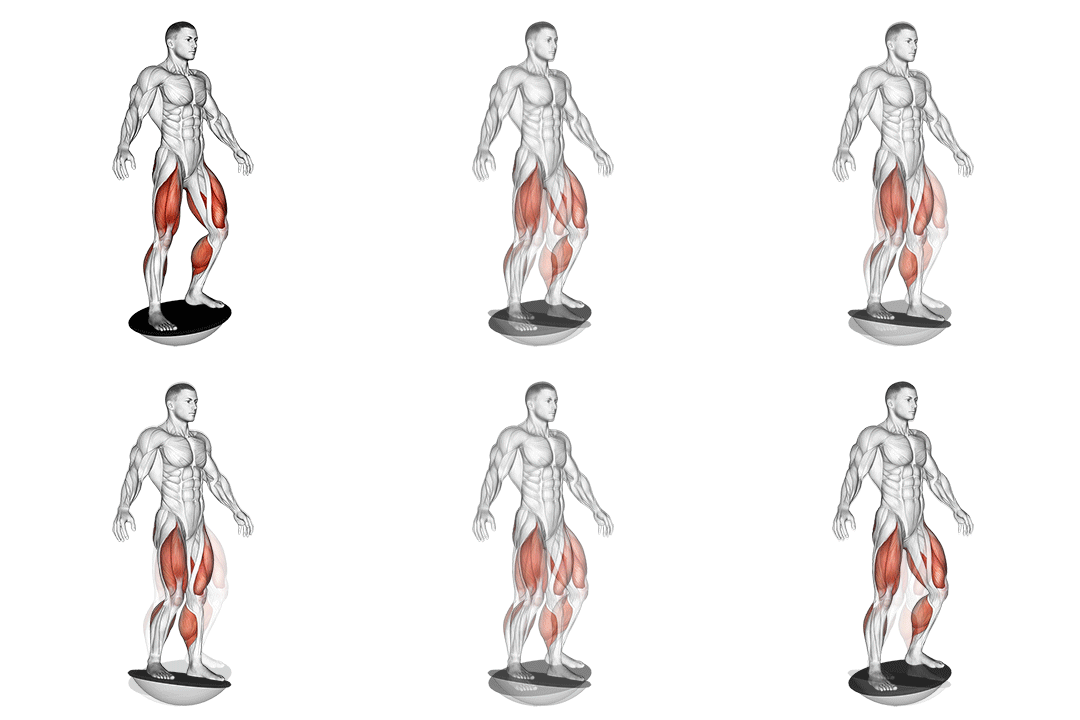
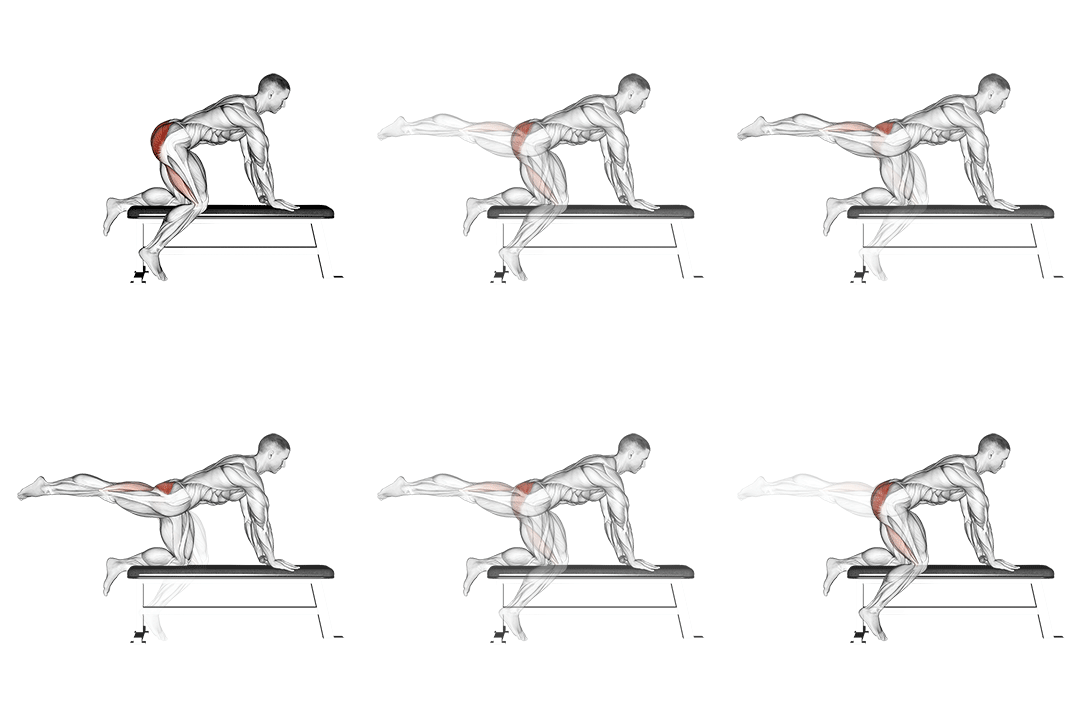
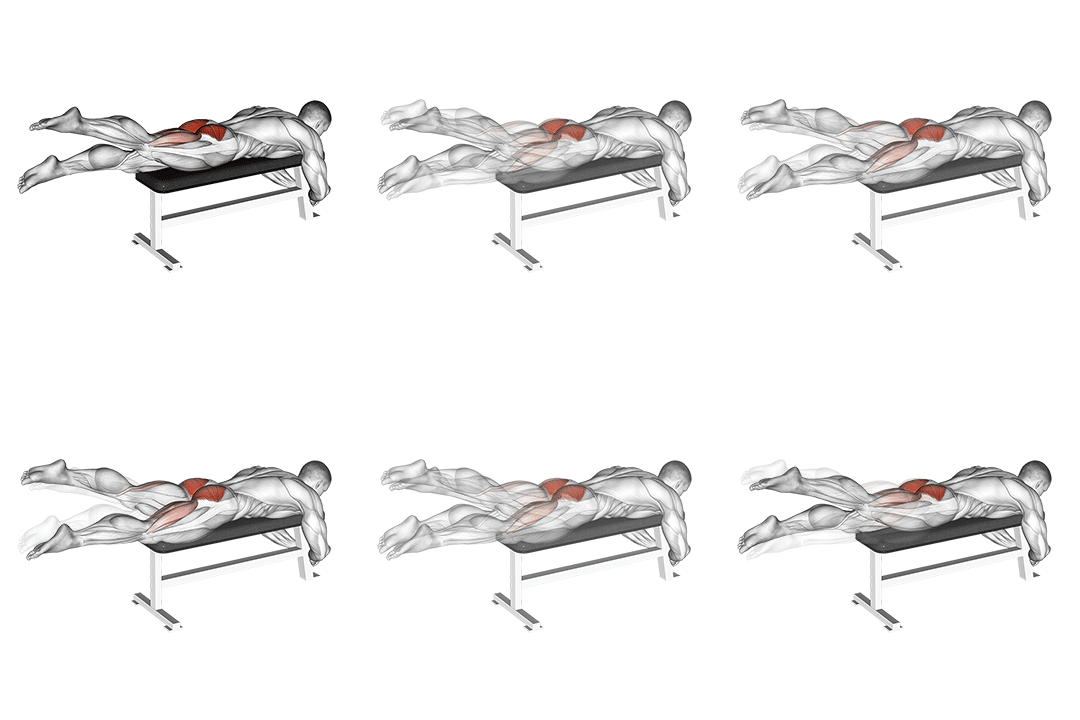
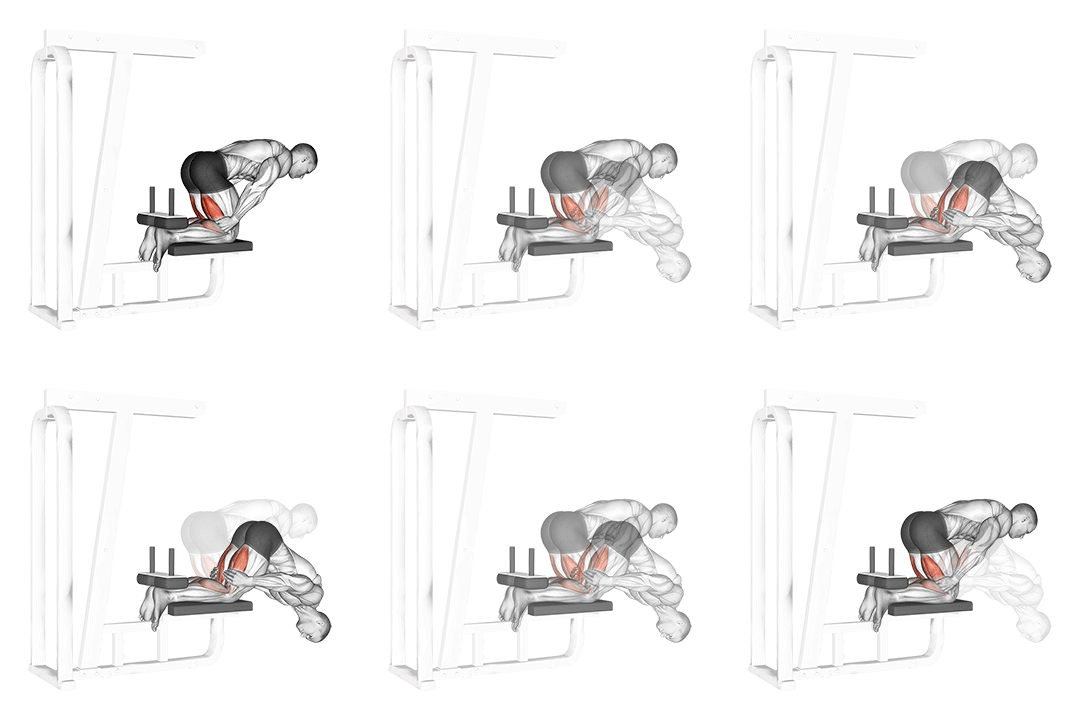
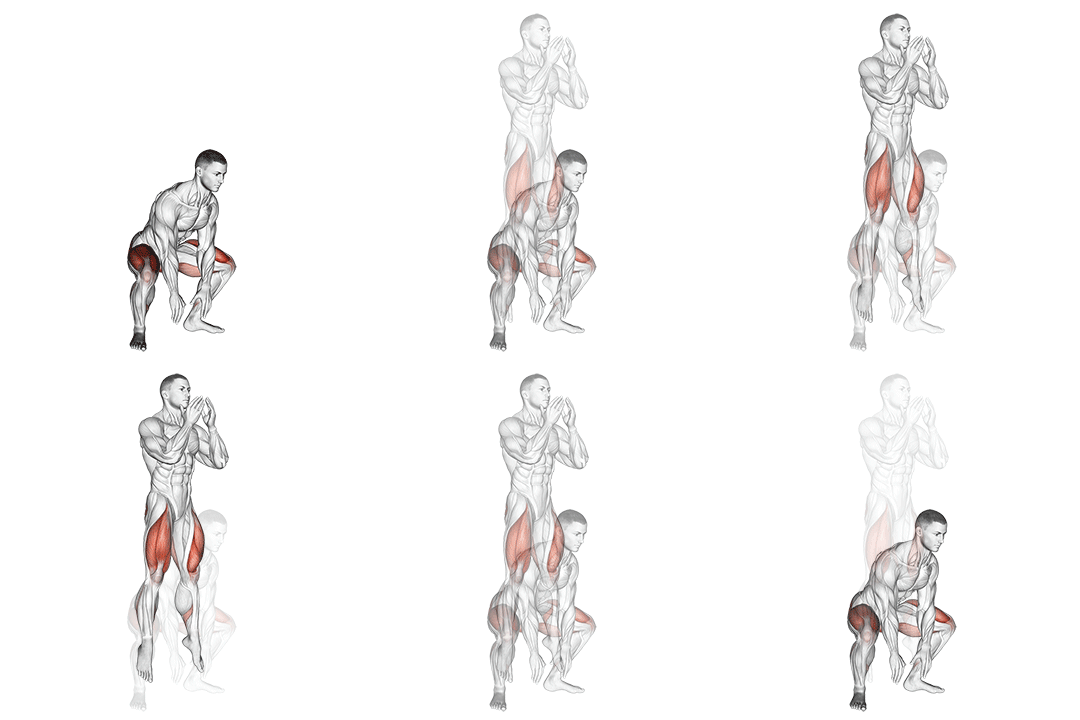
Jump Squat
intermediate plyometrics exercise · body weight · targets glutes
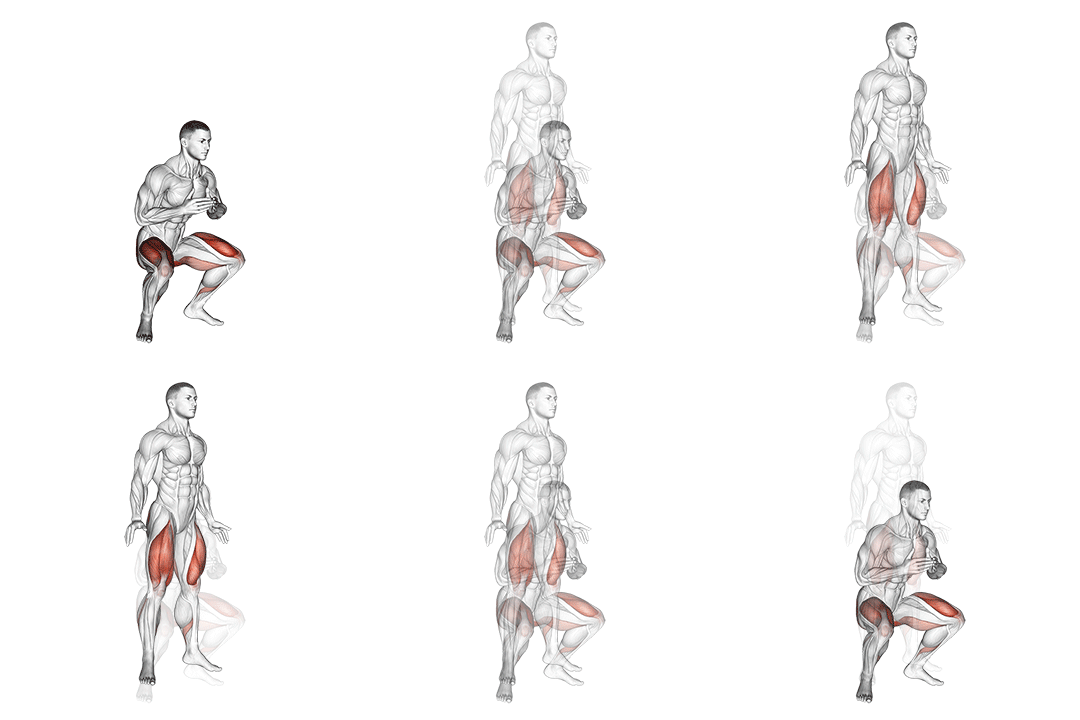
- Body part
- upper legs
- Primary target
- glutes
- Equipment
- body weight
- Difficulty
- intermediate
The jump squat takes the standard bodyweight squat and adds an explosive vertical jump at the top of every rep. From a standing position, you sink into a squat, then drive up explosively to leave the floor before landing softly into the next rep. The jump turns a strength exercise into a power exercise — training the legs to produce force quickly rather than just produce force. This distinction matters for athletes. Maximum strength (how much weight you can squat) and maximum power (how fast you can produce force) are different qualities, and they require different training. Heavy squats build strength; jump squats build power. Most sports — basketball, football, soccer, sprinting, martial arts — depend more on power than on raw strength. Adding 1-2 weekly sessions of jump squats over 8-12 weeks usually produces noticeable improvements in vertical jump height and short-distance sprinting speed. The jump squat is also one of the most accessible lower-body conditioning exercises. Unlike heavy strength work, you don't need any equipment, and the impact on the joints is manageable as long as the landing is controlled. The trade-off is that all-out jump squats are taxing on the knees and ankles over time, so volume needs to be respected.
Why train the Jump Squat?
- Builds explosive lower-body power that transfers directly to sport performance.
- Trains the stretch-shortening cycle — the rapid eccentric-to-concentric transition athletes rely on.
- Improves vertical jump height through specific power training.
- Burns calories quickly and elevates heart rate — useful as conditioning in addition to strength.
- Requires no equipment and minimal space, making it accessible anywhere.
- Carries over to running speed, especially short-distance sprints and changes of direction.
How to do the Jump Squat: step by step
- 1Stand with your feet shoulder-width apart.
- 2Lower your body into a squat position by bending your knees and pushing your hips back.
- 3Jump explosively off the ground, extending your hips, knees, and ankles.
- 4While in mid-air, quickly bring your arms forward for balance.
- 5Land softly on the balls of your feet and immediately go into the next repetition.
- 6Repeat for the desired number of repetitions.
Muscles worked
Primary
glutes
Secondary
quadriceps, hamstrings, calves
Common mistakes to avoid
Landing flat-footed and stiff-legged
Coming down with locked knees and a hard heel strike sends impact straight into the joints. Land on the balls of the feet first, then let the heels touch as the knees and hips bend to absorb the load.
Not squatting fully between jumps
Using the bottom of the squat as just a quick rebound shortens the range and reduces the strength benefit. Reach a controlled parallel squat depth on every rep before jumping again.
Letting the knees collapse inward
When fatigue hits, the knees cave toward each other on takeoff and landing. Drive your knees out in line with your toes through every rep — knee valgus during repeated jumps is a top cause of patellar pain.
Jumping for maximum height every rep
Squeezing every inch out of every jump is exhausting and form-breaking. Aim for consistent height across the set rather than maximum on the first rep — this teaches the kind of repeatable power that matters in sport.
Looking down at the floor
Dropping the head shifts your weight forward and disrupts the takeoff line. Keep eyes on the horizon — chest up, head tall, even when fatigued.
Easier and harder variations
Easier
Skip the jump and do bodyweight squats at moderate tempo. Or perform low-amplitude jump squats (semi squat jumps) where you only leave the floor by an inch or two. Build to full jump squats over 4-6 weeks.
Harder
Add a tuck (pull the knees toward the chest at the top of each jump). Add load (light dumbbells held at the sides, or a weighted vest). Or progress to box jumps and depth jumps for more advanced plyometric training.
Alternative exercises
Box jump
Same takeoff mechanics with a soft landing target. Removes most of the impact while keeping the explosive quality.
Broad jump
Horizontal jump for distance instead of vertical. Trains a different power expression — useful for sport-specific carryover to running and changing direction.
Goblet squat
Loaded version of the squat without the jump. Builds the strength foundation that supports explosive jumping. Pair both for complete leg development.
How to program the Jump Squat into your training
Jump squats are power training, not strength or pure cardio. Program them with that in mind. For power development: 3-4 sets of 5-8 reps with 90-120 seconds full rest between sets. The full rest matters — power training requires you to be fresh enough to produce maximum force on every rep. Total weekly volume of 30-50 quality reps drives most adaptations. For conditioning use: 4-6 rounds of 20-30 seconds work at moderate intensity with 30-60 seconds rest. The reps will be lower height than maximum power training, but heart rate will spike and you'll build conditioning. In a strength session: place jump squats early in the workout when you're fresh, before any heavier squat work. Power before strength is the right order — fatigue from heavy squatting impairs jump quality, but jump training doesn't significantly impair subsequent squat strength. A balanced lower body session: 3 sets of 6 jump squats (power), 4 sets of 8 goblet squats (strength), 3 sets of 12 walking lunges per side (volume), 3 sets of 12 single-leg glute bridges per side (accessory). Done twice per week. Limit total weekly jump squat volume to 30-60 reps. More than that often leads to knee tendinopathy in the patellar tendon — a slow-developing issue that takes weeks to resolve once it appears.
Recovery and frequency
Jump squats are joint-intensive even though they're bodyweight. The knees and ankles absorb impact on every landing, and the cumulative load builds up faster than people expect. 48-72 hours between sessions is the right cadence; more frequent jump training leads to cranky tendons within a few weeks. Quad and calf soreness is normal in the first 2 weeks of training, especially for trainees new to plyometric work. Sharp knee pain — particularly under or around the kneecap — is a signal to stop and reassess form before continuing. Daily calf stretches and ankle mobility work between sessions help the tissues handle repeated impact. If you train barefoot or in flat shoes, expect more ankle and arch fatigue than someone in cushioned shoes.
Frequently asked questions
How many sets and reps of jump squats should I do?
For power: 3-4 sets of 5-8 reps with 90-120 seconds full rest. For conditioning: 4-6 rounds of 20-30 seconds work with 30-60 seconds rest. Total weekly volume of 30-60 quality reps for power, more for conditioning.
How often should I train the jump squat?
1-2 times per week with at least 48 hours between sessions. The knees and ankles take cumulative load that requires recovery; more frequent training usually leads to tendinopathy.
Will jump squats improve my vertical jump?
Yes — they're one of the most direct ways to train vertical jump power. Combined with heavier strength work (loaded squats), most trainees see noticeable vertical jump improvements in 8-12 weeks.
Are jump squats safe for my knees?
Done with proper landing mechanics and reasonable volume, yes. Done by going all-out every rep with locked-knee landings, no — patellar tendinopathy is the most common overuse injury. Soft landings, reasonable volume, and adequate recovery keep the knees safe.
Jump squats vs running: which is better for cardio?
Different tools. Per minute, jump squats burn more calories and recruit more muscle, but you can't sustain them as long as running. Use jump squats for short bursts; use running for longer sustained cardio. Both have a place in well-rounded training.
Can I do jump squats every day?
Not safely. The cumulative joint load builds up too fast for daily training. Stick to 1-2 dedicated jump squat sessions per week, with bodyweight squats or other lower-body work on the alternate days.
Useful tools for this exercise
Build a workout with the Jump Squat
Puna gives you guided bodyweight workouts you can do anywhere — no equipment, no gym, just structured progressions that build real strength.