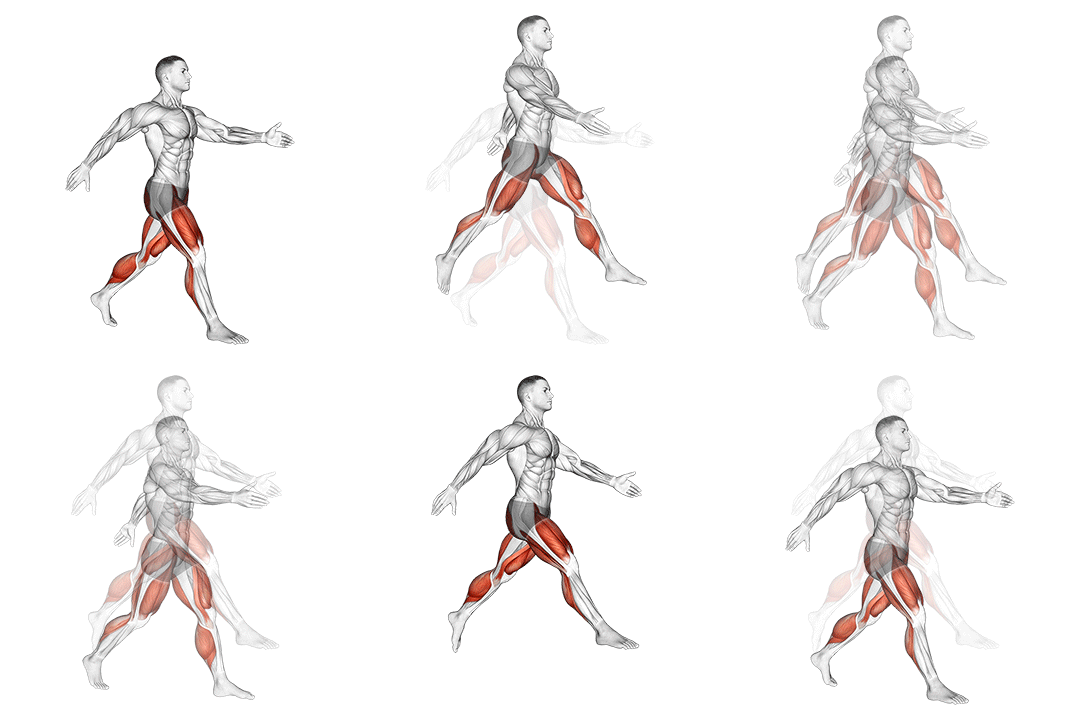
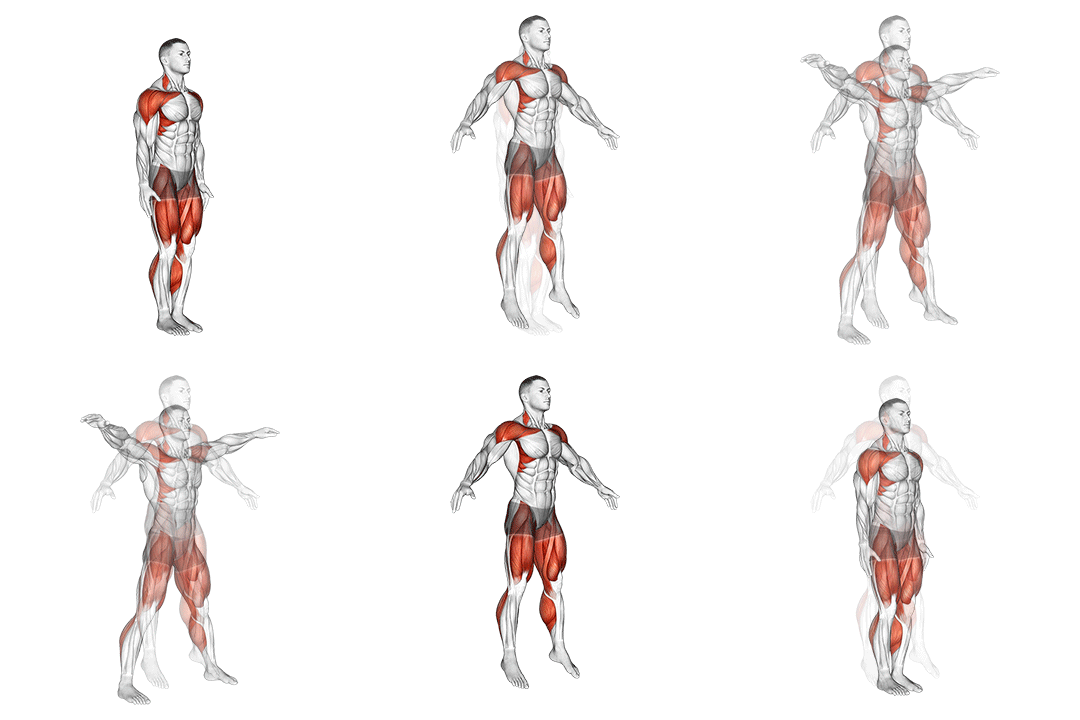
Mountain Climber
beginner cardio exercise · body weight · targets cardiovascular system
- Body part
- cardio
- Primary target
- cardiovascular system
- Equipment
- body weight
- Difficulty
- beginner
The mountain climber is the bridge between strength training and cardio — a high-plank position with alternating knee drives toward the chest, performed at speeds ranging from controlled (a core exercise) to all-out fast (a cardio finisher). The combination loads the shoulders, chest, and core isometrically while the legs work dynamically, creating a full-body demand in a small space. Its versatility is what makes it worth knowing. As a slow mobility drill, mountain climbers warm up the hips and core before lower-body training. At moderate tempo, they're a steady-state core conditioning exercise. At maximum speed, they spike the heart rate as fast as almost any other bodyweight movement. The same exercise, three different uses depending on tempo. Where mountain climbers tend to fail people is in form preservation under fatigue. The whole point of the high-plank position is that the shoulders and core stay rigid while the legs cycle. Once fatigue sets in, the hips bounce up, the shoulders sag, and the exercise turns into a hip flexor drill rather than a core challenge. Most coaches would rather see 30 seconds of strict mountain climbers than 60 seconds of sloppy ones.
Why train the Mountain Climber?
- Combines core stability and cardio in one efficient movement — saves time in shorter sessions.
- Spikes heart rate quickly when performed at high tempo, making it a useful conditioning finisher.
- Trains hip mobility and coordination through the alternating knee drive.
- Reinforces the high-plank position, which carries over to push-ups and other pressing work.
- Requires no equipment and minimal space — works in any small area.
- Scales by tempo — same exercise serves as warm-up, core work, or all-out cardio depending on speed.
How to do the Mountain Climber: step by step
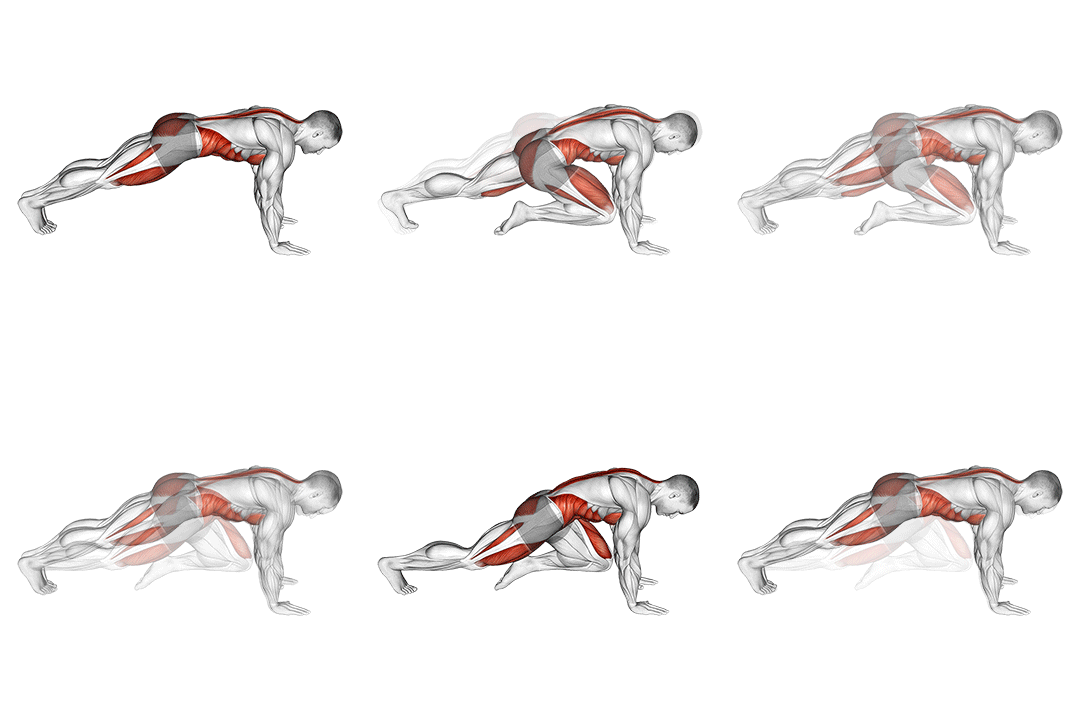
- 1Start in a high plank position with your hands directly under your shoulders and your body in a straight line.
- 2Engage your core and bring your right knee towards your chest, then quickly switch and bring your left knee towards your chest.
- 3Continue alternating legs in a running motion, keeping your hips low and your core engaged.
- 4Maintain a steady pace and breathe evenly throughout the exercise.
- 5Repeat for the desired number of repetitions.
Muscles worked
Primary
cardiovascular system
Secondary
core, shoulders, triceps
Common mistakes to avoid
Letting the hips bounce up and down
The high plank should stay rigid throughout the rep. If the hips rise, the core has stopped working and the exercise becomes a hip flexor drill. Brace the abs hard and keep the body parallel to the floor as the legs move.
Hands placed too far forward of the shoulders
Forward hand placement shifts load onto the shoulders and removes the chest from the supporting work. Set the hands directly under the shoulders before starting and keep them there throughout the set.
Letting the foot stomp on the floor
The drive forward should be controlled — each foot lands softly under the body, not slamming down. Stomping uses momentum and reduces the core's role in moving the leg.
Going too fast before mastering the position
Maximum speed is fine once you have the position locked in, but most beginners try to sprint through mountain climbers from the start. Master 30 seconds of slow controlled mountain climbers first; then add speed.
Holding the breath through the work
Bracing the core often means stopping breathing. Breathe rhythmically with the legs — exhale on each leg drive, inhale on the return. Sustained work requires sustained airflow.
Easier and harder variations
Easier
Slow the tempo dramatically — one knee drive every 2-3 seconds, focusing on form and core engagement. Or perform from an elevated hand position (hands on a bench) to reduce the difficulty of the plank.
Harder
Increase tempo to maximum speed (sprint mountain climbers). Or add a cross-body element (right knee toward left elbow), which adds oblique work. Or progress to spider mountain climbers (knees go to outside of elbows).
Alternative exercises
Cross-body mountain climber
Knee drives toward opposite elbow instead of straight forward. Adds oblique work and is harder on coordination.
Spider mountain climber
Knee drives to outside of same-side elbow, which deepens the hip mobility component. Useful as a warm-up before squat work.
High plank shoulder tap
Same plank position with alternating shoulder taps instead of leg drives. Trains anti-rotation core work without the cardio component.
How to program the Mountain Climber into your training
Mountain climbers fit best as warm-up, finisher, or conditioning circuit work — not as the primary movement of a session. Three usage patterns: As warm-up: 2-3 sets of 30 seconds at moderate tempo at the start of any workout. Wakes up the core and elevates heart rate without depleting the muscles for the main work. As core conditioning: 3-4 sets of 30-45 seconds at moderate tempo with 30-60 seconds rest. Programmed 2-3 times per week. As cardio finisher: 4-8 rounds of 20-30 seconds maximum effort with 30-60 seconds rest. The final 5 minutes of a workout, when you want one last hard push. Heart rate spikes high, which builds work capacity efficiently. In a circuit: pair with strength movements. Example circuit — 30 seconds mountain climbers, 10 push-ups, 30 seconds mountain climbers, 10 squats, 30 seconds mountain climbers, 30-second plank. Repeat 3-4 times. For HIIT-style protocols: Tabata format works well — 20 seconds maximum effort, 10 seconds rest, 8 rounds. Brutal but efficient — total of 4 minutes hits the cardio system hard. Don't program mountain climbers as the only conditioning exercise — variety in cardio modalities prevents the wrist and shoulder fatigue that comes from too much plank-position work in a week.
Recovery and frequency
Mountain climbers in moderate volumes have low recovery cost — daily use is fine. High-volume sessions (cumulative 5+ minutes of work) can leave the shoulders, wrists, and hip flexors sore for a day, but the soreness fades quickly with consistent training. Wrist tightness is the most common complaint, especially during longer sessions. Spend 30-60 seconds on wrist mobility before starting. If wrists hurt during sets, switch to push-up handles or perform on closed fists. Sleep, hydration, and adequate protein cover the rest of recovery — no special protocols needed.
Frequently asked questions
How many sets and reps of mountain climbers should I do?
Work in time intervals: 3-4 sets of 30-45 seconds at moderate tempo with 30-60 seconds rest. For HIIT, 8 rounds of 20 seconds work / 10 seconds rest.
How often should I train the mountain climber?
2-4 times per week is reasonable. Lower volumes (warm-up use) can be done daily without recovery concerns.
Are mountain climbers cardio or strength training?
Both, depending on tempo. At slow controlled speed, they're a core exercise with mild cardio. At maximum speed, they're primarily cardio with a core stability component. The same movement serves both purposes.
Why do my shoulders hurt during mountain climbers?
Usually because the position is held too long, hands are placed wrong (too far forward), or your shoulder strength isn't yet enough for the plank duration. Reduce session time and address pressing strength alongside the cardio work.
Are mountain climbers good for fat loss?
They're a useful tool but no single exercise drives fat loss. Total weekly training volume and nutrition do the bulk of the work. Mountain climbers excel at burning calories per minute and elevating heart rate, both of which help, but they're not magic.
Mountain climbers vs burpees: which is better?
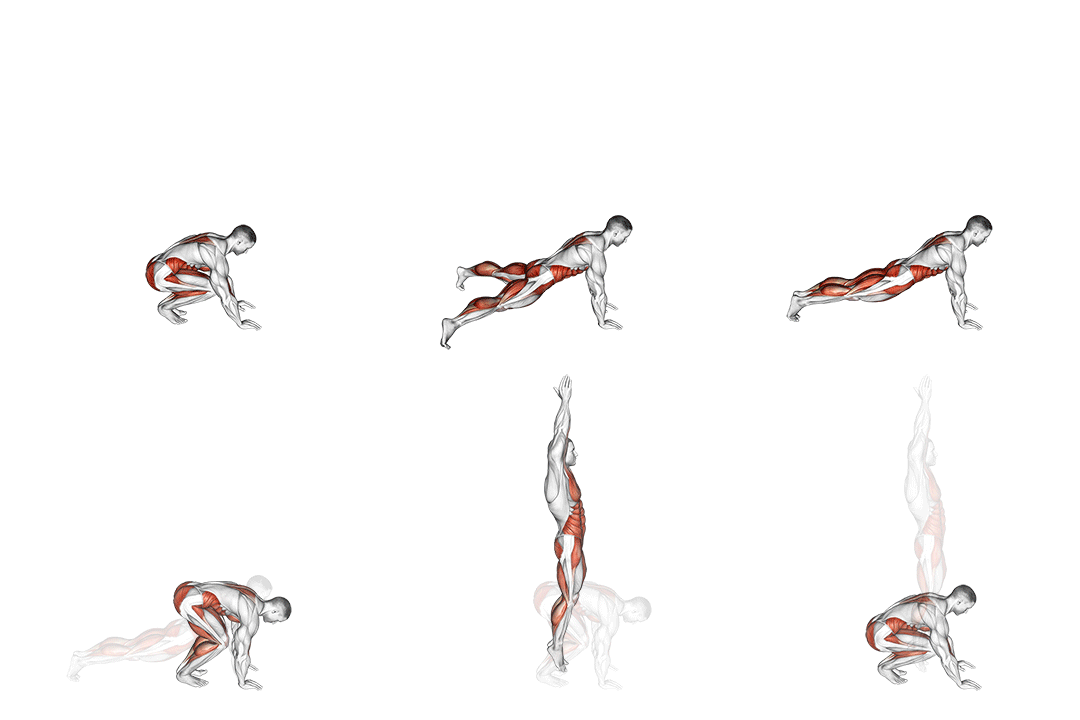
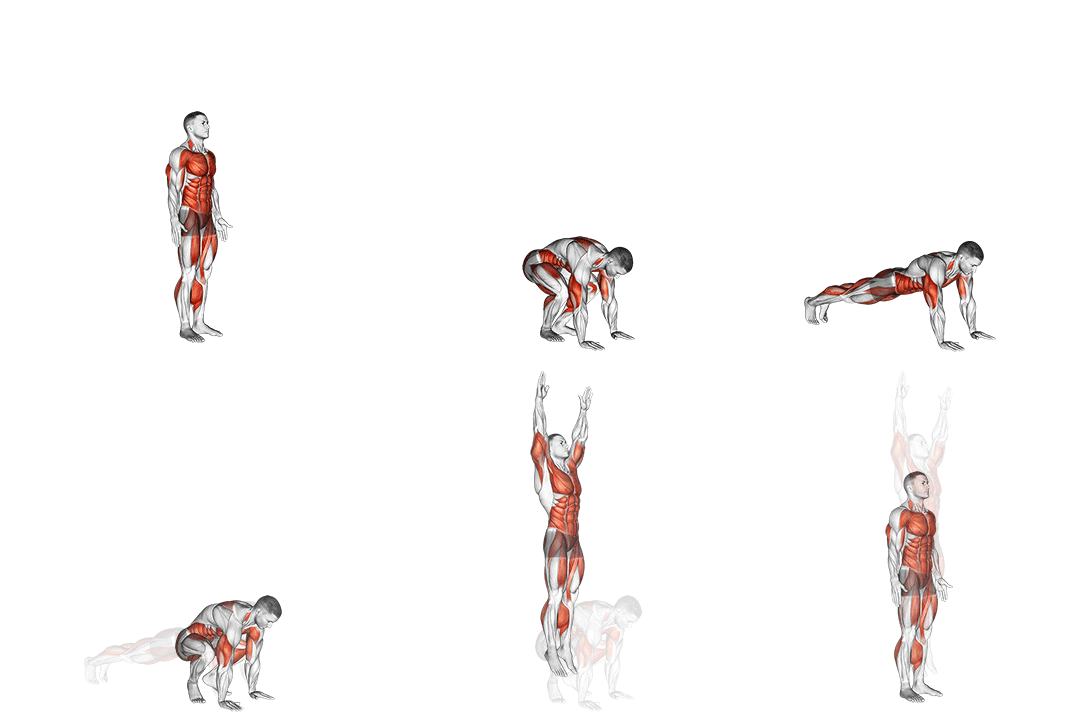
Different tools. Mountain climbers stay in the high-plank position the whole time, with the cardio coming from leg cycling. Burpees include a vertical jump and full body extension, with more total muscle recruitment per rep. Burpees are typically more demanding; mountain climbers are more sustainable for longer durations.
Useful tools for this exercise
Build a workout with the Mountain Climber
Puna gives you guided bodyweight workouts you can do anywhere — no equipment, no gym, just structured progressions that build real strength.