Jack Burpee
advanced cardio exercise · body weight · targets cardiovascular system
- Body part
- cardio
- Primary target
- cardiovascular system
- Equipment
- body weight
- Difficulty
- advanced
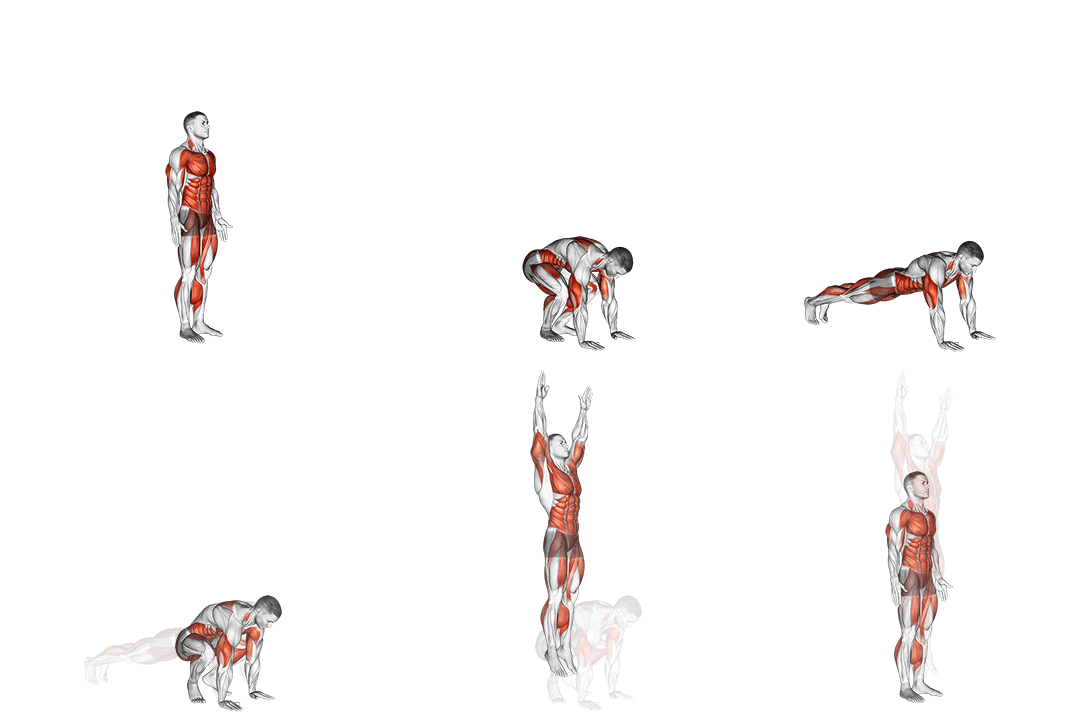
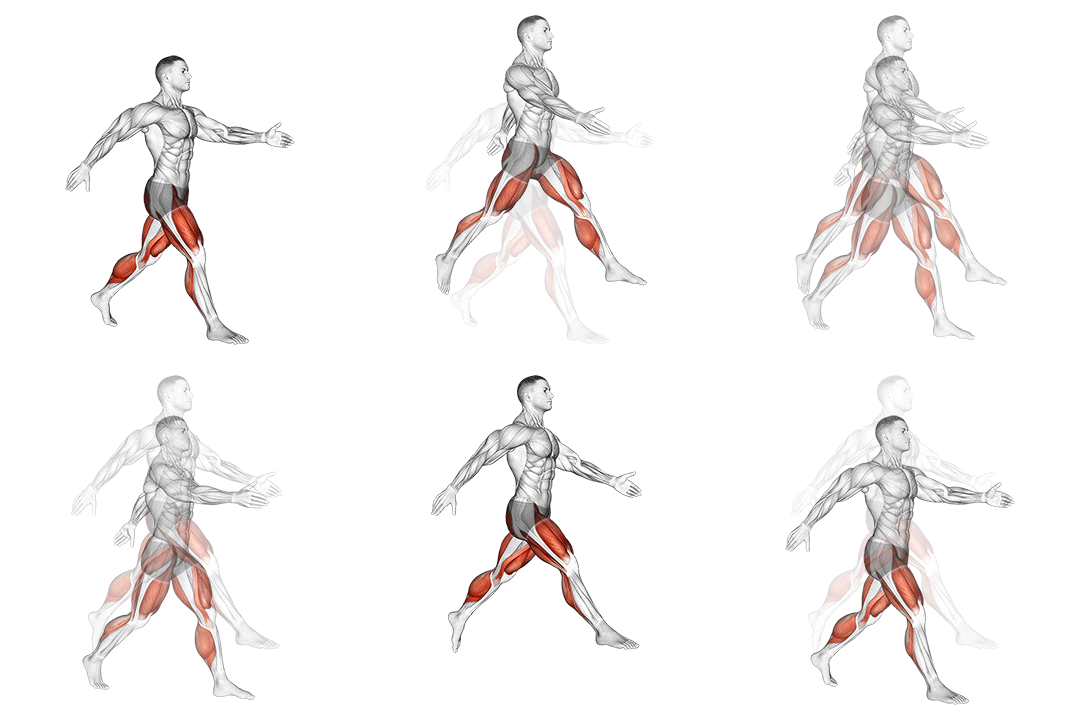
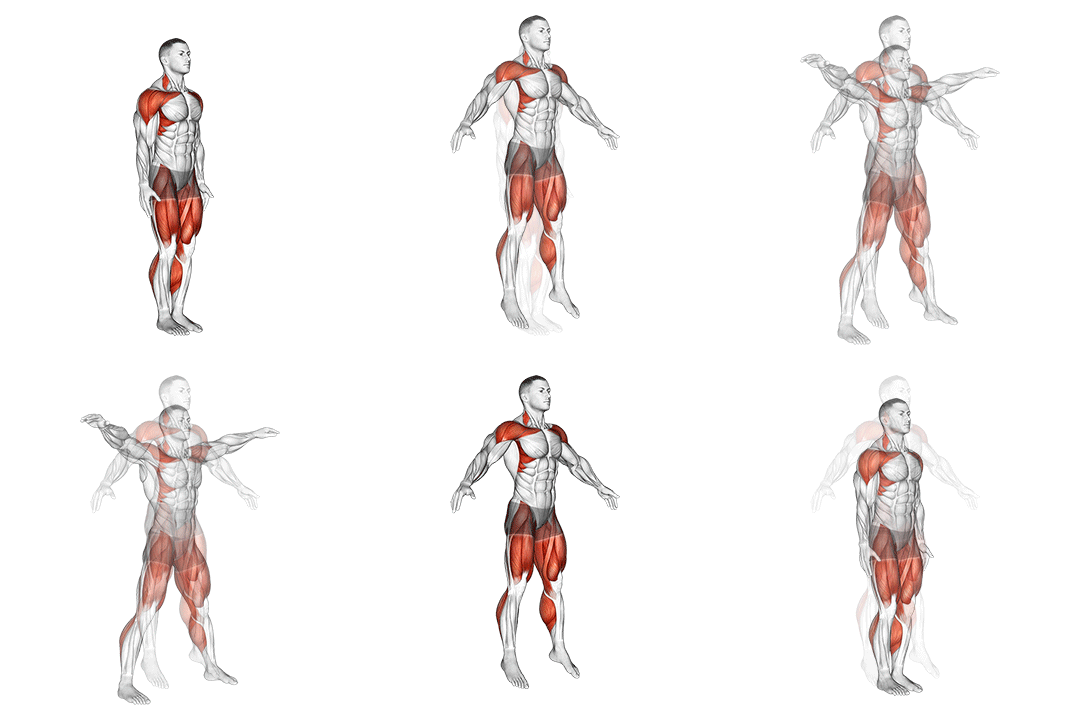
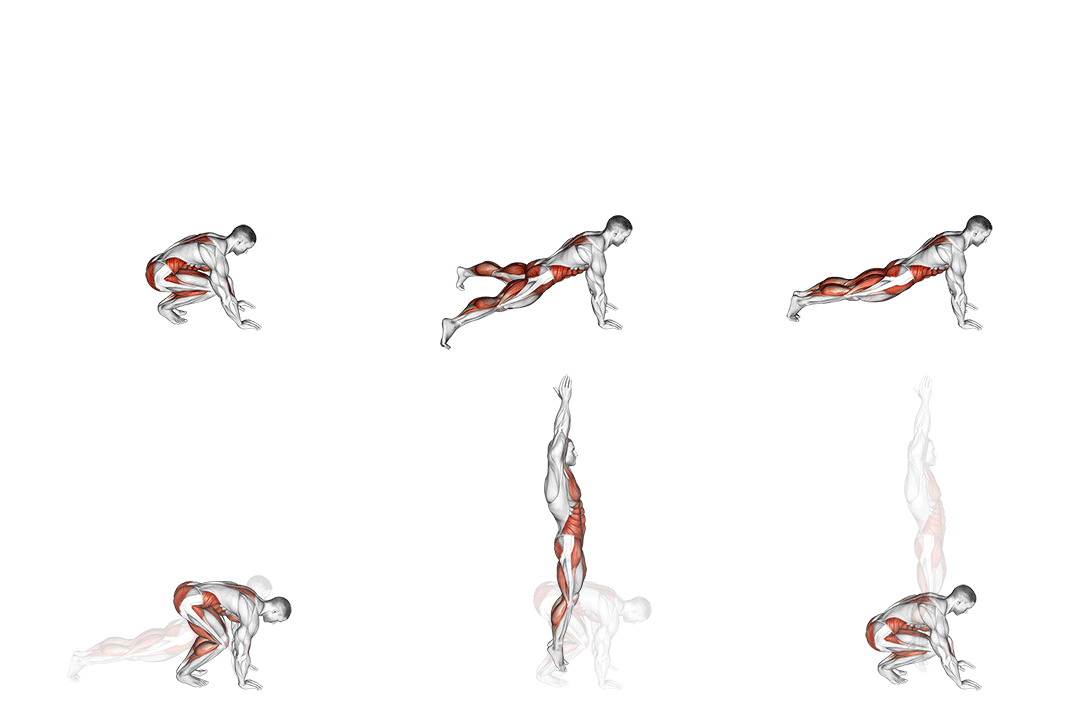
The jack burpee combines the standard burpee — squat, kick out to plank, push-up, jump back, jump up — with the arm and leg pattern of a jumping jack on the final jump. The result is a movement that elevates heart rate faster than almost any other bodyweight exercise while hitting essentially every major muscle group in a single rep. It's brutal and it's earned its reputation: 30 seconds of hard jack burpees can spike your heart rate above 180 bpm. That makes it a high-leverage tool for short conditioning sessions, but also a movement that needs respect — sloppy form under fatigue is how people hurt their wrists, lower backs, and shoulders. The jumping jack on top doesn't just add aesthetic flair. The lateral arm and leg movement at full extension recruits the abductors, adductors, and lateral deltoids in a way the standard burpee misses, making it a more complete full-body movement at the cost of additional coordination demand. For most trainees, the jack version isn't necessary — the standard burpee is already brutal enough — but for athletes whose sport involves lateral movement, the added pattern has real transfer value. Use it sparingly. Even highly conditioned athletes don't program jack burpees more than 1-2 times per week as a primary conditioning piece. The movement is so taxing that doing too much cuts into recovery for actual strength work and other training.
Why train the Jack Burpee?
- Hits every major muscle group in a single repetition — chest, legs, shoulders, core, back, abductors.
- Spikes heart rate faster than running for short conditioning blocks, saving session time.
- Builds work capacity that transfers to most sports and physical jobs.
- Trains the body to recover quickly between bursts of effort, not just sustain steady pace.
- Requires no equipment and minimal space — works in a hotel room or backyard.
- Adds lateral movement on top of the burpee, recruiting abductors and adductors that the standard version misses.
How to do the Jack Burpee: step by step
- 1Start in a standing position with your feet shoulder-width apart.
- 2Lower your body into a squat position, placing your hands on the ground in front of you.
- 3Kick your feet back, landing in a push-up position.
- 4Perform a push-up, lowering your chest to the ground and then pushing back up.
- 5Jump your feet forward, landing in a squat position.
- 6Jump up explosively, reaching your arms overhead.
- 7Land softly and immediately lower back into the squat position to begin the next repetition.
Muscles worked
Primary
cardiovascular system
Secondary
quadriceps, hamstrings, calves, shoulders, triceps, core
Common mistakes to avoid
Letting the lower back sag in the plank position
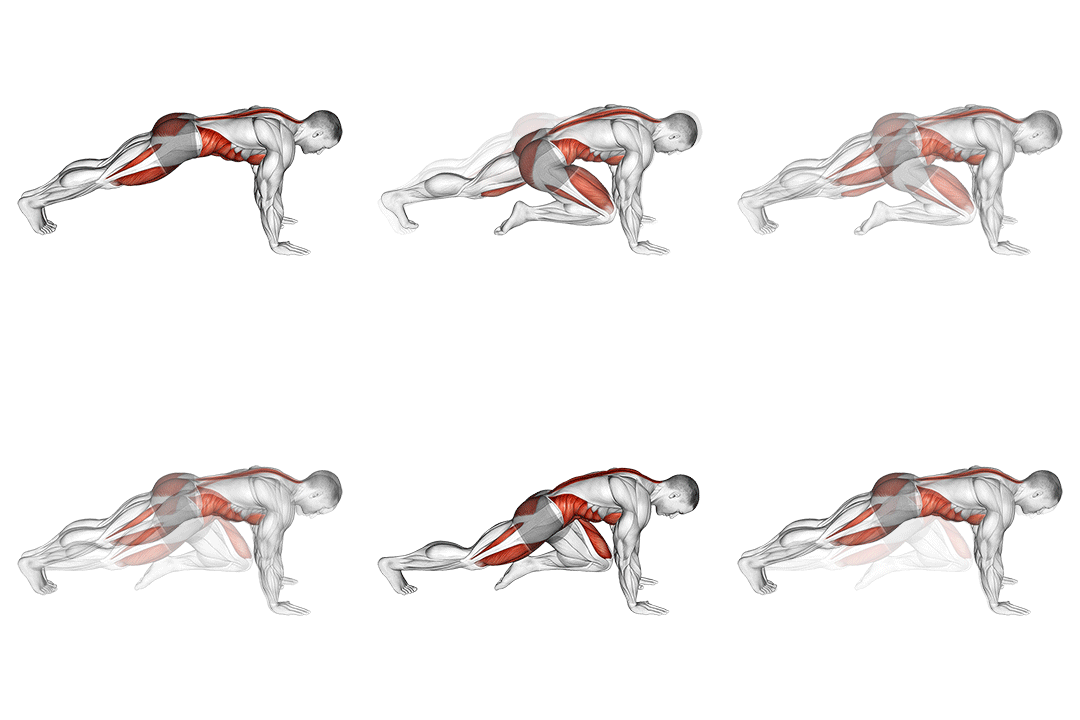
When you kick the feet back, the hips often drop and the lumbar spine takes the load. Brace the abs the moment your hands hit the ground — the plank should be a flat line, not a sagging hammock.
Skipping or shortening the push-up
Under fatigue, the push-up becomes a chest tap or disappears entirely. If you can't complete a clean push-up at the bottom of every burpee, lower your rep count or rest more between sets — partial reps just teach bad form.
Landing the final jump on stiff legs
Coming down hard with locked knees sends impact straight into the joints. Land on the balls of the feet with knees soft, ready to absorb into the next squat.
Rounding the back when standing up between reps
After the jump, fatigue makes people slump forward as they prepare for the next rep. Stand fully upright between burpees — even if it costs a half-second per rep, the spinal alignment matters more than the time.
Slamming the wrists into the ground on the kick-back
Hard impact on the wrists during the kick-back accumulates over hundreds of reps and leads to wrist tendinopathy. Place the hands deliberately, not by collapsing onto them — bend at the elbows slightly to absorb the descent.
Easier and harder variations
Easier
Do a standard burpee without the jumping jack on top — same pattern, less coordination demand. Or step the feet back and forward instead of jumping them, which removes most of the joint impact while keeping the full-body work.
Harder
Add a tuck jump at the top (knees to chest) for more lower-body explosiveness. For real punishment, do them with a weighted vest — but only after 50+ unloaded reps in a session feels manageable.
Alternative exercises
Standard burpee
Simpler version without the jumping jack arm/leg pattern. Use it as your default; reserve jack burpees for sport-specific lateral training.
Up-down (no push-up)
Burpee minus the push-up. Useful when chest and triceps are fried but you still want full-body conditioning.
Manmaker
Burpee with a row at the bottom, using dumbbells. More strength-focused with less cardio than a true burpee.
How to program the Jack Burpee into your training
Jack burpees are conditioning, not strength training. Program them as a finisher or as the conditioning piece on a dedicated cardio day, never as the main work of a strength session. For metabolic conditioning: work in time intervals of 20-30 seconds maximum effort, with 30-60 seconds rest between rounds, for 6-10 rounds. Total work time of 3-5 minutes will leave most people thoroughly cooked. For circuit conditioning: pair with upper body and core movements. Example circuit — 8 jack burpees, 10 push-ups, 30-second front plank, 12 reverse lunges — repeated 3-4 times with 90 seconds rest between rounds. For an EMOM (every minute on the minute) format: 6-8 jack burpees at the top of every minute for 10 minutes. The slower your reps, the less rest you get; this teaches consistent pacing under accumulating fatigue. Schedule them no more than twice per week. Even at 2 weekly sessions, watch for general fatigue in other training — if your strength numbers start dropping, reduce burpee frequency rather than letting overall training quality suffer. Avoid combining jack burpees with other high-impact conditioning in the same week (sprints, plyometric circuits, jump rope intervals). The cumulative joint stress adds up fast.
Recovery and frequency
Jack burpees are some of the most demanding bodyweight conditioning available, and recovery cost reflects that. Plan for 48-72 hours of reduced training capacity after a hard burpee session — even strength work feels heavier the day after. Wrists and lower back tend to take the most cumulative load. If either area starts feeling cranky, drop frequency to once per week and address mobility: wrist circles and cat-cow movements daily can preempt most issues. Hydration and protein intake matter more than usual on burpee days because of the total muscle mass involved. Sleep is the biggest recovery lever — aim for 8+ hours after high-intensity conditioning days.
Frequently asked questions
How many sets and reps of jack burpees should I do?
Work in time intervals — 20-30 seconds of work, 30-60 seconds of rest, for 6-10 rounds. Counting reps under fatigue tends to break form, while time blocks force you to pace.
How often should I train the jack burpee?
1-2 times per week max as a primary conditioning piece. They're so taxing that more frequent training cuts into your recovery for actual strength work.
Why does the jack burpee make me dizzy after a few reps?
The repeated up-down motion drops and raises your blood pressure quickly — combined with high heart rate, this hits the cardiovascular system hard. Build up slowly: start with 5-10 reps total in a session before working up to interval sets.
Is the jack burpee better than running for fat loss?
Different tools, similar effect. Per minute, the jack burpee burns more calories and recruits more muscle than steady running, but you can't sustain it for 30 minutes the way you can sustain a jog. Both work; pick what you'll actually do consistently.
Can I substitute jack burpees for cardio?
Partially. Short interval sessions of jack burpees (10-20 minutes) can replace conventional cardio for general fitness, but if you're training for a long-distance event, you still need the specific endurance of longer steady-state sessions.
What's the difference between a jack burpee and a regular burpee?
The jack burpee adds a jumping jack pattern (arms wide, legs wide) at the top of each rep instead of a vertical jump. Same lower body work, more lateral demand on shoulders and hips.
Useful tools for this exercise
Build a workout with the Jack Burpee
Puna gives you guided bodyweight workouts you can do anywhere — no equipment, no gym, just structured progressions that build real strength.