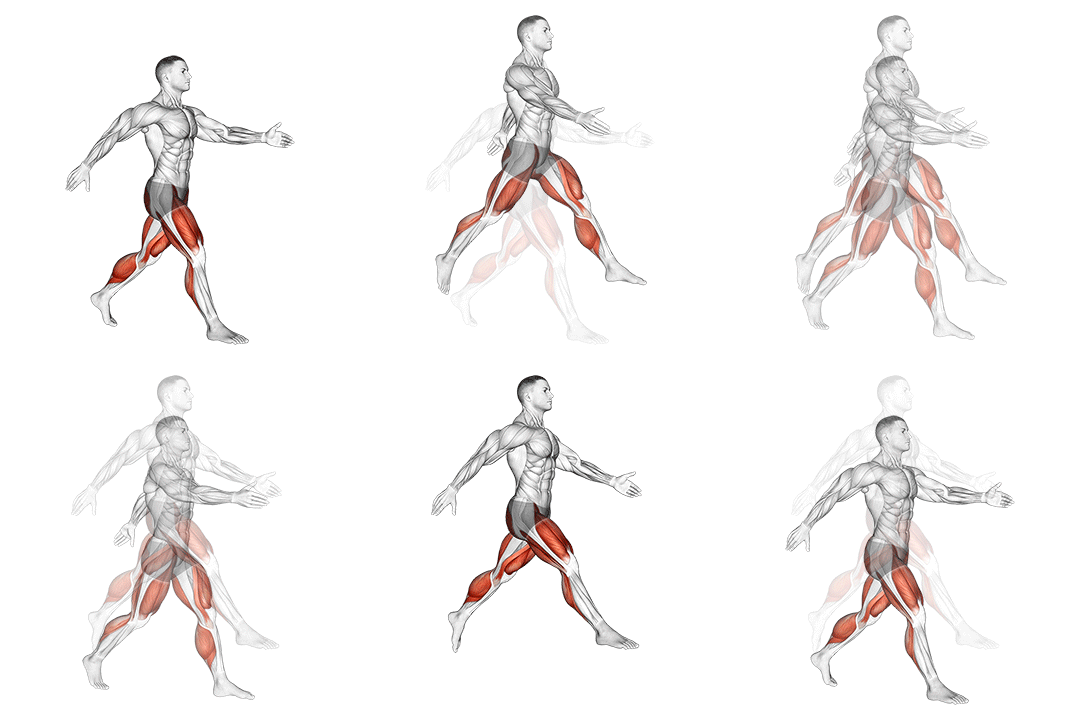
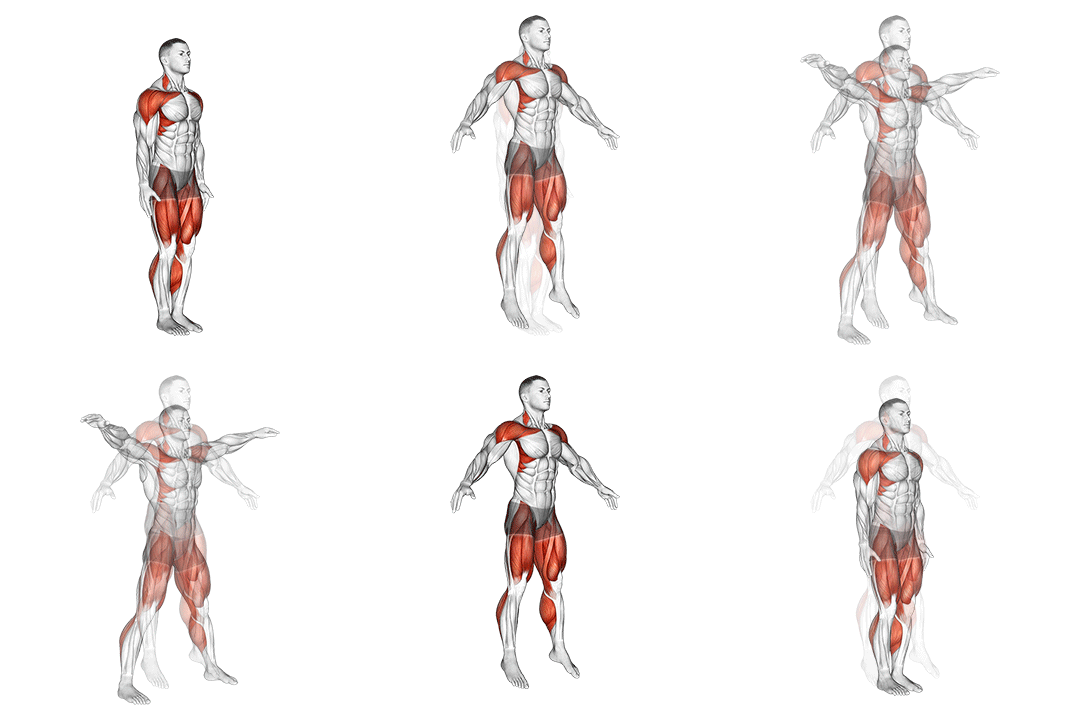
Run
beginner cardio exercise · body weight · targets cardiovascular system
- Body part
- cardio
- Primary target
- cardiovascular system
- Equipment
- body weight
- Difficulty
- beginner
Running — whether outdoors on roads and trails, or indoors on a treadmill — is the most fundamental cardio exercise in human movement. The body evolved for running, particularly endurance running over long distances, and the carryover to general health is unmatched by any single activity. A consistent running practice supports cardiovascular health, mental clarity, body composition, and overall vitality in ways no machine workout fully replicates. What makes running uniquely valuable is the simplicity. No equipment beyond shoes, no gym membership, no learning curve beyond the basics of pacing and form. The barrier to entry is essentially zero, but the benefits compound aggressively over time. Adults who maintain consistent running through midlife and beyond live longer, age slower physically, and report better overall mood and cognitive function than sedentary peers — effects observed in numerous large-population studies over decades. The trade-off, as with any high-impact activity, is the joint loading. The repeated impact of running affects knees, hips, and ankles, which is why many adults conclude they can't run after a few painful weeks of trying. The truth is more nuanced: most running injuries stem from doing too much too soon, not from running itself. New runners who follow a gradual progression (couch-to-5k programs, run-walk methods) develop joint resilience over months and rarely have the issues that 'too much too fast' runners encounter. For trainees willing to build the practice patiently, running becomes a lifelong habit that pays dividends across virtually every health metric.
Why train the Run?
- Improves cardiovascular health more directly than almost any other single exercise.
- Burns significant calories — typically 100-150 per mile depending on body weight and pace.
- Supports mental health through the well-documented release of endorphins and reduction of cortisol.
- Builds bone density through the impact loading, which protects against osteoporosis later in life.
- Strengthens the entire posterior chain (calves, hamstrings, glutes) under repeated dynamic loading.
- Provides clear progression milestones (first mile, first 5K, first half marathon) that drive long-term motivation.
How to do the Run: step by step
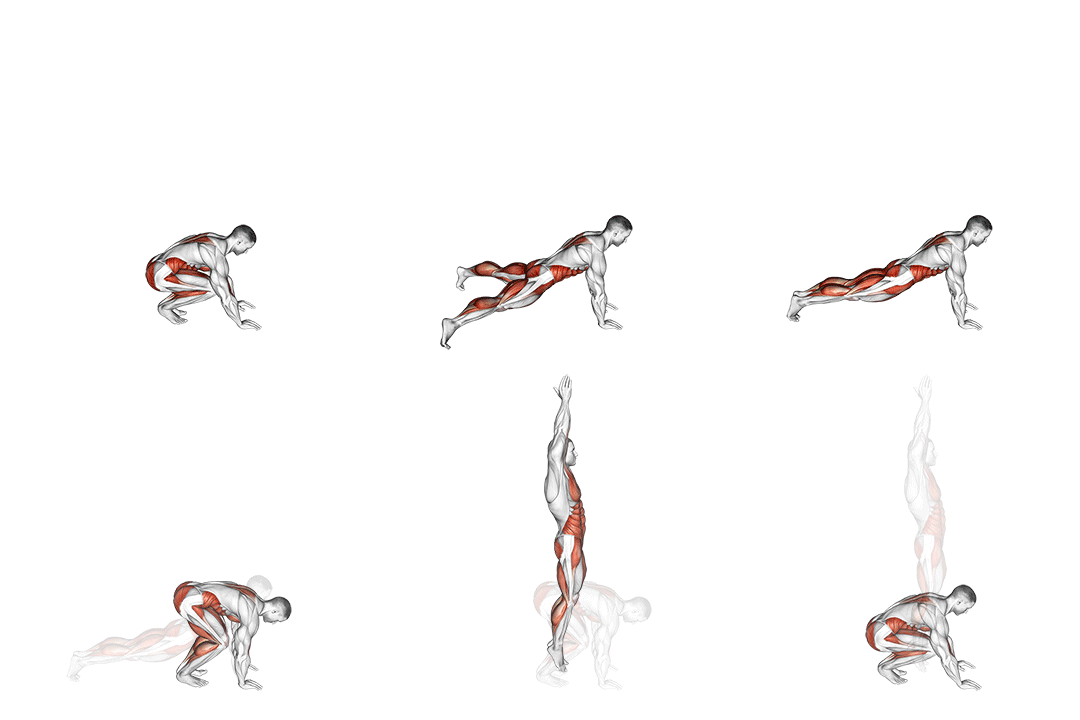
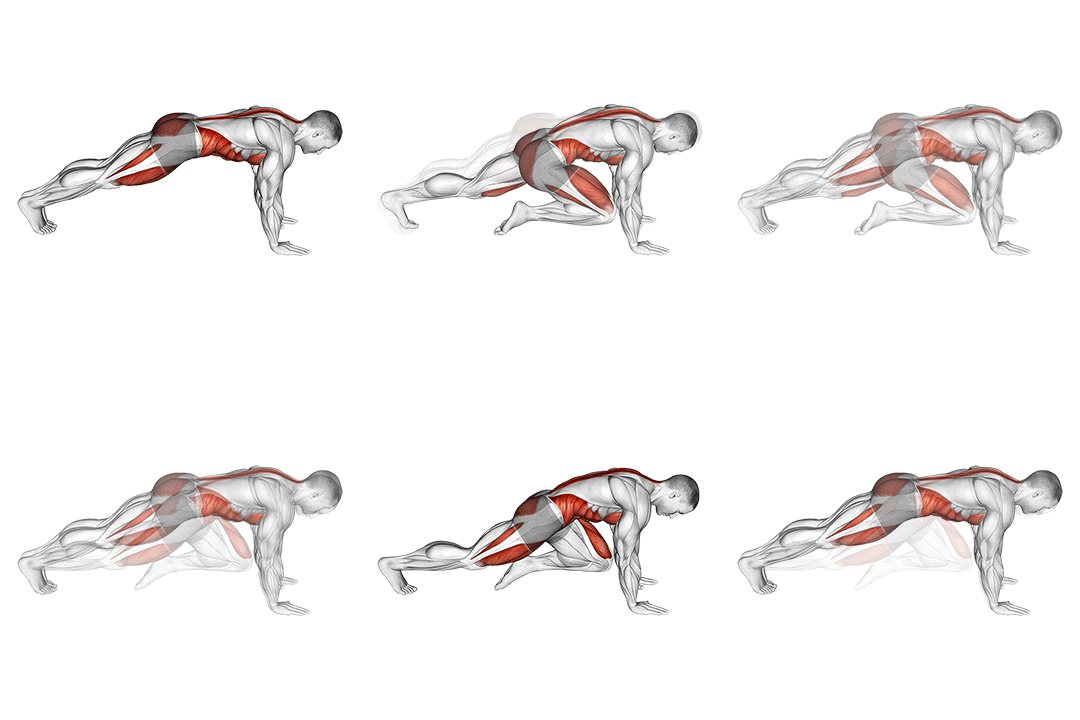
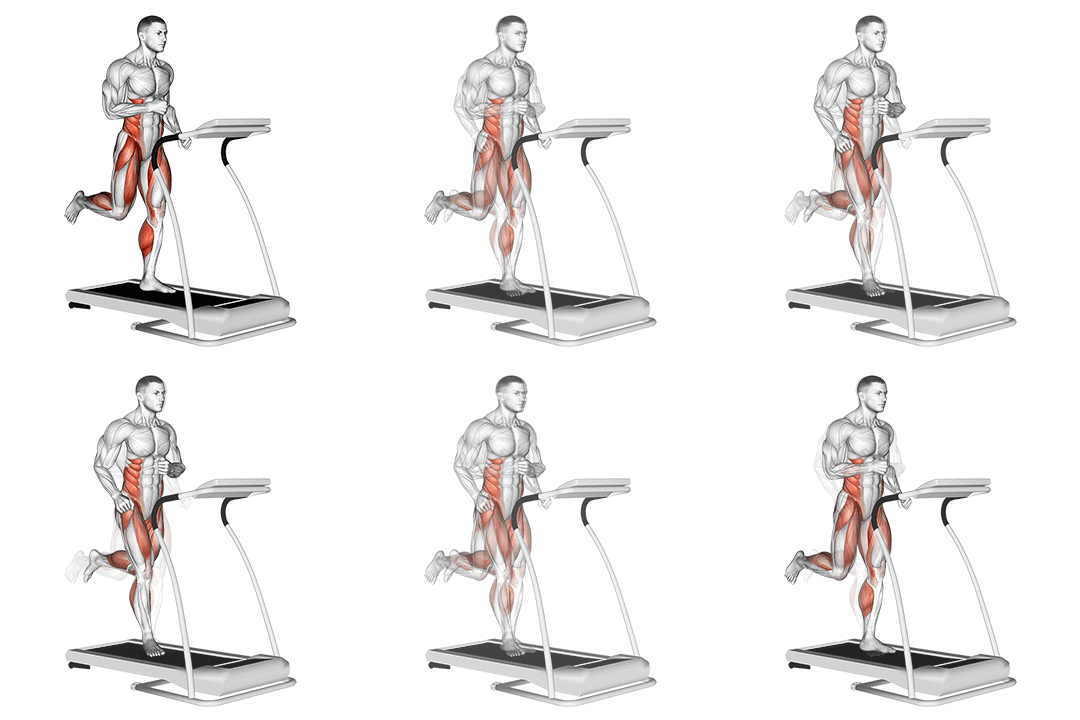
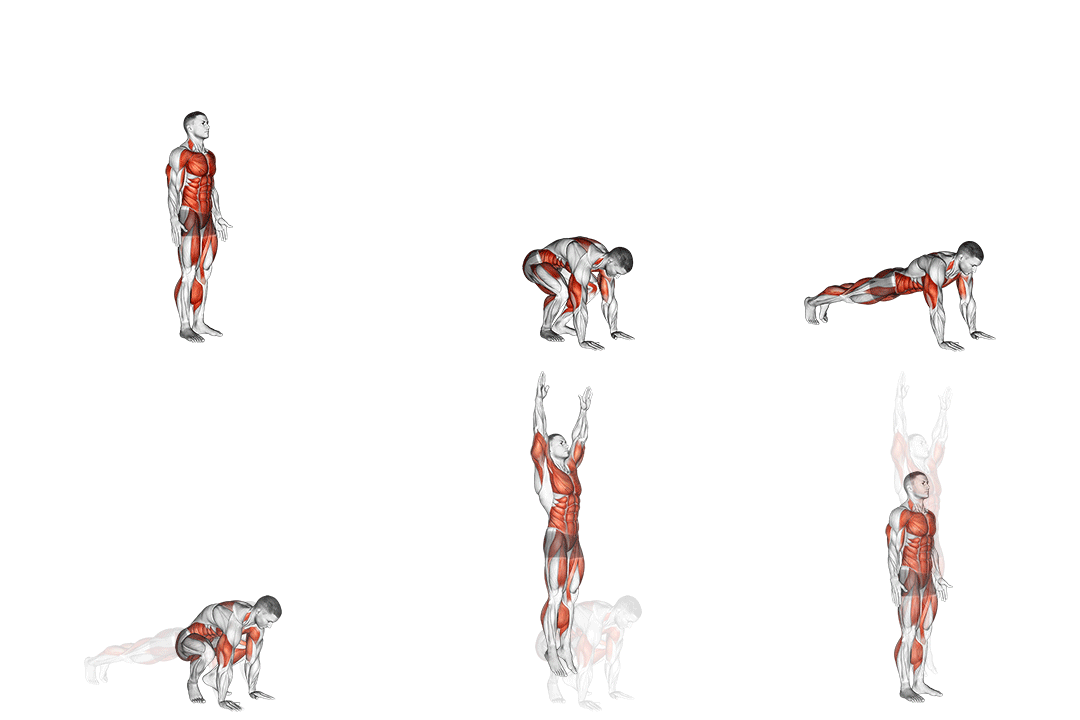
- 1Start by standing upright with your feet hip-width apart.
- 2Engage your core and keep your upper body relaxed.
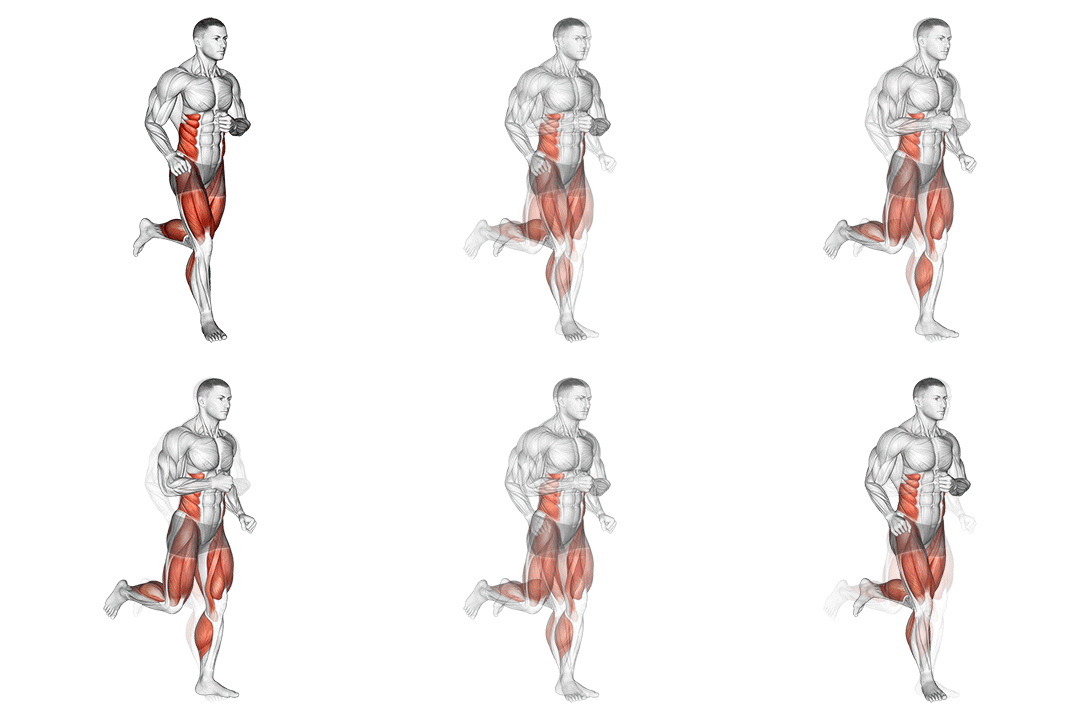
- 3Begin jogging in place, lifting your knees up towards your chest and landing softly on the balls of your feet.
- 4Maintain a steady pace and continue jogging for the desired duration or distance.
- 5Remember to breathe deeply and maintain good posture throughout the exercise.
Muscles worked
Primary
cardiovascular system
Secondary
quadriceps, hamstrings, calves
Common mistakes to avoid
Too much too soon
The most common cause of running injuries. New runners who jump to 30-minute runs from no base usually develop shin splints, knee pain, or stress fractures within 2-4 weeks. Build with the 10% rule: increase weekly mileage by no more than 10% per week. The patience pays off as resilience that lets you run for decades.
Heel striking with overstride
Landing with the heel far in front of the body absorbs impact through the knees rather than through the muscles and tendons. Aim to land with the foot underneath the body's center of mass, with a midfoot or slight forefoot strike. Most natural running form work focuses on this single change.
Running through pain
Mild discomfort during a hard run is normal. Sharp pain, especially in the knees, hips, or shins, is a warning sign. Continuing to run through significant pain almost always makes the issue worse. Take 2-3 days off, address the underlying cause (technique, mileage, footwear), and resume cautiously.
Running in worn-out shoes
Most running shoes lose their cushioning and support after 300-500 miles. Beyond that, they contribute to joint stress without the buffering they were designed to provide. Track your shoe mileage and replace before the cushioning fully breaks down.
Skipping warm-up and cool-down
Diving into a run cold or stopping abruptly at the end raises injury risk. 5 minutes of brisk walking before and after each run preps and recovers the cardiovascular and musculoskeletal systems gradually.
Easier and harder variations
Easier
Start with run-walk intervals — alternate 1 minute of jogging with 1-2 minutes of walking. This is the foundation of most successful couch-to-5k programs. Gradually shift the ratio toward more running and less walking over weeks. Or run on softer surfaces (grass, dirt trail) to reduce impact loading.
Harder
Progress to longer runs (30, 45, 60+ minutes), interval training (running fast for short periods with active recovery), or hill running. For serious training, structured plans for 5K, 10K, half marathon, and marathon distances provide clear progression. Running on uneven trail terrain adds proprioceptive demand that road running doesn't provide.
Alternative exercises
Brisk walking
Lower impact alternative that provides cardiovascular benefit with less joint stress. Useful as a starting point before running, or as cross-training on hard-running days.
Jump rope
Higher intensity in shorter time. Different stimulus (more anaerobic) than steady-state running. Useful complement when running mileage hits a ceiling.
Cycling
Non-impact cardio that supports running fitness without adding impact load. Excellent cross-training option to build cardio capacity while reducing injury risk from running mileage.
How to program the Run into your training
Running programming depends entirely on goals. Beginners need patient progression; experienced runners need varied stimulus. For absolute beginners (no running base): run-walk intervals 3 times per week. Start with 1 minute jog, 2 minutes walk, repeated for 20 minutes. Each week, slightly increase the jogging portion. Most people reach a continuous 20-minute jog within 6-10 weeks of consistency. For general fitness: 3 runs per week, 20-40 minutes each, at conversational pace. Total weekly mileage of 10-15 miles. This is enough for substantial cardiovascular and metabolic benefit without the injury risk of higher volumes. For 5K/10K racing: 4-5 runs per week, including 1-2 longer runs (45-90 minutes), 1 interval session, and 2-3 easy runs. Total weekly mileage of 20-35 miles depending on level. For weight management: 3-4 runs per week of 30-45 minutes at conversational pace, combined with strength training. Running alone doesn't drive significant fat loss; the combination of consistent running, strength training, and dietary management is what produces results. For mental health benefits: 20-30 minutes of running, 3-4 times per week, at any pace. The mental health effects appear at relatively modest volumes; you don't need to be a serious runner to access them. For longevity goals: 2-3 hours of running per week appears to capture most of the longevity benefit. Higher volumes don't add much benefit and start to introduce injury risk. Don't increase weekly mileage by more than 10% per week. Don't replace strength training with running; the combination supports health far better than either alone.
Recovery and frequency
Running recovery scales with intensity and volume. Easy runs at conversational pace recover quickly — 24 hours is plenty. Hard interval sessions or long runs need 48-72 hours to fully recover. The main warning signs are persistent joint pain (especially in knees, hips, and ankles), unusual fatigue lasting more than 48 hours, and elevated resting heart rate the next morning. Any of these suggest overtraining or an underlying issue. Take 2-3 days completely off, then resume at reduced volume. Long-term, sustainable running practice requires monthly easy weeks (reducing volume by 30-40%) and listening to the body's signals. Sleep is the most powerful recovery tool — runners who sleep 7-8 hours per night recover and adapt significantly faster than those getting 5-6. Hydration and protein intake support muscle recovery and adaptation. Foam rolling and gentle mobility work support tissue health between sessions.
Frequently asked questions
How many times per week should I run?
3-4 times per week is the sweet spot for general fitness and cardiovascular health. Higher frequencies are appropriate for serious training but require careful progression. Less than 2 times per week makes consistency difficult.
How long should my runs be?
Depends on goal and level. General fitness: 20-40 minutes per run. 5K training: include 1 long run of 45-60 minutes weekly. Half marathon training: long runs build to 90-120 minutes. Build gradually using the 10% rule.
How fast should I run?
Most of your running should be at conversational pace — slow enough that you can talk in full sentences. This is sometimes called Zone 2. Add 1-2 faster sessions per week (intervals, tempo runs) once you have a base of conversational running built.
Will running hurt my knees?
Not inherently — running is associated with better long-term joint health than sedentary lifestyle. Most knee issues come from rushing progression, poor form (overstriding), or worn-out shoes. Build patiently and most knees handle running fine.
What's the best way to start running?
Couch-to-5K programs are well-tested and accessible. They build from walk-run intervals to a continuous 5K run over 9-12 weeks. The structured progression is far more effective than trying to figure it out yourself.
Can I run every day?
Yes for experienced runners with a built-up base, but most people benefit from at least 2-3 rest days per week. Daily running for beginners almost always leads to injury. Even seasoned runners include easy days and at least 1 full rest day per week.
Useful tools for this exercise
Build a workout with the Run
Puna gives you guided bodyweight workouts you can do anywhere — no equipment, no gym, just structured progressions that build real strength.