Push-up
beginner strength exercise · body weight · targets pectorals
- Body part
- chest
- Primary target
- pectorals
- Equipment
- body weight
- Difficulty
- beginner
The push-up is the universal upper-body strength test, and for good reason: a single rep recruits the chest, shoulders, triceps, core, and lower body all at once, while a full set reveals exactly where your weak links live. It's the most-prescribed bodyweight exercise on the planet, the entry point for most calisthenics, and a movement that scales from absolute beginner (knee variations) to elite athlete (one-arm, planche, weighted) without ever needing equipment. What makes the standard floor push-up worth respecting is how unforgiving it is. There's no machine to support your form, no bench to stabilize your back, no spotter to bail you out — every part of your body has to coordinate. That's also what makes it diagnostic. If your hips sag, your core is weak. If your elbows flare, your shoulder mechanics need work. If your chest never reaches the floor, your range is incomplete. The push-up doesn't lie. Most people who can't do 20 clean push-ups don't lack strength as much as they lack practice with the position. Three sessions per week of focused push-up work, even at low rep counts, builds both the strength and the motor control faster than any single fancy variation. Treat the basic push-up as a permanent staple, not a stepping stone you graduate from.
Why train the Push-up?
- Trains the entire upper body chain — chest, shoulders, triceps, serratus — in one movement.
- Builds the core stability needed to maintain a rigid plank under load.
- Carries over to almost every other pressing exercise, including bench press and overhead variants.
- Requires zero equipment and minimal space — works in any room of any building.
- Scales infinitely: from kneeling to wall to floor to weighted to one-arm, the same pattern progresses for years.
- Provides honest feedback on form: the body tells you immediately when something is off.
How to do the Push-up: step by step
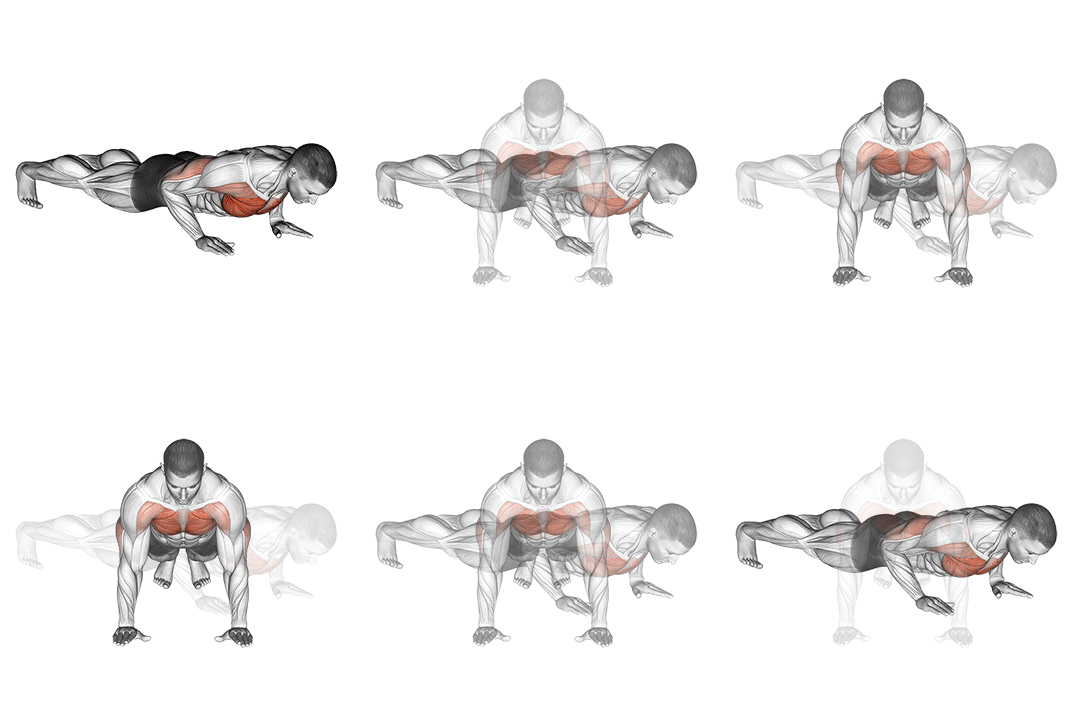
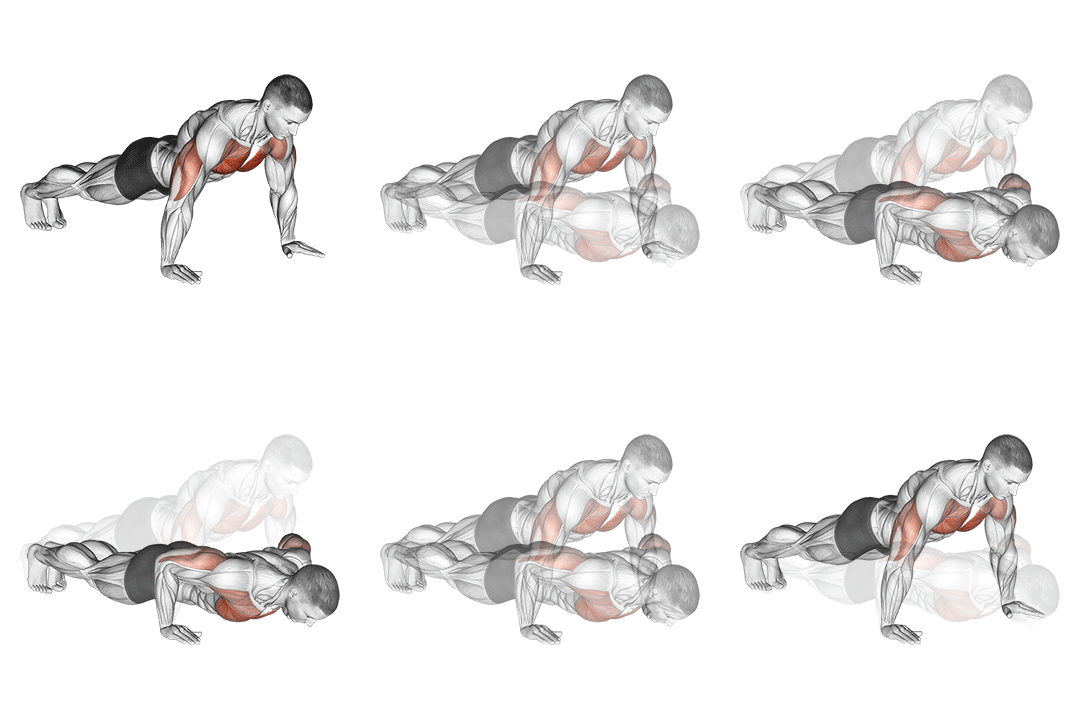
- 1Start in a high plank position with your hands slightly wider than shoulder-width apart and your feet together.
- 2Engage your core and lower your body towards the ground by bending your elbows, keeping your body in a straight line.
- 3Pause for a moment when your chest is just above the ground, then push yourself back up to the starting position by straightening your arms.
- 4Repeat for the desired number of repetitions.
Muscles worked
Primary
pectorals
Secondary
triceps, deltoids, core
Common mistakes to avoid
Sagging hips and an arched lower back
Without core engagement, the hips collapse toward the floor and the spine takes load it shouldn't. Squeeze your glutes and brace your abs as if bracing for a punch — the body should be a rigid plank from heels to head, no curve in the middle.
Flared elbows past 90 degrees
Letting the elbows drift wide stresses the rotator cuff and reduces chest activation. Keep the elbows at roughly 30-45 degrees from your torso — the upper arms should look like an arrow shape from above, not a T.
Partial range of motion
Stopping the descent halfway down trains a fraction of the muscle. The chest should come within an inch of the floor on every rep. If you can't, scale to incline push-ups until you have the strength for full range.
Looking up or dropping the head
Cranking the neck up to look forward — or dropping the chin to the chest — both stress the cervical spine. Keep the neck in line with the spine, eyes on the floor about 6 inches in front of your hands.
Bouncing off the chest at the bottom
Tapping the chest and rebounding uses tendon elasticity instead of muscle force. Pause for half a second at the bottom — that pause is where genuine strength is built and what separates a sloppy rep from a real one.
Easier and harder variations
Easier
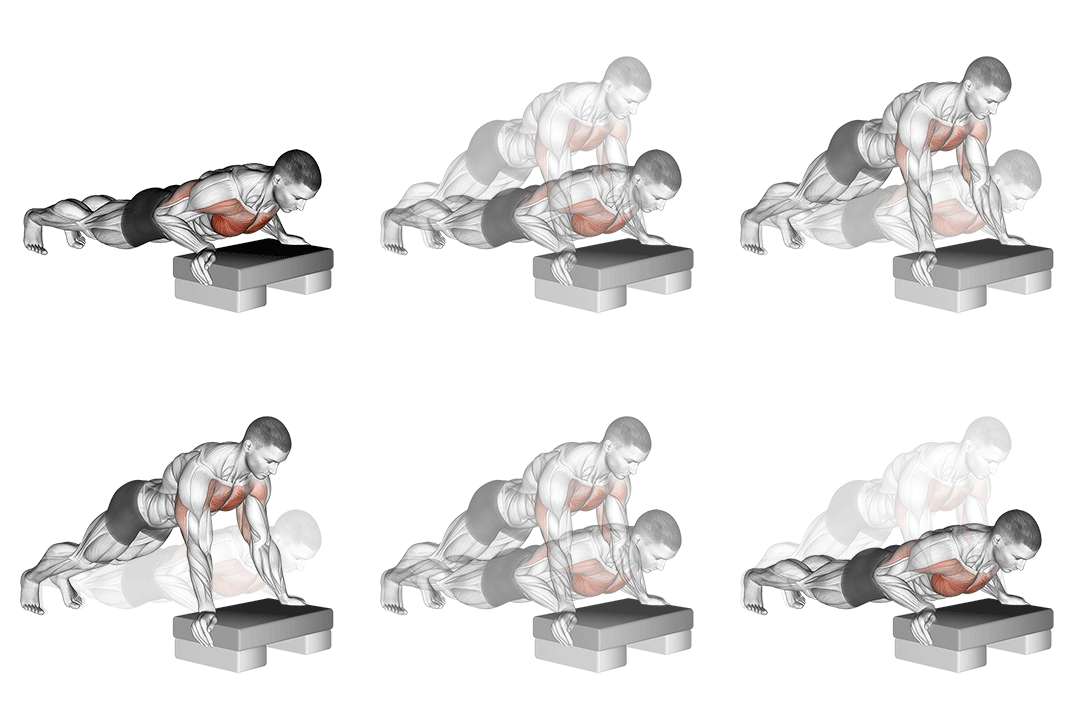
Kneeling push-ups or incline push-ups (hands on a bench or counter) are the standard regressions. Use whichever lets you complete 8-12 reps with the last 2 feeling hard. Don't graduate to floor push-ups until you have strict form at the easier variation.
Harder
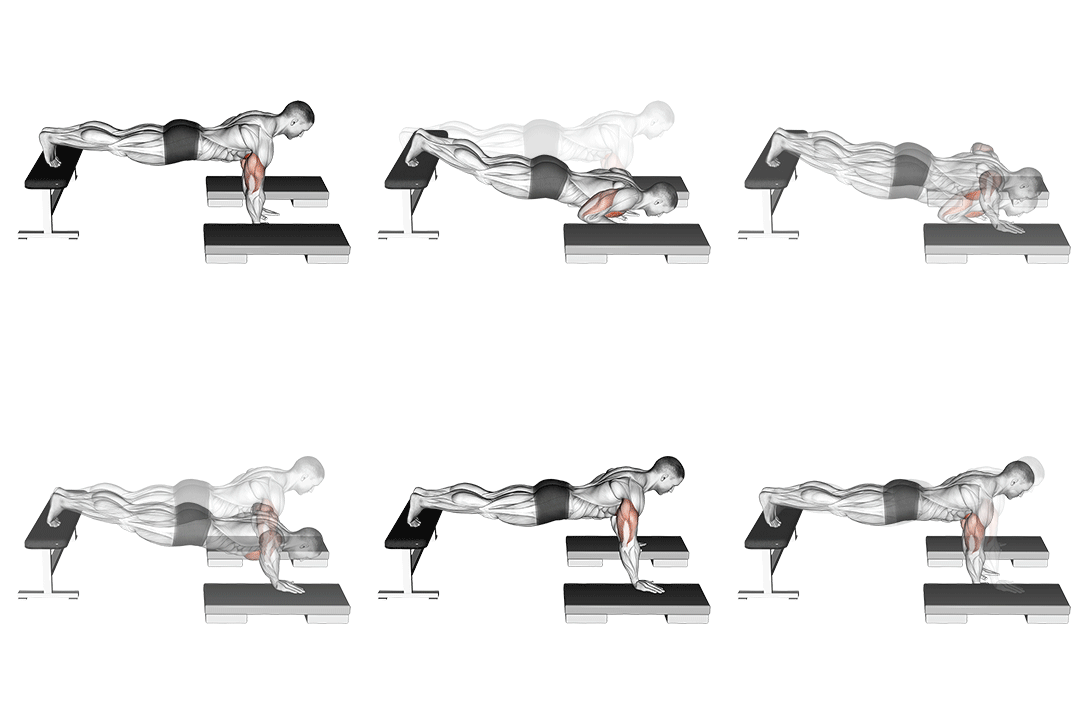
Decline push-ups (feet elevated) load more body weight onto the arms. Beyond that: archer push-ups, single-arm progressions, weighted push-ups (vest or plate on the back), and eventually one-arm push-ups.
Alternative exercises
Kneeling push-up
Direct regression that keeps the same upper-body mechanics with less load. Use it as a stepping stone or for higher-rep volume work when fatigued.
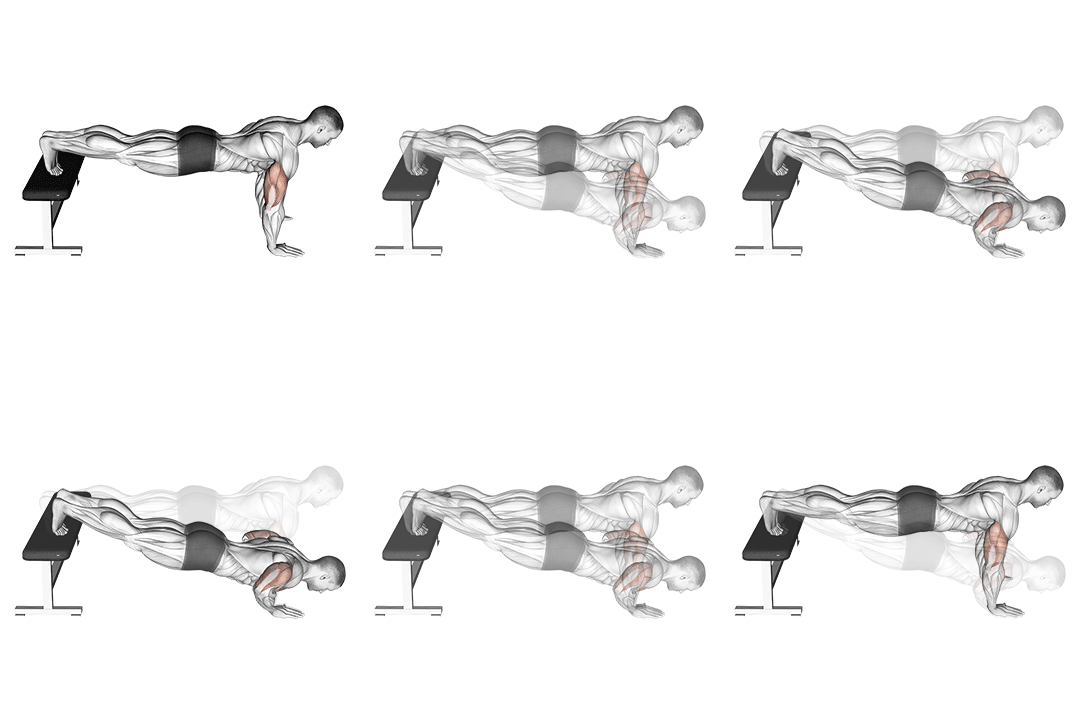
Incline push-up
Hands elevated on a bench or counter. Slightly different angle than kneeling but similar reduction in load. Better for people who struggle with the kneeling position.
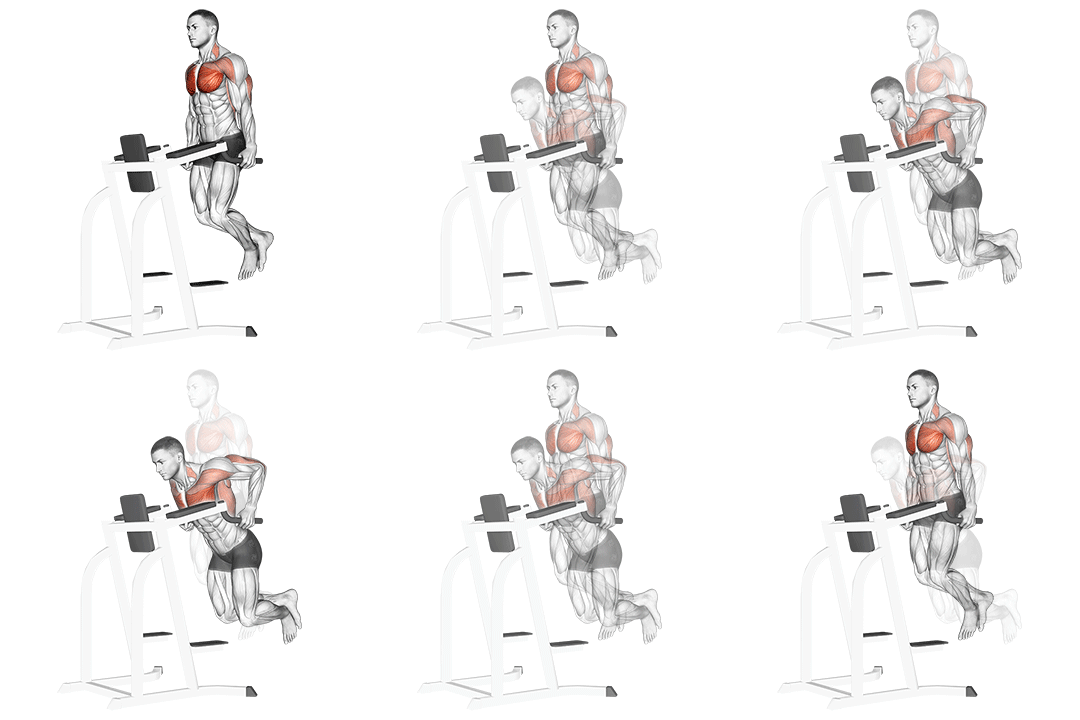
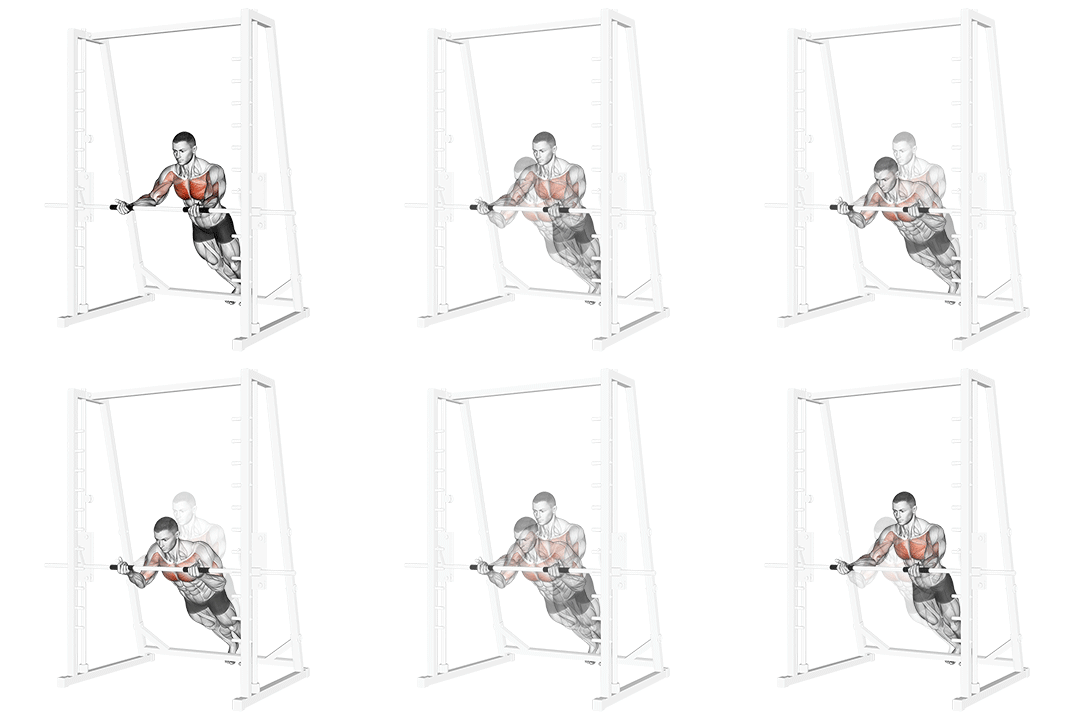
Chest dip
Same pressing pattern with full body weight on the arms but in a different plane. Builds toward more advanced calisthenics pressing.
How to program the Push-up into your training
The push-up is one of the few exercises you can train almost every day if you spread the volume. For pure strength: 3 sessions per week, 4-5 sets of 5-10 reps with 90-120 seconds rest, working at a difficulty where the last rep of each set is genuinely hard. Total weekly volume of 60-150 reps drives most strength gains. For endurance: higher rep sets (15-25 per set), 3-4 sets per session, 3-4 sessions per week. Total weekly volume of 200-400 reps. Build slowly to avoid elbow tendinopathy. A grease-the-groove approach also works well: do 30-50% of your max effort multiple times per day (e.g., 5-10 sets of 5 push-ups spread through the day). This builds strength and frequency tolerance without ever feeling like a workout. Within a session, push-ups belong as either the main horizontal press or as a warm-up before heavier work. Pair with a row variation (inverted rows, pull-ups) for balanced upper body development. A typical 20-minute home session: 4 sets of 8-12 push-ups, 4 sets of 8-12 inverted rows, 3 sets of 30-60 second front planks. Done 2-3 times per week, this maintains and slowly builds upper body strength indefinitely. If you're working toward a specific goal (50 push-ups in a row, one-arm push-up, etc.), program a dedicated push-up day 1-2 times per week with progressive overload, while still using push-ups in maintenance volume on other days.
Recovery and frequency
Push-ups in moderate volume (under 100 reps per session) generally allow training every 48 hours. Higher volumes or unfamiliar variations can leave the chest, shoulders, and triceps sore for 2-3 days, especially in the first weeks of training. Wrist tightness is common — spend 30-60 seconds on wrist circles and gentle extension stretches before each session. If wrists ache after sessions, switch to push-up handles or a fist position to reduce wrist extension. Foam rolling the chest and front delts once a week helps maintain the shoulder mobility push-ups can erode over time. Sleep is the biggest recovery lever; everything else is supplementary.
Frequently asked questions
How many sets and reps of push-ups should I do?
For strength: 3-5 sets of 5-10 reps with 90-120 seconds rest. For endurance: 3-4 sets of 15-25 reps with 60-90 seconds rest. Aim for 60-200 total weekly reps depending on your goal.
How often should I train the push-up?
2-4 times per week works for most people. Beginners may benefit from daily lower-volume practice (greasing the groove); advanced trainees should give 48 hours between heavy push-up sessions.
Why can't I do a single push-up?
Almost always a strength gap, not a flexibility issue. Start with wall push-ups, then incline push-ups on a counter, then a bench, then knees, then floor. Most adults reach a clean floor push-up within 6-12 weeks of consistent progression.
How do I increase my push-up max from 10 to 50 reps?
Total weekly volume is the key driver. Increase from 100 reps per week to 300-400 over 3-4 months by adding sets, frequency, or short rest density work. Test your max every 2-4 weeks, not weekly.
Are push-ups enough for chest development?
For general fitness and visible chest definition, yes. For maximum chest hypertrophy, dedicated weighted pressing (bench press, dumbbell press) gives more progressive load — but push-ups with progressively harder variations (decline, weighted, one-arm) come close.
Should I do push-ups every day?
Spread out, yes — many trainees benefit from daily low-volume push-up practice (grease-the-groove). For high-volume or near-failure training, every other day with full rest is better. Listen to elbow and shoulder feedback as the limiting factor.
Useful tools for this exercise
Build a workout with the Push-up
Puna gives you guided bodyweight workouts you can do anywhere — no equipment, no gym, just structured progressions that build real strength.