Decline Push-up
intermediate strength exercise · body weight · targets pectorals
- Body part
- chest
- Primary target
- pectorals
- Equipment
- body weight
- Difficulty
- intermediate
The decline push-up flips the script on the incline version: by elevating your feet, you transfer roughly 70% of your body weight onto your arms (vs. ~64% in a flat push-up), and you also shift mechanical emphasis toward the upper chest and front delts. It's the natural next step once standard push-ups feel easy for sets of 15 or more, and it's a significantly cheaper progression than buying a weighted vest. The higher you elevate your feet, the more the movement starts resembling a vertical press, with the steepest declines bordering on a handstand push-up. That makes the decline push-up unique in calisthenics — it's one of the few movements that lets you scale the load smoothly from "slightly harder than a push-up" all the way to "almost a handstand" using only the height of your feet. Train it strict — speed and bouncing rob both the strength benefit and the shoulder protection it can offer. The decline angle puts more stress on the rotator cuff and the cervical spine if form breaks down, so it's worth treating each rep as a deliberate movement rather than a count. Done well over 3-6 months, decline push-ups can take an intermediate athlete to genuinely impressive upper body pressing strength without ever touching a barbell.
Why train the Decline Push-up?
- Loads the upper chest and front delts more than a flat push-up, filling a gap most bodyweight programs miss.
- Gives you genuine progression once standard push-ups become too easy without needing weights.
- Improves overhead pressing strength as a side effect, since the angle shifts toward vertical.
- Forces stronger core engagement than flat push-ups — your abs have to fight the forward lean of your torso.
- Scales smoothly: a low step gives mild decline, a couch arm a steep one, with predictable difficulty between.
- Builds shoulder stability through ranges that pure flat pressing never trains.
How to do the Decline Push-up: step by step
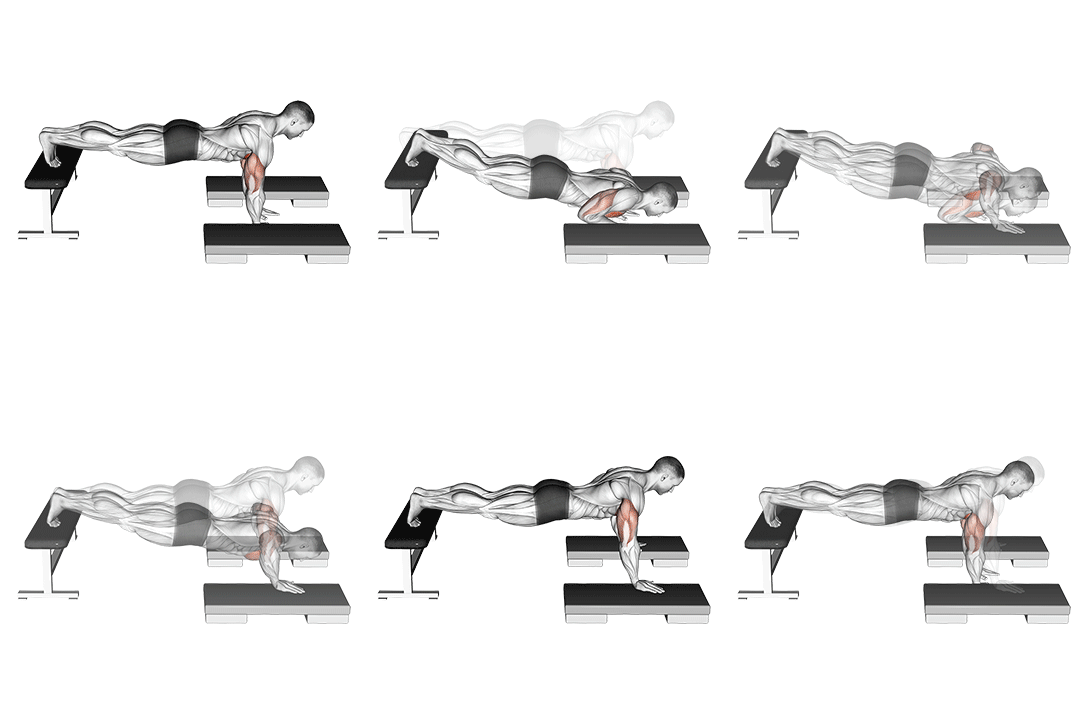
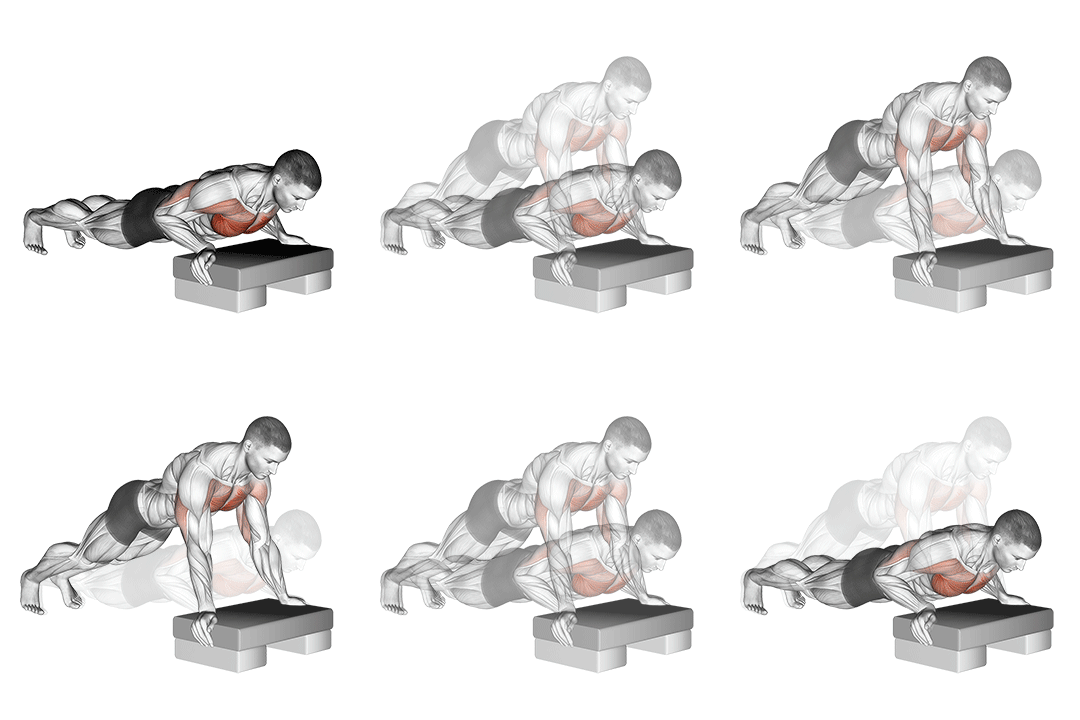
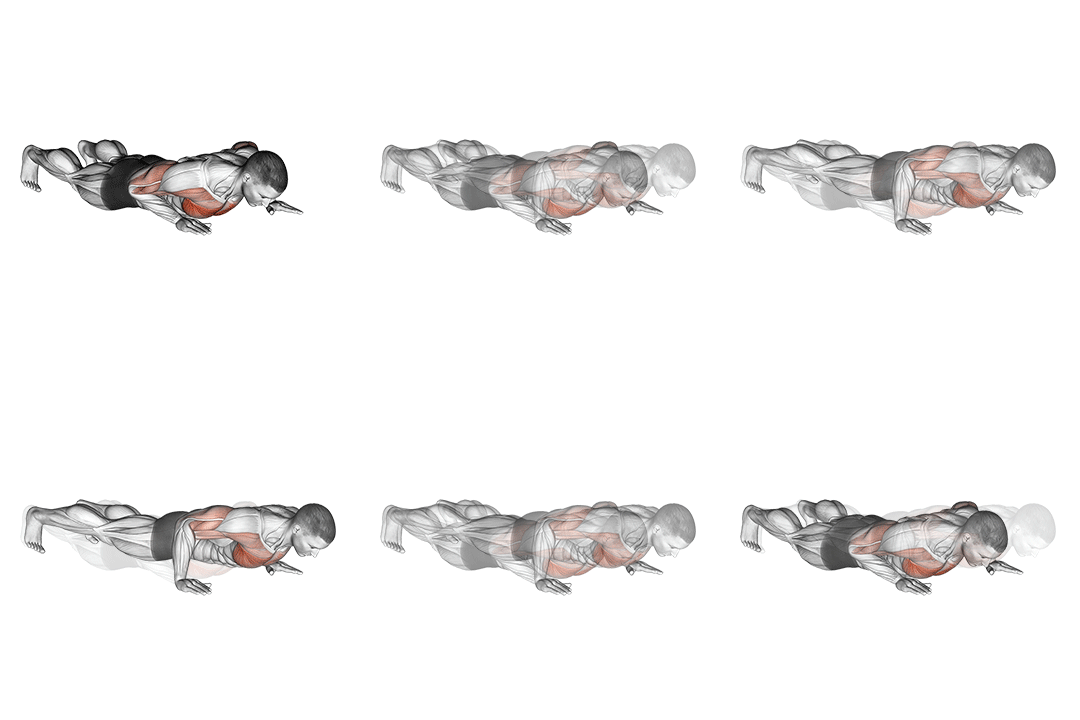
- 1Place your hands on the ground slightly wider than shoulder-width apart, with your feet elevated on a stable surface.
- 2Keep your body in a straight line from head to toe, engaging your core muscles.
- 3Lower your chest towards the ground by bending your elbows, keeping them close to your body.
- 4Push through your palms to extend your arms and return to the starting position.
- 5Repeat for the desired number of repetitions.
Muscles worked
Primary
pectorals
Secondary
triceps, shoulders
Common mistakes to avoid
Letting the head drop below the hands
When fatigue hits, the head dips first and the elbows flare. Keep your gaze on the floor 6 inches in front of your hands and your neck in line with your spine — this protects the cervical spine and keeps the chest engaged.
Going too steep too fast
Jumping from flat push-ups to a chest-height bench under your feet is a recipe for shoulder strain. Start with a low step (6-12 inches) and only progress when 3 sets of 12 feel controlled at that height.
Bouncing off the chest at the bottom
Letting your chest tap the floor and rebounding turns the exercise into a momentum drill. Pause for half a second at the bottom of every rep — the muscle does its work in that pause.
Hyper-extending the lower back to compensate
When the front delts fatigue, the body arches the lower back to push out of the hole. Keep the abs braced and the glutes squeezed throughout — if the back arches, you're past your sets' useful range.
Setting feet on an unstable surface
A wobbly chair or rolling object makes the exercise about balance instead of strength. Use a fixed bench, sturdy step, or solid couch arm — stability of the base lets you focus on the press.
Easier and harder variations
Easier
Drop your feet to the floor and do flat push-ups for 3 sets of 12-15 reps before re-introducing the decline. If flat push-ups are also too hard, regress to incline push-ups on a knee-height bench.
Harder
Steepen the angle by elevating your feet on a chair seat instead of a step. Once chair-height decline push-ups are easy for 10 reps, progress to pike push-ups or wall handstand push-ups for true vertical pressing.
Alternative exercises
Pike push-up
From a downward dog position, lower the head toward the ground and press back up. Trains a similar vertical press pattern but with adjustable depth via foot position.
Diamond push-up
Hands close together under the chest. Targets the triceps more aggressively while still hitting the chest — useful contrast to the upper chest emphasis of the decline.
Archer push-up
Wide hand stance with one arm doing most of the work per rep. Builds toward one-arm push-up strength while staying in the horizontal plane.
How to program the Decline Push-up into your training
Use decline push-ups as your primary horizontal press once flat push-ups are easy for 3 sets of 15. Run them for 6-12 week cycles: increase the foot-elevation height every 2 weeks, dropping rep count when you do. A typical week: 2-3 pressing sessions, with decline push-ups as the main lift. Sets and reps in the 4 sets of 6-10 range with 90-120 seconds rest. Total weekly volume of 40-80 reps is the sweet spot — less doesn't drive adaptation, more usually leads to elbow tendinopathy. Combine in a session with a horizontal pull (inverted row) and a vertical pull (pull-up) for balanced shoulder development. A full home upper body session: 4 sets of 8 decline push-ups, 4 sets of 6-10 inverted rows, 3 sets of 5-8 pull-ups (or negatives if not yet possible), 3 sets of 30-second hollow holds. Done twice per week, this builds genuine pressing strength in 3-6 months. If you're working toward handstand push-ups, alternate decline push-ups with pike push-ups week to week to expose the shoulders to both pressing planes. Once decline push-ups with feet on a chair feel easy for 8+ reps, you have the strength base to start serious wall handstand training.
Recovery and frequency
Decline push-ups are taxing on the front delts in ways flat push-ups aren't, so 48-72 hours between sessions is non-negotiable, especially in the first month of training. Anterior shoulder soreness in the first 2 weeks is normal; sharp pain at the front of the joint is not — back off the elevation if you feel it. The cervical spine also takes more load when the head hangs below the hands, so add 30 seconds of chin tucks or gentle neck mobility before each session. Foam rolling the upper back and lats once a week reduces the postural stiffness this exercise tends to create. Sleep is the biggest recovery lever — pressing strength gains come overnight, not in the gym.
Frequently asked questions
How many sets and reps of decline push-ups should I do?
3-4 sets of 8-12 reps with 60-90 seconds rest. The decline angle adds load, so don't expect the same rep counts as flat push-ups — drop reps and prioritize controlled tempo.
How often should I train the decline push-up?
2-3 times per week. Because the upper chest and front delts get hit harder than usual, give them at least 48 hours before another decline session.
Will decline push-ups help me reach a handstand push-up?
Yes — they're one of the best floor-based stepping stones. The steeper your decline, the closer the angle gets to vertical pressing. Combine them with pike push-ups for a smooth progression.
What height should my feet be elevated to?
Start with 6-12 inches (a low step) for the first 4 weeks. Progress to bench height (about 18 inches) once you hit 3 sets of 12 cleanly. Chair seat height (~24 inches) is the next step. Beyond that you're in pike/handstand territory.
Are decline push-ups bad for the shoulders?
Done with controlled tempo and a height your strength matches, no. The risk comes from going too steep too fast or letting the elbows flare to 90 degrees. Both are form errors, not flaws of the exercise itself.
Decline push-ups vs bench press: which is better?
Different tools. Bench press scales easily by adding weight and trains pure pressing force. Decline push-ups build pressing endurance, shoulder stability, and require no equipment. For complete development, both have value; for home training, decline push-ups cover most of what bench press offers.
Useful tools for this exercise
Build a workout with the Decline Push-up
Puna gives you guided bodyweight workouts you can do anywhere — no equipment, no gym, just structured progressions that build real strength.