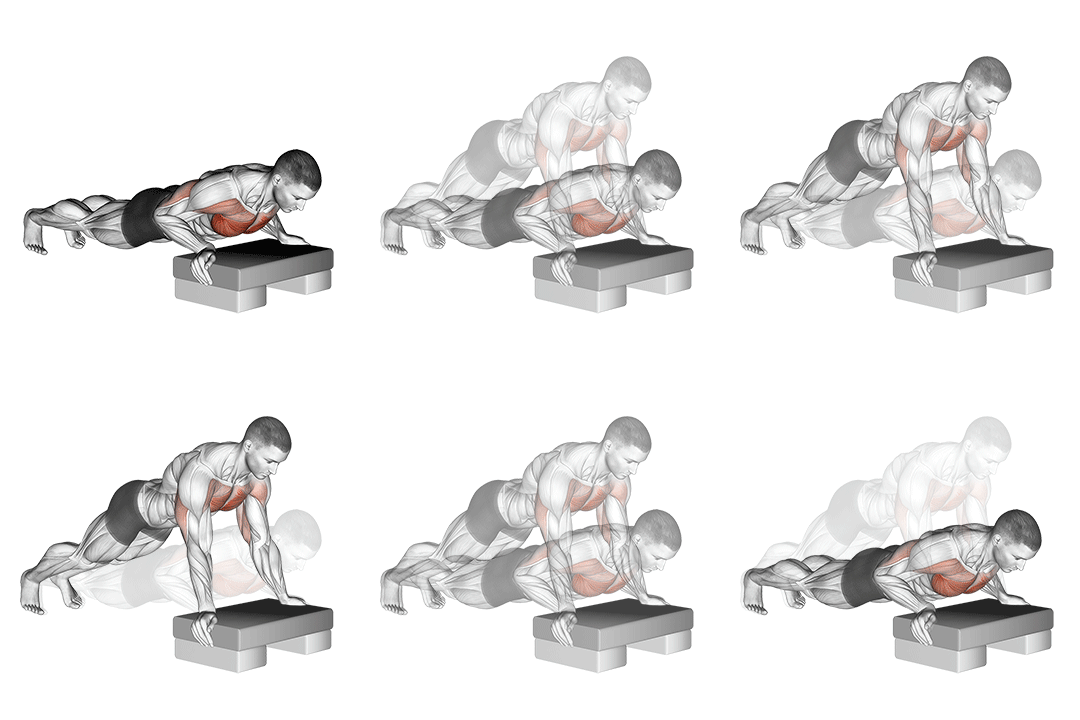
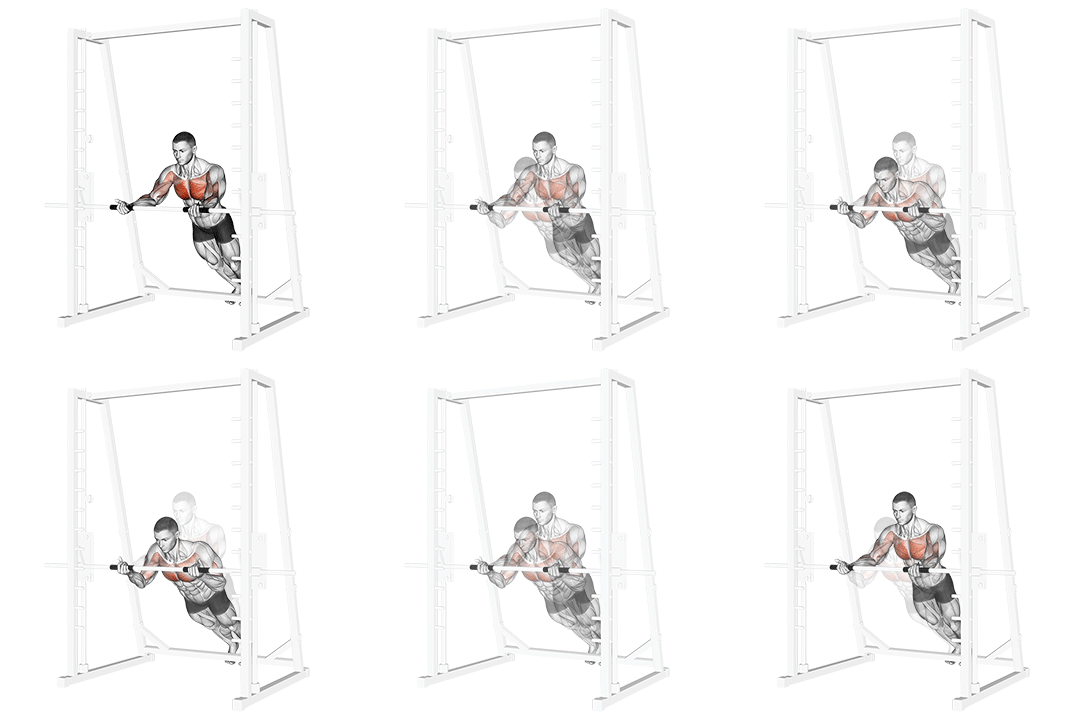
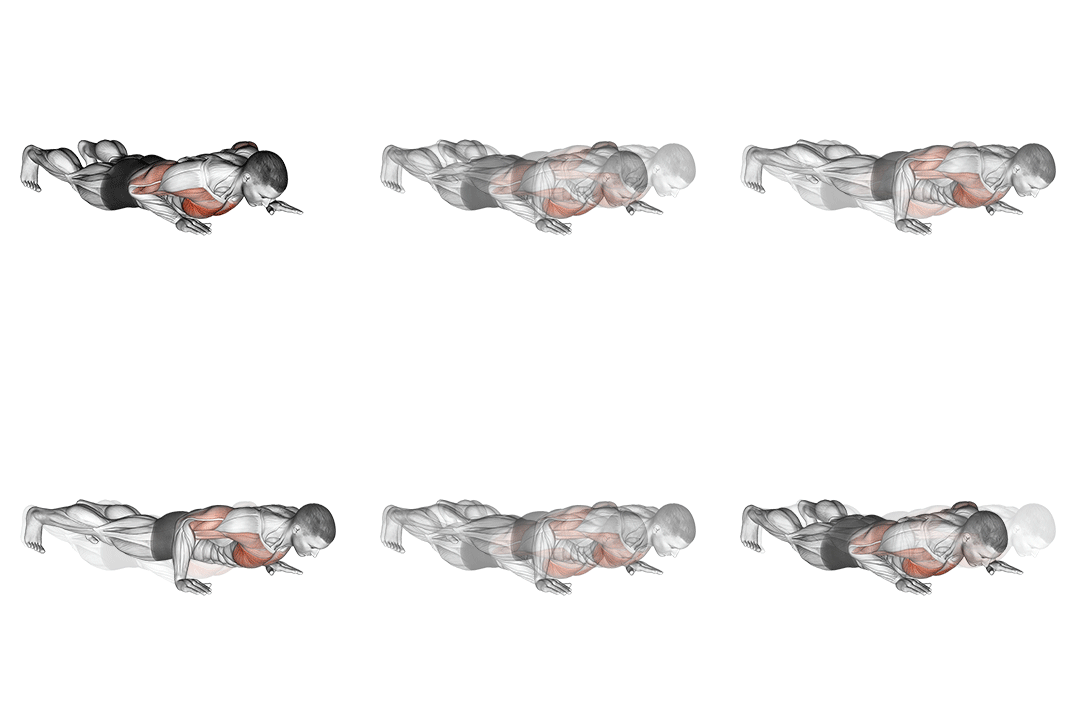
Isometric Wipers
advanced strength exercise · body weight · targets pectorals
- Body part
- chest
- Primary target
- pectorals
- Equipment
- body weight
- Difficulty
- advanced
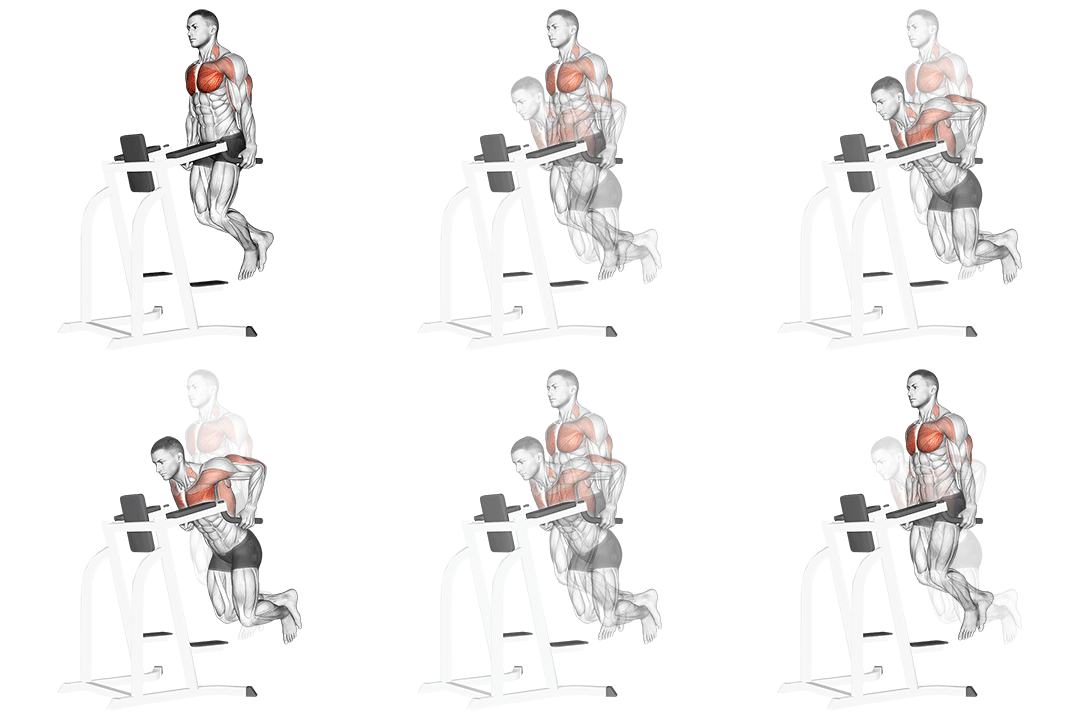
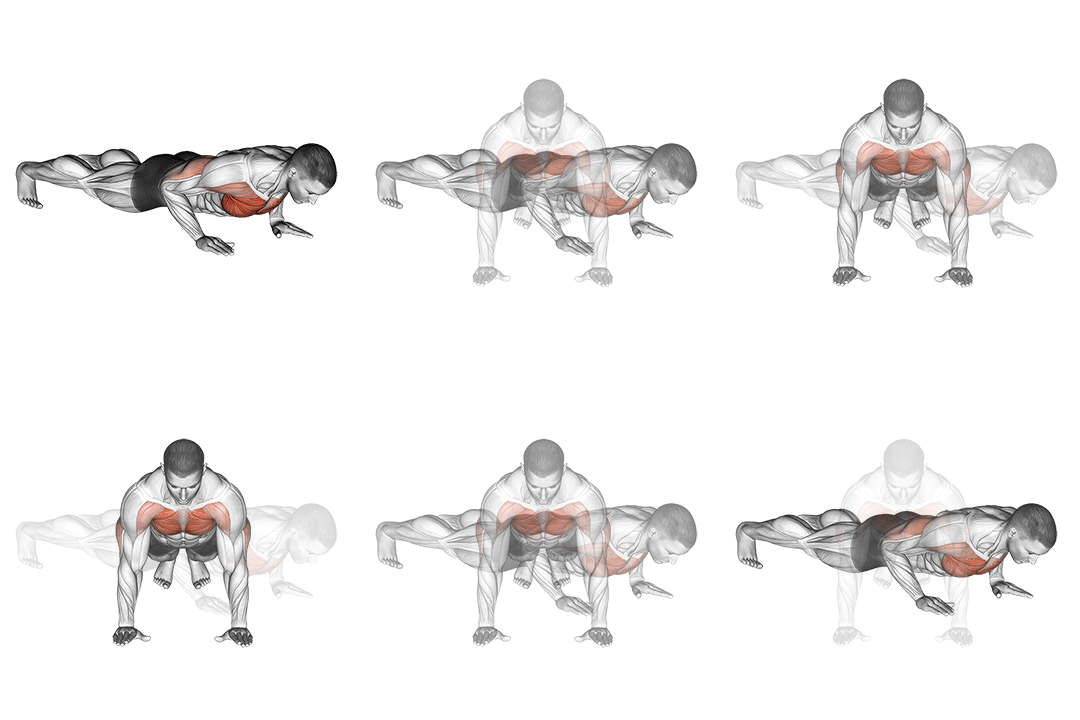
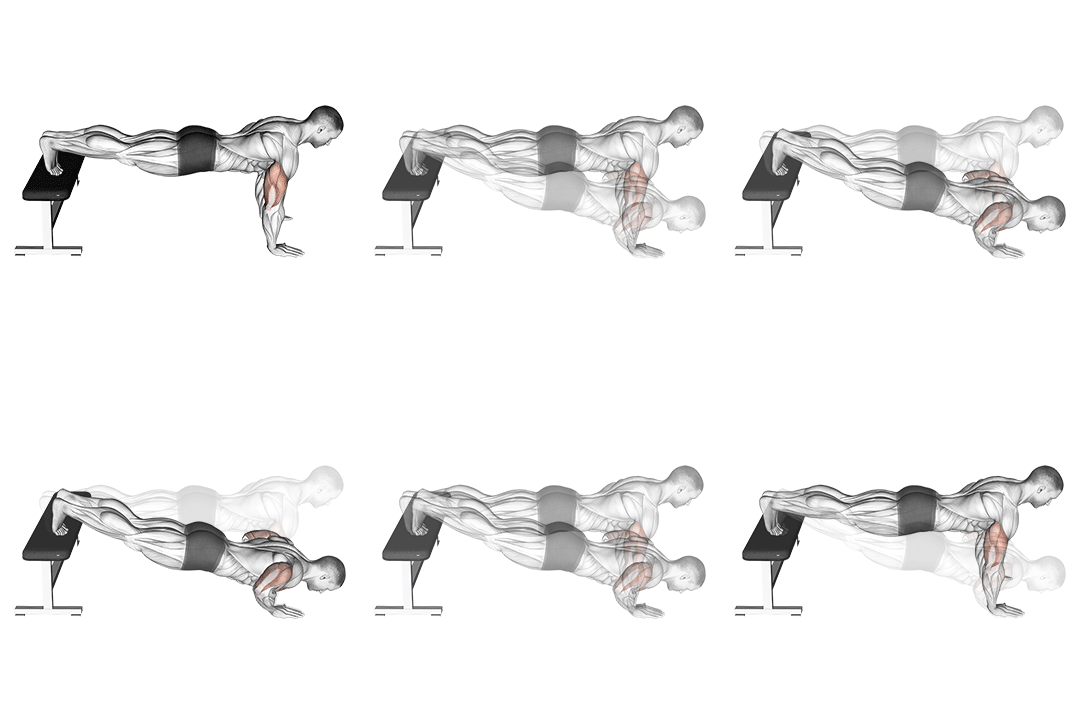
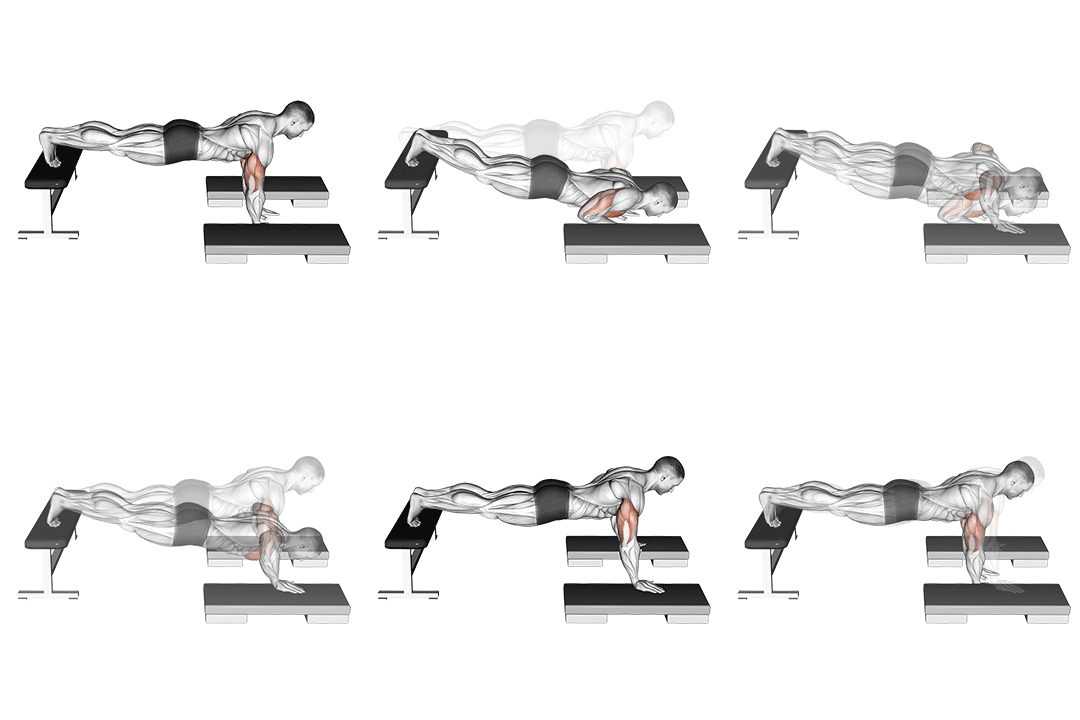
Despite the name, isometric wipers are an oblique-and-core exercise rather than a chest movement. Lying on the back with arms extended sideways, you lift the legs straight up and slowly lower them to one side, hold, and return — the classic 'windshield wiper' motion. The pectorals get involved isometrically as the arms press into the ground for stabilization, but the work is overwhelmingly in the obliques, hip flexors, and lower abs. This is one of the most demanding bodyweight core exercises in existence. The combination of long-lever load (legs straight rather than tucked), slow controlled motion, and the rotational demand puts severe stress on the obliques and the deep transverse abdominis. Most trainees who can rep out 50 sit-ups can barely complete 5 controlled reps per side of straight-leg wipers. The leverage is brutal in a way that's instructive — there's nowhere to cheat from, and weakness anywhere in the core chain shows up immediately. The isometric component refers to the brief hold at the bottom of each rep, where you pause with the legs hovering just above the floor on one side before reversing the motion. This pause is what separates this exercise from standard windshield wipers, where the legs sweep continuously side to side. The pause demands sustained core engagement under maximum lever, which produces the kind of core strength that translates to hanging leg raises, gymnastic skills, and rotational athletics.
Why train the Isometric Wipers?
- Builds severe oblique strength and rotational core control through long-lever loading.
- Trains the deep transverse abdominis and the entire anterior core chain simultaneously.
- Develops the core-arm-shoulder integration needed for advanced bodyweight skills.
- Carries over to rotational sports (golf, tennis, baseball, MMA) where core strength under rotation matters.
- Strengthens hip flexors through the long-lever leg lift and lowering pattern.
- Provides clear progression toward gymnastic skills like front lever and dragon flags.
How to do the Isometric Wipers: step by step
- 1Start by lying flat on your back on a mat or bench.
- 2Extend your arms straight out to the sides, perpendicular to your body.
- 3Engage your core and lift both legs off the ground, keeping them together and straight.
- 4Slowly lower your legs to one side, aiming to touch the ground with your feet while maintaining control.
- 5Pause for a moment, then use your core to lift your legs back to the starting position.
- 6Repeat the movement, this time lowering your legs to the opposite side.
- 7Continue alternating sides for the desired number of repetitions.
Muscles worked
Primary
pectorals
Secondary
shoulders, triceps, core
Common mistakes to avoid
Letting the lower back arch off the ground
When the legs lower to one side, the lumbar spine wants to extend and the lower back wants to arch up. This places shear stress on the discs and reduces the abdominal involvement. Press the lower back firmly into the ground throughout. If you can't keep it pressed, regress to bent-knee variations.
Going too low to one side
Touching the floor with the feet on each side is the classic version, but most trainees can't control the descent that far. Stop the lowering phase 6-12 inches from the floor — the obliques disengage as the legs approach the ground, and the load transfers to passive structures. The middle range is where the work happens.
Using momentum to swing
Speed defeats the purpose. The rep should take 4-6 seconds total — slow lowering, brief pause, controlled return. Swinging the legs side to side trains nothing useful and stresses the lumbar spine. If you can't perform slow reps, reduce range or regress to bent knees.
Bending the knees during the rep
Bent knees shorten the lever arm and dramatically reduce the demand on the core. This is the main regression for people who can't yet do straight-leg versions, but it's not the same exercise. If you start straight and end bent, you're cheating the rep. Either commit to straight legs or commit to the bent-knee progression.
Skipping the pause at the bottom
The 'isometric' part is what distinguishes this from standard wipers. A 1-2 second pause at the bottom of each rep is required — it's where the transverse abdominis works hardest. Without the pause, you're doing standard wipers, which are easier but less productive.
Easier and harder variations
Easier
Bend the knees toward the chest before lowering — this dramatically reduces lever arm and load. Or keep the knees bent at 90 degrees throughout (called knee wipers). For beginners, even the bent-knee version is genuinely demanding; build to 8-10 reps per side before introducing straight legs.
Harder
Increase the pause duration to 3-5 seconds at the bottom of each rep. Or progress to hanging windshield wipers (from a pull-up bar) — the same motion with bodyweight against gravity. For maximum challenge, perform from gymnastic rings, where the unstable support multiplies the core demand.
Alternative exercises
Hanging leg raise
Different motion (vertical lift rather than rotation) but trains similar core lever strength. Often easier to learn and serves as a strength prerequisite for hanging wipers.
Dragon flag
Bruce Lee's signature core exercise. Different motion but similar lever-load demand. Compare and contrast — both are valuable in a core-strength program.
Russian twist
Different position (seated) but similar rotational core training. Lower lever arm load, easier on the lumbar spine, but trains similar tissue.
How to program the Isometric Wipers into your training
Isometric wipers belong as advanced core work, not as a beginner introduction. They demand prerequisite strength and they punish trainees who skip prerequisites with lower back issues. Prerequisites: 60-second hollow body hold, 3 sets of 10 hanging leg raises with bent knees. If you can't do these, build them first. The wipers will be more productive once the foundation is in place. Sets and reps: 3 sets of 5-8 reps per side with 60-90 seconds rest. The reps are low because the load is high and the lever is long. Total weekly volume of 30-50 reps per side is plenty. Frequency: 2 times per week. The core recovers fast, but the lower back and hip flexors take longer because of the long-lever loading. More than twice per week tends to produce hip flexor or lumbar issues. In a core session: place isometric wipers as a primary core exercise, before any tempo or pump work. Sample session: 3 sets of 6 wipers per side, 3 sets of 30-second hollow holds, 3 sets of 10 reverse crunches, 2 sets of 60-second front planks. Total core work in 15 minutes. For those building toward dragon flags or front levers: wipers earn their place in the progression as a transitional exercise. Pair with tucked planche holds and inverted hangs as part of a serious gymnastic strength program. Don't program wipers on the same day as heavy deadlifts or squats — the cumulative lower back load can exceed what the joint tolerates without irritation.
Recovery and frequency
Isometric wipers are demanding on the obliques, deep core, hip flexors, and lower back. The lower back is usually the limiting recovery factor — soreness or stiffness in the lumbar spine warrants reducing volume and adding lower-back-friendly accessory work. 48-72 hours between sessions is the minimum. The hip flexors recover slower than other muscle groups because they're chronically tight in most adults; sore or sticky hip flexors after a session is normal and improves with consistent training. Watch for sharp pain in the lower back during or after sessions — this points to lumbar disc or facet joint stress, and warrants stopping the exercise entirely until the issue resolves. Replace temporarily with lower-load core work (planks, hollow holds, dead bugs) and consult a physiotherapist if pain persists. Standard core soreness in the abs and obliques is normal and fades within 48-72 hours.
Frequently asked questions
How many sets and reps of isometric wipers should I do?
3 sets of 5-8 reps per side with 60-90 seconds rest. The high lever load means low reps drive the stimulus. Total weekly volume of 30-50 reps per side is plenty.
How often should I do this exercise?
2 times per week. The lower back and hip flexors take 48-72 hours to recover. More frequent training tends to produce lumbar or hip flexor issues.
Is this safe for my lower back?
Generally yes when prerequisites are met (60-second hollow hold, 10 hanging leg raises) and form is clean. Risky for trainees who skip prerequisites or push range too far. Sharp lower back pain warrants stopping the exercise entirely.
How is this different from standard windshield wipers?
The isometric pause at the bottom of each rep — typically 1-2 seconds — is what distinguishes this version. The pause demands sustained core engagement at maximum lever, producing more stimulus than continuous swinging.
Will this help my golf or tennis swing?
Yes, indirectly. Rotational core strength and control under long-lever load carries over to rotational sports. Many golfers and tennis players notice improved control and power within 4-6 weeks of consistent rotational core training.
Why are my hip flexors sore the next day?
The straight-leg lever heavily recruits the hip flexors during the rep. Hip flexor soreness is normal and improves with consistent training. If the soreness becomes chronic or sharp, reduce volume and add hip flexor mobility work (couch stretch, kneeling lunge stretch).
Useful tools for this exercise
Build a workout with the Isometric Wipers
Puna gives you guided bodyweight workouts you can do anywhere — no equipment, no gym, just structured progressions that build real strength.