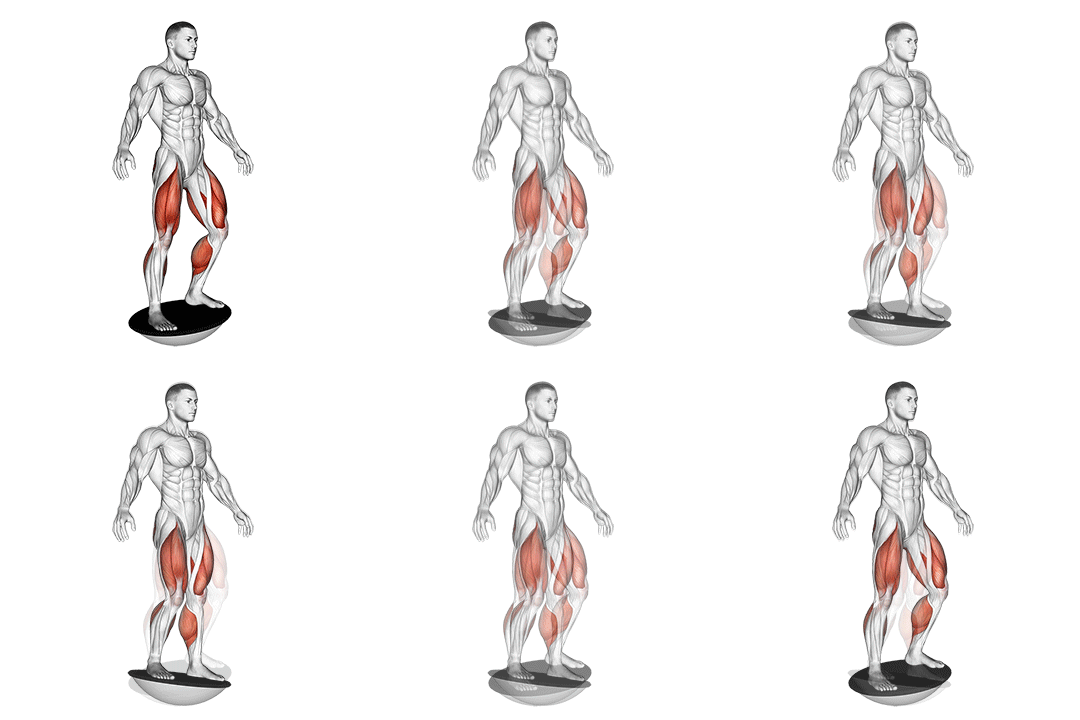
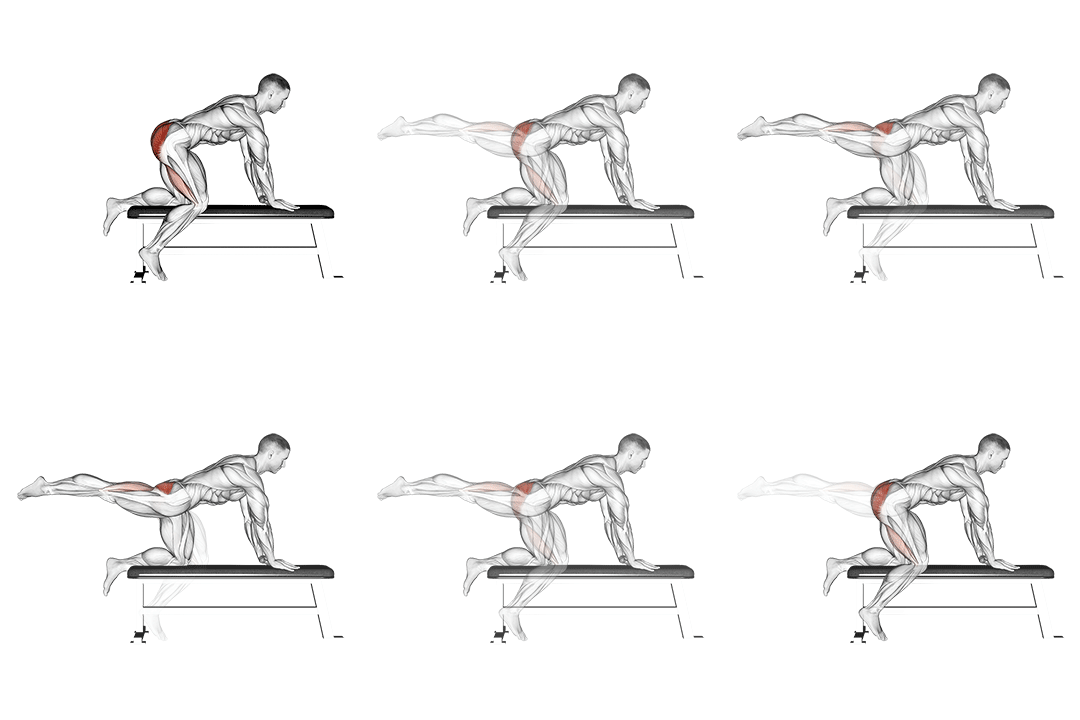
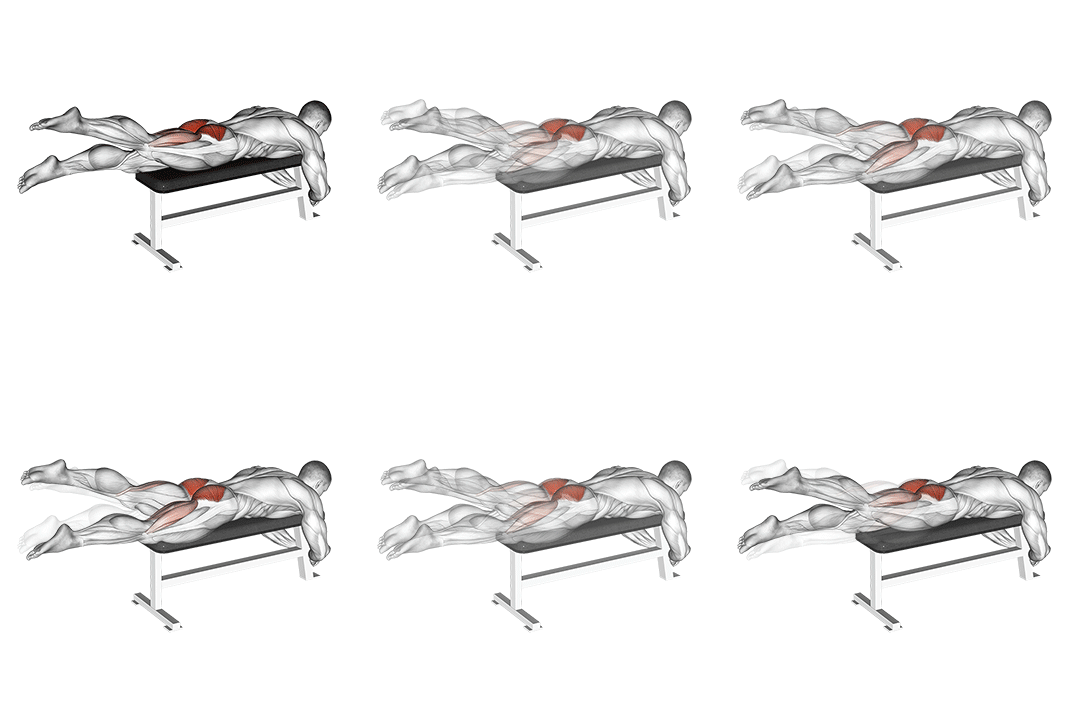
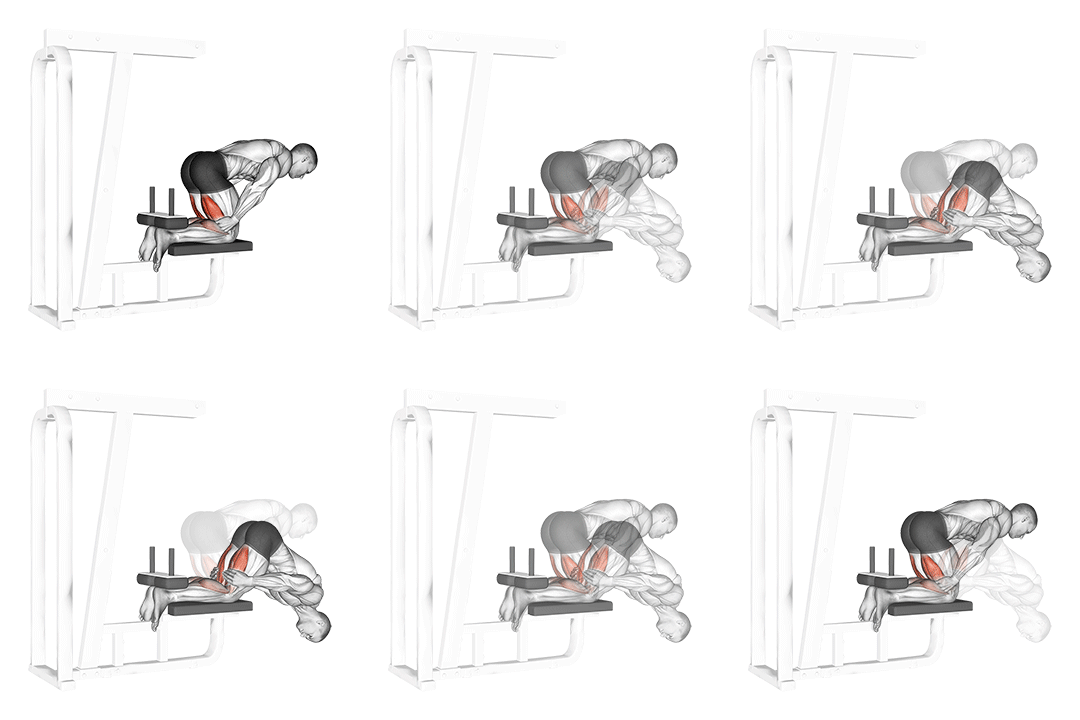
Walking Lunge
intermediate strength exercise · body weight · targets glutes
- Body part
- upper legs
- Primary target
- glutes
- Equipment
- body weight
- Difficulty
- intermediate
The walking lunge takes the basic lunge and turns it into a continuous movement: instead of stepping forward and returning to start, you bring the back foot forward into the next lunge, walking across a space one rep at a time. The added dynamic component challenges balance, demands more coordination, and elevates the cardiovascular demand significantly compared to stationary lunges. What makes the walking lunge worth the time is the way it loads each leg in succession under fatigue. Stationary lunges let you rest the working leg between reps; walking lunges keep the legs alternating with no break, building a different kind of muscular endurance. Add weight (dumbbells at the sides, a barbell on the back) and walking lunges become one of the most demanding lower-body strength exercises in any program — both quads and glutes get hammered, and the core has to work hard to stabilize the load through each step. It's also a useful test of unilateral strength. Once you can do 20 strict walking lunges per leg with body weight, you've built a real foundation; with added load, the metrics keep scaling for years. Walking lunges are particularly valuable for athletes who need lower-body strength expressed in motion — running, ball sports, climbing — because they train the legs in the kind of dynamic, alternating pattern those activities demand.
Why train the Walking Lunge?
- Combines strength, balance, and cardio in one efficient unilateral exercise.
- Trains each leg under fatigue without rest periods between reps — different stimulus than stationary lunges.
- Reveals and corrects strength asymmetries between left and right legs.
- Scales smoothly from bodyweight to heavy weighted variations for decades of progression.
- Carries over directly to running, sports, and any activity requiring dynamic single-leg work.
- Requires only an open space — works in a yard, park, hallway, or gym.
How to do the Walking Lunge: step by step
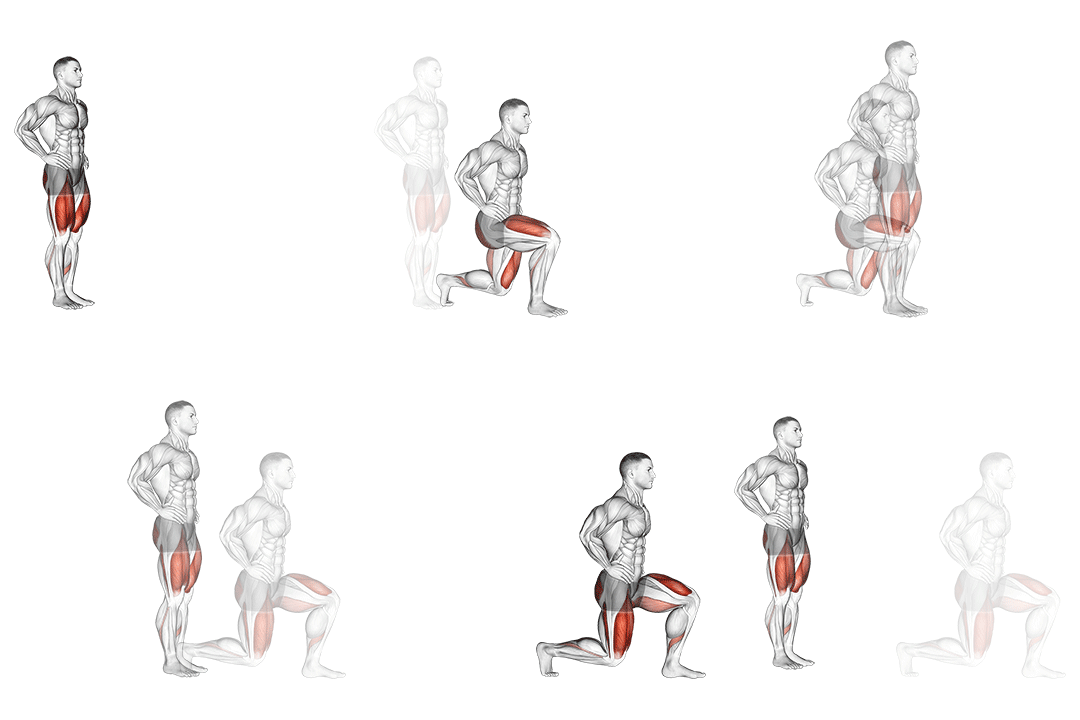
- 1Stand with your feet shoulder-width apart.
- 2Take a step forward with your right leg, lowering your body into a lunge position.
- 3Keep your torso upright and your front knee aligned with your ankle.
- 4Push off with your right foot and bring your left foot forward, stepping into a lunge position with your left leg.
- 5Continue alternating legs and walking forward, maintaining a controlled and steady pace.
- 6Repeat for the desired number of repetitions.
Muscles worked
Primary
glutes
Secondary
quadriceps, hamstrings, calves
Common mistakes to avoid
Letting the front knee drift past the toes
When the front knee moves significantly past the front foot, load shifts forward into the patellar tendon. Step long enough that the front shin stays close to vertical at the bottom of each lunge — the knee tracks over the ankle, not past the toes.
Letting the back knee crash into the floor
Slamming the back knee down stresses the joint. Lower the back knee with control until it's an inch or two from the floor, then drive forward into the next step.
Letting the torso lean forward
Pitching the chest forward shifts load onto the lower back and reduces glute engagement. Keep the torso upright throughout each lunge — chest tall, eyes on the horizon.
Losing balance and stepping wide to recover
Each step should land directly in front of the previous foot, in a straight line. If you find yourself stepping wide for balance, slow down and shorten the steps until you have control.
Rushing through reps when carrying weight
With dumbbells or a barbell, walking lunges become significantly harder. The temptation is to power through fast — but speed under load means form decay. Slow each step down: 1-2 seconds to lower into the lunge, brief pause, 1-2 seconds to drive up and step.
Easier and harder variations
Easier
Stationary forward lunges (no walking) build the same pattern with less balance demand. Or perform walking lunges with very short steps and reduced depth to start.
Harder
Add weight (dumbbells held at the sides, a goblet at the chest, or a barbell on the back). Lengthen the distance walked. Or progress to walking lunge with overhead reach (arms holding light weight overhead throughout).
Alternative exercises
Forward lunge (stationary)
Same pattern without the walking element. Lower coordination and balance demand.
Reverse lunge
Step backward instead of forward. Often easier on the knees and more glute-emphasis.
Bulgarian split squat
Back foot elevated, front leg doing most of the work. More demanding than walking lunges per rep but stationary.
How to program the Walking Lunge into your training
Walking lunges work best as the primary unilateral leg movement in a lower body session. Their combination of strength and conditioning demand makes them efficient when training time is limited. Sets and reps: 3-4 sets of 10-15 reps per leg with 90-120 seconds rest. Total weekly volume of 60-100 reps per leg drives most adaptations. In a lower body session: 4 sets of 8-10 squats (bilateral strength), 3 sets of 12 walking lunges per leg (unilateral), 3 sets of 15 single-leg glute bridges per leg (accessory), 3 sets of 30-second front planks (core). Done twice per week. For conditioning, walking lunges work as a circuit element. Example: 12 walking lunges per leg, 10 push-ups, 10 inverted rows, 30-second plank — repeat 3-4 times with 60-90 seconds rest between rounds. With added weight (dumbbells), treat walking lunges as a strength exercise: 3 sets of 8-10 reps per leg with full rest between sets (2-3 minutes). The added load justifies the longer recovery. For distance-based protocols (more common in athletic settings), 4 trips of 30-50 yards is a typical workout. The longer distance combined with weight builds work capacity that transfers to sport. Avoid programming heavy walking lunges on the same day as heavy bilateral squats — both load the same systems and recovery suffers.
Recovery and frequency
Walking lunges in moderate volume have moderate recovery cost. The unilateral loading combined with the dynamic walking component usually leaves the glutes and quads notably sore for 1-2 days after training, especially in the first weeks. 48-72 hours between sessions is generally enough. Knee discomfort during the exercise usually points to form errors (front knee tracking past toes, torso leaning forward, weak glutes) rather than the exercise itself. Address form first; reduce volume or add load second. Hip mobility work between sessions speeds recovery and improves the next session's quality.
Frequently asked questions
How many sets and reps of walking lunges should I do?
3-4 sets of 10-15 reps per leg with 90-120 seconds rest. Total weekly volume of 60-100 reps per leg builds strength and corrects asymmetries.
How often should I train the walking lunge?
2-3 times per week. The unilateral loading recovers similarly to squats — 48 hours between sessions is plenty.
Walking lunges vs stationary lunges: which is better?
Different tools. Walking lunges add a balance and cardio component that stationary lunges don't have. Stationary lunges let you focus more on strict form and depth without the coordination demand. For complete development, both have value; alternate them in your programming.
Should I add weight or just do more reps?
Once you can do 3 sets of 15 strict bodyweight walking lunges per leg, add weight. Adding more reps beyond that point trains endurance more than strength — diminishing returns for size and force production.
Why is one leg so much weaker in walking lunges?
Almost everyone has unilateral strength asymmetry. The dominant leg is usually 5-15% stronger. The asymmetry typically narrows within 8-12 weeks of equal-rep practice.
Can I do walking lunges with knee pain?
Depends on the source of the pain. Knee discomfort during lunges often points to form issues (front knee past toes, weak glutes) that are correctable. If pain persists after form correction, reduce range of motion or see a physical therapist.
Useful tools for this exercise
Build a workout with the Walking Lunge
Puna gives you guided bodyweight workouts you can do anywhere — no equipment, no gym, just structured progressions that build real strength.