Balance Board
intermediate balance exercise · body weight · targets quads
- Body part
- upper legs
- Primary target
- quads
- Equipment
- body weight
- Difficulty
- intermediate
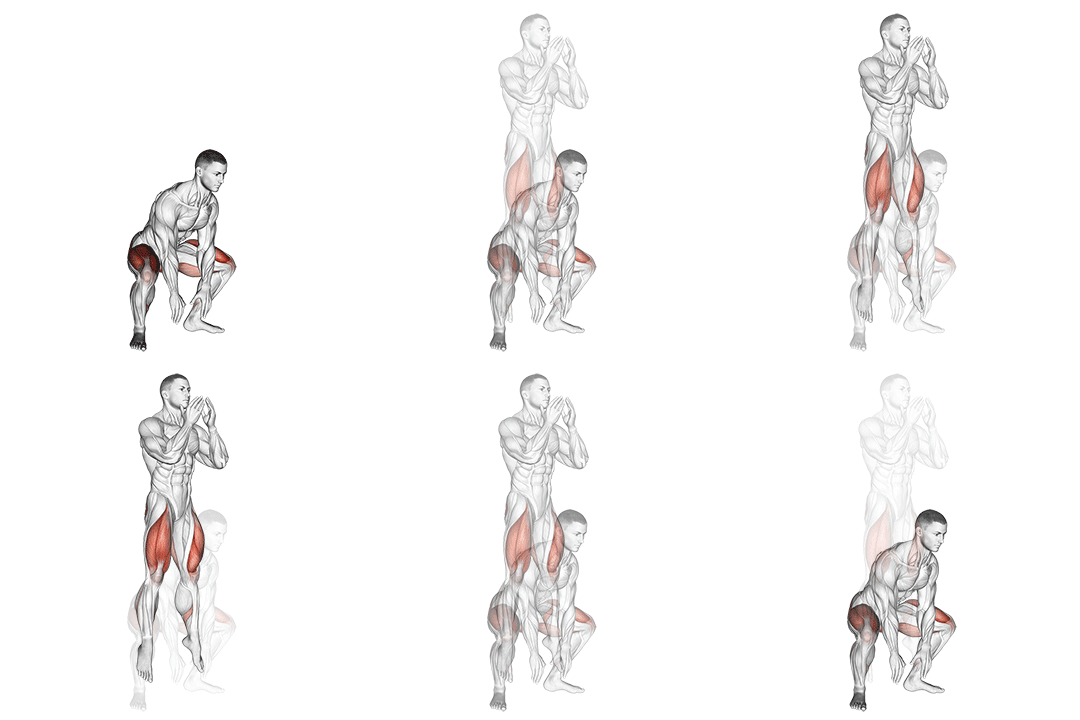
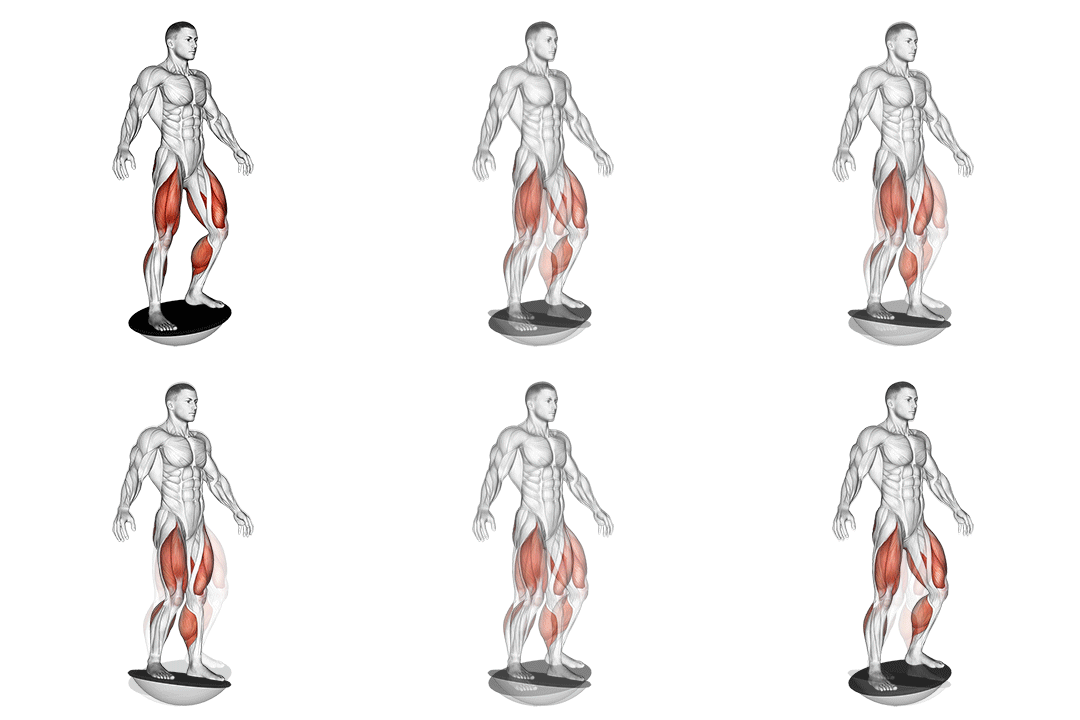
The balance board exercise involves standing on a balance board (rocker, wobble board, or similar unstable surface) and maintaining stability through coordinated muscle engagement. While the equipment is named in the title, this is bodyweight balance training rather than loaded strength work — the demand comes from the unstable surface forcing constant micro-adjustments through the ankles, knees, hips, and core. The exercise builds proprioception, ankle stability, and the kind of fine-motor control that translates to athletic performance. Most adults have lost meaningful proprioceptive control through years of walking exclusively on stable surfaces. Athletic performance, fall prevention in older adults, and ankle injury resilience all depend on proprioception that deteriorates without dedicated training. The balance board addresses this directly. For athletes in cutting sports (basketball, soccer, tennis, MMA), older adults focused on fall prevention, or anyone recovering from ankle injuries, daily balance board work produces real functional improvement. The trade-off is the equipment requirement. While simple boards cost $20-50 and last for years, they're not universally available. For trainees with access, balance board training pairs naturally with single-leg balance work and dynamic stability drills for compound proprioceptive training. The exercise is gentle enough for daily practice and provides incremental benefit that compounds over months. As either standalone balance training or as warm-up for athletic sessions, the balance board earns its place in any well-rounded training program.
Why train the Balance Board?
- Improves proprioception and balance through the unstable surface demand.
- Strengthens ankle stabilizers and reduces injury risk in cutting sports.
- Useful for older adults focused on fall prevention.
- Builds the fine-motor control that translates to athletic performance.
- Can be combined with bodyweight exercises (squats, lunges) for advanced challenge.
- Supports return-to-training after ankle injuries when used progressively.
How to do the Balance Board: step by step
- 1Place the balance board on a flat surface.
- 2Step onto the balance board with one foot, ensuring it is centered.
- 3Slowly shift your weight onto the foot on the balance board, keeping your core engaged.
- 4Maintain your balance and stability as you hold the position for a desired amount of time.
- 5Repeat the exercise with the other foot.
Muscles worked
Primary
quads
Secondary
calves, hamstrings, glutes
Common mistakes to avoid
Trying too much too fast
Beginners often start with aggressive movements (squats, single-leg stands) before basic balance is established. Build static balance first (30-60 seconds standing) before introducing dynamic work.
Looking down constantly
Watching the feet creates dependency on visual feedback. Look forward at a fixed point — this trains the proprioceptive system rather than just the visual system.
Holding the breath
Many trainees hold their breath while concentrating on balance. Breathe slowly and naturally throughout.
Tense rigid posture
Excessive rigidity prevents the small adjustments balance training requires. Stay loose and relaxed; let the joints move slightly to find equilibrium.
Practicing on inappropriate surfaces
The balance board should be on a soft, non-slip surface (carpet, mat). Practicing on hard floors increases fall risk if balance is lost.
Easier and harder variations
Easier
Hold a wall or sturdy support lightly with one hand for balance assistance. Or sit on the balance board (legs extended) and learn the surface response before standing.
Harder
Add bodyweight squats, lunges, or single-leg balance on the board. Or progress to less stable surfaces (BOSU ball, wobble cushion). For maximum challenge, perform standing exercises with eyes closed.
Alternative exercises
Single-leg balance
Floor-based balance work without equipment. Use as foundation before introducing board work.
Y-balance test progression
More structured balance training used in athletic prep and rehabilitation.
BOSU ball squats
Different unstable surface for balance training. Pair with board work for varied stimulus.
How to program the Balance Board into your training
Balance board training works best as daily practice or as part of warm-up routines. Daily routine: 2-5 minutes per day distributed across 2-3 mini-sessions. As warm-up: 60-90 seconds before lower-body sessions. For athletes: 5-10 minutes integrated into sport-specific training days. For older adults focused on fall prevention: 5 minutes daily, alongside single-leg balance work and walking. For those returning from ankle injury: 2-3 minutes daily as part of return-to-training, building duration as tolerance improves. Frequency: daily is appropriate due to the low intensity. Recovery is rarely a concern.
Recovery and frequency
Balance board work has minimal recovery cost when performed within current ability. Daily practice is safe. Ankle soreness or knee discomfort warrants reducing volume or adding stability work elsewhere.
Frequently asked questions
How long should I practice?
2-5 minutes per day, distributed across 2-3 sessions. Frequency matters more than duration for proprioceptive adaptation.
How often?
Daily is appropriate. The low intensity supports frequent training.
Will this prevent ankle sprains?
Often yes — improved proprioception and ankle stability reduce sprain risk in athletic contexts. Most athletic training programs include some form of balance work.
What kind of balance board?
Various options work — rocker boards, wobble boards, BOSU balls. Start with rocker boards (single-axis instability) before progressing to multi-axis options.
Is this useful for general fitness?
Yes for athletic preparation, older adult fall prevention, and ankle injury rehabilitation. For pure cardio or strength goals, balance work is supplementary.
Can I do this with knee issues?
Often yes, but reduce intensity. Consult a physiotherapist for current issues. Mild stiffness usually responds well to gentle balance work.
Useful tools for this exercise
Build a workout with the Balance Board
Puna gives you guided bodyweight workouts you can do anywhere — no equipment, no gym, just structured progressions that build real strength.