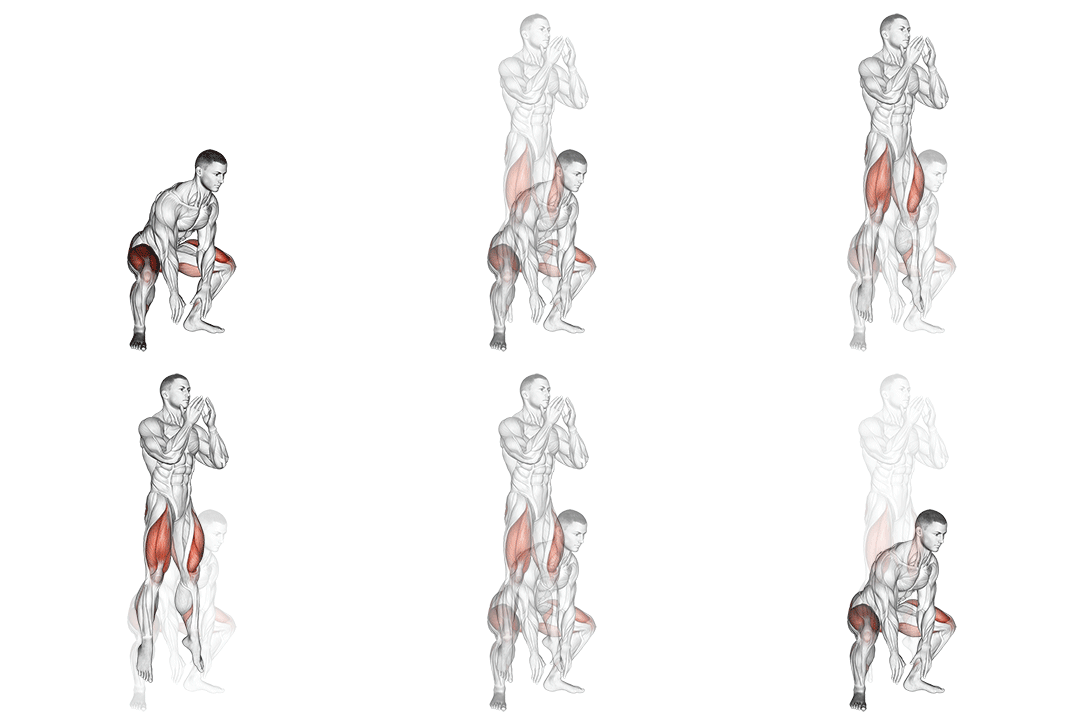
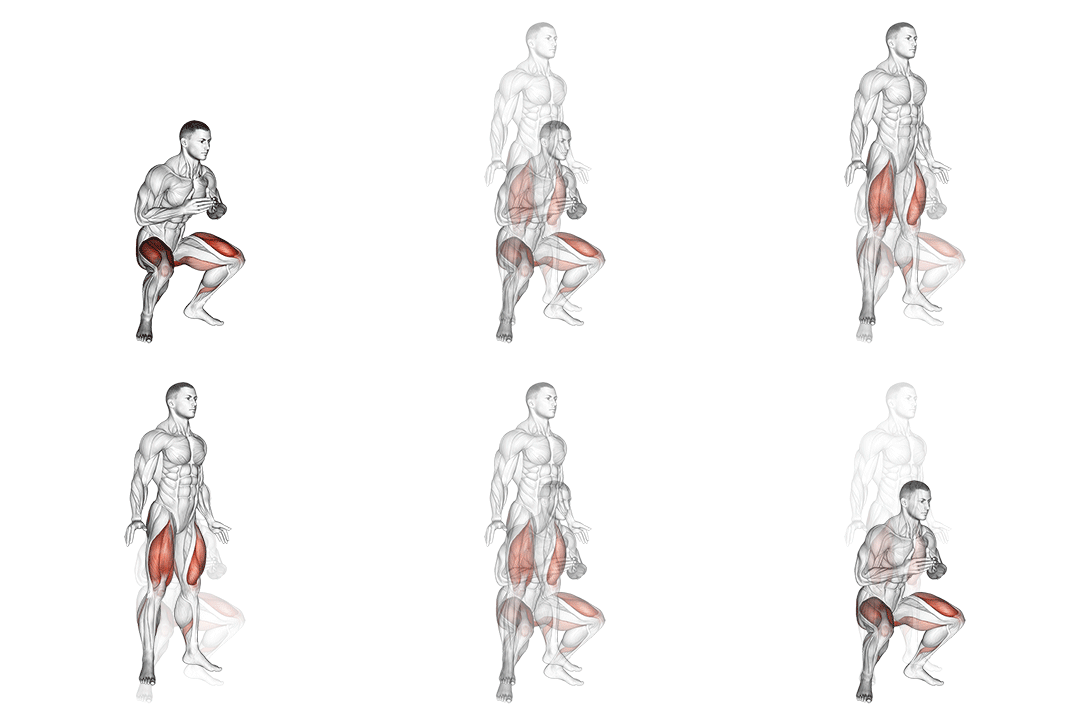
Kick Out Sit
beginner strength exercise · body weight · targets hamstrings
- Body part
- upper legs
- Primary target
- hamstrings
- Equipment
- body weight
- Difficulty
- beginner
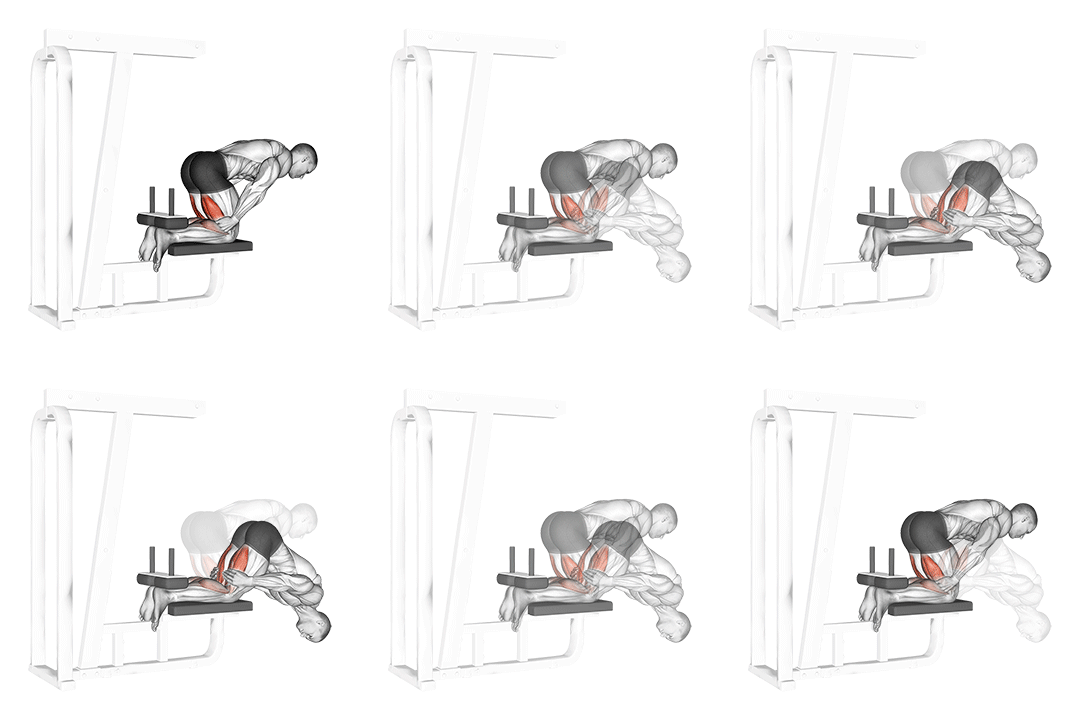
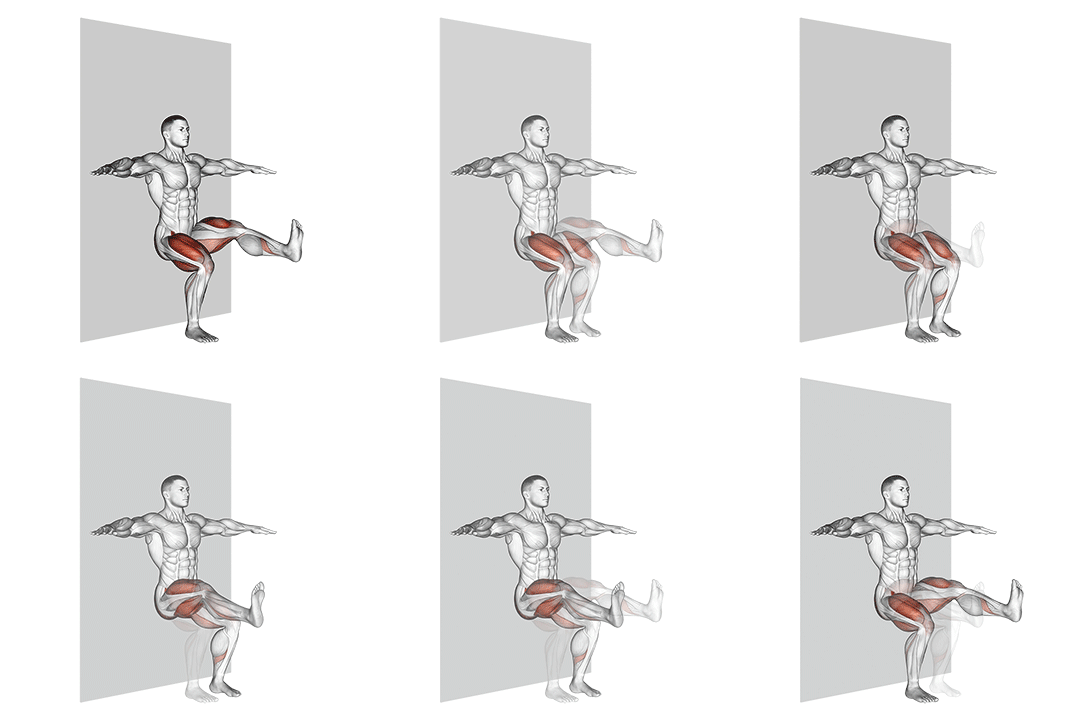
The kick out sit is a hamstring-focused floor exercise where you sit on the floor with knees bent and feet flat, then extend (kick out) one or both legs forward while leaning back slightly to engage the hamstrings and core. The motion combines hamstring activation with core stability, making it useful as a beginner posterior chain exercise or as a warm-up drill before lower-body sessions. This is one of the simpler hamstring activation exercises in any program. The bodyweight load is modest, the setup is nothing more than floor space, and the technical demands are minimal. For beginners who haven't yet developed the hamstring strength for harder bodyweight exercises, the kick out sit provides accessible introduction. For experienced trainees, the exercise serves as warm-up activation before squats and deadlifts. The trade-off is the modest training stimulus. Pure kick out sits won't build serious hamstring strength for advanced trainees — at some point you need heavier loading or harder progressions like inverse leg curls, glute-ham raises, or weighted Romanian deadlifts. As an introductory exercise or warm-up activation, the kick out sit earns its place; as a primary hamstring exercise, it's outclassed by harder alternatives.
Why train the Kick Out Sit?
- Provides accessible hamstring activation for beginners or warm-up purposes.
- Engages the core through the lean-back stability requirement.
- Useful as warm-up before lower-body strength sessions.
- Costs nothing, requires only floor space.
- Suitable for older adults or those returning from injury.
- Pairs with glute bridges for foundational posterior chain work.
How to do the Kick Out Sit: step by step
- 1Sit on the edge of a bench or chair with your feet flat on the ground and your knees bent at a 90-degree angle.
- 2Lean back slightly and place your hands on the edge of the bench or chair for support.
- 3Engaging your hamstrings, lift your feet off the ground and extend your legs straight out in front of you.
- 4Pause for a moment at the top, then slowly bend your knees and bring your feet back towards your body.
- 5Repeat for the desired number of repetitions.
Muscles worked
Primary
hamstrings
Secondary
quadriceps, glutes
Common mistakes to avoid
Bouncing through reps
Slow controlled motion produces the activation benefit. Bouncing reduces engagement and trains nothing useful.
Rounding the back excessively
Some lean back is part of the exercise; excessive rounding stresses the lower back. Keep the spine relatively neutral.
Treating it as primary hamstring work
The kick out sit is too light for serious hamstring building. Use as warm-up or beginner introduction; progress to harder exercises for strength gains.
Holding the breath
Breathe rhythmically through reps.
Skipping when 'too easy'
If the exercise feels too easy, it serves as warm-up activation rather than strength work — that's appropriate. Use it for that purpose; do harder exercises for strength.
Easier and harder variations
Easier
Reduce range — only partially extend the legs. Or perform with hands behind for additional support.
Harder
Slow tempo to 3 seconds in each direction. Or progress to single-leg variations alternating sides.
Alternative exercises
Glute bridge
More effective beginner posterior chain exercise. Direct hip extension.
Romanian deadlift
Standing hamstring work with weight progression. More productive for strength building.
Inverse leg curl
Advanced bodyweight hamstring exercise. Significant progression from kick out sits.
How to program the Kick Out Sit into your training
Kick out sits work as warm-up activation or beginner accessory work. Sets and reps: 3 sets of 12-20 reps. Total weekly volume of 80-150 reps. Frequency: 2-3 times per week as warm-up; 3-4 times per week if used as primary beginner work. In a session: as warm-up before lower-body work, or 3 sets of 15 as accessory after squats. For beginners: start with this exercise before progressing to harder hamstring work over 4-6 weeks. Don't expect this to build serious hamstring strength.
Recovery and frequency
Minimal recovery cost. Daily practice is tolerable. Progress to harder exercises rather than chasing higher rep counts.
Frequently asked questions
How many sets and reps?
3 sets of 12-20 reps. Build duration before adding intensity.
How often?
2-3 times per week as warm-up; daily is tolerable.
Will this build my hamstrings?
Foundational only. For serious hamstring development, progress to inverse leg curls, glute-ham raises, or Romanian deadlifts.
Is this useful for athletes?
As warm-up activation before main work, yes. As primary training, no.
Can I do this with back issues?
Often yes, with reduced lean-back. Mild stiffness usually responds well to gentle activation work.
When should I progress?
Once 20 reps feel easy and you have basic strength foundation, progress to glute bridges, then Romanian deadlifts, then inverse leg curls.
Useful tools for this exercise
Build a workout with the Kick Out Sit
Puna gives you guided bodyweight workouts you can do anywhere — no equipment, no gym, just structured progressions that build real strength.