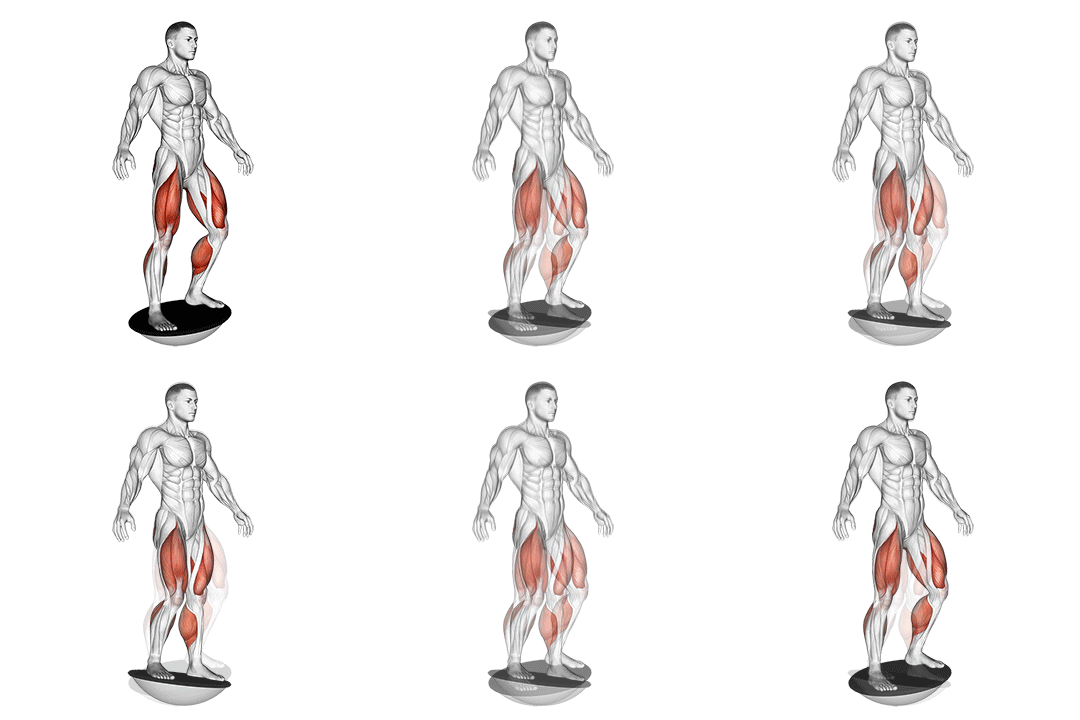
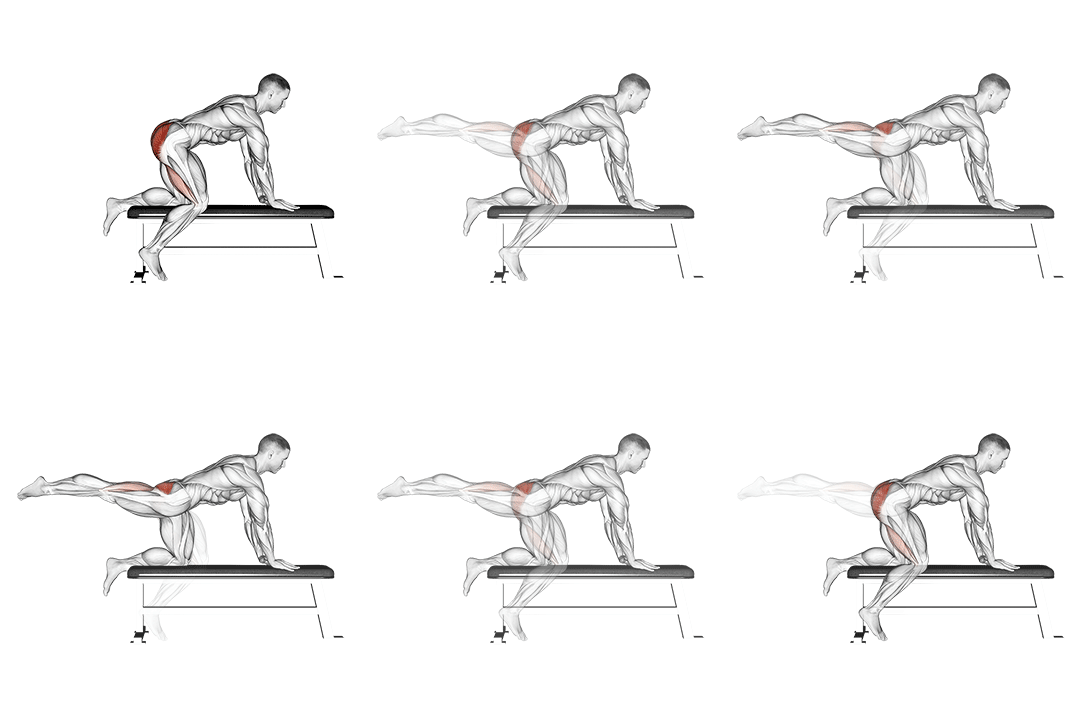
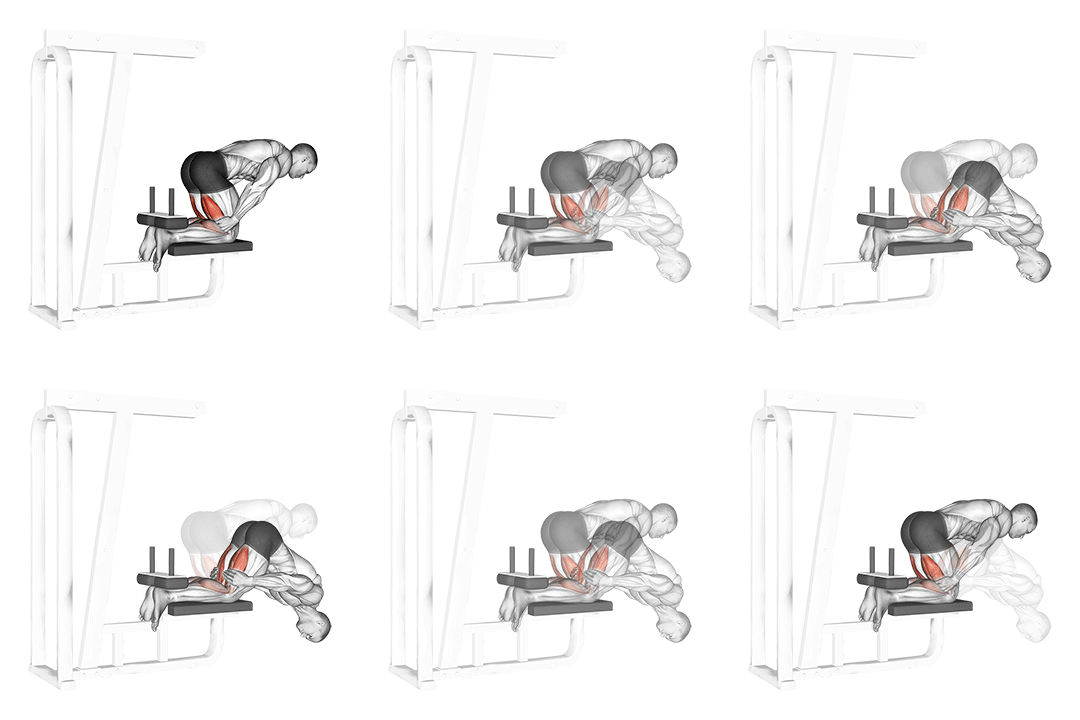
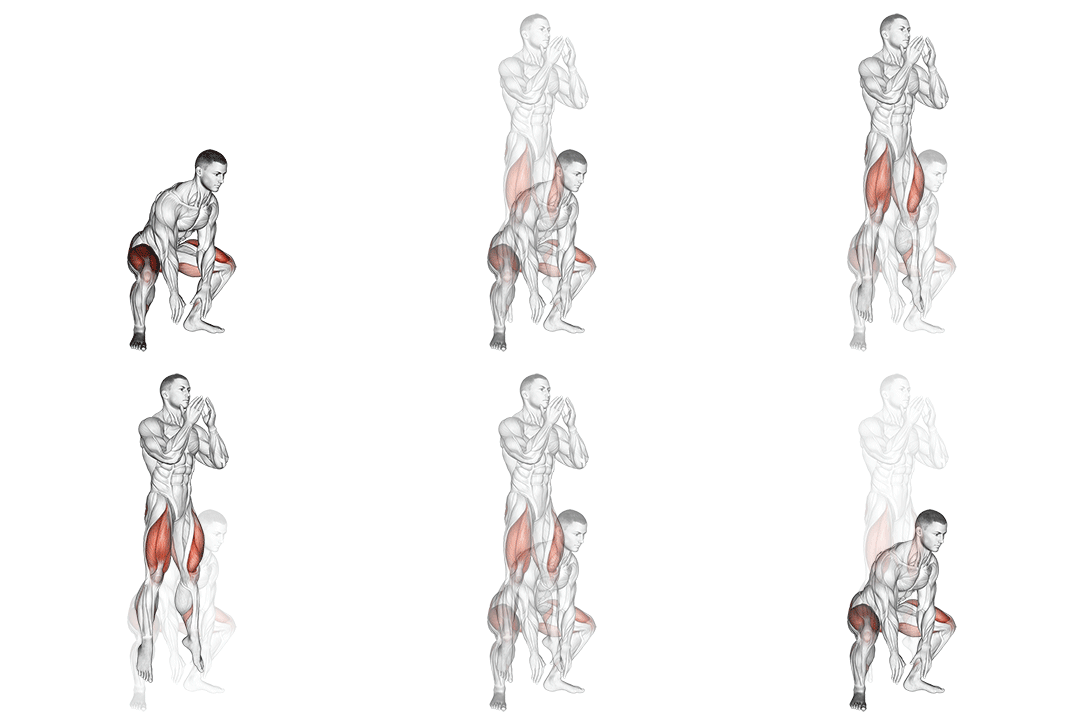
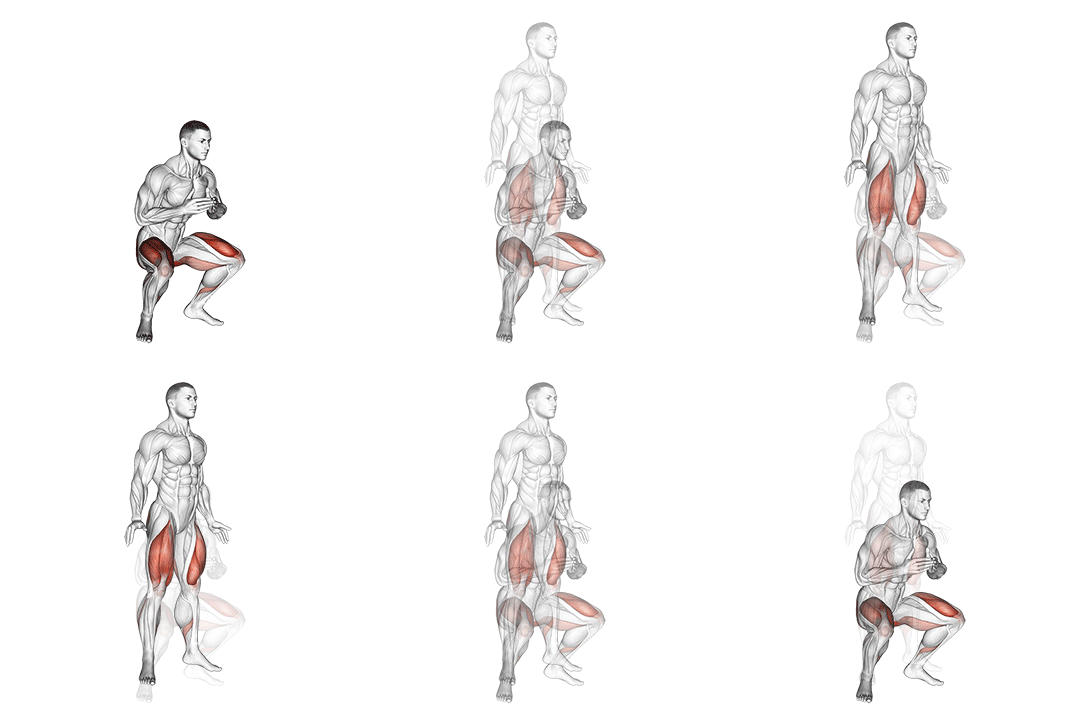
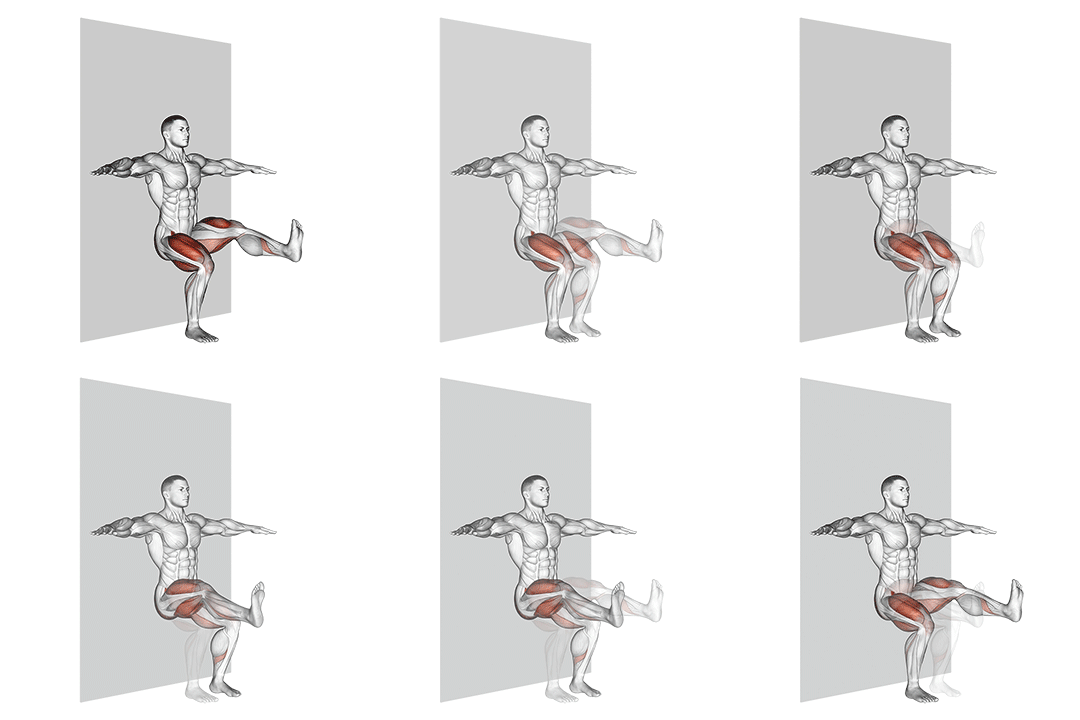
Flutter Kicks
beginner strength exercise · body weight · targets glutes
- Body part
- upper legs
- Primary target
- glutes
- Equipment
- body weight
- Difficulty
- beginner
Flutter kicks are a foundational lower-ab and hip flexor exercise where you lie face-up with hands beneath the lower back for support, then alternate kicking the legs up and down a few inches off the floor in continuous flutter motion. Despite the legs target listed in the data, flutter kicks primarily train the lower abdominals and hip flexors — the legs are tools rather than targets. The continuous motion produces sustained core engagement and meaningful endurance work for the often-neglected lower abs. This is one of the most accessible lower-ab exercises in any training program. No equipment required, no setup, accessible to almost any fitness level. The exercise scales easily through duration — beginners start with 20-30 second sets, intermediates work to 60+ seconds, advanced trainees can push 90-second continuous holds. The trade-off versus more demanding lower-ab exercises (hanging leg raises, dragon flags) is the lower load and longer duration requirement; flutter kicks build endurance more than maximum strength. Where this earns its place is as accessory or finisher work in any core-focused session. Combined with planks (anti-extension) and Russian twists (rotation), flutter kicks complete the abdominal training spectrum. For trainees with limited equipment access or those building foundational core strength, daily flutter kick practice over 4-6 weeks produces meaningful lower-ab development.
Why train the Flutter Kicks?
- Targets the lower abdominals and hip flexors directly, addressing a commonly under-trained area.
- Builds core endurance through sustained continuous engagement.
- Accessible to beginners and scalable through duration adjustment.
- Costs nothing, requires no equipment, and works in any space.
- Pairs naturally with planks for compound core training.
- Useful as finisher work at the end of any abs-focused session.
How to do the Flutter Kicks: step by step
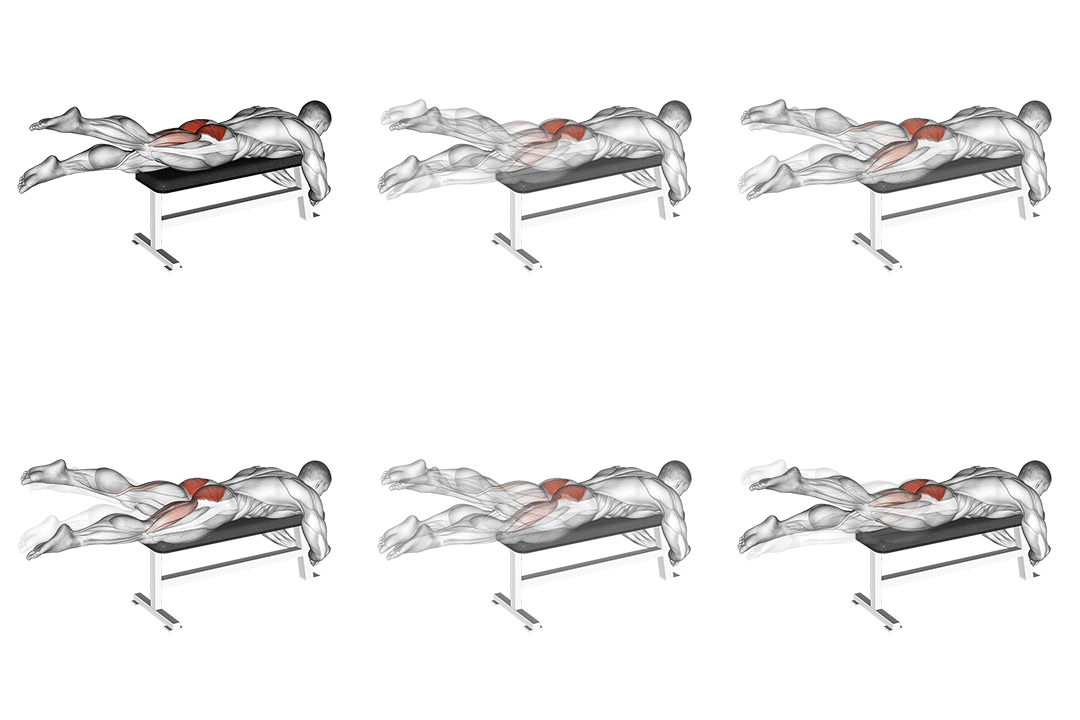
- 1Lie flat on your back with your legs extended and your hands by your sides.
- 2Engage your core and lift your legs off the ground about 6 inches.
- 3Keeping your legs straight, alternate lifting one leg slightly higher than the other.
- 4Continue this fluttering motion for the desired number of repetitions.
Muscles worked
Primary
glutes
Secondary
hip flexors, lower abs
Common mistakes to avoid
Letting the lower back arch off the floor
When the legs lift, the lower back wants to arch up, especially as fatigue builds. This stresses the lumbar spine and reduces ab engagement. Press the lower back firmly into the floor throughout. If you can't keep it pressed, the exercise is too demanding — reduce duration.
Lifting the legs too high
Higher legs reduce hip flexor and lower-ab demand. Keep the legs just a few inches off the floor for maximum stimulus.
Holding the breath
Sustained core engagement invites breath-holding. Breathe rhythmically — exhale on each leg lift, inhale on each lower.
Rushing the motion
Speed reduces core engagement. Aim for moderate steady tempo — slow enough to maintain form, fast enough to keep heart rate elevated slightly.
Pulling on the neck for support
The hands belong under the lower back for spine support, not behind the head. Hands behind the head invite neck pulling that strains the cervical spine.
Easier and harder variations
Easier
Bend the knees slightly to reduce hip flexor demand. Or perform with hands palms-down at sides for additional support. Or do shorter intervals (15-20 seconds) building duration over weeks.
Harder
Increase duration to 60-90 second continuous sets. Or perform with arms extended overhead for added core demand. Or progress to scissor kicks (legs cross over and under) for rotational variation.
Alternative exercises
Dead bug
Floor-based core work with similar lower-ab focus but cleaner lumbar protection. Better for beginners or those with back issues.
Hanging leg raise
Hanging version of similar lower-ab work. Significantly harder; requires bar.
Reverse crunch
Lying lower-ab exercise with full hip flexion range. Pair with flutter kicks for varied stimulus.
How to program the Flutter Kicks into your training
Flutter kicks work as accessory or finisher core work in any program. Sets and reps: 3 sets of 30-60 seconds with 30-60 seconds rest. Total weekly duration of 4-8 minutes. Frequency: 3-4 times per week. The core recovers within 24-48 hours from this volume. In a core finisher: 30 seconds flutter kicks, 30 seconds front plank, 30 seconds Russian twists, 30 seconds rest. Repeat 3-4 times. For lower-ab emphasis: 4 sets of 45-60 seconds, 3 times per week, alongside planks and dead bugs. Don't program flutter kicks daily at high duration — the cumulative hip flexor demand can produce tightness.
Recovery and frequency
Flutter kicks recover within 24-48 hours from moderate volume. Watch for hip flexor tightness (common; address with daily mobility) and lower-back discomfort (warrants reducing volume).
Frequently asked questions
How long should I do flutter kicks?
30-60 seconds per set, 3 sets per session. Build duration gradually.
How often?
3-4 times per week. The core recovers within 24-48 hours.
Will this give me a six-pack?
Flutter kicks build the muscle underneath; visible abs come from low body fat. Diet drives visibility, training builds the muscle.
Why do my hip flexors get tight?
Flutter kicks heavily recruit the hip flexors. Tight hip flexors are common; address with daily hip flexor mobility (couch stretch, kneeling lunge).
Can I do this with back pain?
Cautiously, with bent knees and reduced range. The bent-knee version is safer; or switch to dead bugs entirely for back-friendly lower-ab work.
Flutter vs scissor kicks?
Flutter kicks alternate up-down; scissor kicks alternate the legs over and under each other. Different motion, similar muscle emphasis.
Useful tools for this exercise
Build a workout with the Flutter Kicks
Puna gives you guided bodyweight workouts you can do anywhere — no equipment, no gym, just structured progressions that build real strength.