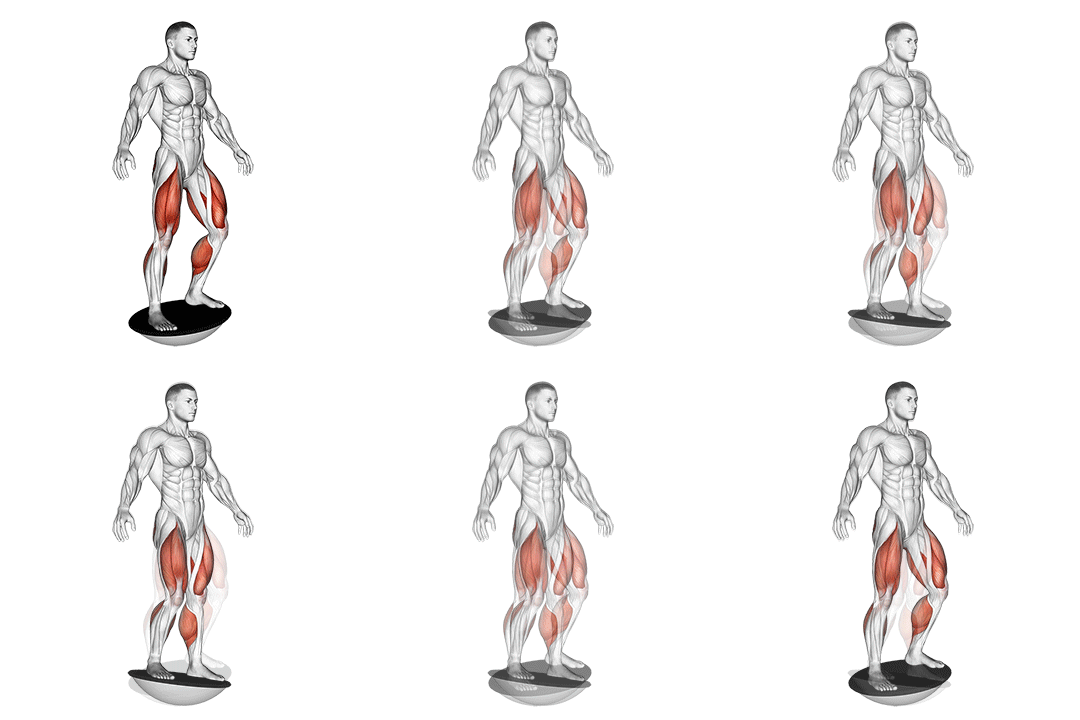
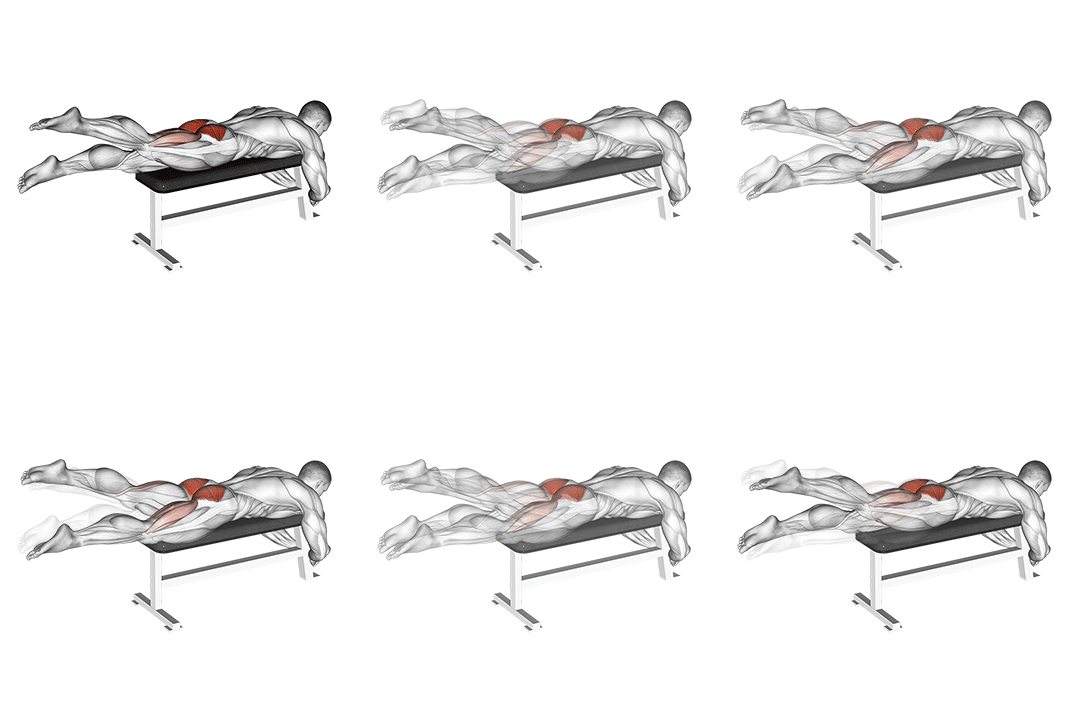
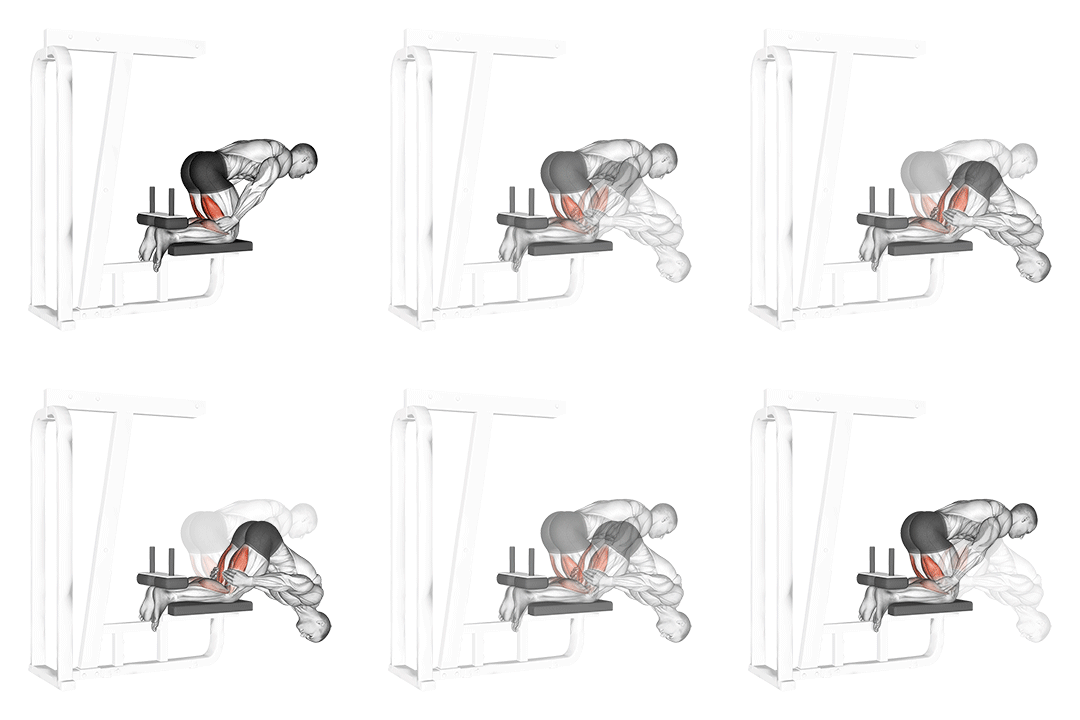
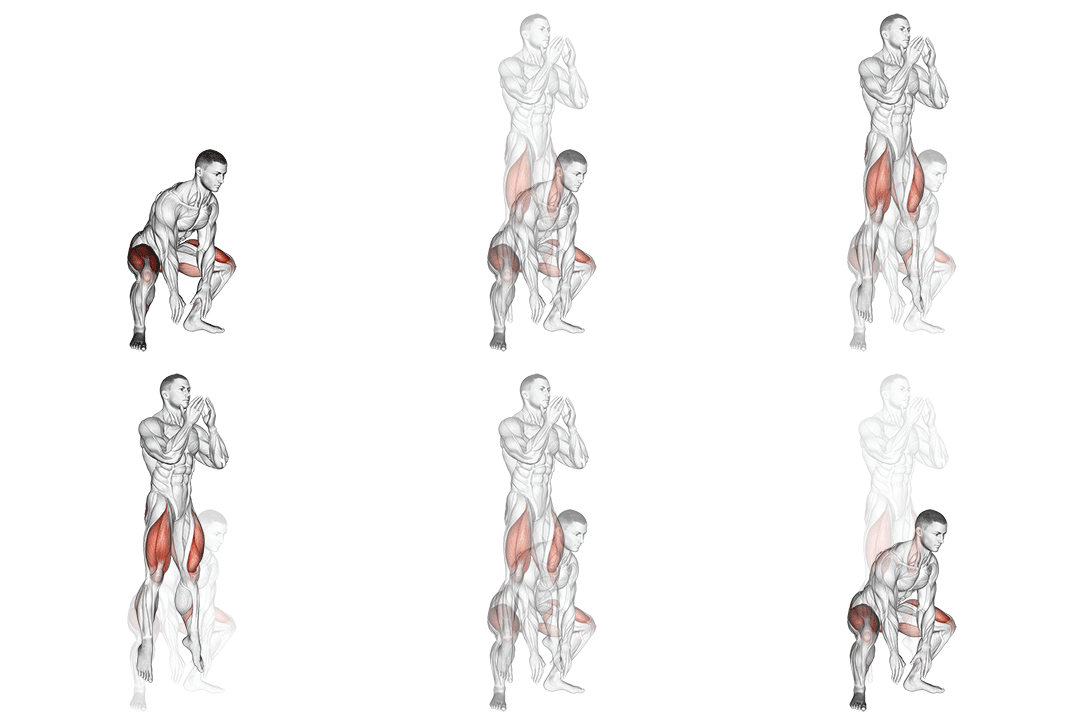
Bench Hip Extension
beginner strength exercise · body weight · targets glutes
- Body part
- upper legs
- Primary target
- glutes
- Equipment
- body weight
- Difficulty
- beginner
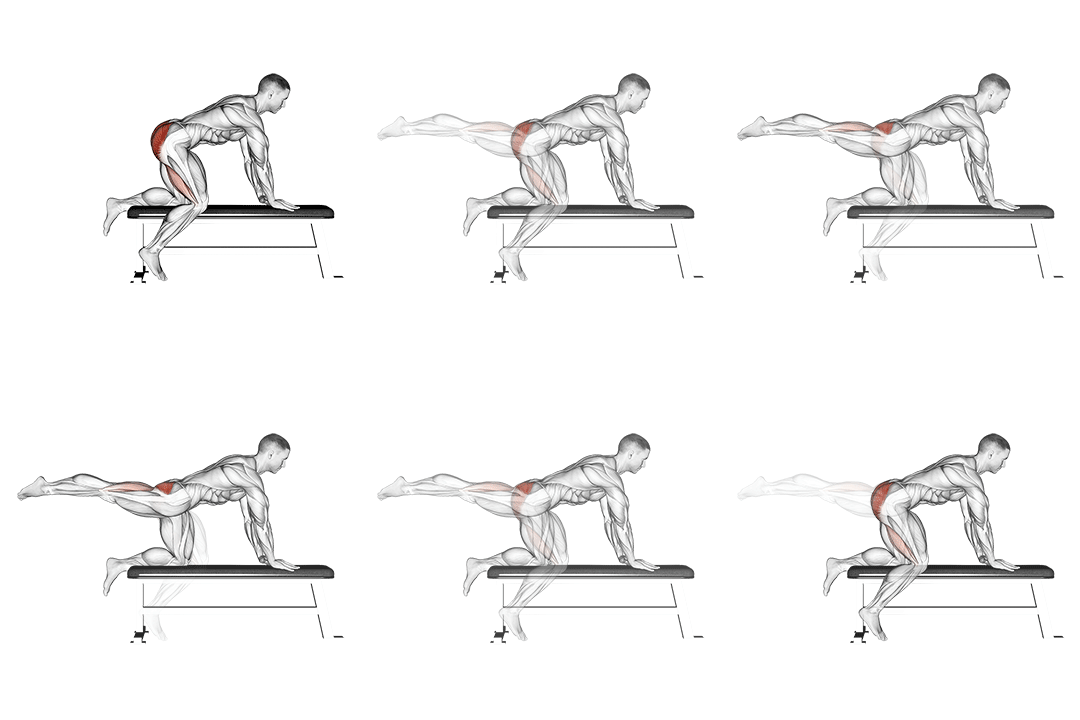
The bench hip extension — sometimes called the bench reverse hyperextension or hip thrust on bench — is performed lying face-down on a bench with hips at the edge and legs hanging off, then lifting the legs to extend at the hips while keeping them straight. The exercise targets the glutes and hamstrings through a hip-extension pattern that compound lifts like deadlifts and squats only partially train. For trainees specifically targeting glute development, the bench hip extension provides isolated work that few other exercises match. The glutes are notoriously difficult to develop fully through compound lifts alone. Squats and deadlifts engage the glutes but the load is shared with the quads and hamstrings; isolated glute work like the bench hip extension trains the glutes more directly. The lying position with legs hanging off the bench creates a long lever arm for the glutes to work against, producing meaningful stimulus without requiring weight. Where this earns its place is as accessory glute work in any lower-body program. Combined with squats and lunges for compound work, glute bridges for direct hip extension, and bench hip extensions for the lying-position emphasis, glute development becomes complete. The trade-off is the equipment requirement (a sturdy bench at appropriate height) and the somewhat awkward setup. For trainees with bench access, the exercise produces real glute development; for those without, glute bridges and reverse hyperextensions on the floor cover similar territory.
Why train the Bench Hip Extension?
- Provides direct glute and hamstring work through the hip extension pattern.
- Builds the posterior chain in a way compound lifts only partially train.
- Trains the glute medius and lower glute fibers specifically.
- Strengthens the lower back through the spinal stability requirement.
- Improves hip extension range that often limits squat depth and deadlift performance.
- Pairs naturally with glute bridges and squats for complete glute development.
How to do the Bench Hip Extension: step by step
- 1Sit on a bench with your back against the bench and your feet flat on the ground.
- 2Place your hands on the bench for support.
- 3Engage your glutes and hamstrings, then lift your hips off the bench until your body forms a straight line from your knees to your shoulders.
- 4Pause for a moment at the top, then slowly lower your hips back down to the starting position.
- 5Repeat for the desired number of repetitions.
Muscles worked
Primary
glutes
Secondary
hamstrings
Common mistakes to avoid
Hyperextending the lower back
When lifting the legs, the lower back wants to arch dramatically. Excessive lumbar extension stresses the discs. Stop the lift when the legs reach hip height (parallel to the floor); going further produces lumbar load without glute benefit.
Bending the knees during the lift
Bent knees shorten the lever arm and reduce glute demand. Keep legs locked straight throughout the rep.
Bouncing through reps
The descent should be controlled (2-3 seconds). Bouncing through the bottom shifts load to passive structures.
Insufficient bench height
If the bench is too low, the legs can't fully extend below body level, limiting range of motion. Use a bench tall enough that legs can hang straight down at the bottom of each rep.
Treating it as primary work
Bench hip extensions are accessory work, not primary glute training. Use squats, lunges, and bridges for primary work; bench hip extensions for additional isolation.
Easier and harder variations
Easier
Bend the knees slightly to reduce lever arm. Or perform with feet together for support before progressing to single-leg variations.
Harder
Hold a weight plate between the feet for added load. Or perform single-leg bench hip extensions for unilateral training. For maximum challenge, weighted single-leg bench hip extensions produce serious glute development.
Alternative exercises
Glute bridge
Floor-based hip extension without bench requirement. Use as primary glute work; bench version as accessory.
Reverse hyperextension
Similar lying-prone hip extension on a dedicated machine or bench. More effective when the equipment is available.
Romanian deadlift
Standing hip extension with weight loading. More functional and productive for serious posterior chain development.
How to program the Bench Hip Extension into your training
Bench hip extensions work as accessory posterior chain work in any lower-body program. Sets and reps: 3 sets of 12-20 reps with 60 seconds rest. Total weekly volume of 80-150 reps. Frequency: 2-3 times per week. Glutes recover within 48 hours from this volume. In a lower-body session: 4 sets of 8 squats, 3 sets of 10 lunges, 3 sets of 15 bench hip extensions, 3 sets of 12 calf raises. For glute emphasis: 4 sets of 15-20 reps, 2-3 times per week, paired with glute bridges and Bulgarian split squats. Don't program bench hip extensions on the same day as heavy deadlifts.
Recovery and frequency
Recovery within 48 hours from moderate volume. Watch for sharp lower-back pain (warrants stopping) and persistent glute tightness.
Frequently asked questions
How many sets and reps?
3 sets of 12-20 reps with 60 seconds rest. Progress with weight or single-leg variations once 20 reps feel easy.
How often?
2-3 times per week. Glutes recover within 48 hours.
Will this build my glutes?
Yes, as accessory work. Combined with squats, lunges, and glute bridges, bench hip extensions contribute to complete glute development.
Bench hip extension vs glute bridge?
Bench version uses long lever arm for harder isolation. Bridges are more accessible (no equipment) but easier load. Use both for variety.
Is this safe for back?
Generally yes when range stops at hip height. Hyperextending past that point stresses the lower back.
Should I add weight?
Eventually, yes. Build to 4 sets of 18-20 strict bodyweight reps first, then hold a weight plate between the feet.
Useful tools for this exercise
Build a workout with the Bench Hip Extension
Puna gives you guided bodyweight workouts you can do anywhere — no equipment, no gym, just structured progressions that build real strength.