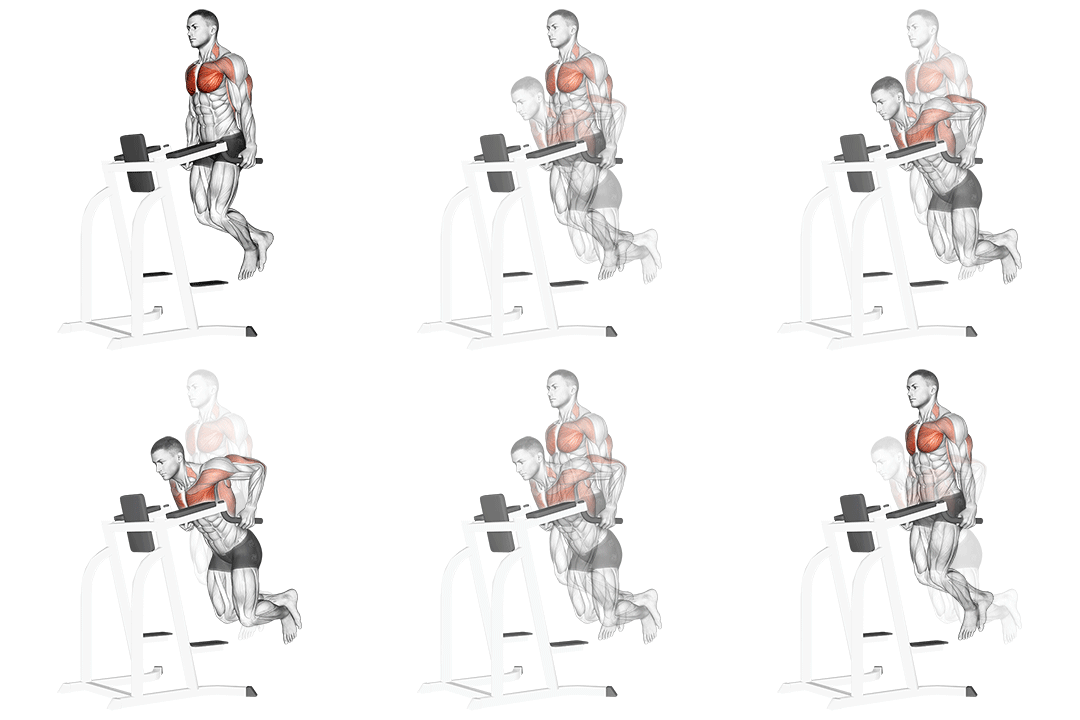
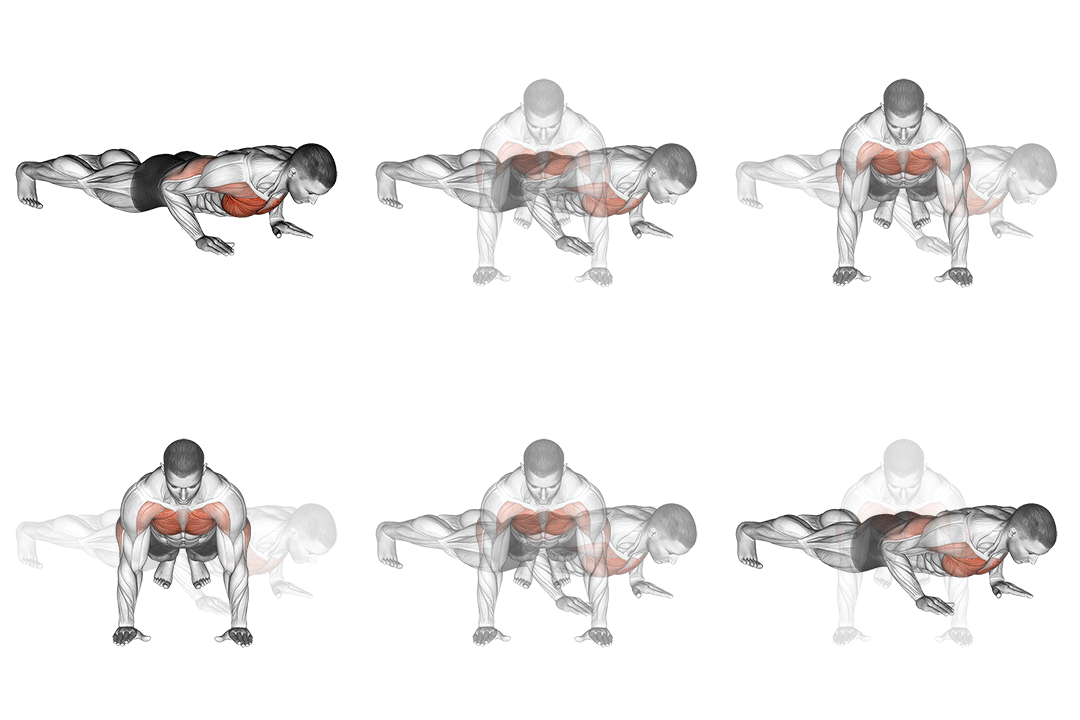
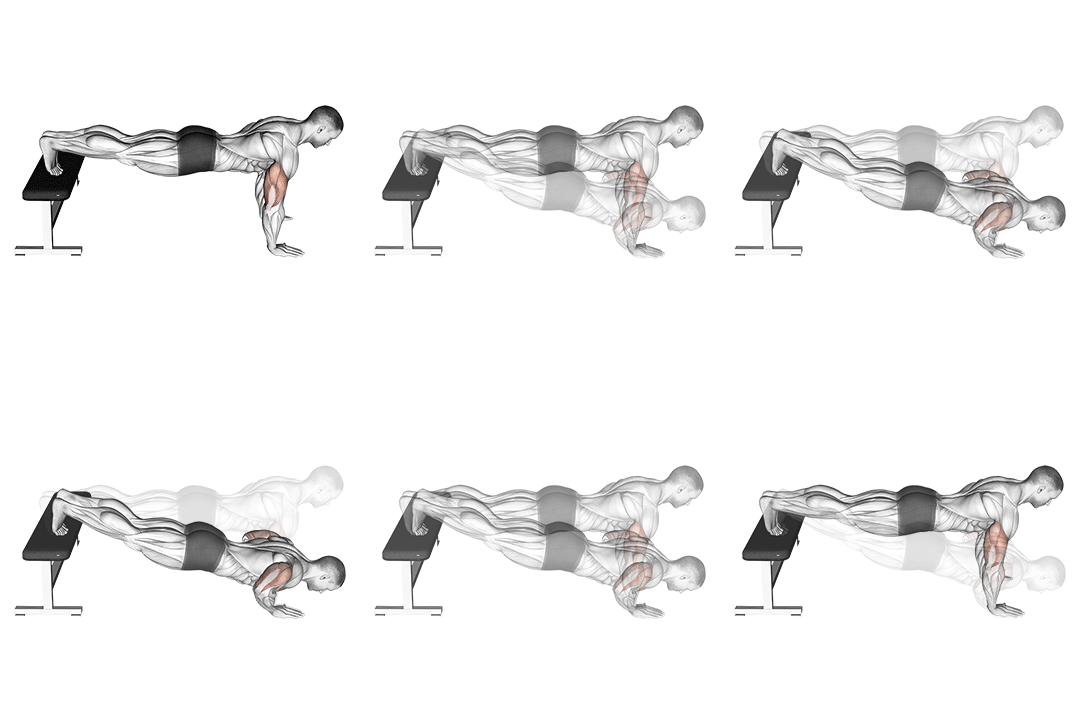
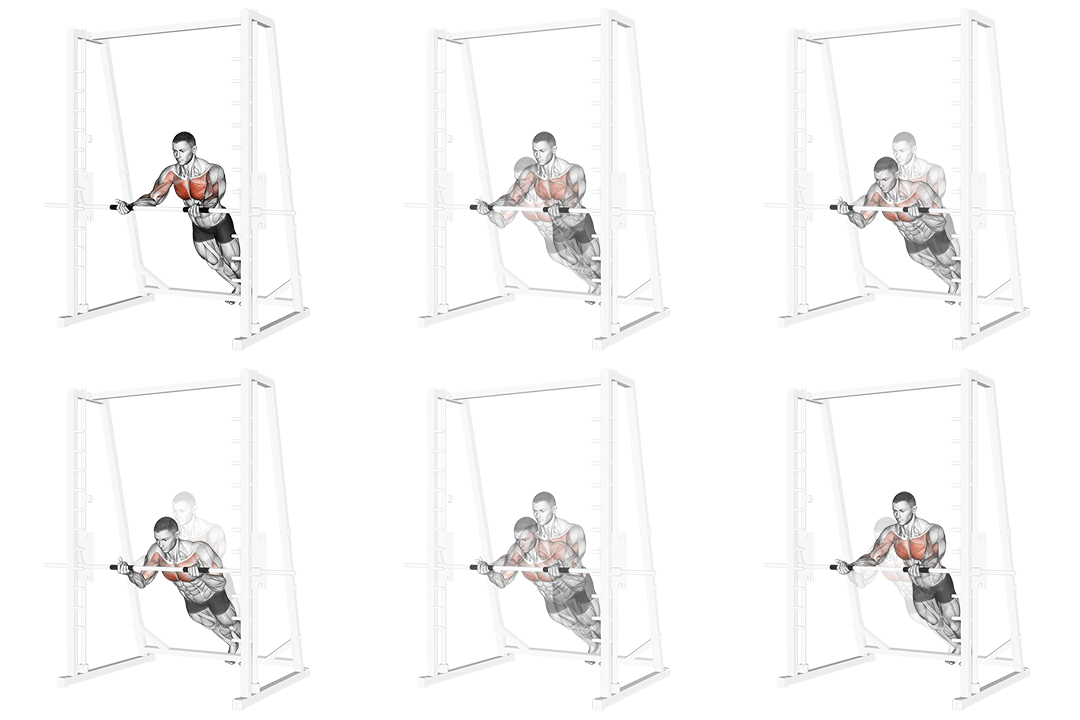
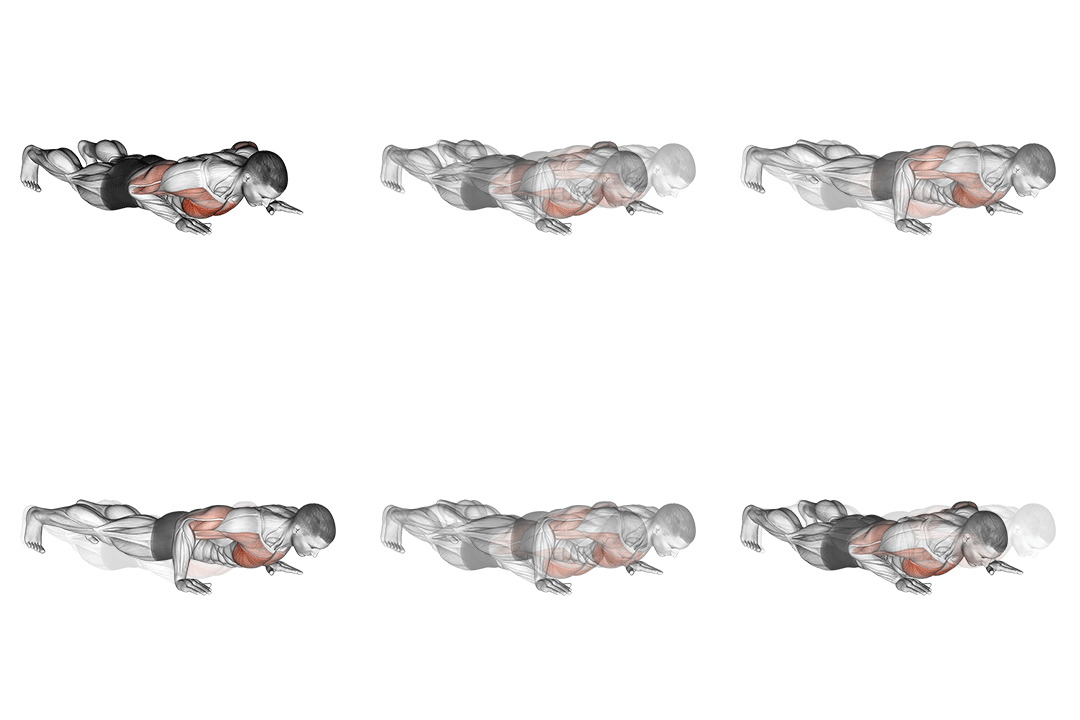
Incline Push Up Depth Jump
advanced plyometrics exercise · body weight · targets pectorals
- Body part
- chest
- Primary target
- pectorals
- Equipment
- body weight
- Difficulty
- advanced
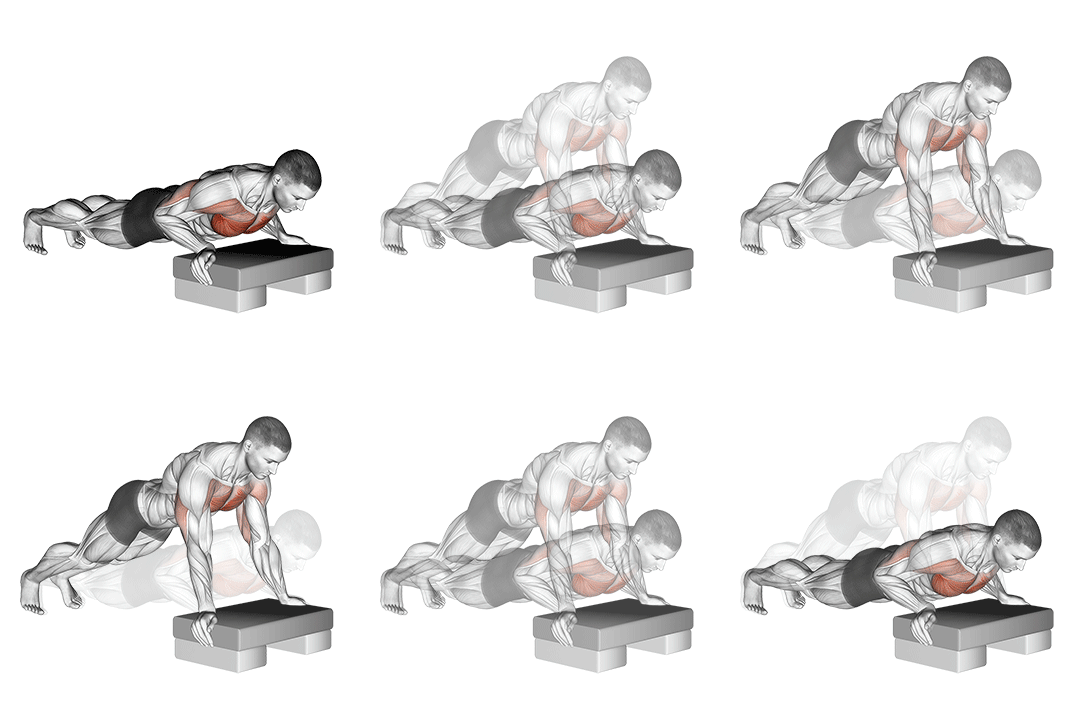
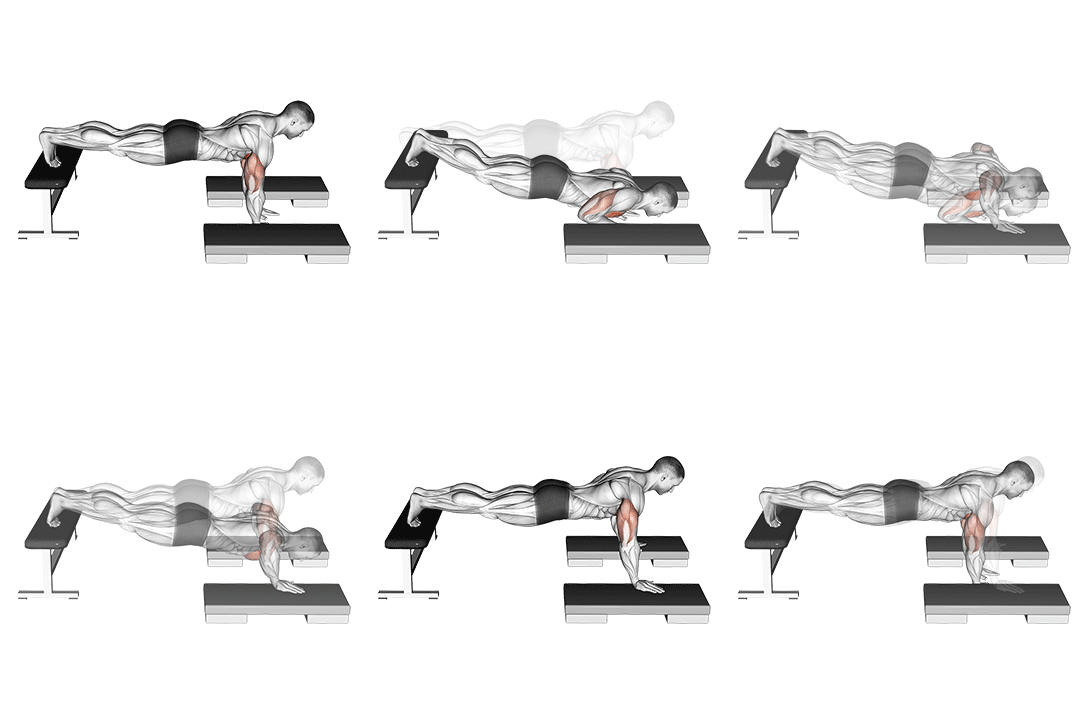
The incline push-up depth jump is a plyometric upper-body drill that combines an explosive push-up off an elevated surface with a depth jump landing. From hands placed on a bench or elevated step in an incline push-up position, you push explosively enough to leave the surface, then land softly back into the push-up position to absorb and reverse direction. It's a hybrid of the reactive lower-body depth jump (popularized in track and field plyometrics) applied to the upper body. The goal is to train the stretch-shortening cycle in the chest, shoulders, and triceps — the same reflexive force-absorption-and-release pattern that distinguishes plyometric work from traditional strength work. For athletes who need explosive upper-body power (combat sports, throwing sports, climbing, gymnastics), this kind of training pays meaningful dividends. For general fitness, the value is more modest; pure strength training and standard push-up volume cover most needs. What makes this exercise useful is that the elevated incline reduces the load on the upper body compared to floor push-ups, making explosive plyometric reps actually possible for trainees who can't yet do clap push-ups on the floor. It serves as a stepping-stone progression — once you can do clean incline depth jumps, floor-based plyometric push-ups become accessible. Programming requires care: plyometric work has a steep neural fatigue cost, and over-training it produces shoulder and elbow issues quickly.
Why train the Incline Push Up Depth Jump?
- Trains the upper-body stretch-shortening cycle for explosive pressing power.
- Builds reactive strength in the chest, shoulders, and triceps under absorption load.
- Provides a less aggressive plyometric option than floor-based clap push-ups.
- Develops the proprioceptive control needed to land softly under explosive return.
- Carries over to combat sports, throwing, and other rotational/explosive athletic contexts.
- Builds confidence with airborne moments before progressing to harder plyometric variations.
How to do the Incline Push Up Depth Jump: step by step
- 1Find an elevated surface, such as a bench or step, and place your hands shoulder-width apart on the edge.
- 2Step your feet back, keeping your body in a straight line from head to heels.
- 3Lower your chest towards the edge of the surface, bending your elbows and keeping your body aligned.
- 4Push through your palms to extend your arms and return to the starting position.
- 5Jump off the edge of the surface, landing softly with your knees slightly bent.
- 6Repeat the push-up and depth jump for the desired number of repetitions.
Muscles worked
Primary
pectorals
Secondary
triceps, shoulders, core
Common mistakes to avoid
Crashing into the landing
The point of plyometric work is reactive absorption, not impact. Land softly with the elbows bending immediately to absorb force, transitioning into the next rep without bouncing. Hard landings spike the joints and miss the elastic component the exercise is meant to train.
Letting the body collapse on landing
When the hands hit the surface, the core often gives out and the hips drop. This breaks the alignment and turns the rep into a sloppy semi-controlled descent. Brace the abs and glutes throughout; the body should land as a unified unit, not in segments.
Doing too many reps
Plyometric work is high-intensity, low-volume by nature. Sets of 3-5 explosive reps are appropriate; sets of 15+ are not plyometric anymore — they're just sloppy push-ups. Stop the set when reps lose explosiveness, even if that's at rep 3.
Insufficient warm-up
Plyometric work cold is one of the fastest paths to injury. Complete a full upper-body warm-up before depth jumps — band work, slow push-ups, gentle pressing — until the shoulders and elbows feel warm and responsive. The 5 minutes of preparation prevents most issues.
Programming too frequently
Plyometric stimulus has a steep neural fatigue cost. More than 2 sessions per week leads to chronic shoulder fatigue, elbow tendinitis, and stagnation. Twice per week is the cap for most trainees, regardless of how good they feel after a session.
Easier and harder variations
Easier
Use a higher surface (waist height or above) — the more upright the body, the less load the upper body absorbs on landing. Or skip the airborne phase entirely and just push explosively to lockout, returning to the start without leaving the surface. This is the introductory pre-plyometric version.
Harder
Lower the incline gradually (knee-height bench, then chair, then floor) to increase the load. Eventually progress to floor-based plyometric push-ups, then clap push-ups, then triple-clap push-ups for serious upper-body power work.
Alternative exercises
Clap push-up
Floor-based plyometric push-up — significantly more demanding. Use this once incline depth jumps feel comfortable and you have the strength for floor-level plyometric work.
Medicine ball chest pass
Standing plyometric pressing with a medicine ball release. Different position but similar reactive pressing pattern. Easier on the wrists and elbows than push-up plyometrics.
Standard incline push-up
Non-plyometric strength version of the same position. Use this for general pressing strength and as accessory work on non-plyometric days.
How to program the Incline Push Up Depth Jump into your training
Plyometric push-ups belong as accessory or specialty work, not as primary pressing volume. They're concentrated stimulus that should be programmed surgically, not casually. Sets and reps: 3-4 sets of 3-5 reps with 90-120 seconds rest. Stop when reps lose explosiveness. Total weekly volume of 12-30 reps is plenty; more produces fatigue rather than progress. Frequency: 1-2 times per week is the cap. Plyometric stimulus has steep recovery demands and the shoulders need 3-4 days between hard sessions. More frequent training produces stagnation, not progress. In an upper-body session: place plyometric work after a full warm-up but before main strength work. The fatigue from heavy pressing degrades plyometric quality, while the explosiveness of plyometric work primes the nervous system for heavier work afterward. Sample order: warm-up, 4 sets of 4 incline depth jumps, 4 sets of 8 push-ups, 4 sets of 6 pull-ups. For athletes with sport-specific needs: integrate into your sport-specific training day, not into general strength days. The transfer to sport demands proximity to other sport-specific work. For general fitness: this exercise is largely optional. Standard push-ups and progressive variations cover most needs. Plyometric work earns its place if you genuinely need explosive upper-body power. Don't program depth jumps during deload weeks or when feeling fatigued — the high neural cost is exactly what should be reduced during recovery periods.
Recovery and frequency
Plyometric upper-body work has a steep recovery cost. The shoulders, elbows, and wrists all absorb significant impact, and the nervous system needs time to recover from the explosive demand. 72 hours between sessions is the minimum; many trainees do better with 96 hours. The main warning signs are anterior shoulder pain, inner elbow soreness (golfer's elbow), and wrist soreness. Any of these warrant skipping a session or two and reducing volume on return. Standard chest and triceps soreness fades within 48 hours and indicates appropriate stimulus. Long-term, plyometric push-up training requires monthly deload weeks where you skip the high-intensity work entirely. Sleep, hydration, and protein intake all matter more than usual when training plyometrically — the recovery demand is amplified compared to standard strength work.
Frequently asked questions
How many sets and reps of incline push-up depth jumps should I do?
3-4 sets of 3-5 explosive reps with 90-120 seconds rest. Stop when reps lose explosiveness. Plyometric quality drops fast — long sets defeat the purpose.
How often should I do this exercise?
1-2 times per week maximum. Plyometric stimulus has steep recovery demands and the shoulders need 3-4 days between sessions. More frequent training produces stagnation.
Is this safe for beginners?
No — beginners should master strength push-ups (3 sets of 10 clean reps) before introducing plyometric variations. The reactive load demands base strength and joint preparedness. Start with strength training; introduce plyometrics 6-12 months in.
Will this help my pressing strength?
Indirectly, through the neural priming effect. Plyometric work doesn't directly build maximum strength, but it improves the nervous system's ability to recruit muscle fibers, which can show up as small strength gains in heavy pressing.
Incline depth jump vs clap push-up: which is better?
Incline depth jumps are the easier introduction; clap push-ups are the more advanced variation. Use incline first for 4-8 weeks, then progress to floor-based variations once explosiveness and form are clean.
Why do my elbows hurt after plyometric push-ups?
Plyometric work is hard on elbow tendons, especially when volume builds too fast. Reduce frequency to once per week, lower volume to 3 sets of 3 reps, and add eccentric forearm work. If pain persists, skip plyometric work entirely until the elbows settle.
Useful tools for this exercise
Build a workout with the Incline Push Up Depth Jump
Puna gives you guided bodyweight workouts you can do anywhere — no equipment, no gym, just structured progressions that build real strength.