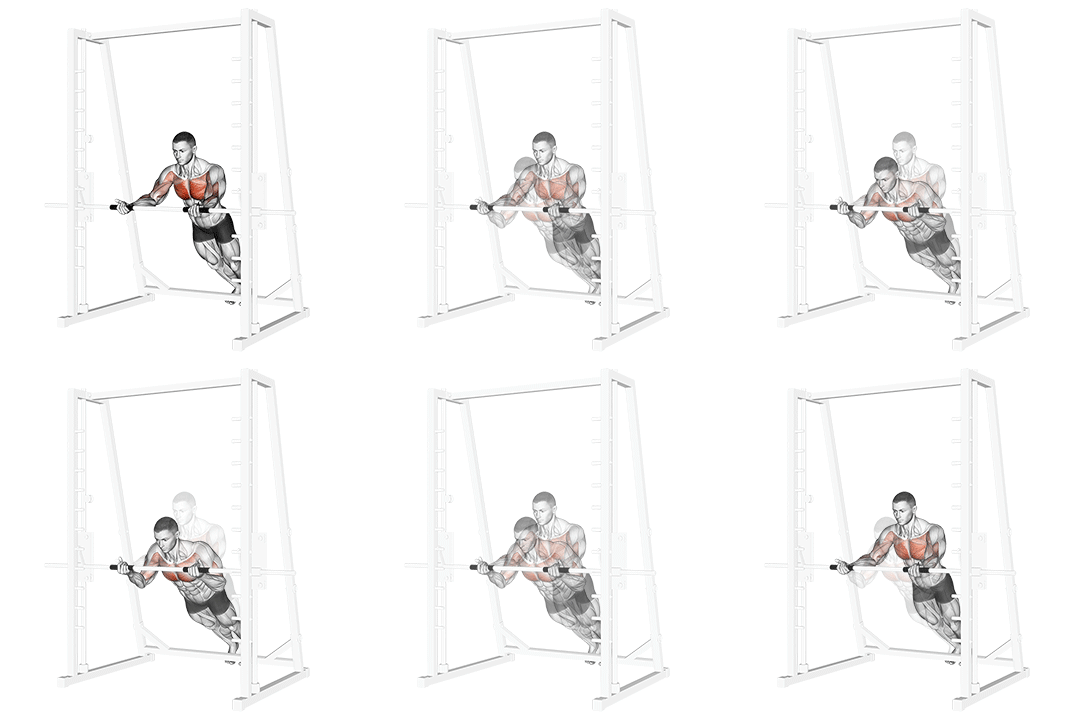
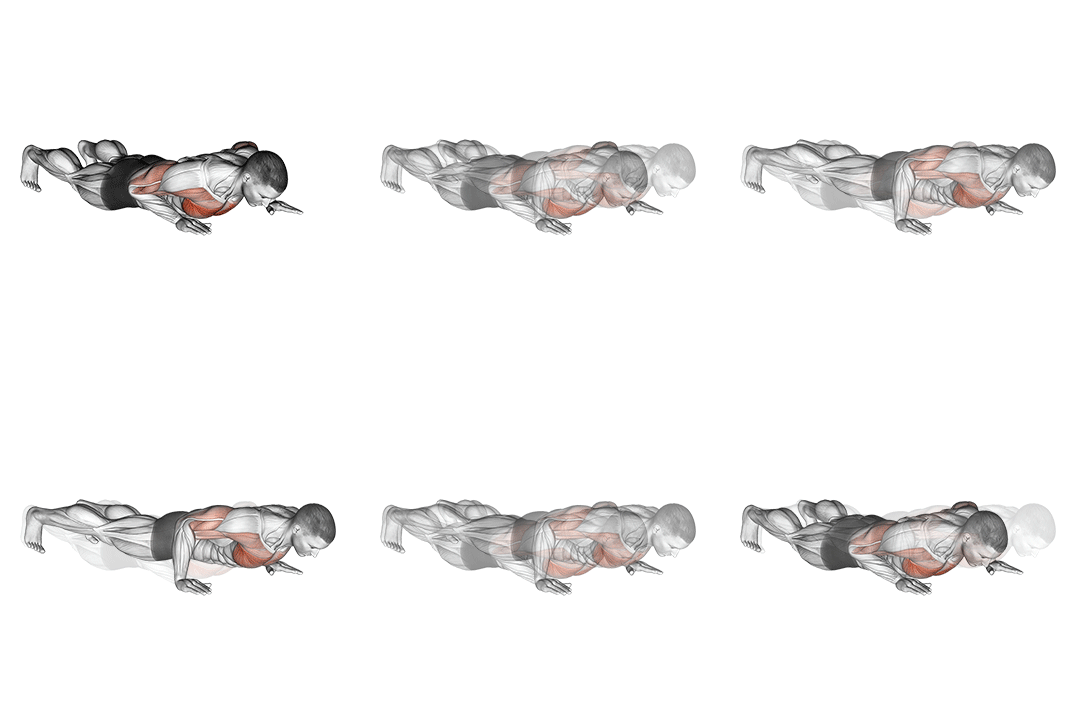
Clock Push-up
advanced strength exercise · body weight · targets pectorals
- Body part
- chest
- Primary target
- pectorals
- Equipment
- body weight
- Difficulty
- advanced
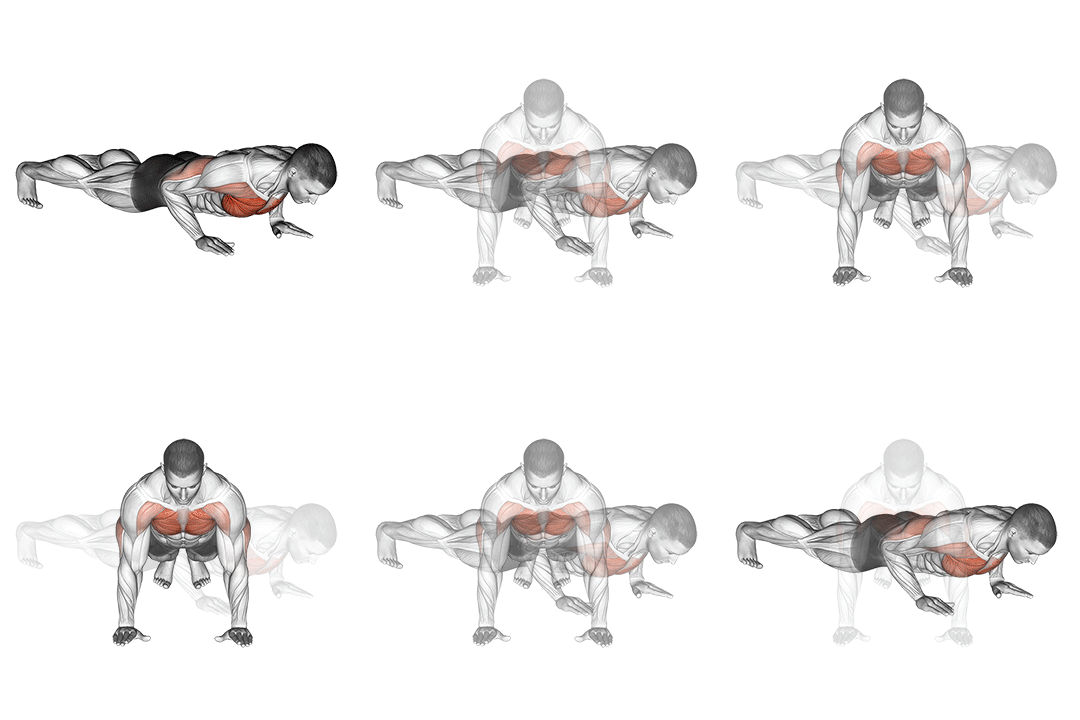
The clock push-up is an advanced variation that combines a standard push-up with a body rotation: at the top of each rep, you rotate the body to one side and extend the same-side arm out into the air, mimicking the hands of a clock. The combination demands all the chest and tricep work of a standard push-up plus the rotational core control of a side plank — performed under fatigue, on alternating sides. It's primarily a coordination and stability exercise rather than a hypertrophy builder. The added rotation cuts the rep counts you can accumulate compared to standard push-ups, but builds qualities those don't: rotational strength, single-arm support tolerance, and the kind of trunk control that transfers to combat sports, climbing, and most rotational athletic movements. Best used as a finisher or accessory in an upper-body session rather than a main strength piece. The complexity makes it ineffective for chest hypertrophy compared to a focused diamond push-up or weighted push-up, but its value as an athletic conditioning exercise is real. Programmed once a week alongside other variations, it adds variety without compromising progression on more focused movements.
Why train the Clock Push-up?
- Trains rotational core strength alongside pressing work — efficient combination.
- Builds shoulder stability under unilateral load during the rotation.
- Reveals trunk asymmetries between the two sides.
- Adds variety to push-up programming when standard reps have become routine.
- Carries over to combat sports, climbing, and most rotational athletic movements.
- No equipment required, can be performed in any space large enough for a push-up.
How to do the Clock Push-up: step by step
- 1Start in a high plank position with your hands directly under your shoulders and your body in a straight line.
- 2Lower your body towards the ground by bending your elbows, keeping them close to your sides.
- 3As you lower, rotate your body to the left, extending your left arm straight out to the side.
- 4Push back up to the starting position, while rotating your body to the center.
- 5Repeat the push-up, this time rotating your body to the right and extending your right arm out to the side.
- 6Continue alternating sides with each repetition.
Muscles worked
Primary
pectorals
Secondary
triceps, shoulders, core
Common mistakes to avoid
Twisting the lower back instead of the trunk
If the rotation comes from the lumbar spine rather than from the thoracic spine and shoulders, the lower back takes load it shouldn't. Initiate the rotation from the upper back and shoulders; the hips follow as a unit.
Cutting depth on the push-up to manage the rotation
Adding the rotation makes the push-up harder, so the temptation is to cut depth. Maintain full depth (chest near the floor) on every rep — partial push-ups train a worse pattern than fewer full push-ups.
Snapping into the rotation
Whipping into the side plank uses momentum and skips the actual core work. Rotate slowly — 1-2 seconds into the side plank, brief pause at the top, 1-2 seconds back. The control is the exercise.
Letting the bottom hip drop in the side plank position
If your bottom hip falls toward the floor during the rotation, the obliques have lost the fight. Drive the hip up so the body forms a straight diagonal line from heels to head.
Attempting it before mastering the basic push-up
Clock push-ups are an advanced variation. Build to 15+ strict push-ups before attempting them — adding rotation on top of a shaky pressing pattern reinforces bad form.
Easier and harder variations
Easier
Drop the rotation and do strict push-ups with a brief side plank between reps (no extended arm). Or perform the same pattern but from a kneeling position to reduce the load.
Harder
Add a hold at the top of each rotation (3-5 seconds in the side plank position with the arm extended). Or add a leg raise during the side plank — lifting the top leg as you rotate.
Alternative exercises
Push-up to side plank
Same rotational concept without the extended arm. Slightly easier and more focused on the obliques.
T push-up
Often used as a synonym depending on the source. Look it up under either name when seeking video demonstrations.
Renegade row
Push-up plus alternating dumbbell row instead of rotation. Different upper-body component but similar anti-rotation core demand.
How to program the Clock Push-up into your training
Clock push-ups work best as a secondary movement after primary pressing work, or as a finisher in an upper-body session. Not ideal as the main exercise because the rep counts are too low for hypertrophy work. Sets and reps: 3 sets of 4-8 reps per side with 60-90 seconds rest. The added rotation cuts your usable rep count significantly compared to standard push-ups. In an upper body session: 4 sets of 8 push-ups or chest dips (main press), 3 sets of 6 clock push-ups per side (rotation work), 4 sets of 8 inverted rows or pull-ups (main pull), 3 sets of 30-second hollow holds (core). Done 2-3 times per week. As a finisher: 2-3 sets of 5 clock push-ups per side at the end of a workout. Adds useful core and shoulder stability work without significantly extending the session. For athletes building rotational power, pair clock push-ups with medicine ball throws or rotational cable work in the same session — train both controlled rotation (clock push-up) and explosive rotation (med ball throws). Do not program clock push-ups on the same day as heavy pressing or heavy oblique work. The cumulative shoulder and trunk load slows recovery and increases injury risk.
Recovery and frequency
Clock push-ups load the chest, shoulders, obliques, and serratus. 48-72 hours between sessions is the right cadence — the shoulders are usually the limiting recovery factor. Lateral shoulder soreness in the first 1-2 weeks of training is normal and fades with consistent practice. Sharp pain at the front or top of the shoulder during sets is a different signal — back off and reassess form. Foam roll the lats and chest weekly to maintain the thoracic mobility this exercise demands. Standard recovery practices cover the rest.
Frequently asked questions
How many sets and reps of clock push-ups should I do?
3 sets of 4-8 reps per side with 60-90 seconds rest. Quality of rotation matters more than rep count — stop the set when you can't hit a clean side plank with extended arm.
How often should I train the clock push-up?
1-2 times per week. The combined demand on shoulders and obliques means 48-72 hours of recovery between sessions.
Should I count one rep as both sides or each side separately?
Each side separately. Counting per side prevents accidentally favoring the easier side.
Why is one side so much harder than the other?
Trunk asymmetry — the dominant-arm side usually feels easier because the body is more practiced at stabilizing for that arm. The asymmetry typically narrows within 6-12 weeks of equal-rep practice.
Are clock push-ups good for chest growth?
Less effective than focused chest exercises (standard push-ups, diamond push-ups, weighted push-ups). The rotation cuts the rep counts you can accumulate, which limits hypertrophy potential. Use them for the rotational core benefits, not chest building.
Can I do clock push-ups if I can't do regular push-ups?
No — build to 15+ strict push-ups first. Adding rotation on top of a shaky pressing pattern reinforces bad form and increases injury risk.
Useful tools for this exercise
Build a workout with the Clock Push-up
Puna gives you guided bodyweight workouts you can do anywhere — no equipment, no gym, just structured progressions that build real strength.