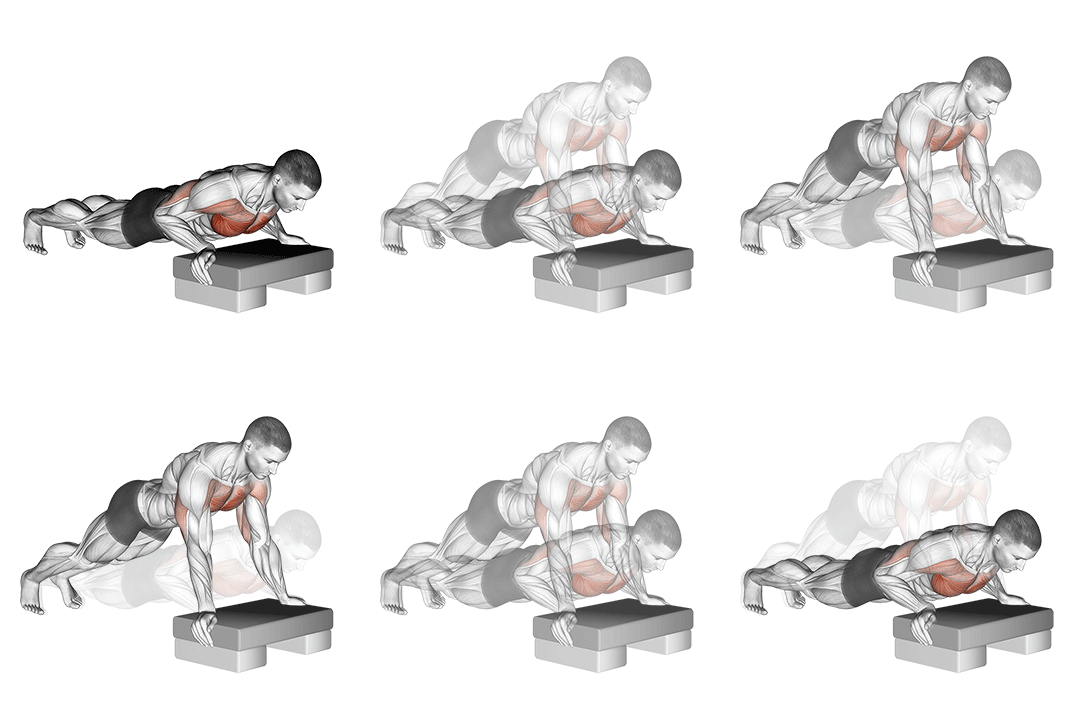
Incline Push-up
beginner strength exercise · body weight · targets pectorals
- Body part
- chest
- Primary target
- pectorals
- Equipment
- body weight
- Difficulty
- beginner
The incline push-up shifts the loading angle of a standard push-up by raising your hands above your feet, which reduces the percentage of body weight your arms have to press. That makes it the ideal entry point for anyone who can't yet manage a clean floor push-up — high schoolers returning to training, post-injury rehab, or anyone over 200 lb building a base. The lower the surface (a low coffee table vs. a kitchen counter), the harder the variation gets, so you can progress within the same movement for weeks before needing a new exercise. Mechanically it still trains the same chain — pectorals, anterior deltoids, triceps — but in a more forgiving range that lets you accumulate volume without form breakdown. That volume is what builds the connective tissue strength a beginner actually needs. People often skip this step in a rush to "real" push-ups and end up grinding bad reps for months; doing the incline version with strict form for 4-6 weeks builds a foundation that pays back fast when you do hit the floor. Use it as your primary push variation while you're building up, or as a warm-up movement once you've moved past it. It's also a smart fallback when you're traveling and can't access a gym — any solid surface above hip height does the job.
Why train the Incline Push-up?
- Builds the exact press pattern needed for floor push-ups, just at a friendlier angle that lets form survive.
- Lets you train chest and triceps with high reps when floor push-ups would force you to grind bad reps.
- Easy to progress: lower the surface a few inches every two weeks until you reach the ground.
- Doubles as an excellent warm-up for stronger trainees before heavier pressing or bench work.
- Requires only a wall, bench, or counter — works in hotel rooms, parks, or any office building.
- Friendlier on the wrists than floor push-ups, since the angle reduces wrist hyperextension.
How to do the Incline Push-up: step by step
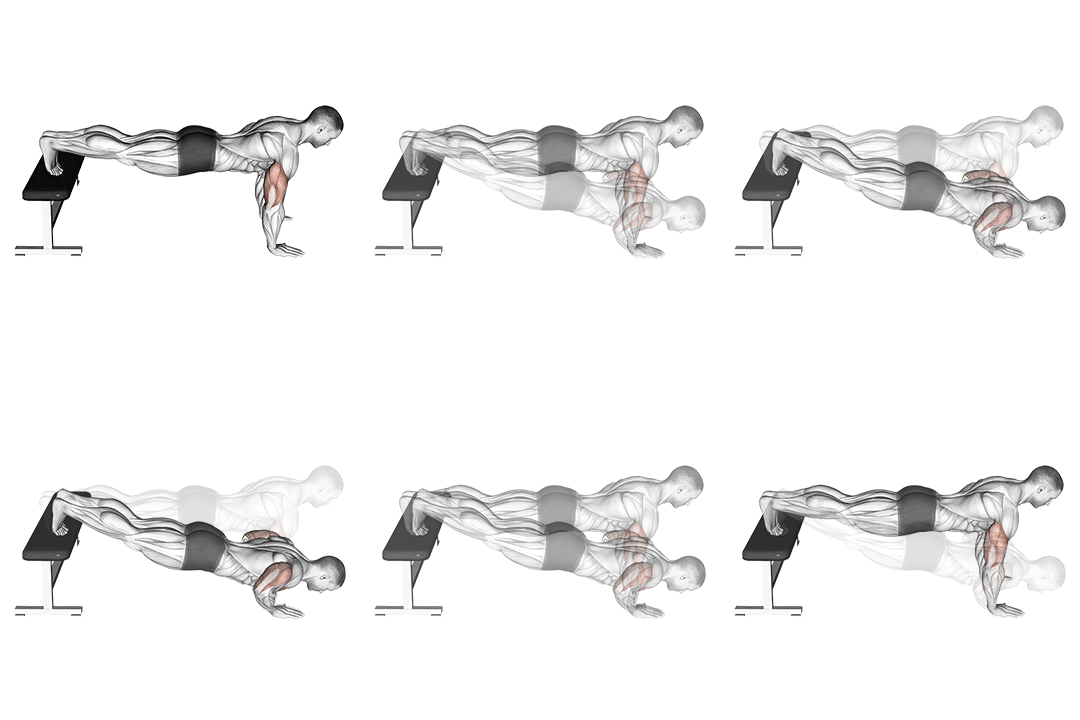
- 1Place your hands on an elevated surface, such as a bench or step, slightly wider than shoulder-width apart.
- 2Extend your legs behind you, resting on the balls of your feet, creating a straight line from your head to your heels.
- 3Lower your chest towards the elevated surface by bending your elbows, keeping your body in a straight line.
- 4Pause for a moment at the bottom, then push yourself back up to the starting position by straightening your arms.
- 5Repeat for the desired number of repetitions.
Muscles worked
Primary
pectorals
Secondary
triceps, shoulders
Common mistakes to avoid
Sagging hips and flared lower back
When you focus only on the arms, the midsection collapses. Brace your abs as if bracing for a punch and squeeze your glutes — your body should look like a straight ramp, not a banana.
Hands too far forward of the shoulders
Stretching your hands away from your body shifts load into the shoulders and removes the chest from the equation. Set your hands directly under your shoulders before lowering, and keep that alignment through every rep.
Choosing a surface that's already too easy
If you can do 20 clean reps without the chest burning, the surface is too high. Drop a few inches — incline push-ups only build strength when the last reps feel hard.
Letting the elbows flare to 90 degrees
Wide elbows turn the exercise into a shoulder-stress drill. Keep the upper arms at roughly 30-45 degrees from your torso to load the chest and triceps without compromising the shoulder joint.
Bouncing off the surface at the bottom
Tapping the chest and rebounding uses tendon elasticity instead of muscle force. Pause for half a second at the bottom of every rep — that pause is where the strength is built.
Easier and harder variations
Easier
If even a kitchen counter feels heavy, try a wall push-up first — same movement, even less load. Build up to 3 sets of 15 wall push-ups before progressing back to the counter or a higher bench.
Harder
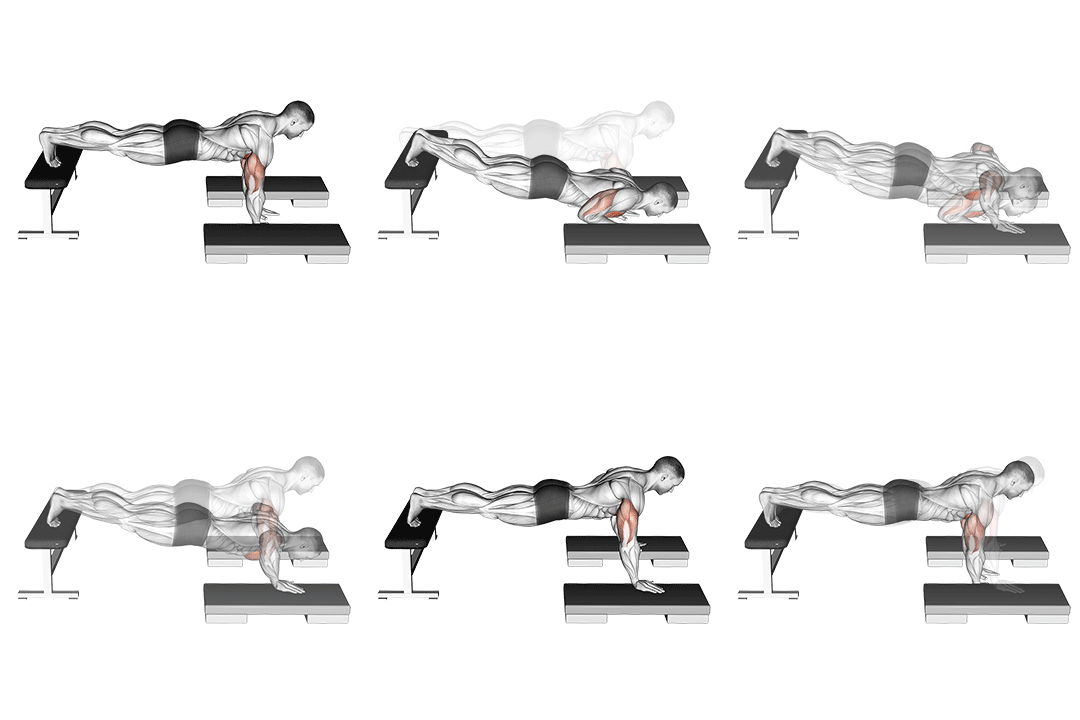
Once you can hit 3 sets of 15 reps on a knee-height bench, drop to a yoga block (about 6 inches off the floor), then to the floor itself. After floor push-ups feel manageable, move on to decline push-ups (feet elevated).
Alternative exercises
Knee push-up
Bridges the gap between incline and floor push-ups by reducing leverage instead of changing angle — useful if you're approaching the floor variation and want a different stimulus.
Eccentric floor push-up
Take 3-5 seconds to lower into a floor push-up, then push up from your knees. This builds full-range strength faster than staying on the incline forever.
Banded push-up
Loop a long resistance band across your back and under your hands to assist the press — keeps you on the floor while reducing load by a measured amount.
How to program the Incline Push-up into your training
Slot incline push-ups as your primary horizontal pressing movement during the 4-12 weeks you're building toward floor push-ups. A good template: 3 sessions per week, alternating with rest days. Each session, perform 3-4 sets of 8-12 reps with 60-90 seconds rest. Keep the surface height the same for 2 weeks, then drop the surface and reset the rep count. If you're using incline push-ups as a warm-up before heavier pressing, do 1-2 sets of 10-15 reps at a comfortable height before your main lifts. For total weekly volume, aim for 30-60 reps of incline push-ups across 2-3 sessions when this is your main pressing exercise. Less than 30 reps per week is too little to drive adaptation; more than 60 typically burns out the elbow tendons before it builds extra strength. Pair them in a session with a row or pull-up variation for balanced upper body work, plus a core exercise like a plank or dead bug. A complete 20-minute home workout could be: 3 sets of 10 incline push-ups, 3 sets of 8 inverted rows or band pull-aparts, 3 sets of 30-second front planks. Two or three of those sessions per week is enough to make real progress for the first 6 months of training.
Recovery and frequency
Incline push-ups are light enough that 2-3 sessions per week with at least 48 hours between them is the right cadence. Beginners sometimes feel surprising chest soreness in the first 1-2 weeks — that's normal connective tissue adaptation, not damage, and it fades within 3-4 weeks of consistent training. Wrist tightness is the more common complaint than muscle soreness. Spend 30-60 seconds before each session opening up the wrists: kneel and place your palms flat on the floor with fingers pointed back toward your knees, then gently lean back. If wrist discomfort persists, switch to push-up handles or a fist position to reduce extension. Walking, stretching, and 7-9 hours of sleep do more for recovery than any specific protocol.
Frequently asked questions
How many sets and reps of incline push-ups should I do?
For building strength, aim for 3 sets of 8-12 reps with 60-90 seconds rest. If you can hit 15+ clean reps, lower the surface — staying at a comfortable height stops driving adaptation.
How often should I train the incline push-up?
2-3 times per week with 48 hours between sessions. The chest and triceps need recovery time to rebuild stronger, even on lower-load exercises like this one.
Should I use a bench, table, or wall for incline push-ups?
Pick whatever lets you hit 8-12 reps with the last 2 reps feeling hard. Wall is for absolute beginners; counter and bench cover most progression; a low step or yoga block bridges to floor push-ups.
How many weeks until I can do floor push-ups?
Most beginners reach a clean floor push-up in 6-12 weeks of consistent incline training, 3 sessions per week. Faster if you have a strength training background, slower if you're starting from scratch in middle age.
Are incline push-ups good for women?
Yes — they're often a more honest entry point than knee push-ups, which can teach a slightly different motor pattern. Women can build to floor push-ups using the same incline progression as men, just typically starting from a higher surface.
Will incline push-ups help me bench press more?
Indirectly. They build base chest and tricep endurance that supports bench press training, but they won't add 50 lb to your bench by themselves. Use them to maintain pressing volume when bench access is limited or as a warm-up before heavier pressing.
Useful tools for this exercise
Build a workout with the Incline Push-up
Puna gives you guided bodyweight workouts you can do anywhere — no equipment, no gym, just structured progressions that build real strength.