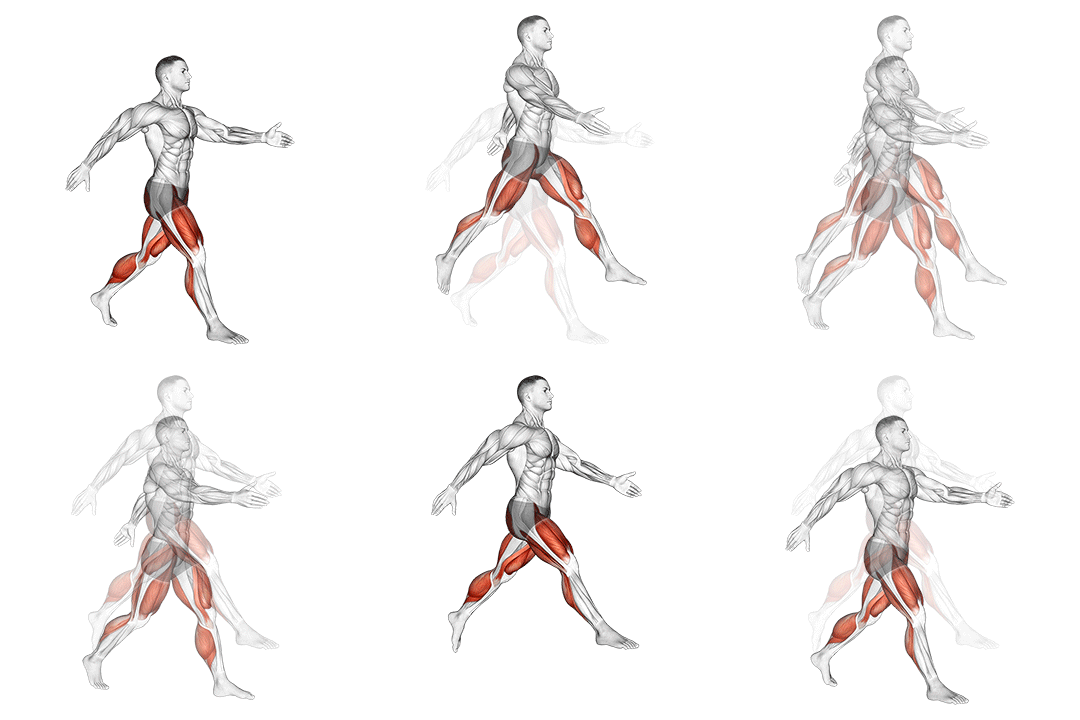
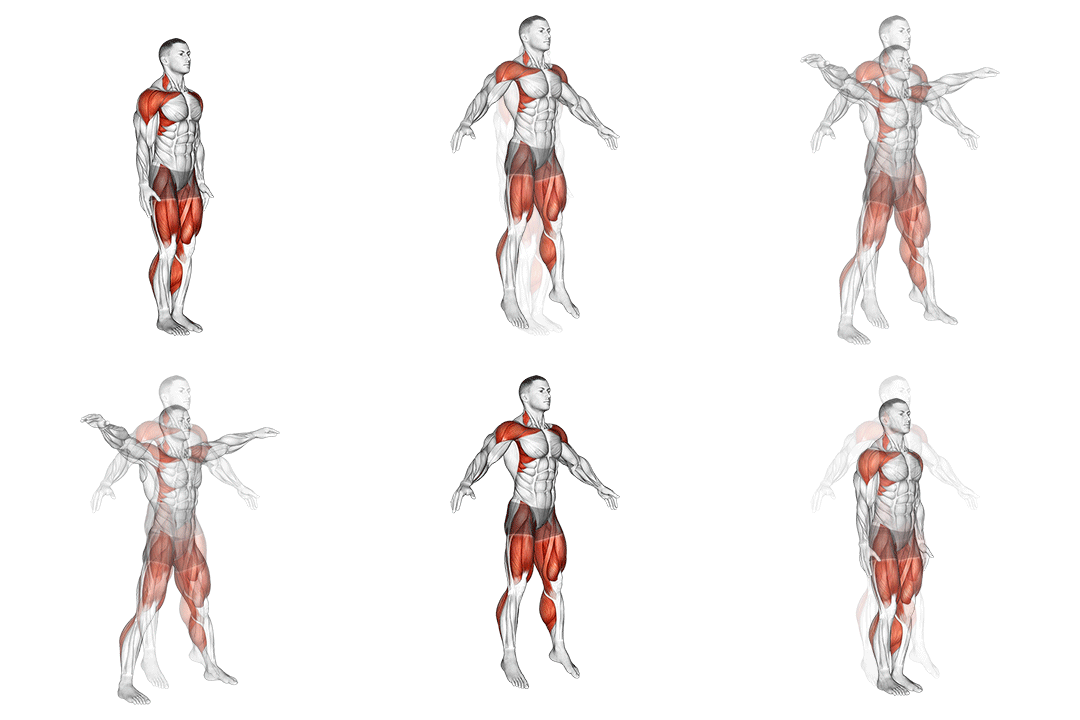
Run (equipment)
beginner cardio exercise · body weight · targets cardiovascular system
- Body part
- cardio
- Primary target
- cardiovascular system
- Equipment
- body weight
- Difficulty
- beginner
Running with equipment — typically meaning treadmill running, but also covering running with a weighted vest, parachute, or other resistance gear — extends the basic running pattern with mechanical or load-based variations. The treadmill is by far the most common equipment-based running context, providing a controlled environment for running regardless of weather, time of day, or available outdoor space. Weighted running adds resistance for athletes seeking sport-specific power and endurance development. Treadmill running gets dismissed by some outdoor purists as inferior to road or trail running, which oversimplifies the picture. Yes, the biomechanics differ slightly — the moving belt does some of the leg's pulling work, the impact characteristics are different than concrete, and the visual landscape is unchanging. But the cardiovascular stimulus is essentially identical, the heart rate response is the same, and for many trainees the controlled environment makes consistent training possible when outdoor running wouldn't be. Bad weather, dark mornings, busy schedules — the treadmill makes running achievable when the alternative is skipping. Weighted running serves a more specific niche: athletes in sports requiring running under load (military prep, certain combat sports, hiking with packs) and trainees building robust posterior-chain strength alongside cardiovascular fitness. It's not for general fitness — the joint demands are real and the injury risk increases significantly with added load. But for the right athletic context, weighted running provides specific adaptations that pure cardio doesn't replicate. Used appropriately, equipment-supported running fills training gaps that bodyweight-only running can't reach.
Why train the Run (equipment)?
- Provides a controlled environment for running regardless of weather, time, or outdoor conditions.
- Allows precise pace and incline control for structured training (intervals, tempo runs, hill simulation).
- Reduces impact stress slightly compared to concrete or asphalt, which can extend running careers for older athletes.
- Enables weighted running for sport-specific power and endurance development.
- Makes consistent training possible during travel, dark mornings, or unsafe outdoor conditions.
- Provides clear data tracking (pace, distance, calories, heart rate) for progress monitoring.
How to do the Run (equipment): step by step
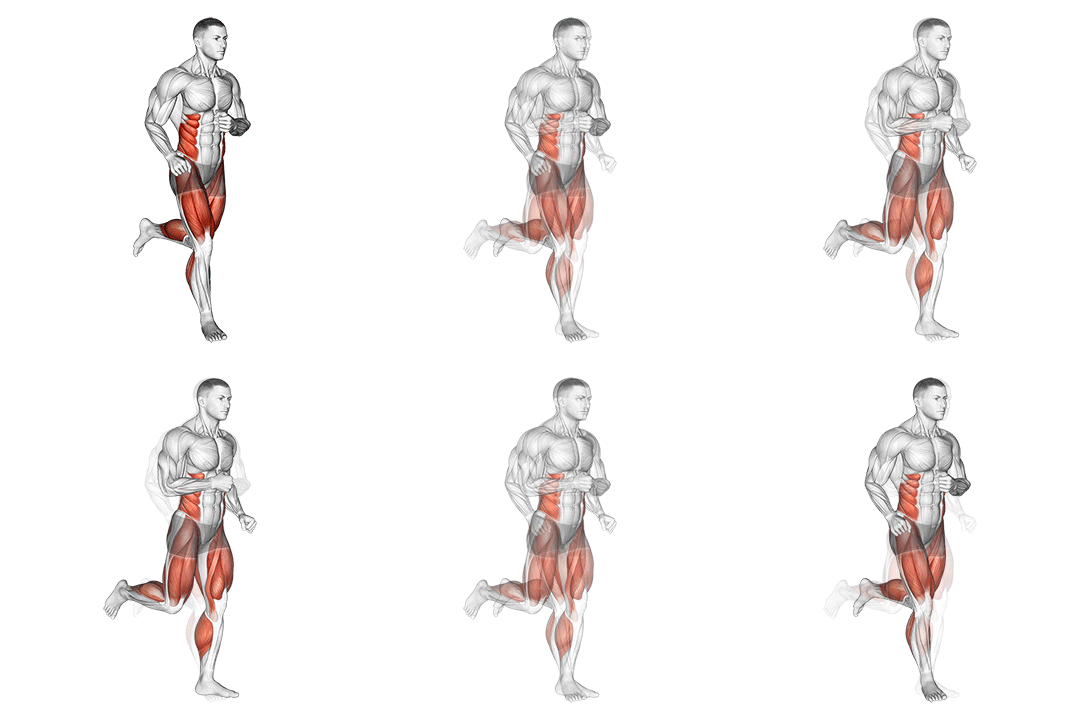
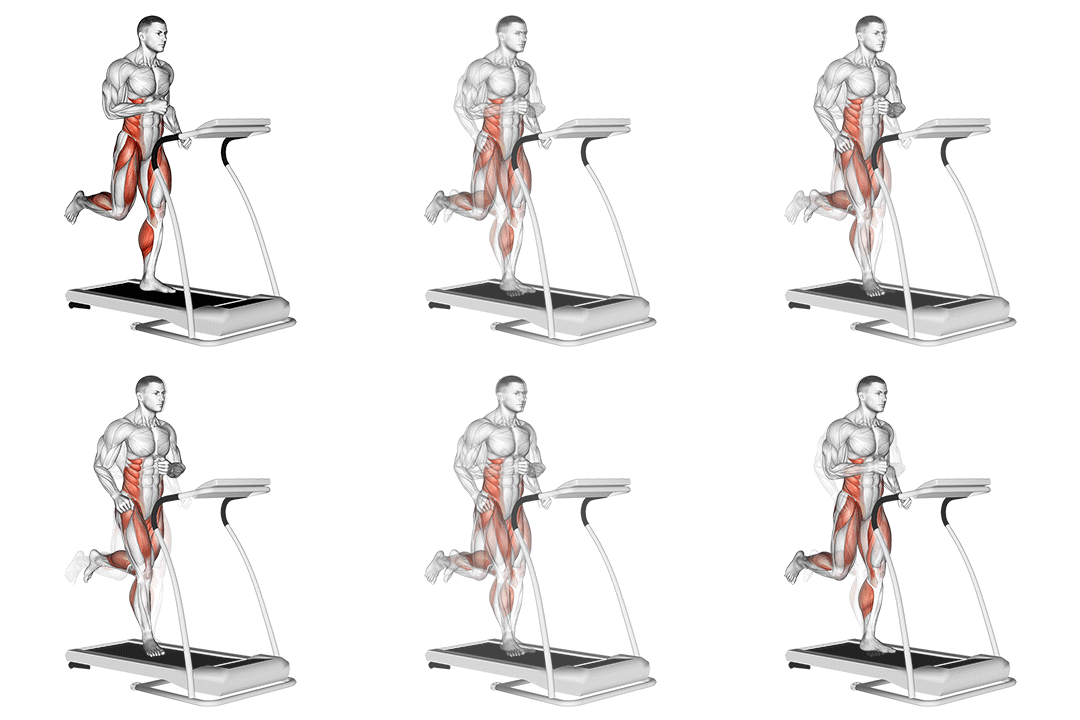
- 1Start by standing upright with your feet hip-width apart.
- 2Engage your core and keep your upper body relaxed.
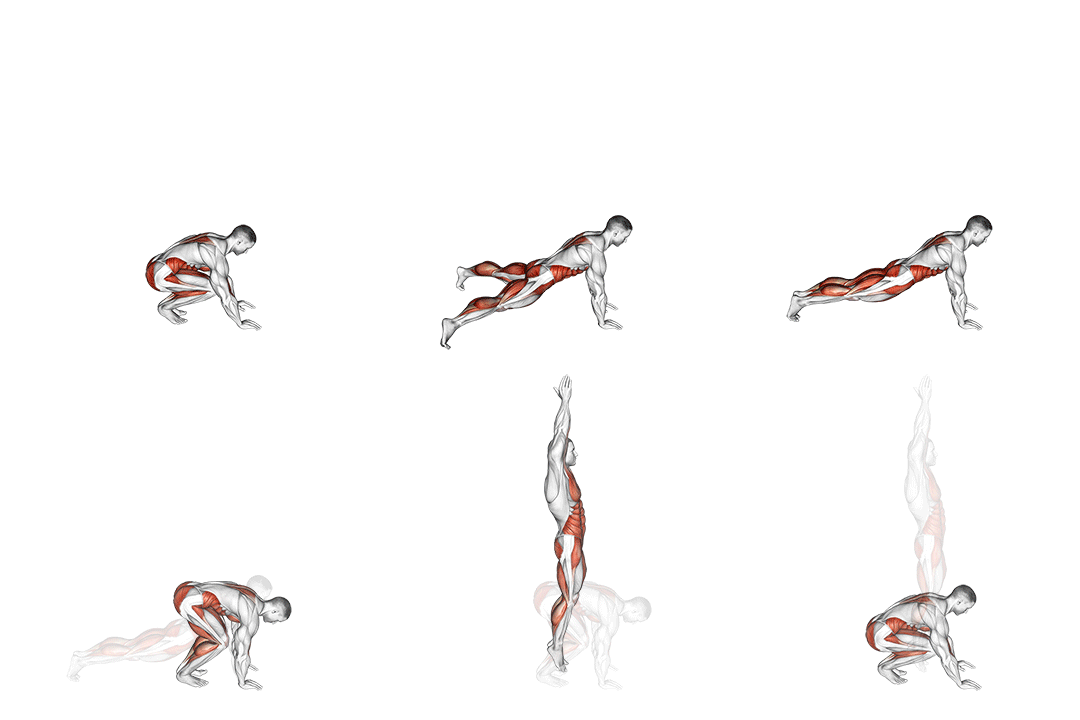
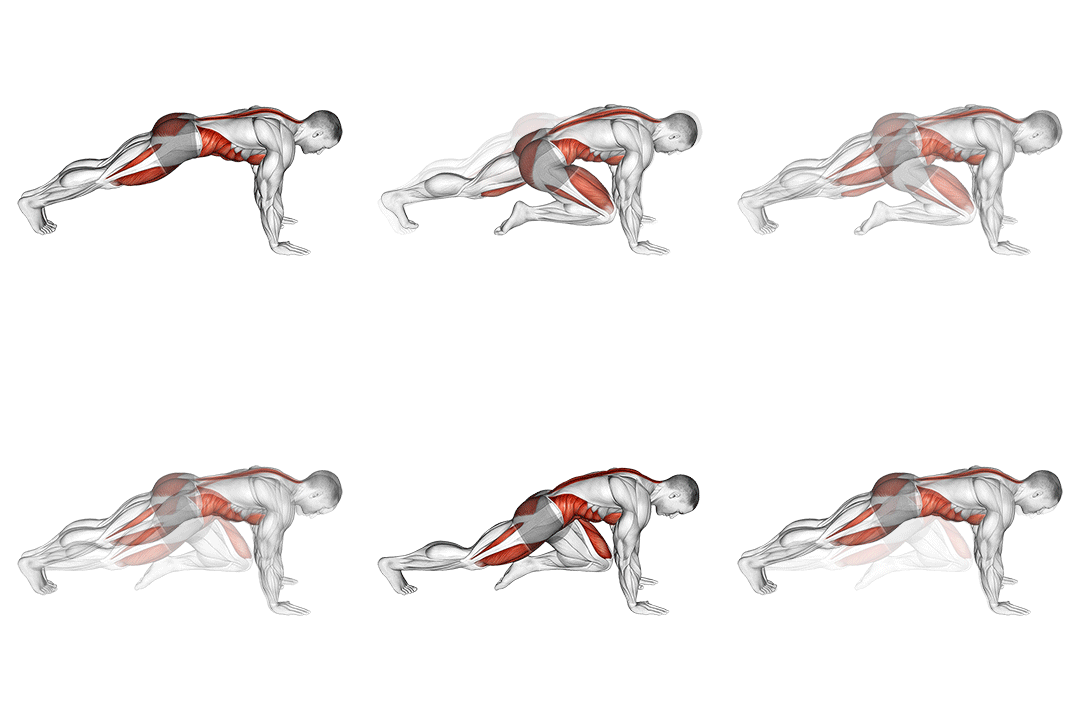
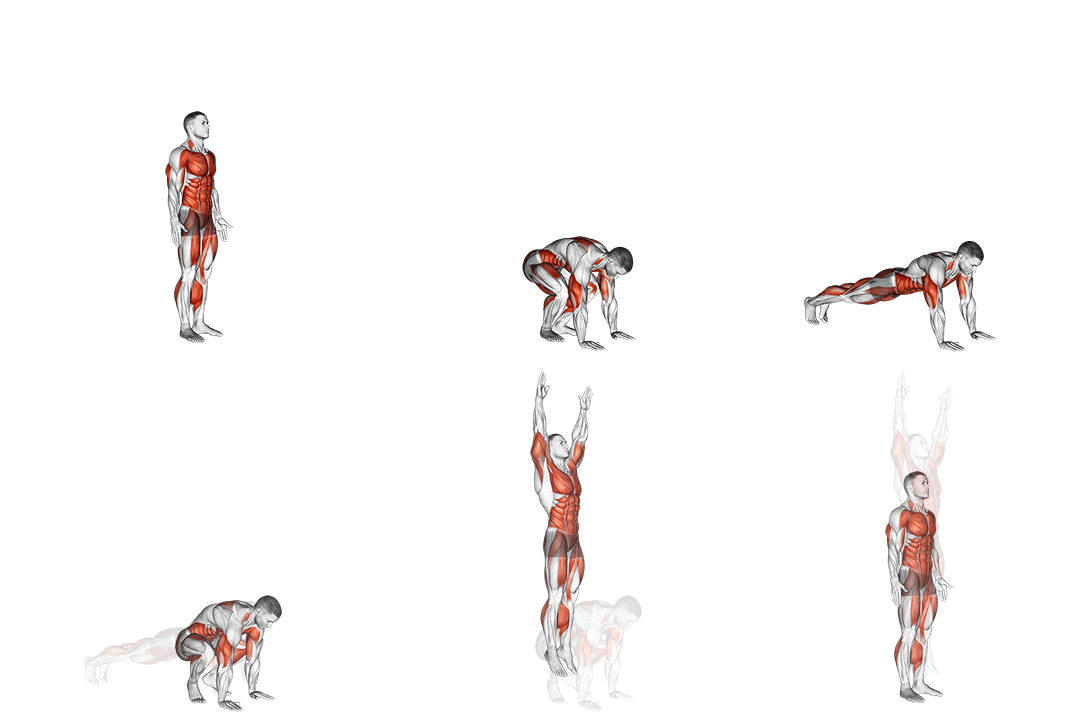
- 3Begin jogging in place, lifting your knees up towards your chest and landing softly on the balls of your feet.
- 4Maintain a steady pace and continue jogging for the desired duration or distance.
- 5Remember to breathe deeply and maintain good posture throughout the exercise.
Muscles worked
Primary
cardiovascular system
Secondary
quadriceps, hamstrings, calves
Common mistakes to avoid
Holding the handrails during running
Gripping the handrails during a treadmill run reduces the workout intensity dramatically and trains poor running form. Use the rails only for stepping on and off; once running, hands should be free with natural arm swing. If you can't run without holding on, the speed or incline is too high — reduce them.
Setting incline to 0% always
Treadmill belts assist forward motion slightly compared to outdoor surfaces. Setting a 1-2% incline approximates the energy demand of outdoor running. Always running flat undertrains compared to outdoor equivalents.
Adding too much weight too fast (weighted running)
Weighted running multiplies joint impact significantly. Starting with vests heavier than 5-10% of bodyweight nearly guarantees joint issues. Build up gradually — 5%, then 10%, then 15% over months — and reduce mileage when load increases.
Stepping on a fast-moving treadmill
Always start the treadmill at a low speed and increase gradually after you're moving. Stepping onto a moving belt at running speed is how people fall and get hurt. Most modern treadmills have safety clips that stop the belt; use them for additional protection.
Treating the treadmill as a complete substitute for outdoor running
Treadmills don't replicate uneven terrain, wind resistance, varied gradients, or the proprioceptive demands of trail or road running. Use treadmill running as a complement to outdoor running rather than a complete substitute, especially if your goals include outdoor races or events.
Easier and harder variations
Easier
Walk on the treadmill at moderate pace instead of running — useful for beginners building cardiovascular base or older adults focused on safe joint loading. Or use the treadmill for run-walk intervals with the precise speed control to manage transitions.
Harder
Add incline (3-7%) to simulate hill running and increase intensity without speed change. Or progress to weighted treadmill running with a 5-15% bodyweight vest. For interval training, the treadmill's precise speed control makes structured intervals (e.g., 90 seconds at 8 mph, 60 seconds at 5 mph) easier than outdoor pace control.
Alternative exercises
Outdoor running
More natural movement pattern, better proprioceptive demand, varied terrain. Use outdoor running as the primary training when conditions allow; treadmill as backup.
Stationary cycling
Non-impact cardio alternative for treadmill environments. Useful when running stress is too high or for active recovery between hard runs.
Elliptical training
Low-impact cardio with running-like motion. Useful for runners returning from injury or building base without impact load.
How to program the Run (equipment) into your training
Equipment-supported running programming follows the same principles as outdoor running, with some adjustments for the specific equipment context. For treadmill running: 3-4 sessions per week of 20-40 minutes each, at conversational pace, with 1-2% incline. Treat it functionally identically to outdoor easy runs. Add 1 interval session per week using the precise speed control (e.g., 6x90 seconds at hard pace with 90 seconds easy). For weighted treadmill running: 1-2 sessions per week, 20-30 minutes at moderate pace, with 5-10% bodyweight vest. Build up vest weight slowly over months. Combine with unloaded running on other days; never train weighted running every session due to cumulative joint stress. For structured 5K or 10K training on treadmill: 4-5 sessions per week, mixing easy runs (3 sessions), tempo runs (1 session at 5K race pace), and intervals (1 session of 200m-800m repeats). The precise pace control of treadmills supports interval training particularly well. For weight loss goals: 3-4 sessions of 30-45 minutes at conversational pace, with 2-3% incline to slightly increase calorie burn. Combine with strength training and dietary management. For those switching from outdoor to treadmill running (winter, weather, etc.): increase volume slightly (5-10%) to compensate for the slight efficiency advantage of belt-assisted running. Add incline to bring effort closer to outdoor equivalent. Don't make all your running treadmill running if you compete outdoors. The biomechanics differ enough that exclusive treadmill training can cause issues during outdoor races.
Recovery and frequency
Equipment-supported running recovery follows the same patterns as outdoor running. Easy runs recover within 24 hours; hard interval sessions or long runs need 48-72 hours. Weighted running has higher recovery cost than unweighted — the added impact load on joints requires longer between sessions. Watch for joint pain, especially in knees, hips, and ankles, which can appear quickly with weighted running. Reduce volume or vest weight if any joint discomfort persists beyond 48 hours. The main treadmill-specific consideration is the consistent stride pattern. Outdoor running varies stride based on terrain, but treadmill running uses the same stride for the entire workout, which can produce repetitive strain issues over time. Incorporating outdoor running, varying treadmill speed and incline, and adding strength training all help reduce this risk. Standard recovery practices — sleep, hydration, protein intake — apply equally to all forms of running.
Frequently asked questions
Is treadmill running as good as outdoor running?
For cardiovascular fitness, essentially equivalent. For sport-specific running performance, outdoor running better matches the demands of races and outdoor events. For consistency through bad weather and dark seasons, treadmill running is irreplaceable. Both have legitimate roles.
What incline should I set on a treadmill?
1-2% approximates the energy demand of outdoor running on flat ground. Higher inclines (3-7%) simulate hill training. 0% is slightly easier than outdoor running due to belt assistance.
How heavy should a weighted vest be?
Start at 5% of bodyweight. Build to 10% over weeks if joints tolerate well. 15% is appropriate for advanced athletes; beyond that, the joint stress increases dramatically. Don't add weight to your maximum running speed — reduce pace when load increases.
Will weighted running hurt my joints?
It can if built up too fast. Start with 5% bodyweight vest, reduce mileage by 30-50% during the introduction phase, and progress weight gradually over months. Most weighted running injuries come from doing too much too soon, not from the loading itself.
Should I use the treadmill or run outdoors?
Both. Outdoor running provides better biomechanical training and varied terrain. Treadmill running provides consistency and convenience. Most successful runners use both depending on weather, schedule, and training goals.
How long should treadmill runs be?
Same as outdoor runs based on goals. 20-30 minutes for general fitness, 30-60 minutes for endurance training, 45-90 minutes for long runs in race training programs. Build duration gradually using the 10% weekly increase rule.
Useful tools for this exercise
Build a workout with the Run (equipment)
Puna gives you guided bodyweight workouts you can do anywhere — no equipment, no gym, just structured progressions that build real strength.