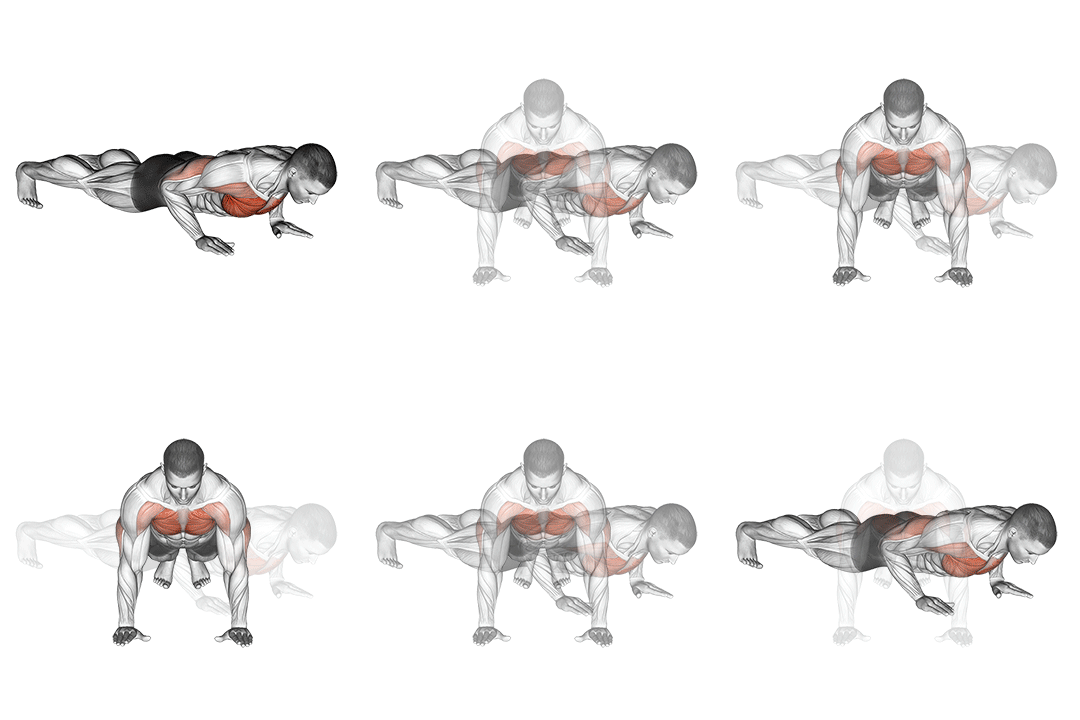
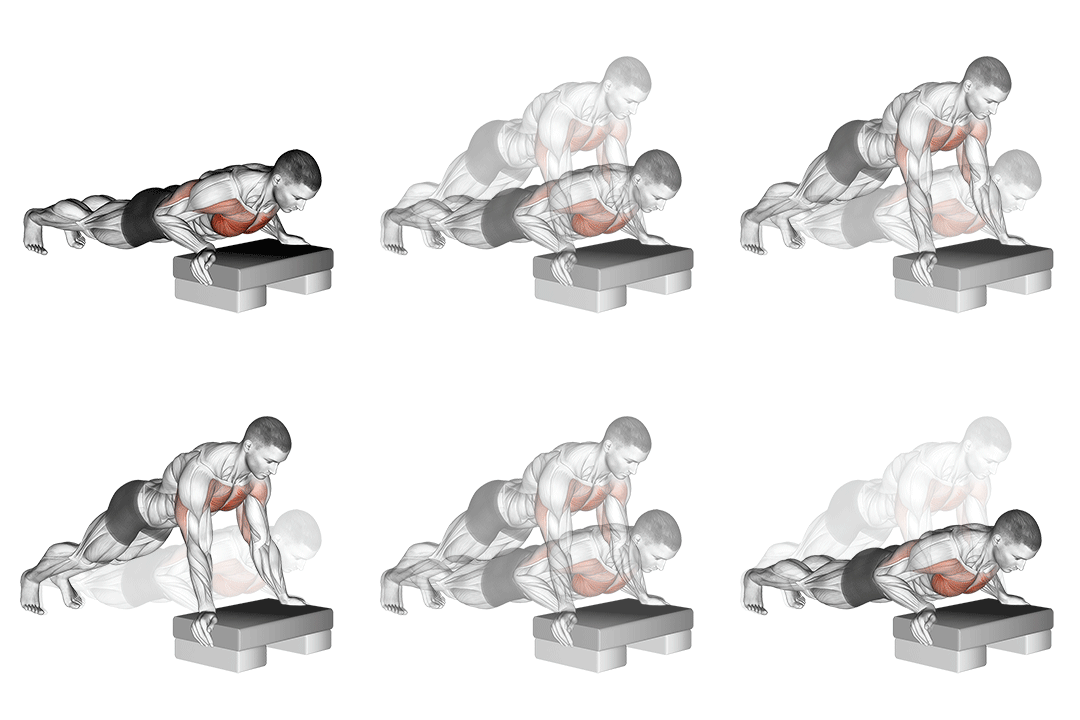
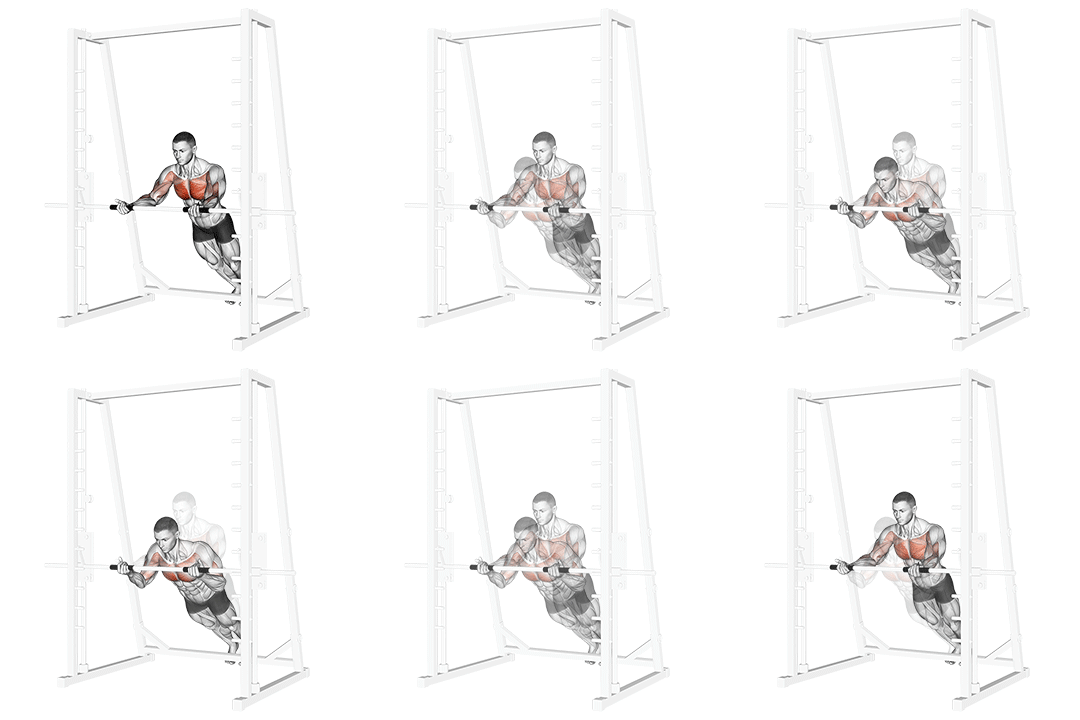
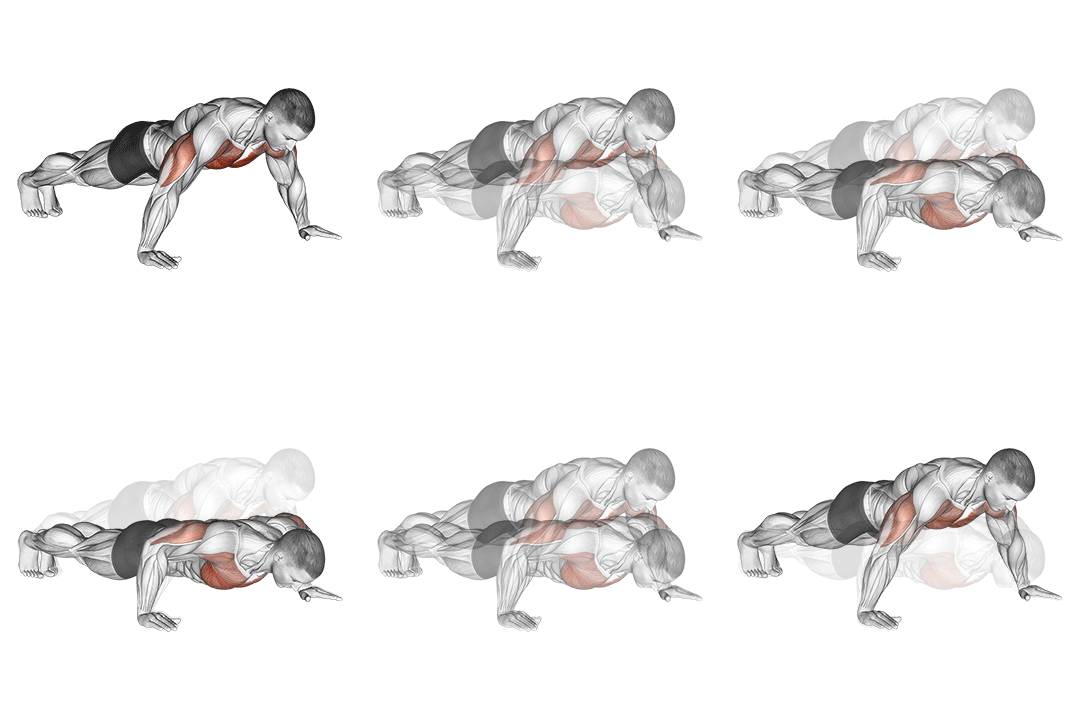
Wide Hand Push Up
intermediate strength exercise · body weight · targets pectorals
- Body part
- chest
- Primary target
- pectorals
- Equipment
- body weight
- Difficulty
- intermediate
The wide hand push-up is a chest-emphasis variation of the standard push-up where the hands are placed significantly wider than shoulder width. The wider hand position changes the biomechanics in two key ways: it shortens the range of motion (the chest doesn't have to travel as far to reach the floor), and it shifts more of the load onto the chest at the expense of the triceps and shoulders. Done correctly, it's one of the most chest-targeted bodyweight exercises in existence. This variant fills a specific niche in push-up programming. Standard push-ups balance work across the chest, shoulders, and triceps. Diamond and close-grip variations bias toward the triceps. Wide push-ups bias toward the chest, particularly the outer fibers of the pectoralis major. Trainees who want to develop chest width specifically — or who feel their chest under-engaged during standard push-ups — find wide push-ups significantly more effective for the goal. The trade-off is increased shoulder demand at the bottom of the rep, especially the front of the shoulder, which can become a problem at high volume. Programmed as part of a varied push-up rotation alongside standard and close-grip variations, wide push-ups provide useful chest-emphasis stimulus without the equipment demands of bench press or dips. Done as a primary push-up variant for trainees with shoulder issues, they can become problematic over time. The shoulder loading at the bottom is the main consideration — most trainees who get hurt with wide push-ups did high volume without adequate shoulder mobility work or rotated through them too long without varying push-up positions.
Why train the Wide Hand Push Up?
- Biases load toward the chest, especially the outer pectoralis fibers, more than standard push-ups.
- Develops chest width that's often hard to build with bodyweight-only training.
- Provides a useful push-up variation for trainees who under-engage their chest during standard push-ups.
- Pairs well with close-grip push-ups to provide chest and triceps emphasis on alternating sessions.
- Requires no equipment and minimal space — usable anywhere.
- Trains the core stability needed to maintain plank position through a wider arm position.
How to do the Wide Hand Push Up: step by step
- 1Start in a high plank position with your hands wider than shoulder-width apart.
- 2Keep your body in a straight line from head to toe.
- 3Lower your chest towards the ground by bending your elbows, keeping them close to your sides.
- 4Push through your palms to extend your arms and return to the starting position.
- 5Repeat for the desired number of repetitions.
Muscles worked
Primary
pectorals
Secondary
triceps, shoulders
Common mistakes to avoid
Going too low at the bottom
The wider hand position increases shoulder loading at the bottom of the rep. Lowering until the chest touches the floor places the front of the shoulder in a vulnerable position. Stop the descent when the upper arms reach parallel to the ground; the bottom 10 degrees of range adds shoulder risk far more than chest benefit.
Letting the elbows flare to 90 degrees
When the hands are wider, the elbows want to flare even wider — sometimes to 90 degrees from the torso. This places extreme stress on the shoulder capsule. Keep the elbows at roughly 60-70 degrees from the torso, even with the wider hand position. This protects the shoulder while still emphasizing the chest.
Hips sagging or piking during fatigue
As the chest fatigues, the body wants to break alignment to reduce load. The hips sag (dropping toward the floor) or pike (lifting up). Brace the abs and glutes throughout — the body should travel as one unit, not in segments.
Wrist discomfort from the wide position
The wide hand position increases the angle of the wrist relative to the forearm, which can become uncomfortable for trainees with limited wrist mobility. If wrists hurt, reduce hand width slightly and add daily wrist mobility work (circles, prayer stretches) to build tolerance.
Programming wide push-ups as the only push-up variant
The wider position consistently loads the front of the shoulder. Trainees who only do wide push-ups for months often develop anterior shoulder issues. Rotate between standard, wide, and close-grip variations across training weeks to balance the loading patterns.
Easier and harder variations
Easier
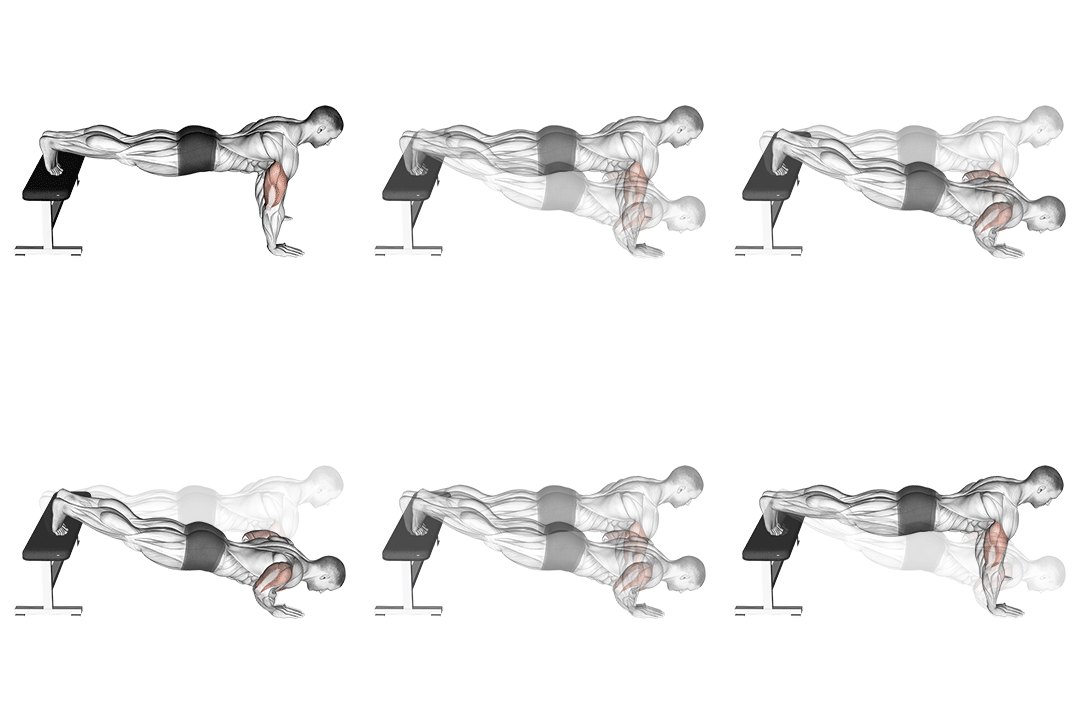
Drop to your knees or perform with hands elevated on a bench. The reduced load makes the wider position accessible to beginners who can't yet manage standard push-ups. Or reduce hand width slightly — somewhere between standard and 'truly wide' position — to find a setup the shoulders tolerate.
Harder
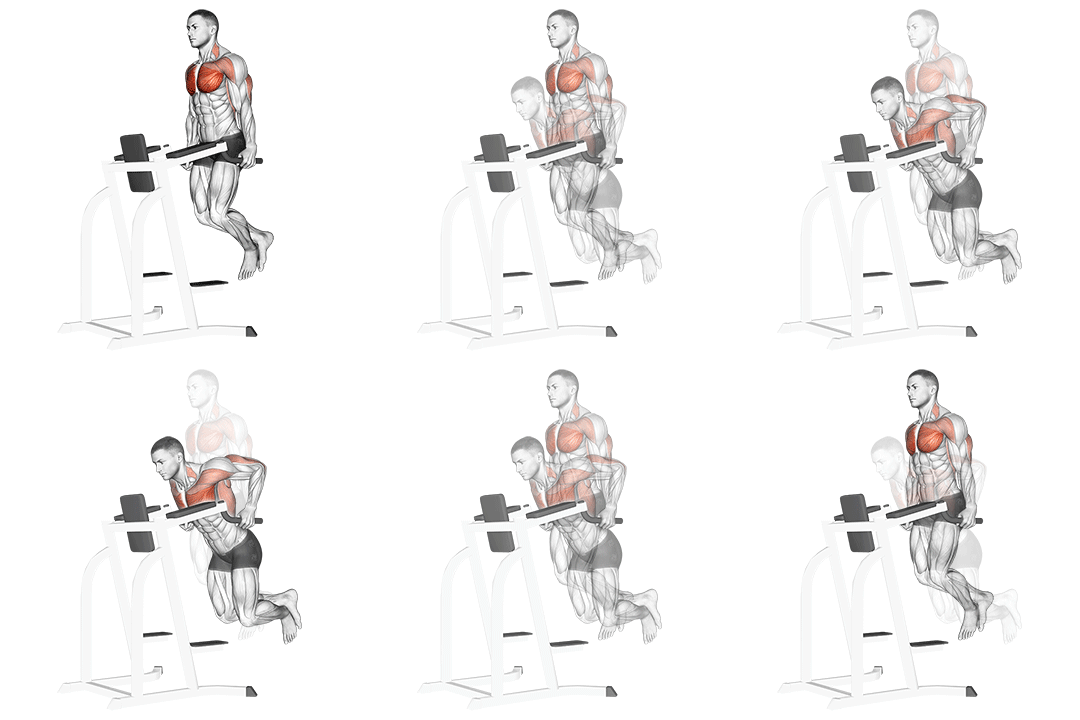
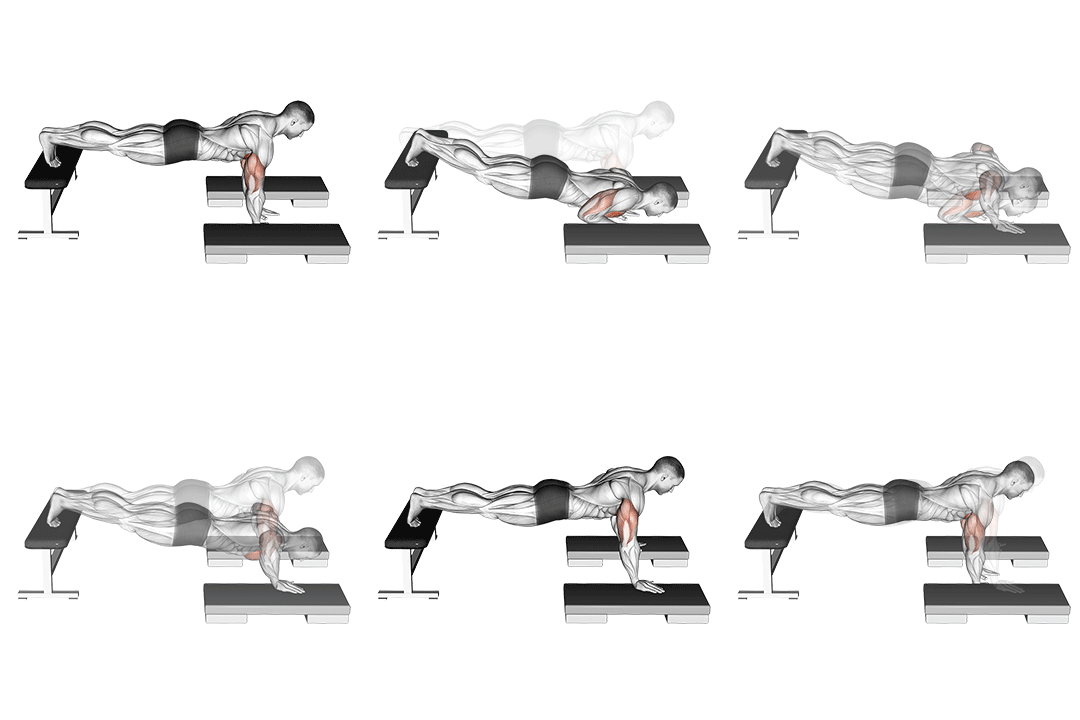
Add a 2-second pause at the bottom of each rep to increase time under tension. Or perform with feet elevated on a bench (decline position) to shift more bodyweight onto the arms. For advanced chest emphasis, transition to ring push-ups with wide grip — the unstable support adds significant difficulty.
Alternative exercises
Standard push-up
More balanced loading across chest, shoulders, and triceps. Use as the primary push-up variant; rotate wide push-ups in for chest emphasis.
Diamond push-up
Triceps-emphasis variation that complements wide push-ups. Alternating between wide and diamond gives chest- and triceps-biased work in different sessions.
Decline push-up
Increases shoulder emphasis through the elevated foot position. Different stimulus from wide push-ups; useful in a rotation.
How to program the Wide Hand Push Up into your training
Wide push-ups work best as a rotational variation within a broader push-up program rather than as a primary variant. In a rotation: alternate standard, wide, and close-grip push-ups across training weeks or sessions. A typical 3-day-per-week upper body program: Monday standard push-ups, Wednesday close-grip, Friday wide. Each session does 3-4 sets of 8-12 reps. The rotation distributes load across muscle groups and reduces shoulder cumulative stress. Sets and reps: 3-4 sets of 8-12 reps with 60-90 seconds rest. Progress to 4 sets of 12-15 once form is automatic. Total weekly volume of 50-100 wide push-up reps is reasonable as part of an overall push-up program. Frequency: 1-2 times per week is the sweet spot. The shoulders need at least 48-72 hours between wide push-up sessions due to the anterior shoulder load. For chest emphasis goals: place wide push-ups first in the session when chest is freshest. 4 sets of 10 wide push-ups, then 3 sets of 8 standard push-ups, then 3 sets of 6 dips or close-grip variations. For general fitness: include wide push-ups in a rotation but don't lead with them. Standard push-ups are the foundation; wide push-ups are accessory variation. Don't program wide push-ups daily — the cumulative anterior shoulder load consistently produces issues within 2-4 weeks of daily training. Rotate.
Recovery and frequency
Wide push-ups recover within 24-48 hours for the chest and triceps. The shoulders are the limiting factor — the anterior shoulder loading from the wide position takes longer to recover than from standard push-ups, often 48-72 hours. The main warning signs are anterior shoulder pain (front of the deltoid), pain at the top of the biceps near the shoulder, and clicking or popping in the shoulder during reps. Any of these suggest the shoulder is being overworked. Reduce volume, add rotator cuff and band work, and consider rotating to other push-up variations until the shoulder settles. Wrist discomfort is the second most common complaint, especially in trainees with limited wrist mobility. Daily wrist preparation (circles, prayer stretches, gentle eccentric work) addresses most cases. Standard chest soreness in the muscle belly is normal and fades within 48 hours.
Frequently asked questions
How many sets and reps of wide push-ups should I do?
3-4 sets of 8-12 reps with 60-90 seconds rest. Progress to 4 sets of 12-15 once form is automatic. Total weekly volume of 50-100 reps.
How often should I do wide push-ups?
1-2 times per week as part of a rotation with standard and close-grip variations. The shoulders need 48-72 hours between wide push-up sessions due to the anterior loading.
Wide vs standard push-up: which is better?
Different goals. Standard push-ups balance work across chest, shoulders, and triceps. Wide push-ups bias toward chest. For chest emphasis, wide is better; for general fitness, standard is better. Most well-rounded programs include both.
Will wide push-ups build my outer chest?
Yes, more directly than standard push-ups. The wider hand position increases load on the outer pectoralis fibers, which is the area most associated with 'chest width.' For trainees specifically targeting outer chest, wide push-ups have real value.
How wide should my hands be?
Roughly 1.5-2x shoulder width. Beyond that, the shoulder loading becomes excessive without much added chest benefit. The exact width depends on shoulder mobility — find a position where the shoulder feels stable at the bottom and don't go wider.
Why do my shoulders hurt after wide push-ups?
The wider position places more load on the front of the shoulder. If shoulders hurt, reduce hand width slightly, stop the descent earlier (don't go full depth), and rotate in close-grip and standard push-ups to balance loading. If discomfort persists, see a physiotherapist.
Useful tools for this exercise
Build a workout with the Wide Hand Push Up
Puna gives you guided bodyweight workouts you can do anywhere — no equipment, no gym, just structured progressions that build real strength.