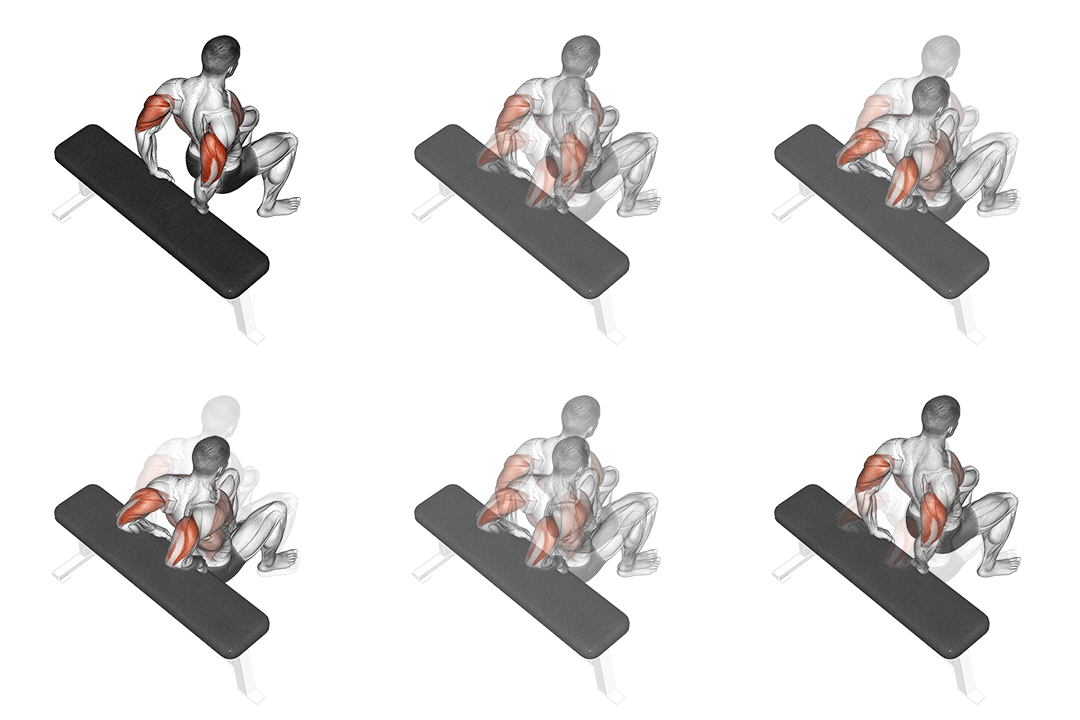
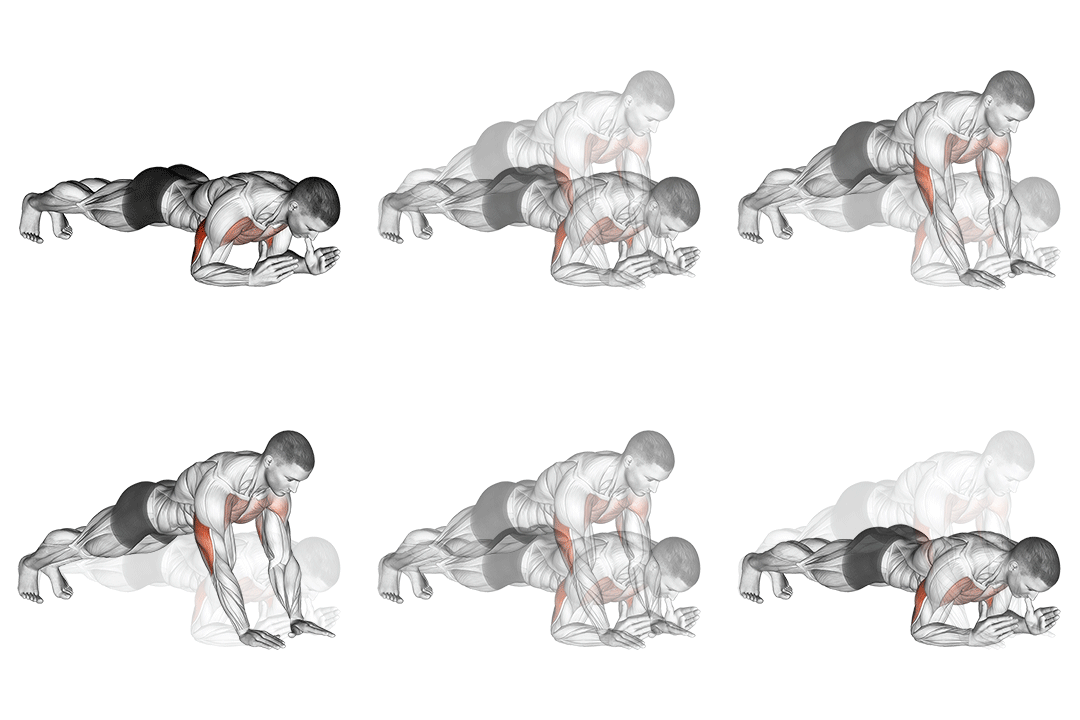
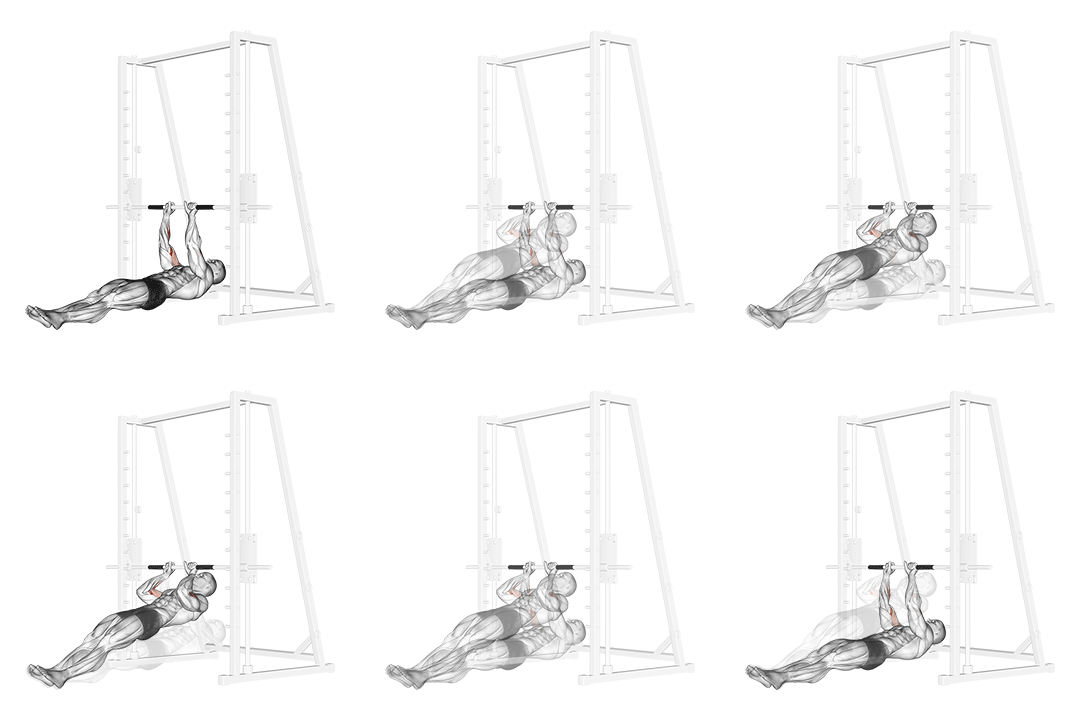
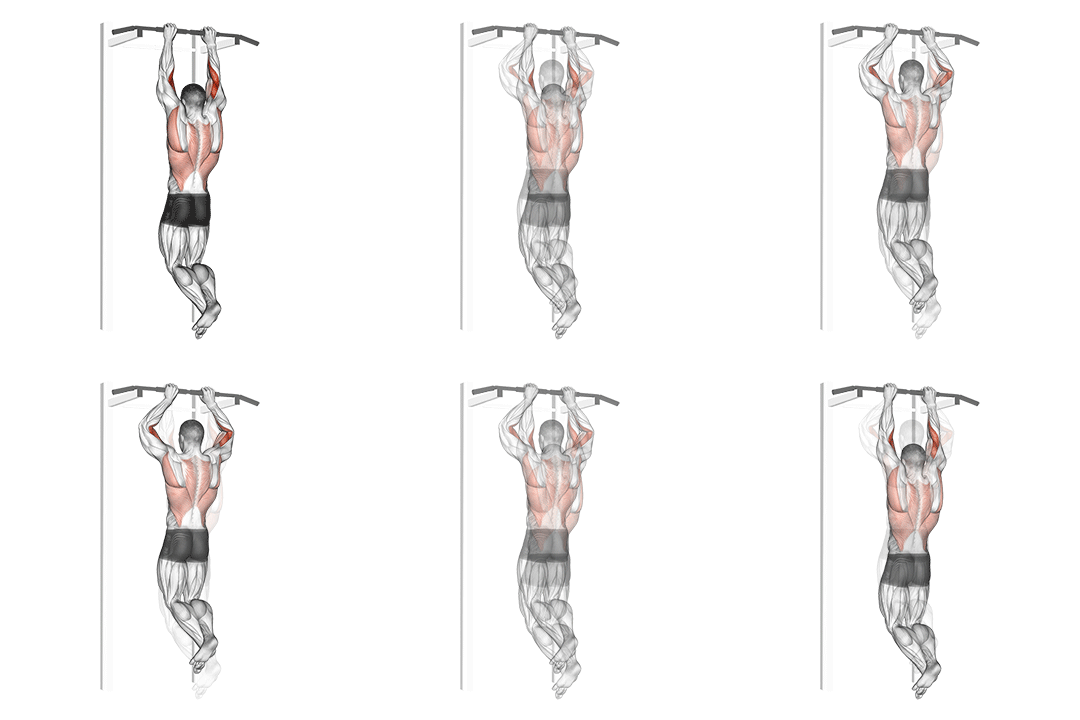
Triceps Stretch
beginner stretching exercise · body weight · targets triceps
- Body part
- upper arms
- Primary target
- triceps
- Equipment
- body weight
- Difficulty
- beginner
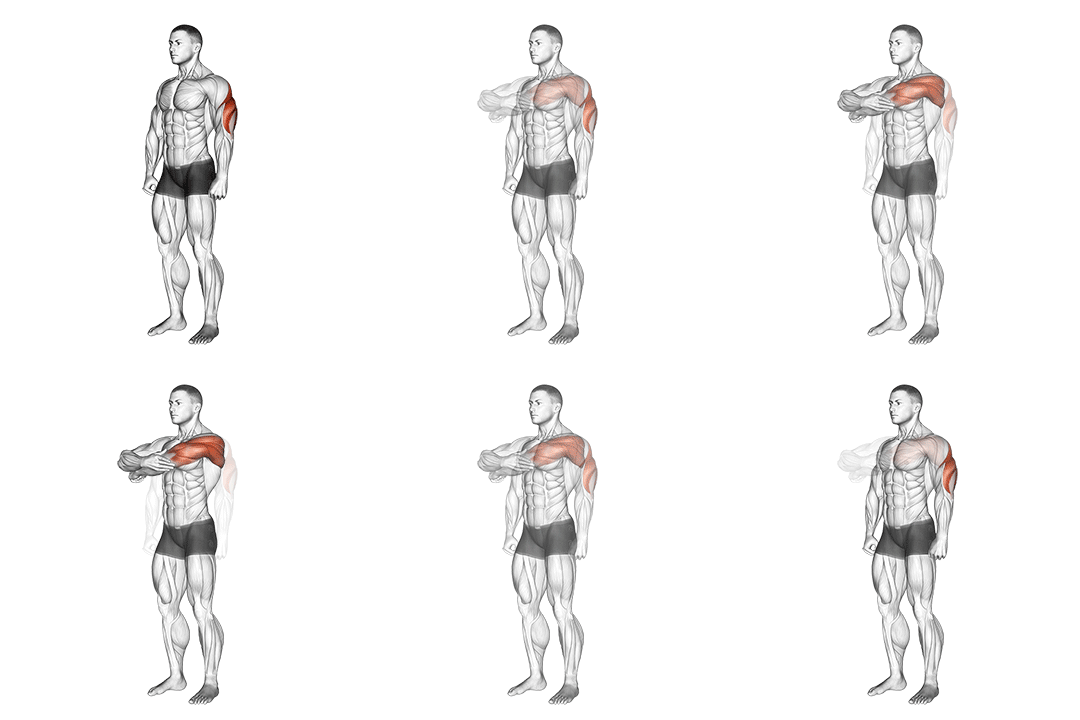
The triceps stretch — the basic version where you reach one arm overhead, bend the elbow so the hand drops behind the head, and use the opposite hand to gently support the elbow — is the simplest mobility drill for the back of the upper arm. It's the introductory version of the more aggressive overhead triceps stretch with active assist; the basic triceps stretch focuses on accessibility and gentle daily maintenance rather than pushing range. The triceps shorten quietly across years of training and daily life. Every push-up, every dip, every time you straighten your arm to reach for something repeats the same elbow extension pattern, and the long head of the triceps — which crosses both the elbow and shoulder — accumulates resting tightness over time. Most people never feel it directly; it shows up as restricted overhead reach, slight tightness at the back of the upper arm after long lifting blocks, and the kind of background stiffness that doesn't register as a problem until you actually stretch and feel how much was there. This drill is for the lifter who wants daily triceps maintenance without committing to a more advanced mobility routine. It takes 60 seconds, requires nothing, and sits well in any post-workout cooldown or evening wind-down. For people who train upper body 3+ times per week, it's worth doing daily; for everyone else, 2-3 times per week is enough to keep the triceps moving freely. As a beginner-friendly entry to overhead mobility work, it pairs naturally with shoulder rolls and gentle lat stretches.
Why train the Triceps Stretch?
- Maintains resting length in the triceps, especially the long head that shortens with frequent pressing work.
- Counters the chronic elbow-extension shortening pattern that accumulates from daily life and training.
- Improves overhead arm comfort during lifting, reaching, and yoga poses requiring vertical arm reach.
- Provides a gentle entry point for trainees new to mobility work or those returning after a layoff.
- Costs nothing, takes 60 seconds, and integrates easily into any post-workout cooldown or evening routine.
- Pairs well with the shoulder cross-body stretch and lat stretch for a complete upper-body mobility flow.
How to do the Triceps Stretch: step by step
- 1Stand or sit upright with your back straight.
- 2Extend one arm overhead, bending it at the elbow.
- 3Place your opposite hand on the bent elbow and gently pull it towards your head.
- 4Hold the stretch for 15-30 seconds, feeling a gentle stretch in your triceps.
- 5Release the stretch and repeat on the other arm.
Muscles worked
Primary
triceps
Secondary
shoulders
Common mistakes to avoid
Pulling forcefully on the elbow
The basic version is supposed to be gentle. Pulling hard on the elbow turns it into the deeper assisted overhead triceps stretch, which has more risk of shoulder strain. Use the assisting hand to support and guide, not to pull. If you want more depth, do the assisted version intentionally rather than turning a basic stretch into a forced one.
Leaning the torso to the side
When the assisting hand pulls the elbow, the body wants to lean toward it to reduce the stretch. Keep the torso upright throughout. If you have to lean to reach the position, your shoulder mobility is the limiting factor — work on that separately rather than compensating with side bend.
Letting the head poke forward
As the working arm reaches overhead, the chin tends to drift forward. Keep the chin slightly tucked toward the throat to maintain neutral neck position. A chin that pokes forward shifts loading patterns through the upper spine and reduces the cleanness of the triceps stretch.
Stretching only one arm
Many people are right-hand dominant and unconsciously stretch the dominant side longer or more often. Asymmetric stretching reinforces asymmetric tightness over time. Always do both arms equally, even if one feels less tight than the other.
Holding for only 5-10 seconds
Triceps respond to longer holds. Brief stretches barely cue the tissue to release. Aim for 30-45 seconds per arm, breathing slowly. Most of the release happens in the second half of the hold.
Easier and harder variations
Easier
Skip the assisting hand entirely — just bend the elbow overhead and let the hand fall behind your head naturally. The unassisted version is the gentlest entry to triceps mobility and is appropriate for older adults or anyone with shoulder restrictions.
Harder
Add a slight side bend toward the opposite side after positioning the elbow — this engages the lat alongside the triceps. Or transition to the deeper assisted overhead triceps stretch where the elbow is pulled toward the opposite ear. For maximum depth, perform lying face-up on a foam roller positioned along the spine, letting gravity assist the stretch.
Alternative exercises
Overhead triceps stretch (assisted)
Deeper version of the same stretch with more aggressive pull toward the opposite ear. Use this once the basic version stops producing range improvement.
Wall triceps stretch
Performed by placing the working hand on a wall behind you — the wall provides leverage and isolates the stretch more deeply. Useful when the basic version feels too gentle.
Cross-body shoulder stretch
Different muscle group (rear deltoid, rhomboids), but addresses the same overhead-reach restrictions from a different angle. Pair with the triceps stretch for compound benefit.
How to program the Triceps Stretch into your training
The basic triceps stretch is best programmed as a daily maintenance habit rather than as a workout-time stretch. The triceps respond well to consistent daily exposure, and the basic version is gentle enough that frequency rather than intensity drives the adaptation. Daily routine: 1-2 sets of 30-45 seconds per arm, performed once per day. Tying the practice to an existing trigger (post-shower, before bed, post-workout cooldown) makes it automatic. One minute total per day is enough to maintain range for most trainees. Post-workout cooldown: 1 set of 30-45 seconds per arm at the end of any upper-body session. The combination of warm tissue and post-exercise activation makes this an effective timing window for tissue length adaptation. Evening wind-down: 2 sets of 45 seconds per arm before bed, paired with shoulder rolls and a doorway pec stretch. The evening routine is particularly useful if you wake up with stiff shoulders or back of upper arms. For trainees new to mobility work: this is the right entry point. Start at 2-3 times per week, build to daily as the practice becomes habitual. Once daily practice is consistent and range plateaus, progress to the deeper overhead triceps stretch with active assist. For people who train upper body 3+ times per week: daily practice is worth the 60 seconds. The chronic elbow extension volume requires daily lengthening to keep the triceps moving freely. Don't program this as part of an isolated 'mobility day' — daily small doses far outperform infrequent long sessions for tissue length adaptation.
Recovery and frequency
The basic triceps stretch has zero recovery cost. Daily practice is safe and ideal — the triceps adapt to frequent low-volume input far better than to occasional intense sessions. The main warning signs are sharp pain in the shoulder joint or pinching sensations during the stretch. These suggest you're either pulling too hard with the assist hand or reaching beyond your shoulder mobility's current capacity. Reduce assist pressure, ensure the torso stays upright, and skip the stretch entirely on days when the shoulder feels off. For ordinary triceps tightness with only stretch sensation, the practice is safe, recovery is immediate, and consistency over 2-4 weeks produces gradual improvement in overhead comfort.
Frequently asked questions
How long should I hold the triceps stretch?
30-45 seconds per arm, ideally 1-2 sets per side. Holds shorter than 20 seconds don't provide enough cumulative input to cue the muscle to release. Longer than 60 seconds offers diminishing returns.
How often should I stretch my triceps?
Daily is ideal for trainees who do upper-body work 3+ times per week. For everyone else, 2-3 times per week is enough. The triceps respond well to frequency.
Should I do this before or after lifting?
After is better. Before lifting, brief dynamic mobility (arm circles, band pull-aparts) prepares the joint better than static stretching. After lifting, when tissue is warm, longer holds drive most adaptation.
Why don't I feel much in this stretch?
Either your triceps aren't particularly tight, or your shoulder mobility limits how deep you can take the position. If overhead reach is restricted, the stretch never reaches the muscle properly. Address the shoulder and lat mobility first; the triceps stretch becomes more useful afterward.
How is this different from the assisted overhead triceps stretch?
Same general motion, different intensity. The basic version has gentle support; the assisted version pulls the elbow toward the opposite ear with more force. Use the basic version for daily maintenance, the assisted version for actually building range over time.
Can I do this with elbow tendinitis?
Often yes, but with reduced intensity. Mild stretching usually doesn't aggravate tendinitis and can help reduce surrounding tissue tightness. Stay well within painless range, and consult a physiotherapist if symptoms worsen during or after the stretch.
Useful tools for this exercise
Build a workout with the Triceps Stretch
Puna gives you guided bodyweight workouts you can do anywhere — no equipment, no gym, just structured progressions that build real strength.