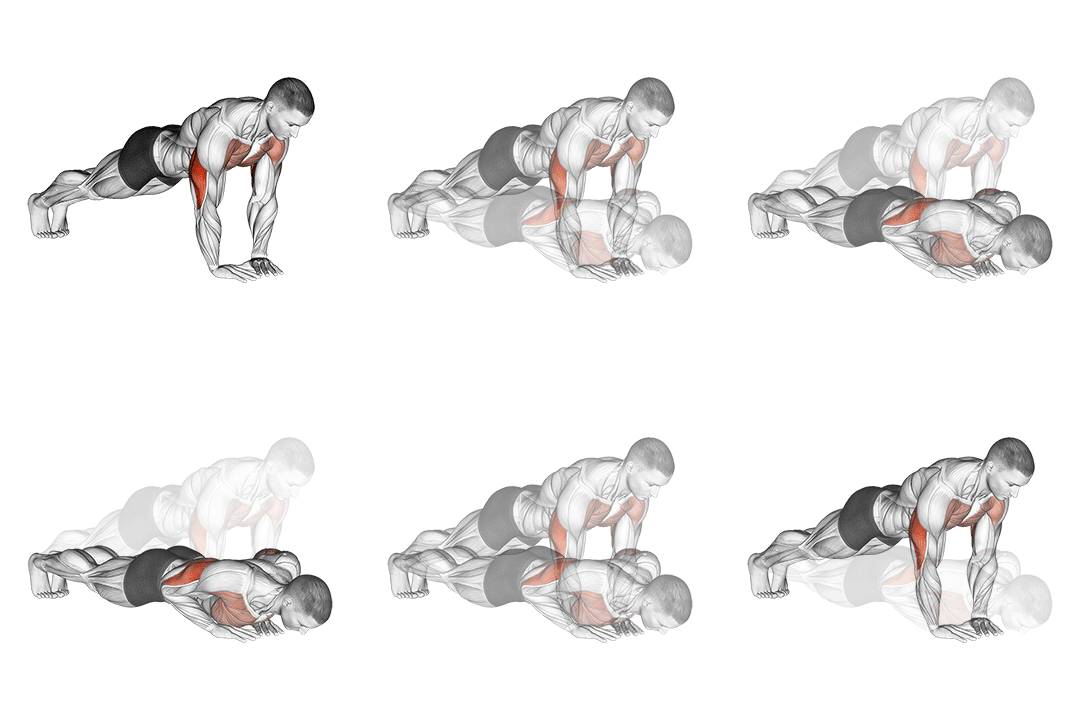
Close-grip Push-up
intermediate strength exercise · body weight · targets triceps
- Body part
- upper arms
- Primary target
- triceps
- Equipment
- body weight
- Difficulty
- intermediate
The close-grip push-up shifts the standard push-up's emphasis from chest to triceps by moving the hands closer together under the shoulders — typically positioned about shoulder-width apart or slightly inside that. The narrower base loads the triceps more directly and reduces the lever arm advantage the chest gets in a wide-grip push-up. The result is an exercise that builds tricep strength and lockout power without needing equipment. It sits in a useful programming position: harder than a standard push-up, easier than a diamond push-up, and accessible to anyone who can already do 8-10 standard reps. That makes it one of the most underused intermediate calisthenics movements — most trainees go straight from regular push-ups to diamond push-ups and skip the close-grip in between, missing a useful bridging exercise. The close-grip is also a smart accessory for athletes who do a lot of bench pressing or other chest work. It keeps tricep volume high without compounding the front-of-shoulder load that heavy bench accumulates. A 3-set finisher of close-grip push-ups twice per week pairs well with bench-focused programming to keep the triceps developing alongside the chest.
Why train the Close-grip Push-up?
- Shifts emphasis from chest to triceps — more direct triceps loading than a standard push-up.
- Builds lockout strength in the press, useful for overhead pressing and bench press.
- Accessible intermediate progression between standard push-ups and diamond push-ups.
- Requires no equipment; can be done anywhere a standard push-up works.
- Useful accessory for trained lifters who want extra tricep volume without front-shoulder fatigue.
- Trains the elbows to track properly under load — a skill that carries over to all pressing variations.
How to do the Close-grip Push-up: step by step
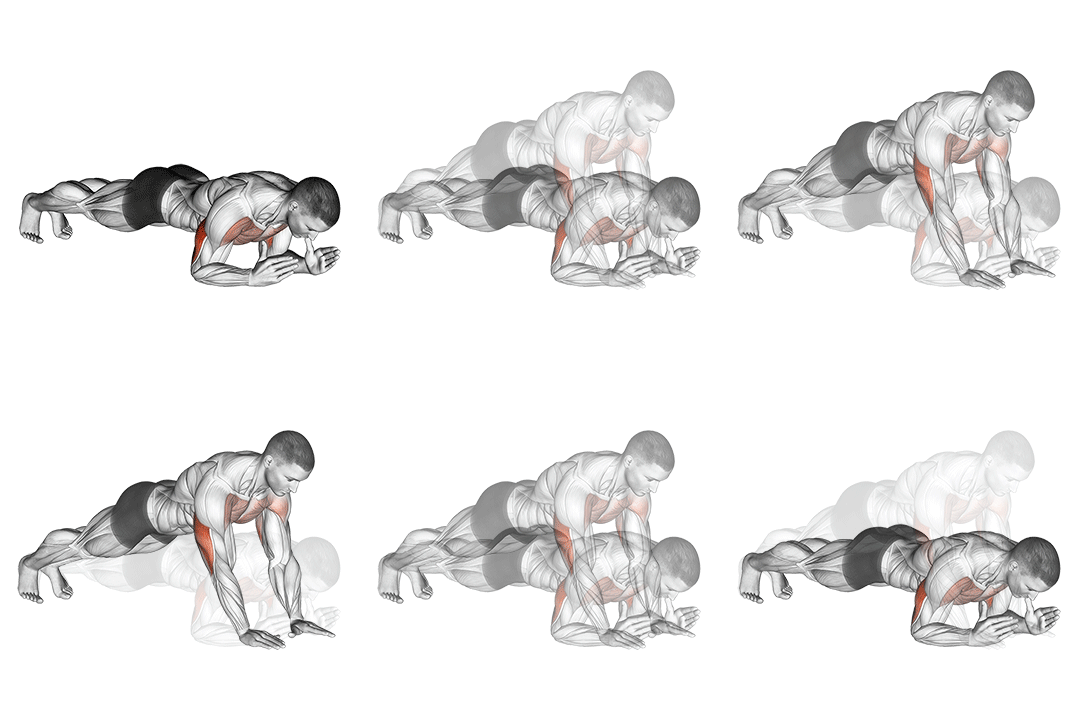
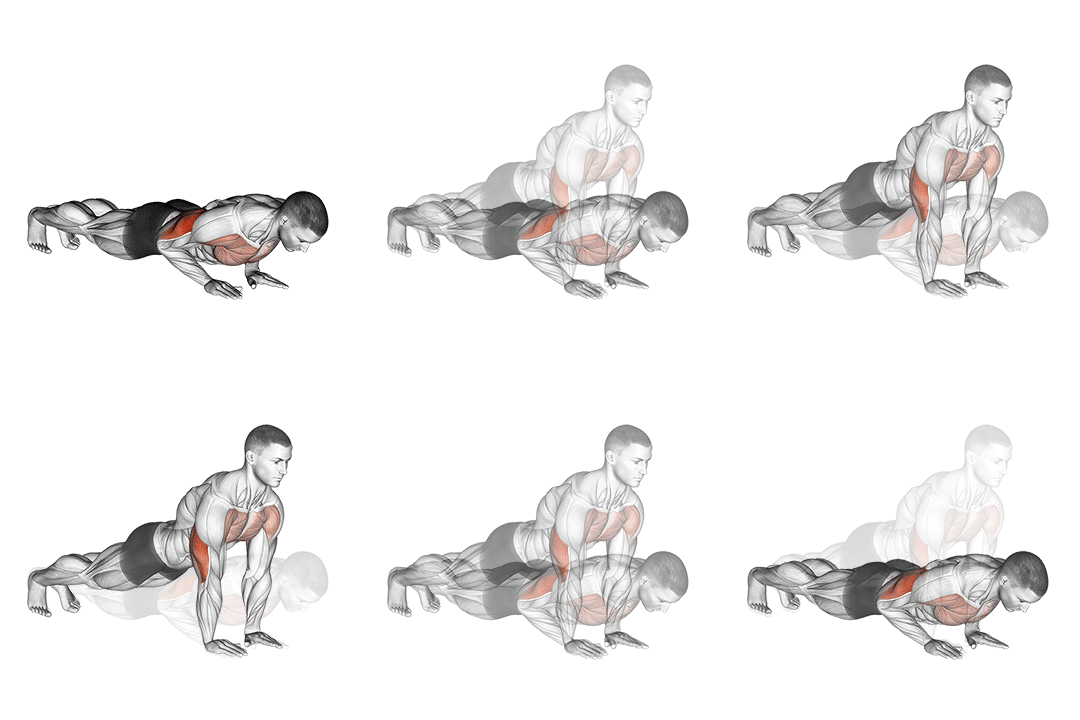
- 1Start in a high plank position with your hands placed close together, directly under your shoulders.
- 2Engage your core and lower your body towards the ground, keeping your elbows close to your sides.
- 3Push through your palms to extend your arms and return to the starting position.
- 4Repeat for the desired number of repetitions.
Muscles worked
Primary
triceps
Secondary
chest, shoulders
Common mistakes to avoid
Letting the elbows flare wide
The whole point of close-grip is that the elbows track close to the torso, loading the triceps. If your elbows flare to 90 degrees, you're back to a regular push-up with worse leverage. Keep the elbows tucked in tight to the ribs throughout the rep.
Going so close that the hands touch
Hands directly touching is a diamond push-up — a different exercise. For close-grip, keep the hands roughly shoulder-width or just inside that. Hands too close strains the wrists and shifts the exercise away from its intended emphasis.
Sagging hips under the increased difficulty
Close-grip is harder than a standard push-up, and many people compensate by letting the core slacken. Brace the abs and squeeze the glutes — the body should be a straight line from heels to head, even if reps drop.
Cutting depth to manage fatigue
When the triceps fatigue, depth shortens to keep the rep count up. Maintain full depth (chest near the floor) on every rep — partial reps build a worse pattern than fewer full reps.
Skipping the warm-up for the elbows
The narrower hand position increases stress on the elbow joint, especially during the descent. Spend 30 seconds on band tricep press-downs or arm circles before the first set — cold elbows + close-grip is a recipe for tendinopathy.
Easier and harder variations
Easier
Standard push-ups with hands at shoulder-width are the baseline. If close-grip feels too hard, build to 12+ standard push-ups first. Or perform close-grip on knees to reduce load while practicing the hand position.
Harder
Diamond push-ups (hands forming a diamond directly under the chest) are the obvious next step. Beyond that: close-grip decline push-ups (feet elevated), close-grip on rings, or one-arm progressions.
Alternative exercises
Diamond push-up
The next progression — hands form a diamond shape directly under the chest. More tricep emphasis with even less chest involvement.
Triceps dip
Different pressing plane (vertical instead of horizontal) but same tricep emphasis. Combine both in a session for complete tricep development.
Diamond push-up on knees
Same hand position as diamond, reduced load. Useful regression if standard close-grip feels manageable but diamond feels impossible.
How to program the Close-grip Push-up into your training
Close-grip push-ups work best as either the primary press in a tricep-focused workout or as accessory work after heavier pressing in a general chest day. Sets and reps: 3-4 sets of 6-12 reps with 60-90 seconds rest. Total weekly volume of 40-100 reps drives most tricep strength and size adaptations. In a chest workout: standard push-ups for 4 sets of 8-10 (main movement), close-grip push-ups for 3 sets of 6-8 (tricep emphasis), inverted rows for 3 sets of 8-10 (balance the pressing). Done twice per week. As a tricep finisher in a strength session: 2-3 sets of close-grip push-ups to near-failure at the end of an upper-body workout. The high reps drive blood into the triceps and add useful volume without specialized equipment. For athletes building toward a one-arm push-up or other advanced calisthenics, close-grip push-ups are essential intermediate work. Run them in a 6-week block twice per week, progressing from 3 sets of 8 to 4 sets of 12, before attempting diamond push-up training. Don't program close-grip push-ups on the same day as heavy bench press or weighted dips — the cumulative tricep and front-shoulder load is excessive and slows recovery.
Recovery and frequency
Close-grip push-ups recover similarly to standard push-ups — 48 hours between sessions is sufficient for most people. The triceps may stay sore for 2-3 days during the first weeks of training the variation, but the soreness pattern fades quickly with consistent practice. Elbow tendinopathy is the main risk to watch for, especially in trainees who jump into high volumes too quickly. If the inside of the elbow starts feeling sore or sharp during sets, reduce volume immediately and add tricep mobility work (band pull-aparts, light tricep stretches). Sleep, hydration, and standard recovery practices cover the rest.
Frequently asked questions
How many sets and reps of close-grip push-ups should I do?
3-4 sets of 6-12 reps with 60-90 seconds rest. Build to 3 sets of 12 strict reps before attempting diamond push-ups as your main tricep press.
How often should I train the close-grip push-up?
2-3 times per week. The triceps recover quickly, but the elbows take cumulative load — give 48 hours between sessions and watch for any joint discomfort.
Close-grip vs diamond push-up: which is better?
Close-grip is the easier, more accessible version. Diamond is the harder progression with even more tricep emphasis. Use close-grip if diamond feels too hard or as the volume work; use diamond as the intensity work once you can handle it cleanly.
Why do my wrists hurt during close-grip push-ups?
Hands placed too close together (touching) creates wrist strain. Keep the hands roughly shoulder-width or just inside that — the angle should be close enough to load the triceps but not so close that the wrists are forced into uncomfortable extension.
Are close-grip push-ups effective for chest growth?
Less effective for chest growth than wide-hand variations because the triceps take the bulk of the load. They contribute to overall chest training when combined with other variations, but they're not a primary chest builder.
Can I do close-grip push-ups with elbow tendinopathy?
Generally not until the underlying tendinopathy is resolved. The narrower elbow tracking increases joint stress and aggravates most tendinopathies. See a physical therapist for a return-to-training plan if you have known elbow issues.
Useful tools for this exercise
Build a workout with the Close-grip Push-up
Puna gives you guided bodyweight workouts you can do anywhere — no equipment, no gym, just structured progressions that build real strength.