Bench Dip (knees Bent)
beginner strength exercise · body weight · targets triceps
- Body part
- upper arms
- Primary target
- triceps
- Equipment
- body weight
- Difficulty
- beginner
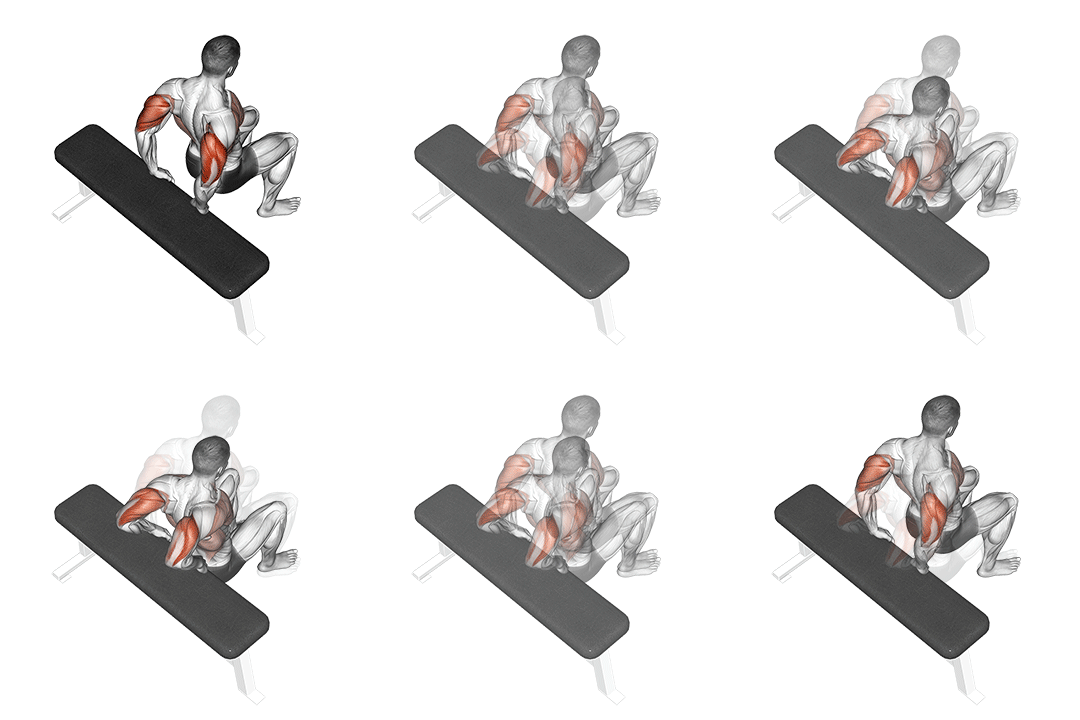
The bench dip with knees bent is the most accessible bench dip variation — performed with hands on a bench or chair behind you and feet flat on the floor with knees bent at roughly 90 degrees. The bent knees keep the body close to the bench, reducing the body weight the arms have to press during each rep. This makes it the right entry point for beginners learning the dip pattern before progressing to harder variations. The bent-knee position is the bridge between floor triceps dips (easier, less load) and standard bench dips with extended legs (harder, more load). Most beginners can manage 8-12 strict bent-knee bench dips before they can do straight-leg bench dips, and the bent-knee variation lets them practice the form fundamentals — elbows tracking back, shoulders packed down, controlled tempo — without the strength challenge of more demanding variations. It's also useful as a high-rep finisher for trained athletes. The reduced load makes it possible to accumulate volume that more demanding dip variations don't allow. A few sets of 20+ bent-knee bench dips at the end of an upper body session adds tricep volume without compromising heavier work.
Why train the Bench Dip (knees Bent)?
- Most accessible bench dip variation — appropriate for absolute beginners.
- Teaches dip pattern fundamentals before progressing to harder variations.
- Bridges floor triceps dips and standard bench dips in a logical progression.
- Allows higher rep counts than harder variations — useful for endurance work.
- Requires only a bench, chair, or low sturdy surface.
- Useful as a finisher for trained athletes when triceps need volume but elbows can't handle more load.
How to do the Bench Dip (knees Bent): step by step
- 1Sit on the edge of a bench or chair with your hands gripping the edge next to your hips.
- 2Slide your butt off the bench and straighten your legs in front of you, keeping your heels on the ground.
- 3Bend your elbows and lower your body towards the ground, keeping your back close to the bench.
- 4Pause for a moment at the bottom, then push yourself back up to the starting position.
- 5Repeat for the desired number of repetitions.
Muscles worked
Primary
triceps
Secondary
chest, shoulders
Common mistakes to avoid
Letting the elbows flare out to the sides
Wide elbows shift load away from the triceps and into the front of the shoulders. Keep elbows tracking straight back, narrow as possible — this is what makes it a tricep exercise rather than a shoulder exercise.
Drifting the hips forward away from the bench
Some people let the hips drift forward as they descend, which shifts load to the front delts and out of the triceps. Keep the hips close to the bench throughout the rep — almost grazing it on the way down.
Going too deep too fast
Lowering until the shoulders dip below the elbows can stress the anterior shoulder capsule. Stop when the upper arms are roughly parallel to the floor — going further increases injury risk without proportional benefit.
Letting the shoulders shrug toward the ears
When fatigue hits, the shoulders ride up toward the ears. Pack the shoulders down (drive them away from the ears) and maintain that position throughout every rep.
Using too unstable a surface
If the bench or chair shifts, the exercise becomes about not falling rather than training the triceps. Use solid, heavy surfaces; if at home, push the chair against a wall so it can't slide.
Easier and harder variations
Easier
Floor triceps dips (no bench, just sitting with hands behind hips). Or bench dips with knees more sharply bent (closer to the body) to reduce load further.
Harder
Straighten the legs out in front of you (standard bench dip). Elevate the feet on a second bench (reverse dip). Add weight (a plate on the lap). Or progress to parallel-bar dips for full body weight on the arms.
Alternative exercises
Bench dip with extended legs
Standard bench dip with legs straight in front. Significantly more load than the bent-knee version.
Floor triceps dips
The regression. No bench needed — just sitting on the floor with hands behind hips.
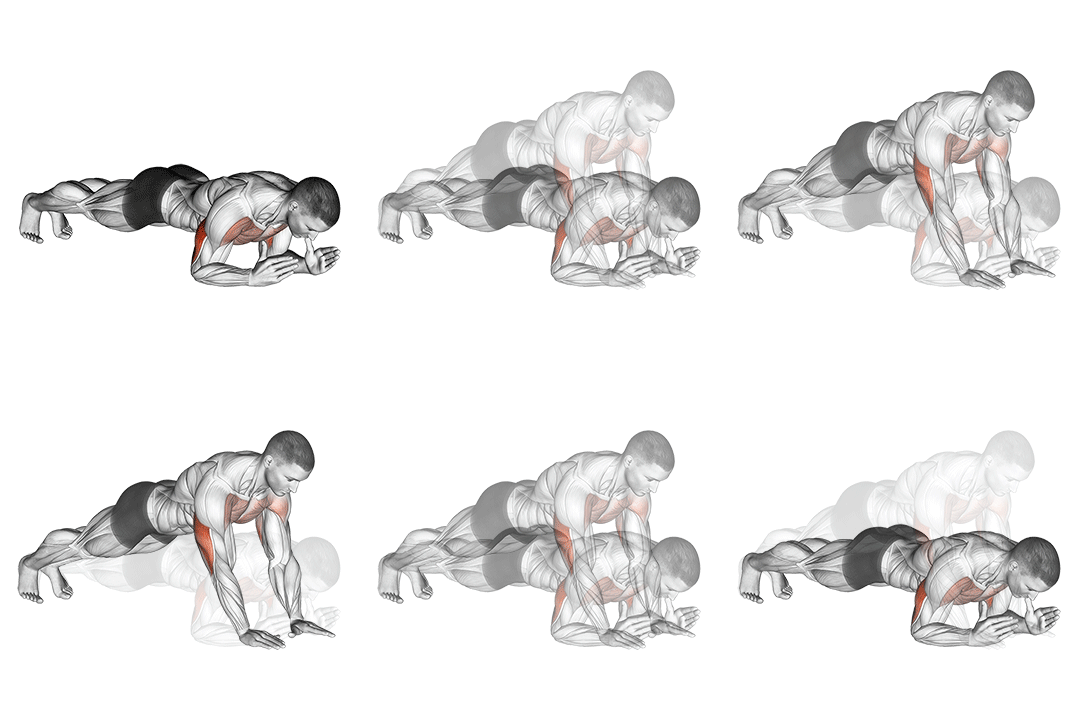
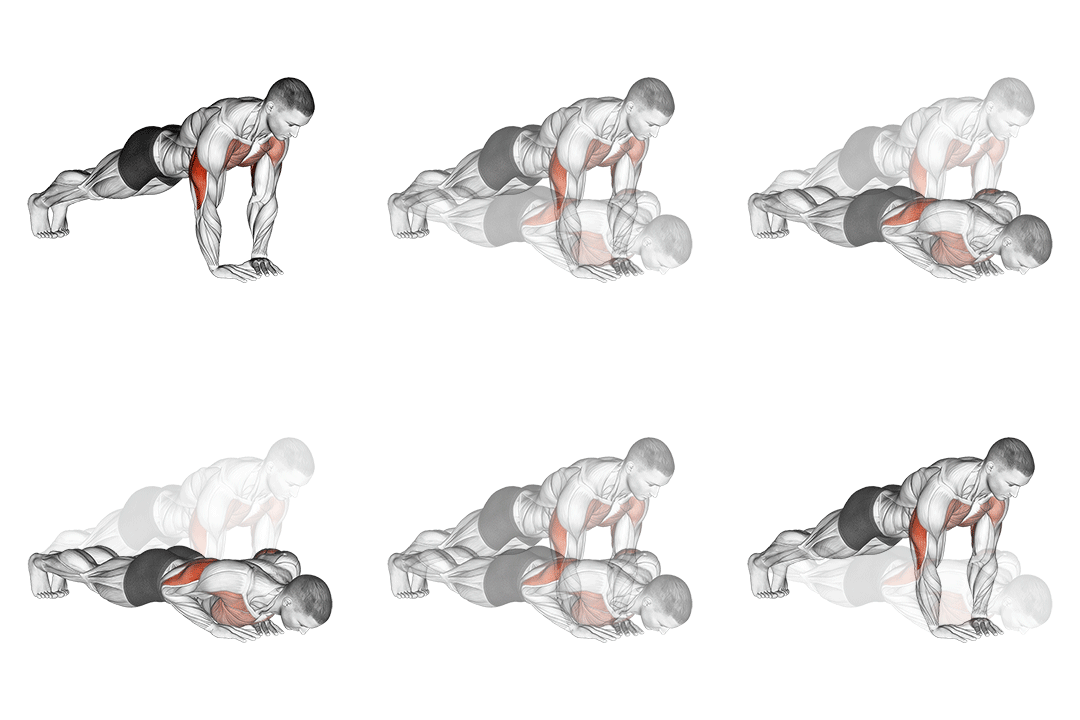
Diamond push-up
Different pressing plane (horizontal instead of vertical) but similar tricep focus. Useful pairing for complete tricep development.
How to program the Bench Dip (knees Bent) into your training
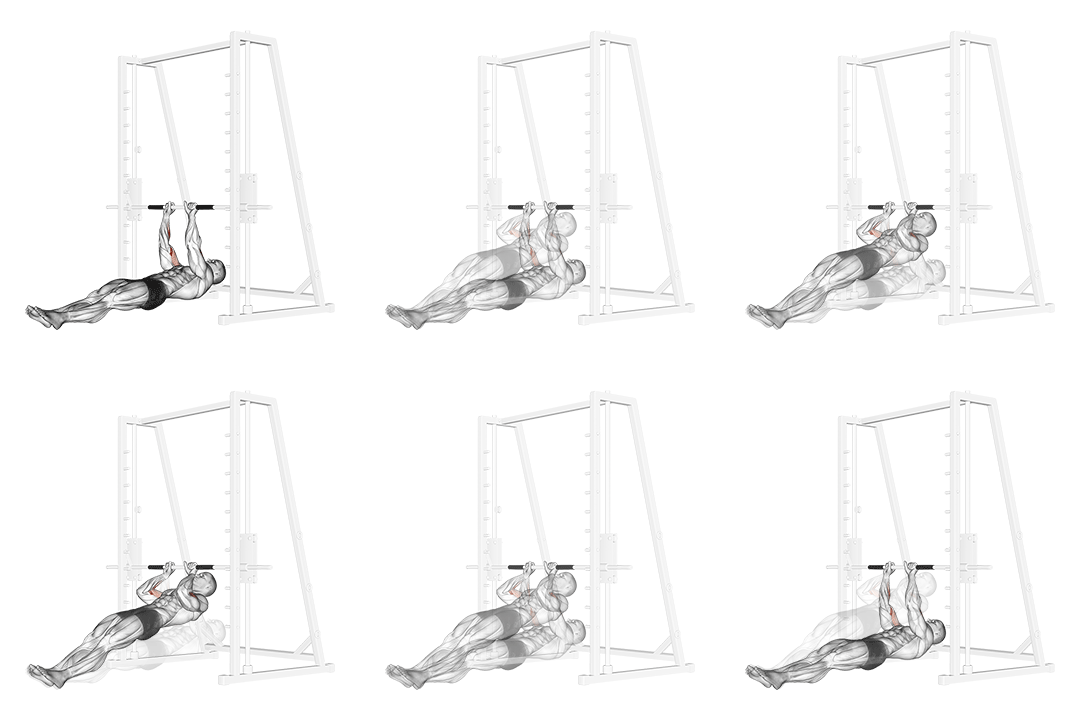
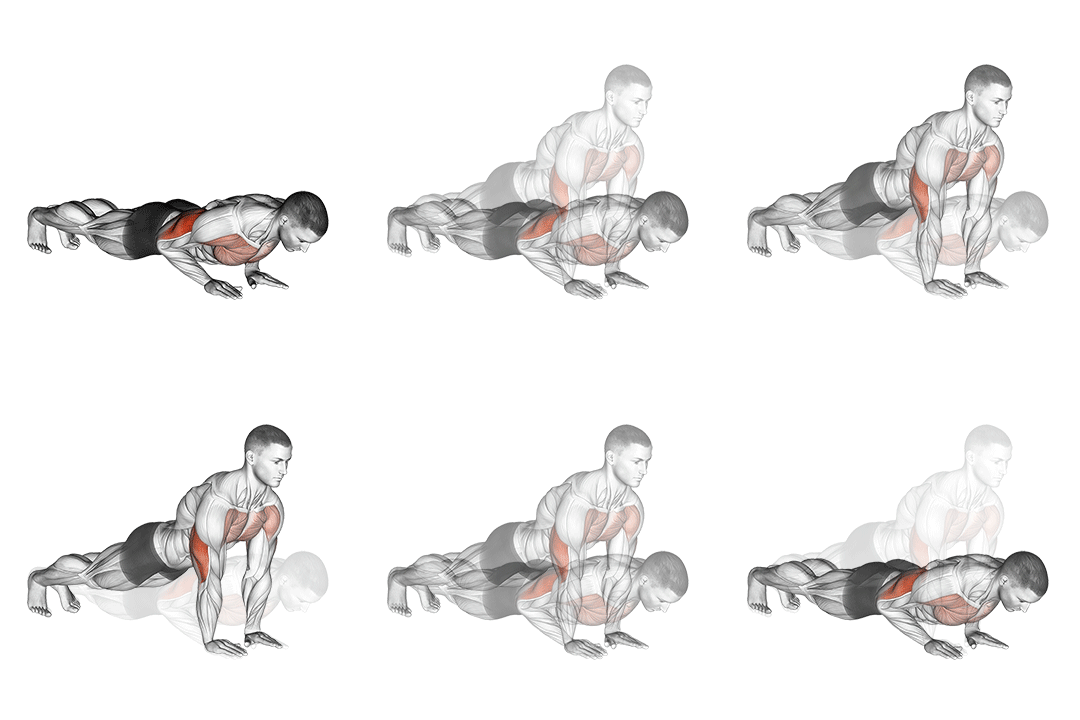
Bent-knee bench dips work as either a primary tricep exercise for beginners or as a warm-up/finisher for trained athletes. For beginners (working toward standard bench dips): 3-4 sets of 8-15 reps with 60-90 seconds rest. Programmed twice per week. Progress to straight-legged bench dips when 3 sets of 15 bent-knee reps feel easy. As warm-up: 1-2 sets of 10-15 reps before heavier tricep work like dips or diamond push-ups. As a finisher: 2-3 sets of 15-25 reps at the end of an upper body session. High-rep tricep volume without specialized equipment. In a beginner full-body session: 3 sets of 10 bent-knee bench dips, 3 sets of 8-10 push-ups, 3 sets of 8-10 inverted rows, 3 sets of 12 squats. Done 2-3 times per week. Do not pair bent-knee bench dips with heavy tricep-intensive work in the same session — the cumulative load is excessive for a beginner program.
Recovery and frequency
Bent-knee bench dips have moderate recovery cost — 48 hours between sessions is plenty. The reduced load compared to harder variations means soreness is moderate even in the first weeks of training. Wrist tightness from the bench-supported position is common. Wrist circles and gentle stretches before each session help. The shoulders take less load than in straight-leg variations, so anterior shoulder fatigue is rare.
Frequently asked questions
How many sets and reps of bent-knee bench dips should I do?
3-4 sets of 8-15 reps with 60-90 seconds rest. Build to 3 sets of 15 strict reps before progressing to straight-legged bench dips.
How often should I train bent-knee bench dips?
2-3 times per week. The reduced load allows higher session frequency than harder dip variations.
Bent-knee vs straight-legged bench dips: when do I progress?
When you can do 3 sets of 15 strict bent-knee bench dips. Try straight-legged dips; if you can manage 8+ reps, transition fully. If less, alternate between the two for a few weeks.
Are bent-knee bench dips effective?
For beginners, yes — they build the foundation of tricep strength. For trained athletes, the load is too low for hypertrophy. Use them as warm-up or volume work, not as a primary tricep builder.
Can I do bent-knee bench dips with shoulder issues?
Cautiously, and not without medical clearance. The dip position loads the anterior shoulder, even at reduced load. If you have known shoulder issues, see a physical therapist before progressing.
What if I don't have a bench?
Use a sturdy chair, low sturdy table, or stair step. The surface needs to be solid (won't shift) and roughly hip-height. If nothing's available, use floor triceps dips instead.
Useful tools for this exercise
Build a workout with the Bench Dip (knees Bent)
Puna gives you guided bodyweight workouts you can do anywhere — no equipment, no gym, just structured progressions that build real strength.