Biceps Pull-up
advanced strength exercise · body weight · targets biceps
- Body part
- upper arms
- Primary target
- biceps
- Equipment
- body weight
- Difficulty
- advanced
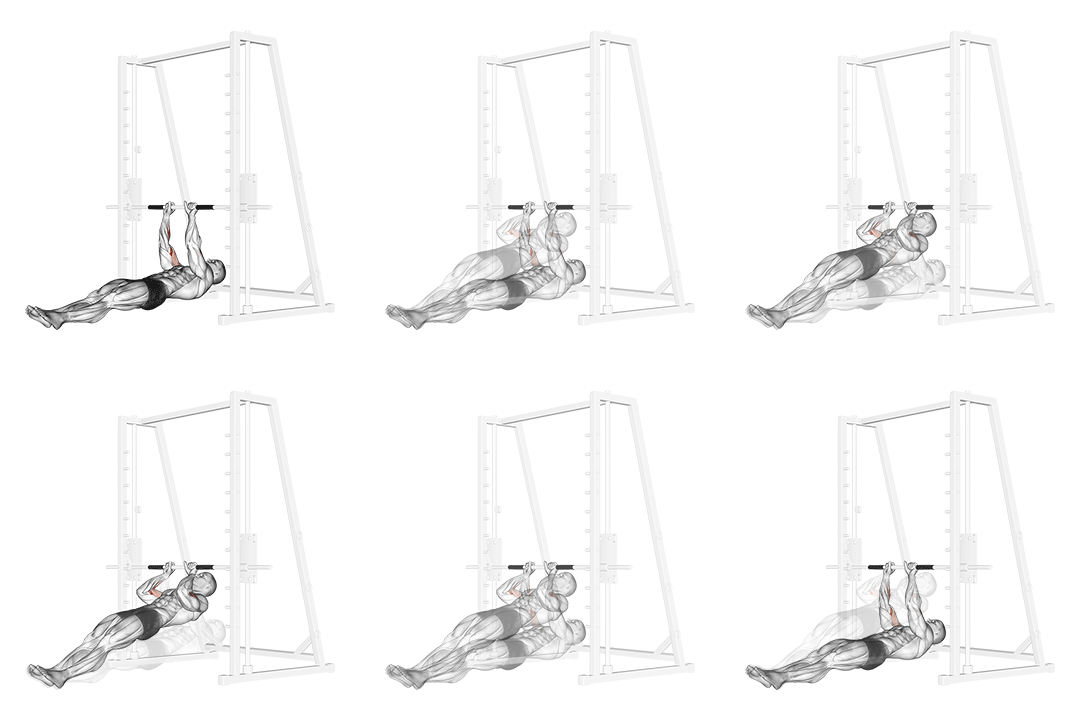
The biceps pull-up is essentially a chin-up performed with deliberate emphasis on the biceps — typically with palms facing toward you (supinated grip), hands shoulder-width or slightly closer, and a focus on initiating the pull from the elbows rather than the lats. The grip and movement pattern shift the work from the back to the biceps more than a standard chin-up does, making it one of the most effective bodyweight bicep-builders available. What distinguishes this from a standard chin-up is the intent. A normal chin-up engages both the lats and the biceps, with the lats doing most of the heavy lifting. The biceps pull-up consciously reduces lat involvement (don't overly pack the shoulders down or focus on driving the elbows back) so the biceps take more of the load. The result is a pull-up variation specifically designed for arm development. This is an advanced exercise — most trainees can't do it productively until they can already do 5-8 strict standard chin-ups. The biceps fatigue faster than the lats, so volume and reps drop significantly compared to standard chin-ups. Used as an arm-focused finisher in a back day, it adds bicep volume that isolated curls simply can't match — full body weight is more challenging than most dumbbells.
Why train the Biceps Pull-up?
- Builds the biceps directly with full body-weight load — more demanding than most dumbbell curl variations.
- Combines arm and back work efficiently in compound movements.
- Carries over to standard chin-ups and pull-ups by strengthening the biceps that contribute to those.
- Provides a clear progression goal beyond standard chin-ups for trainees seeking arm development.
- Requires only a pull-up bar.
- More functional than isolated bicep curls because of the compound nature.
How to do the Biceps Pull-up: step by step
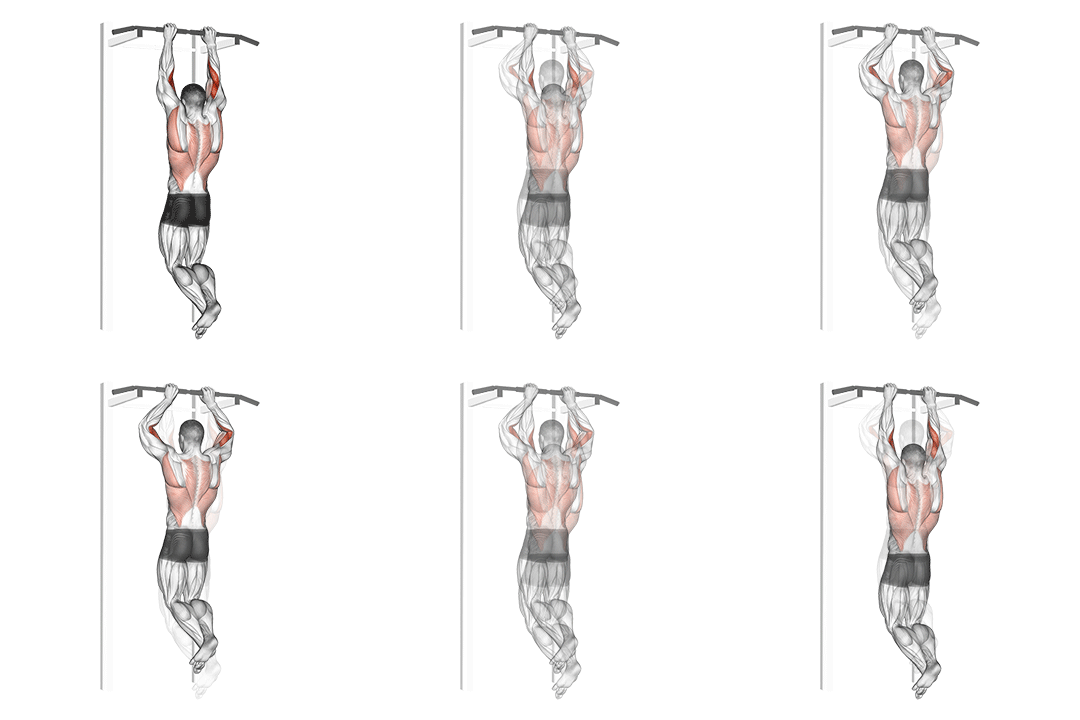
- 1Hang from a pull-up bar with your palms facing away from you and your hands shoulder-width apart.
- 2Engage your core and pull yourself up by bending your elbows, bringing your chest towards the bar.
- 3Pause at the top of the movement, then slowly lower yourself back down to the starting position.
- 4Repeat for the desired number of repetitions.
Muscles worked
Primary
biceps
Secondary
forearms, shoulders
Common mistakes to avoid
Kipping or swinging to get the chin up
Using momentum is universally bad form for any pull-up variation. Strict form means the body stays still — only the biceps and arms move the body. If you can't pull strictly, regress to standard chin-ups until you can.
Letting the elbows flare wide
Wide elbows shift load away from the biceps and into the front of the shoulders. Keep the elbows tucked close to the ribs throughout the rep — close grip enhances bicep emphasis.
Cutting depth at the bottom or top
Full range matters: arms fully extended at the bottom, chin clearing the bar at the top. Trainees who cut range build a partial pattern and miss the bicep work full range provides.
Treating it the same as a standard chin-up
If you don't consciously emphasize the biceps (close grip, elbow-driven pull, less lat focus), the exercise becomes just a slightly narrow chin-up. The intent matters as much as the position.
Doing high volume in the first sessions
The biceps fatigue faster than the lats, and the close grip stresses the elbows. Build volume gradually — start with 3 sets of 4-6 reps before pushing to higher rep ranges.
Easier and harder variations
Easier
Standard chin-ups with palms toward you at shoulder-width. Or bench-assisted chin-ups (feet on a bench). Or negative chin-ups (jump or step to the top, lower slowly).
Harder
Add weight (a vest or weight belt with a plate). Slow the tempo (3 seconds down, 1-second pause, 1 second up). Or progress to one-arm chin-up training — a multi-year goal that few achieve.
Alternative exercises
Standard chin-up
Same supinated grip but at shoulder-width with lat emphasis. The default vertical pulling exercise; biceps pull-up is the arm-focused specialty version.
Close-grip chin-up
Often used as a synonym for biceps pull-up depending on the source. Hands close together to maximize bicep involvement.
Bicep curl
Isolated bicep exercise with weights. Less load than biceps pull-ups but easier to progressively overload over time. Useful complement, not replacement.
How to program the Biceps Pull-up into your training
Biceps pull-ups work as accessory or finisher arm work in a back day, not as the primary pulling exercise. Sets and reps: 3 sets of 4-8 reps with 90-120 seconds rest. Total weekly volume of 20-40 reps drives most bicep adaptations from this exercise. In a back-focused session: 4 sets of 6-8 standard pull-ups (main pulling), 3 sets of 8-10 inverted rows (horizontal pulling), 3 sets of 5-7 biceps pull-ups (arm emphasis), 3 sets of 30-second hollow holds (core). Done twice per week. For focused arm development, alternate weeks between biceps pull-ups (Week 1) and dumbbell curls (Week 2) for variety. Different stimuli prevent stagnation. For advanced trainees building toward one-arm chin-ups, biceps pull-ups are essential preparation work — they build the bicep strength one-arm work demands. Do not program biceps pull-ups on the same day as heavy dips or other tricep-intensive work. The cumulative elbow load is excessive.
Recovery and frequency
Biceps pull-ups load the biceps, forearms, and grip more than standard chin-ups. 48-72 hours between sessions is the right cadence. The biceps tend to stay sore for 2-3 days during the first weeks of training the variation. Elbow tendinopathy is the main risk — particularly medial epicondylitis (golfer's elbow). Symptoms include pain on the inside of the elbow during or after sets. Reduce volume immediately if you notice these. Foam roll the lats and biceps weekly. Standard recovery practices cover the rest.
Frequently asked questions
How many sets and reps of biceps pull-ups should I do?
3 sets of 4-8 reps with 90-120 seconds rest. Total weekly volume of 20-40 reps.
How often should I train the biceps pull-up?
1-2 times per week with 48-72 hours between sessions. The biceps need recovery from this load.
Biceps pull-up vs chin-up: what's the difference?
Both use a supinated grip (palms toward you), but biceps pull-ups emphasize the biceps through closer grip and elbow-driven pulling, while chin-ups balance bicep and lat work. Biceps pull-ups are more bicep-focused; chin-ups are more balanced.
Are biceps pull-ups better than bicep curls?
For trained athletes, yes — they allow heavier loading (full body weight) than most dumbbells. But they require strong baseline pulling strength. For beginners, dumbbell curls are more accessible until pull-up strength develops.
Will biceps pull-ups give me bigger arms?
Yes — they're one of the most effective bicep-builders available. Combined with isolated curls and overall back training, they drive significant arm development for trained athletes.
Why does my elbow hurt during biceps pull-ups?
Usually because the close grip is concentrating load on the elbow joint. Reduce volume, switch to standard chin-ups for a few weeks, and address forearm and grip mobility. If pain persists, consult a physical therapist.
Useful tools for this exercise
Build a workout with the Biceps Pull-up
Puna gives you guided bodyweight workouts you can do anywhere — no equipment, no gym, just structured progressions that build real strength.