Body-up
beginner strength exercise · body weight · targets triceps
- Body part
- upper arms
- Primary target
- triceps
- Equipment
- body weight
- Difficulty
- beginner
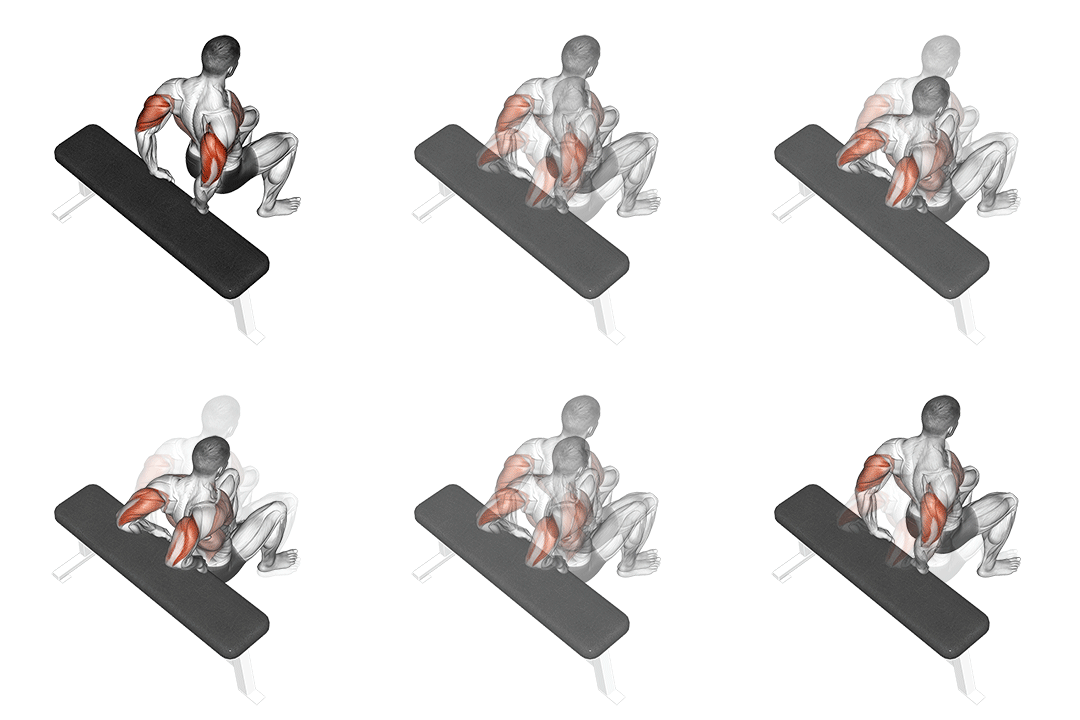
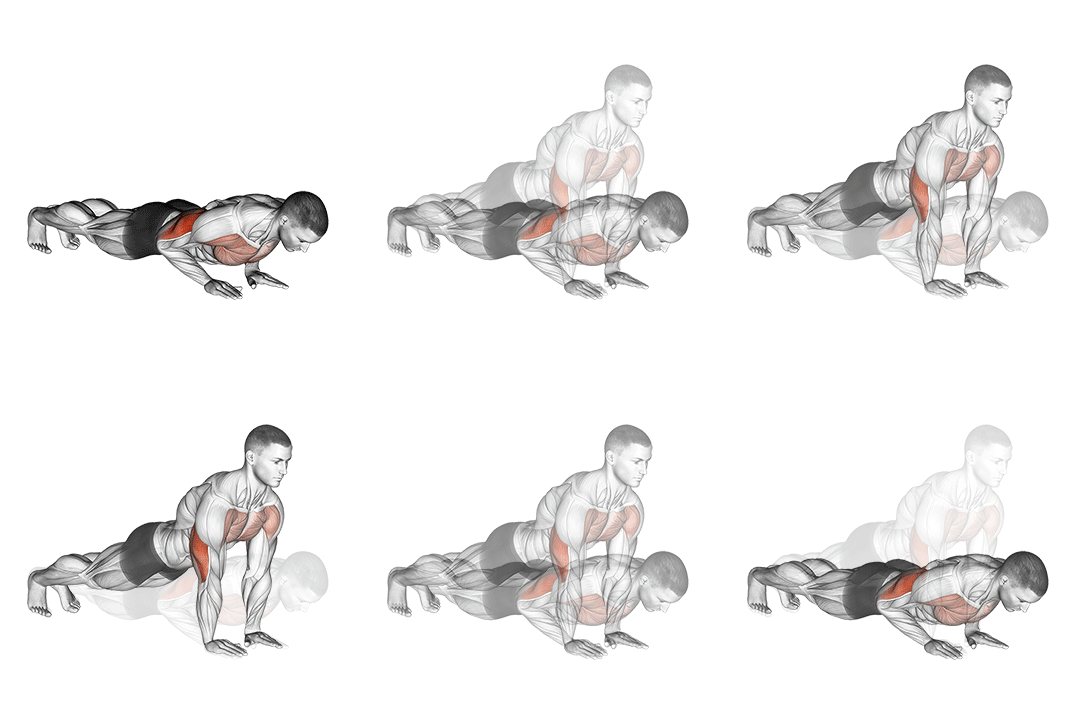
The body-up — sometimes called the bench dip with extended legs — is a stripped-down bodyweight triceps exercise that loads the back of the upper arm under near-full bodyweight. You sit at the edge of a bench or sturdy chair, place your hands beside your hips facing forward, slide your butt off the bench, and lower yourself by bending the elbows. With legs extended forward and heels on the ground, most of your bodyweight presses through the triceps as you push back up. This is one of the few bodyweight exercises that genuinely loads the triceps directly rather than as a secondary mover. Push-ups work the triceps, but the chest takes the lion's share. Dips between parallel bars hit the triceps harder, but most home environments don't have parallel bars at the right height. The body-up bridges that gap: any bench, low table, or step works as the surface, and the load lands squarely on the triceps with the chest and shoulders as supporting players. The trade-off is wear and tear on the front of the shoulder. The position of the upper arm — extended back behind the torso — places the shoulder at a mechanical disadvantage and can irritate the anterior capsule for trainees with poor shoulder mobility or pre-existing issues. For most people, programmed in moderation, this isn't a problem; the exercise builds usable triceps strength, supports lockout in pressing movements, and adds a solid pulling-the-body-up pattern that pairs well with push-up volume in any home program.
Why train the Body-up?
- Loads the triceps directly under nearly full bodyweight — rare for a no-equipment exercise.
- Builds the lockout strength essential for push-up endurance and any future pressing variations.
- Develops the long head of the triceps through the deep elbow flexion at the bottom of each rep.
- Improves shoulder stability under load, especially in the position of arm extension behind the body.
- Requires only a bench, chair, or step — usable in almost any home or hotel environment.
- Pairs naturally with push-ups and pull-ups for a complete bodyweight upper-body workout.
How to do the Body-up: step by step
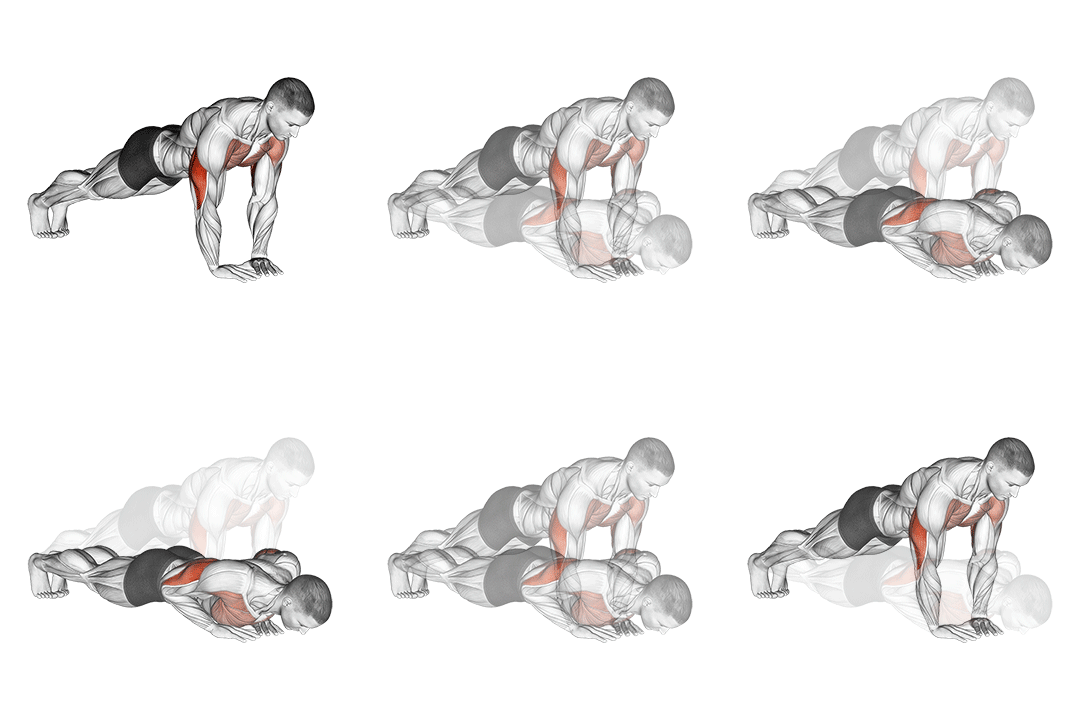
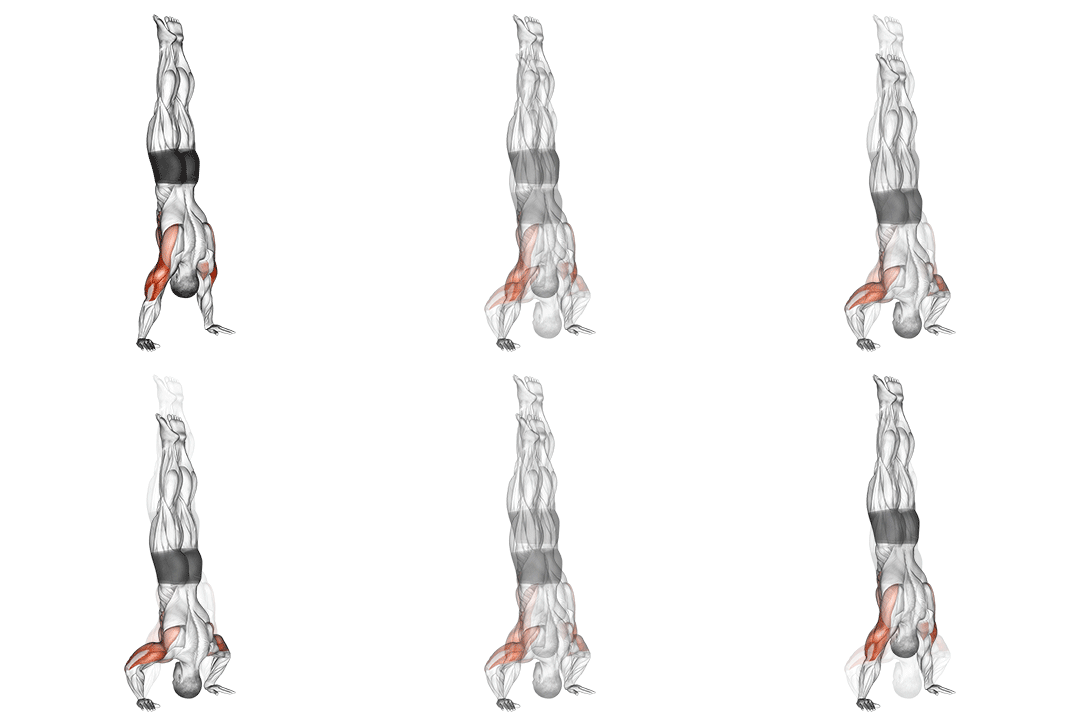
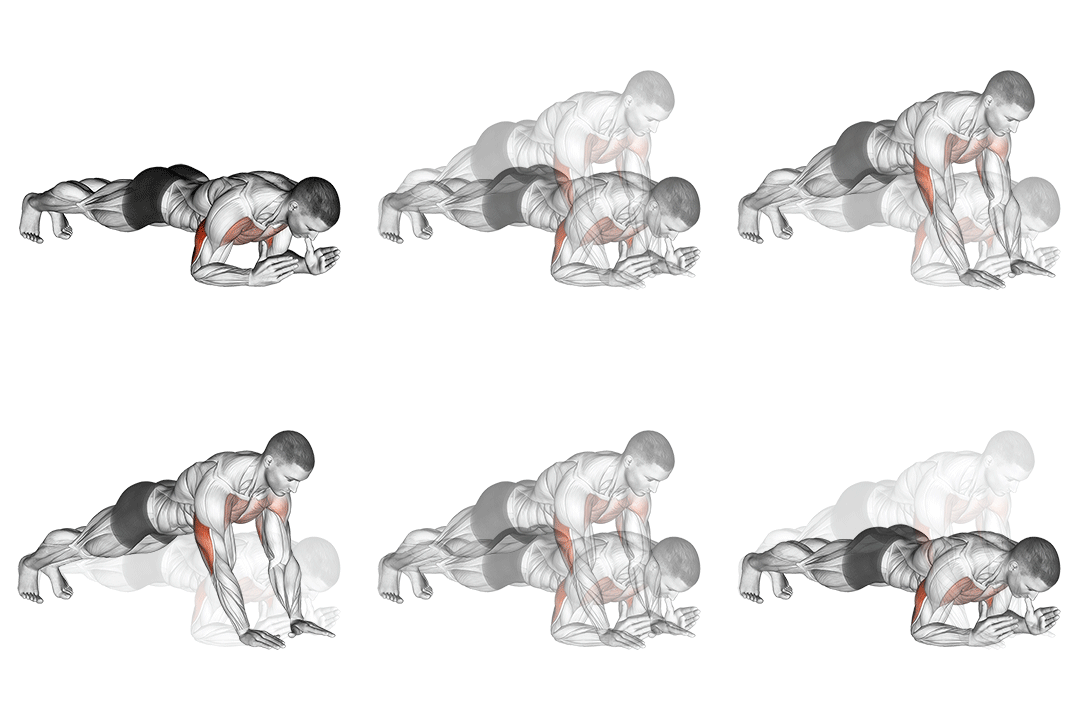
- 1Start by placing your hands on a raised surface, such as a bench or parallel bars, with your palms facing down and fingers pointing forward.
- 2Extend your legs out in front of you, keeping your heels on the ground and your body straight.
- 3Lower your body by bending your elbows, keeping them close to your sides, until your upper arms are parallel to the ground.
- 4Pause for a moment, then push through your palms to straighten your arms and lift your body back up to the starting position.
- 5Repeat for the desired number of repetitions.
Muscles worked
Primary
triceps
Secondary
chest, shoulders
Common mistakes to avoid
Letting the elbows flare outward
The elbows must track straight back, not flare to the sides. Flared elbows shift load away from the triceps and into the shoulder capsule, where the position is already vulnerable. Imagine pulling the elbows toward each other behind your back as you lower.
Going too deep at the bottom
Lowering until the upper arms are well past parallel to the ground places extreme stress on the anterior shoulder. Stop when the upper arms reach parallel — about a 90-degree elbow bend. The bottom 10 degrees of range adds shoulder risk far more than triceps benefit.
Using the legs to bounce out of the bottom
Pushing through the heels to assist the press defeats the purpose. The triceps should do the work; the heels are there to anchor body position, not boost the rep. If you can't push back up without leg drive, regress to bench dips with bent knees.
Letting the hips drop forward away from the bench
As the body fatigues, the hips drift forward, increasing distance from the bench and making the lever harder. Keep the back close to the bench throughout — the descent should be vertical, not curving away.
Skipping shoulder warm-up before sets
The body-up loads the front of the shoulder in a vulnerable position. Going into sets cold dramatically increases the risk of anterior shoulder irritation. 1-2 minutes of band pull-aparts and arm circles before sets pays off in injury prevention.
Easier and harder variations
Easier
Bend the knees and place the feet flat on the ground rather than extending the legs. The bent-knee version reduces the load on the triceps significantly and is appropriate for beginners or anyone returning from a layoff. Or perform with the feet on the same bench/chair as the hands (a closed position that reduces range).
Harder
Place the feet on a second bench at the same height for fully horizontal position — this maximizes load on the triceps and shoulders. For advanced trainees, add a weight plate on the lap or progress to ring or parallel bar dips, which load the triceps even more aggressively but require more shoulder stability.
Alternative exercises
Parallel bar dips
More demanding triceps exercise with full bodyweight load. Better for trainees with healthy shoulders who want to push triceps strength further. Less accessible if you don't have parallel bars.
Diamond push-up
Loads the triceps similarly but with the shoulders in a safer position. Useful alternative for anyone with anterior shoulder issues. Different angle, similar muscle emphasis.
Close-grip push-up
Triceps-focused push-up variant. Loads less of the triceps than a body-up but is much safer for the shoulder. Good for high-volume work where shoulder fatigue would be a concern.
How to program the Body-up into your training
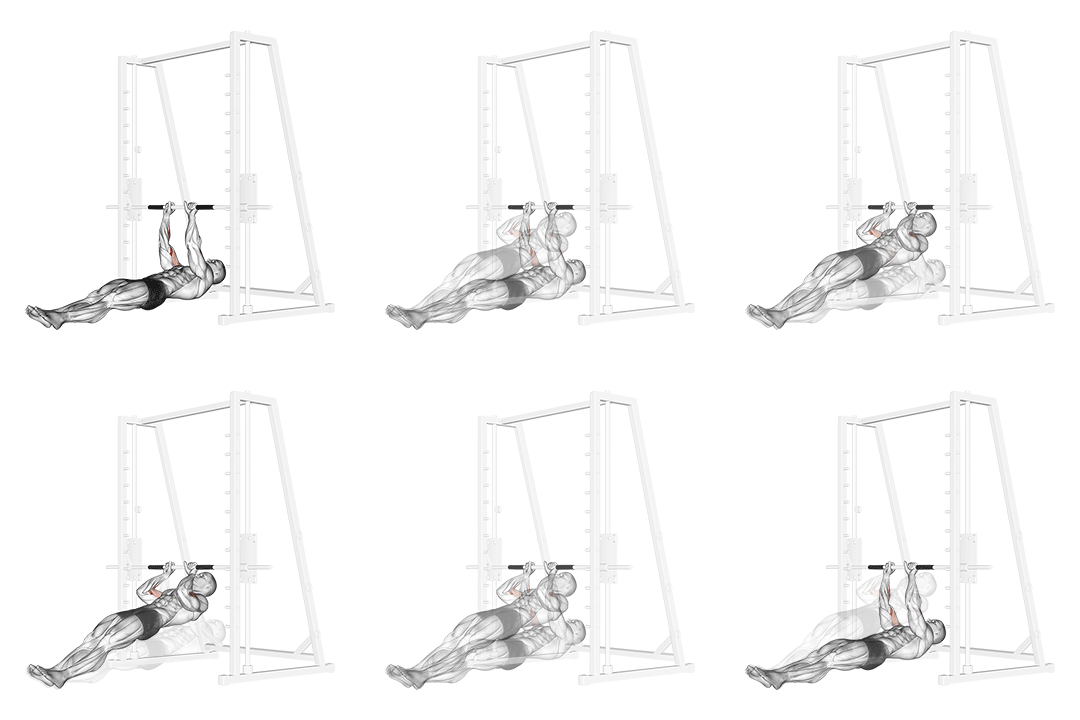
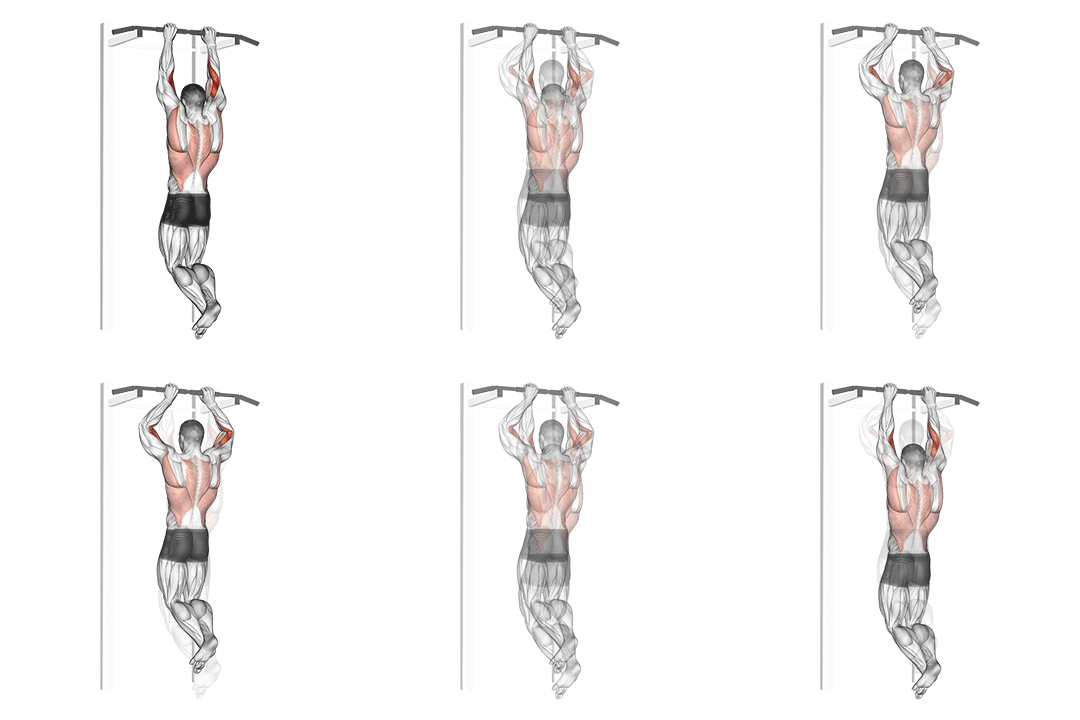
The body-up sits in the accessory triceps slot of upper-body training, not as a main exercise. It pairs well with primary pressing (push-up variants) and primary pulling (pull-ups, rows) to round out arm work without overloading the shoulders. Sets and reps: 3 sets of 8-12 reps with 60-90 seconds rest. Quality matters more than counts — sloppy reps train no useful pattern and stress the shoulder. Progress to 4 sets of 12-15 once form is automatic and shoulder feels strong throughout. Frequency: 2 times per week is the sweet spot. The triceps recover fast from low-volume work, but the shoulder takes longer to recover from the loaded position. More than twice per week and shoulder issues become likely. Typical upper-body session: 4 sets of 10 push-ups, 4 sets of 6 pull-ups, 3 sets of 10 body-ups, 3 sets of 8 inverted rows, 3 sets of 30-second hollow holds. Done twice per week, this provides balanced upper-body volume without overworking any single joint. For those new to the exercise: start with 2 sets of 5-6 reps with bent knees, focusing entirely on form and shoulder comfort. Build to 3 sets of 8 with bent knees, then transition to extended legs once the shoulders adapt. The progression should take 4-6 weeks, not a single session. Avoid programming body-ups on the same day as overhead pressing or heavy bench work — the cumulative anterior shoulder load can exceed what the joint tolerates without irritation.
Recovery and frequency
The triceps recover fast — typically 24-48 hours. The limiting factor is usually the front of the shoulder, which can take 48-72 hours to fully settle after a hard session. The main warning signs are anterior shoulder pain (front of the deltoid), pain at the top of the biceps near the shoulder, and clicking or popping in the shoulder during the exercise. Any of these suggest the shoulder is being overworked in a vulnerable position. Reduce volume, add rotator cuff and band work, and consider switching to a safer triceps movement (close-grip push-up, diamond push-up) until the shoulder settles. Standard triceps soreness in the muscle belly is normal and fades within 48 hours; soreness in the joint is not normal and warrants attention.
Frequently asked questions
How many sets and reps of body-ups should I do?
3 sets of 8-12 reps with 60-90 seconds rest, twice per week. Progress to 4 sets of 12-15 once form is automatic. Higher volumes don't add much benefit and increase shoulder strain risk.
How often should I do body-ups?
Twice per week is plenty. The shoulders need 48-72 hours between sessions because the position of arm extension behind the body is mechanically vulnerable. More frequent training causes more issues than progress.
Will this exercise hurt my shoulders?
It can if you push depth too far, flare the elbows, or skip warm-ups. With proper form (90-degree elbow bend, elbows tracking straight back, warm shoulders), most trainees handle it fine. If your shoulders feel unstable in this position generally, switch to diamond or close-grip push-ups.
Body-up vs parallel bar dip: which is better?
Parallel bar dips load the triceps harder and use a more shoulder-friendly arm path. They're better for serious triceps strength building when you have access to parallel bars. The body-up wins on accessibility — any bench works as the equipment.
How is this different from a bench dip?
The body-up extends the legs forward (heels on the ground, knees straight), increasing the load on the triceps to nearly full bodyweight. A bench dip with bent knees is much lighter — the legs assist by carrying significant body weight. The body-up is the harder progression.
Can I do body-ups daily?
No — twice per week is the maximum for most trainees. The triceps recover fast but the shoulders need longer rest from the loaded extended-arm position. Daily body-ups almost guarantee shoulder issues within 2-3 weeks.
Useful tools for this exercise
Build a workout with the Body-up
Puna gives you guided bodyweight workouts you can do anywhere — no equipment, no gym, just structured progressions that build real strength.