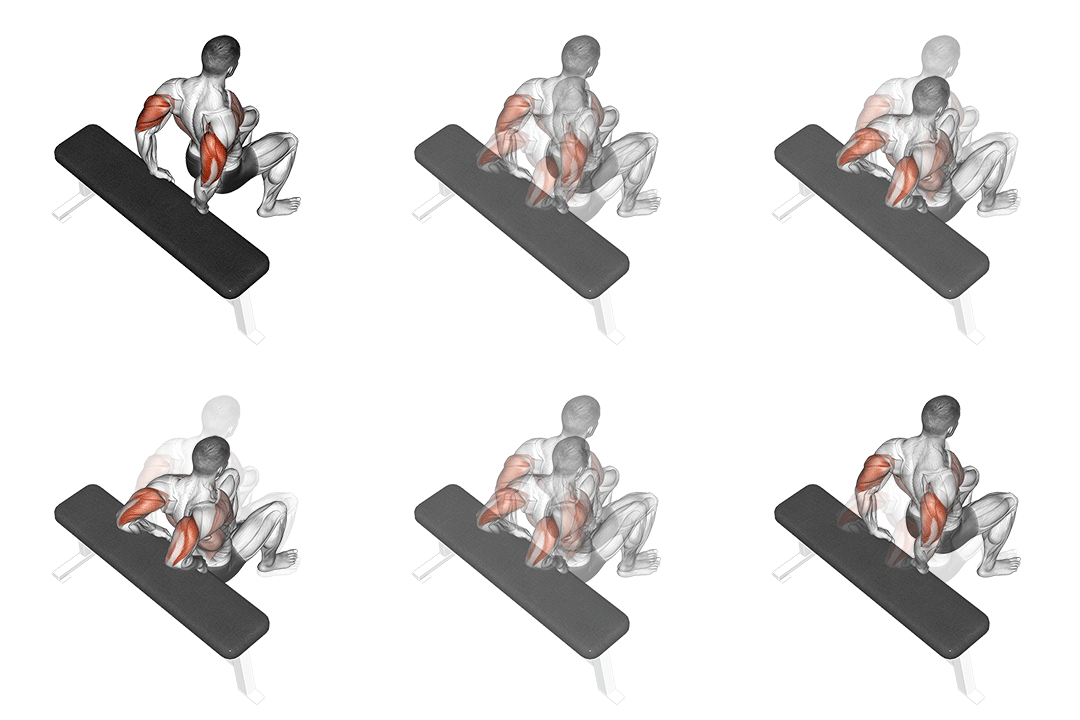
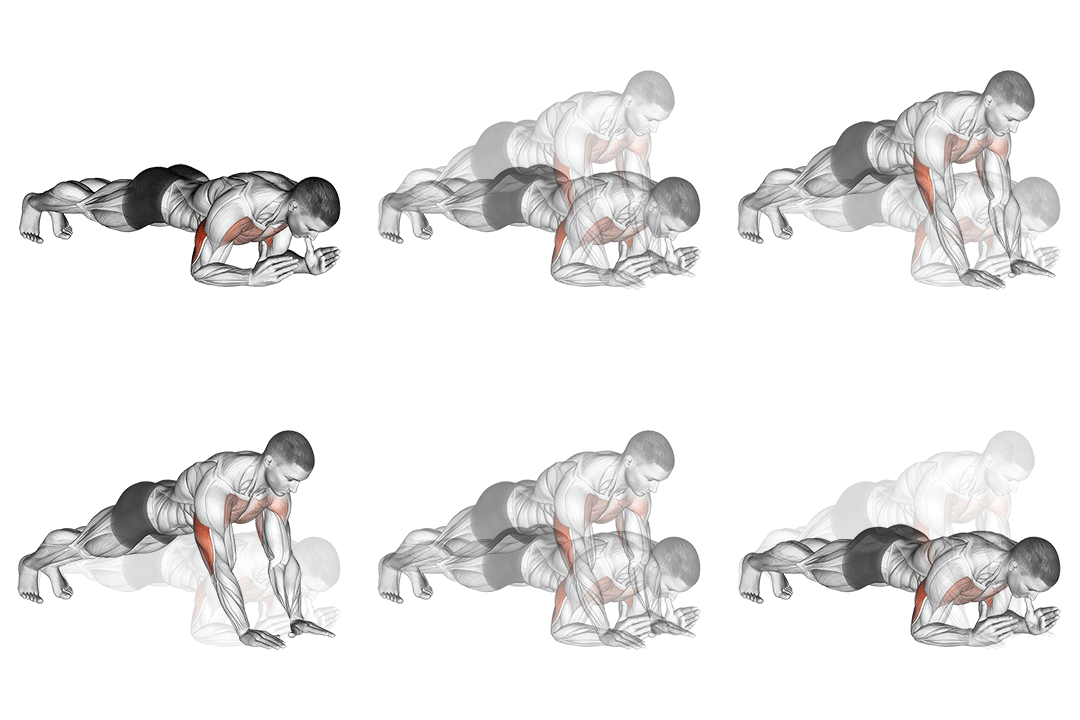
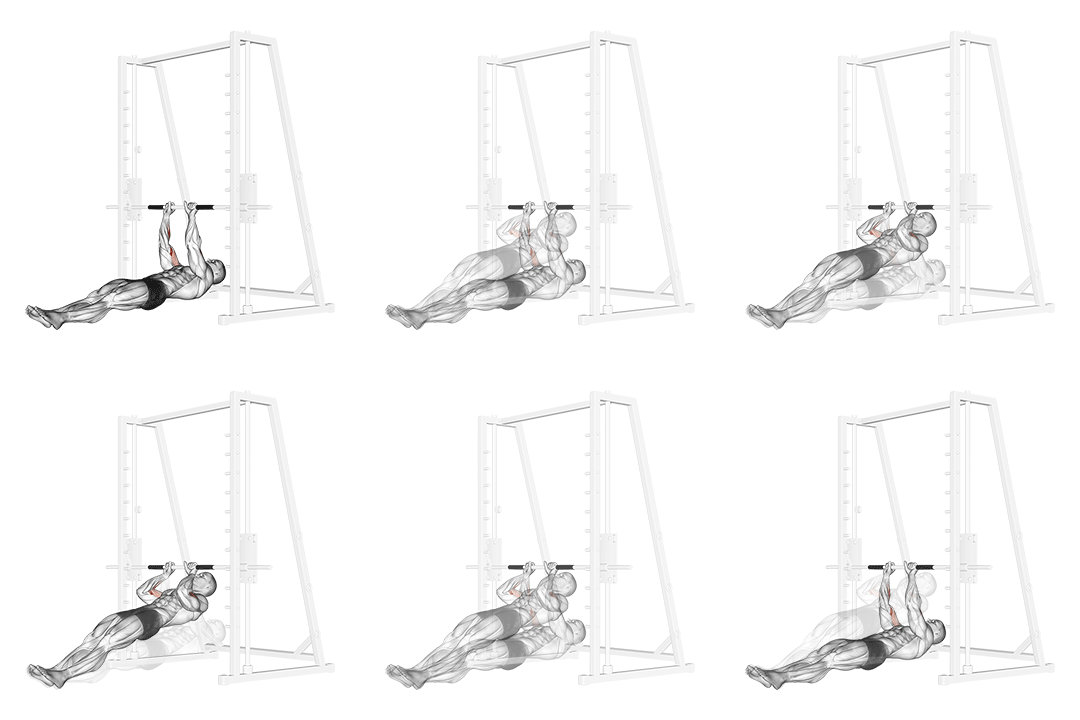
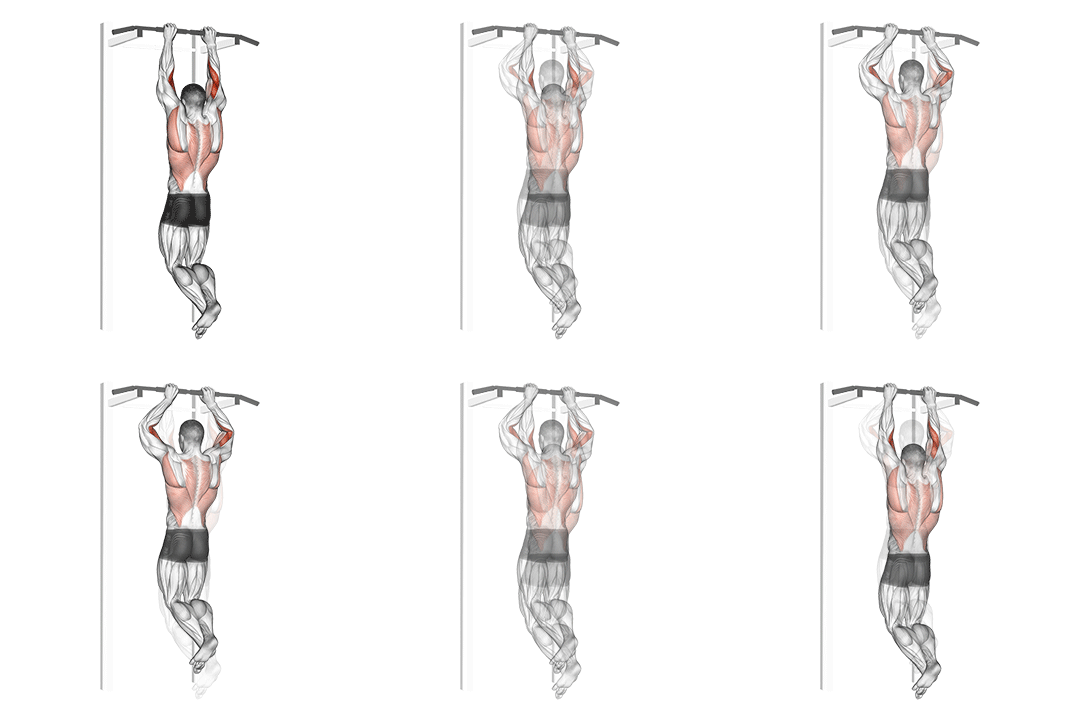
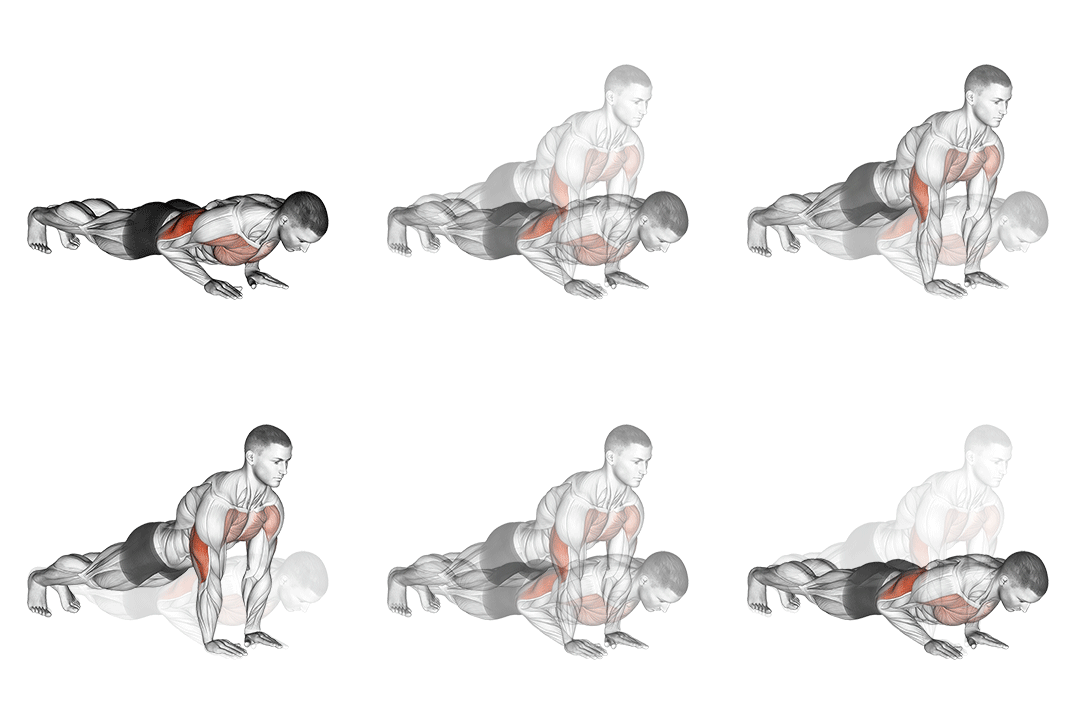
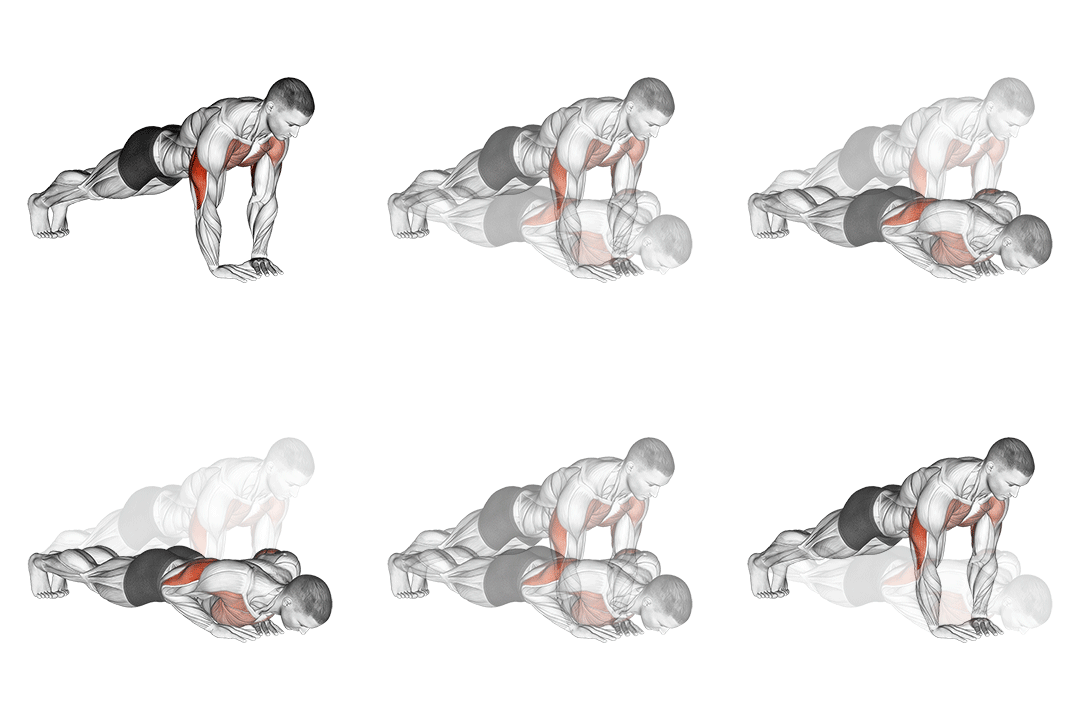
Handstand Push-up
advanced strength exercise · body weight · targets triceps
- Body part
- upper arms
- Primary target
- triceps
- Equipment
- body weight
- Difficulty
- advanced
The handstand push-up is the apex of bodyweight pressing — you're lifting roughly 90% of your body weight straight overhead through a full range of motion, all while balancing inverted against a wall. Reaching it requires not just shoulder and tricep strength, but also wrist mobility, scapular stability, and the mental willingness to be upside down. Most lifters who can bench press their body weight still can't do a single clean handstand push-up, because the shoulder strength curve is completely different and the support is tiny. The bench provides a stable, predictable base; the handstand requires the body to be a rigid lever with all the stabilizers firing simultaneously. That's why the handstand push-up is a long-term project — typically 6-18 months of dedicated work from a regular push-up base. The strength carryover, however, is significant. People who develop a clean handstand push-up usually find that their overhead pressing in any context (military press, jerk, push press) feels easier and more controlled. The shoulder stability built through bearing body weight overhead transfers to almost every overhead lift. Beyond the strength benefits, the handstand push-up offers something most barbell exercises don't: complete spatial awareness training. Inverting the body forces the brain to recalibrate its sense of balance, which is why even strong lifters look shaky on their first attempts. That neural component takes weeks to consolidate, separate from the strength itself.
Why train the Handstand Push-up?
- Builds genuine vertical pressing strength comparable to a heavy military press, with no equipment.
- Develops shoulder stability through the overhead range, which protects you in all overhead lifts.
- Trains the wrists, forearms, and core simultaneously — the body has to be a rigid lever upside down.
- Improves balance and proprioception in an inverted position, useful for gymnastics and climbing.
- Carries over strongly to weighted overhead pressing — a strong handstand push-up usually means a strong strict press.
- Once mastered, scales endlessly via deficit work, free-standing variation, and weight added — the ceiling is far above what most people will reach.
How to do the Handstand Push-up: step by step
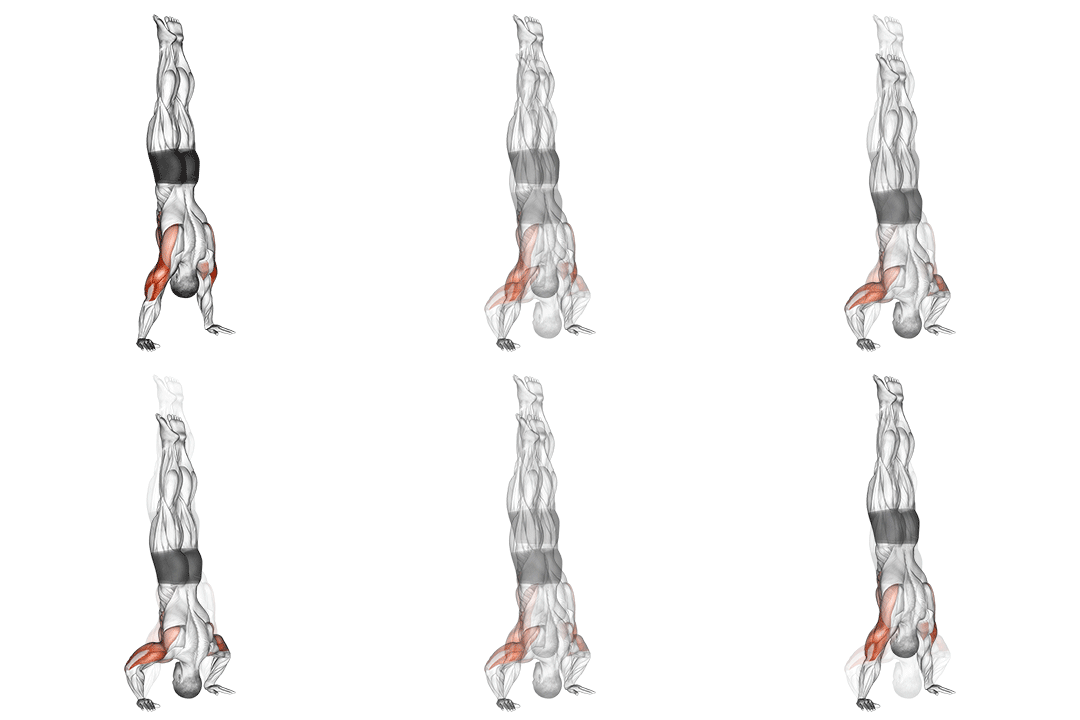
- 1Find a wall and face away from it, standing a few feet away.
- 2Place your hands on the ground shoulder-width apart and kick your feet up against the wall, coming into a handstand position.
- 3Bend your elbows and lower your head towards the ground, keeping your body in a straight line.
- 4Push through your hands and extend your arms to return to the starting position.
- 5Repeat for the desired number of repetitions.
Muscles worked
Primary
triceps
Secondary
shoulders, chest, core
Common mistakes to avoid
Bending at the hips to fake the rep
When the shoulders can't press the full range, the body folds at the waist to create the illusion of a rep. Keep your body in a straight line from wrists to heels — if you can't, you're not ready and should regress.
Letting the elbows flare to 90 degrees
Wide-elbow handstand push-ups load the rotator cuff in a vulnerable position. Keep the elbows roughly in line with the body — no more than 30-45 degrees of flare — to load the triceps and front delts safely.
Crashing down out of the handstand at the end of a set
Coming out of the inverted position quickly can hurt the wrists and the shoulders. Lower one foot at a time in a controlled descent, or step out the way you came in.
Skipping wrist preparation
The wrists take the full body weight inverted. Skip the warm-up and you'll develop wrist tendinopathy that derails training for weeks. Spend 2-3 minutes on wrist mobility before every handstand session.
Using the wall too far away from the body
Setting up too far from the wall puts you in a banana shape, with the lower back overarched. Hands should be 4-8 inches from the wall, with the body close to vertical — straight, not arched.
Easier and harder variations
Easier
Pike push-ups (feet elevated on a bench, hips piked up high so the body is roughly L-shaped) train the same vertical press pattern with much less load. Build to 3 sets of 12 pike push-ups before attempting a wall handstand push-up.
Harder
Move the feet away from the wall (free-standing handstand push-ups), or add range by pressing from a deficit (hands on yoga blocks so the head can drop below them). Free-standing handstand push-ups are the gold standard.
Alternative exercises
Pike push-up
The most direct handstand push-up regression. Same vertical press pattern with adjustable load via foot height.
Strict overhead press
Loaded vertical press with a barbell or dumbbells. Builds the same pressing strength without the balance demand — useful as a complement during handstand training.
Wall walk
Crawl up a wall from the bottom of a push-up to a near-handstand position. Builds inversion tolerance and shoulder endurance without the press.
How to program the Handstand Push-up into your training
Handstand push-ups are a low-rep, high-effort movement. Once you've achieved the first rep, programming requires patience and respect for the recovery cost. Early phase (first 1-3 reps possible): 4-5 sets of 1-3 reps, twice per week, with 2-3 minutes rest between sets. Don't rush — rep quality is everything at this stage. Pair with other vertical pressing work (pike push-ups, light overhead press) on alternate days. Building phase (3-8 reps possible): 4-5 sets of 3-6 reps, twice per week. Once you hit 3 sets of 6, start adding deficit (yoga blocks under hands) instead of more reps. Deficit work builds full-range strength faster than higher reps in shorter range. Advanced phase (8+ reps or deficit work): Reduce frequency to once per week as a focused session, with 4 sets of 5-8 reps in deficit. Add a second weekly session of pike push-ups or strict press to maintain pressing volume without overusing the wrists. Always pair handstand push-up training with horizontal pulling — heavy rows or pull-ups — to keep the shoulders balanced. Vertical pressing without enough pulling work creates postural issues over time. For programming progression toward free-standing handstand push-ups, add 2-3 sets per week of 30-second freestanding handstand holds (at first against the wall, gradually pulling away). The strength is one piece; the balance is another.
Recovery and frequency
Handstand push-ups are demanding on the wrists, shoulders, and central nervous system. 72 hours between dedicated sessions is the right cadence — push beyond that and most people develop wrist or shoulder issues that interrupt training for weeks. Wrist mobility work daily (not just before sessions) keeps the joint healthy. Foam rolling the lats and pecs once or twice a week prevents the postural compression that overhead pressing creates. Sleep is non-negotiable for this kind of high-CNS-load work — aim for 8+ hours, especially in heavy training phases. If you feel any sharp shoulder pain at the front of the joint or under the bicep, stop and reassess. Handstand push-ups should burn the front delts and triceps; they shouldn't pinch or feel sharp. Consult a physical therapist before continuing if pain persists more than a few sessions.
Frequently asked questions
How many sets and reps of handstand push-ups should I do?
When you first achieve the movement, you'll likely manage only 1-3 reps per set. Aim for 4-5 sets of 1-3 reps with 2-3 minutes rest. As you build to 5+ reps per set, drop sets and add deficit.
How often should I train the handstand push-up?
2 times per week, separated by at least 72 hours. The shoulders and triceps take longer to recover from this much load than from regular pressing.
How long does it take to learn a handstand push-up?
From a base of 20+ standard push-ups, expect 6-12 months of consistent pike push-up and handstand hold work. From scratch, plan on 12-24 months. Wrist conditioning and shoulder stability are usually the slowest pieces, not raw strength.
Should I learn to handstand against a wall first?
Yes — wall-supported handstand push-ups are the entry point for almost everyone. Free-standing requires both the strength and the balance, which are best built separately first.
Are handstand push-ups dangerous?
Done with progression and mobility prep, no. Done by going from zero to a freestanding rep without prerequisites, yes — wrist injuries, shoulder strains, and cervical issues are all possible. The risk is in the rush, not the movement itself.
Will handstand push-ups build big shoulders?
Yes, particularly the front and side delts. The full-body-weight load drives significant hypertrophy in the shoulders and triceps for most people. They won't replace dedicated lateral raises for shoulder width, but they build genuine size in the pressing musculature.
Useful tools for this exercise
Build a workout with the Handstand Push-up
Puna gives you guided bodyweight workouts you can do anywhere — no equipment, no gym, just structured progressions that build real strength.