Diamond Push-up
intermediate strength exercise · body weight · targets triceps
- Body part
- upper arms
- Primary target
- triceps
- Equipment
- body weight
- Difficulty
- intermediate
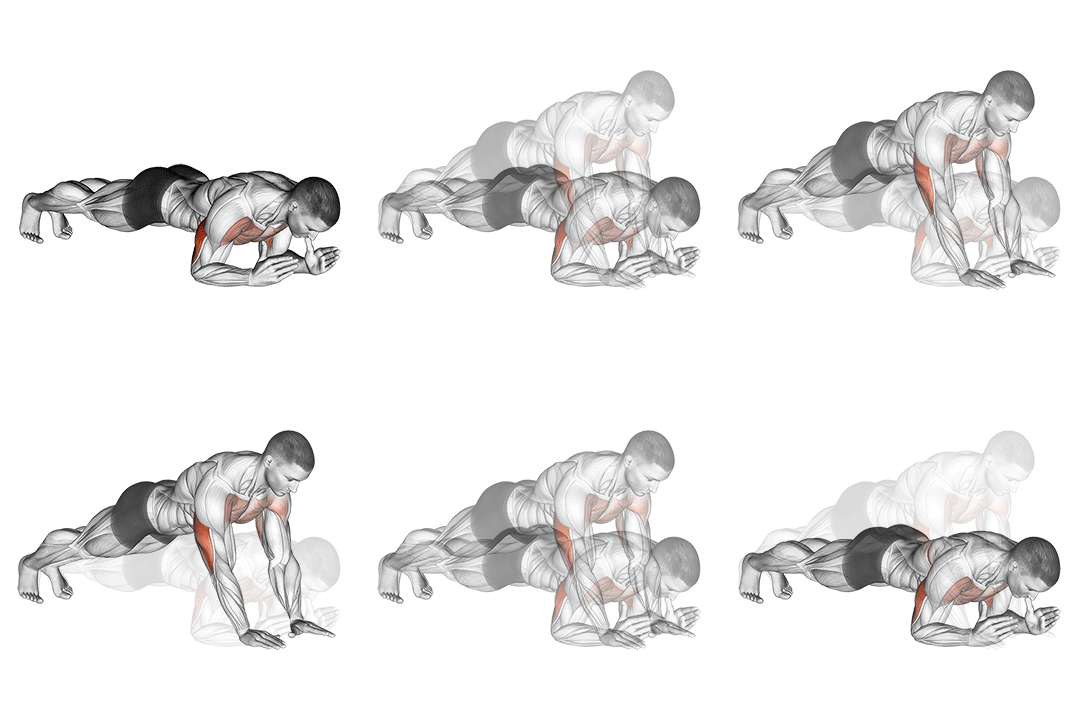
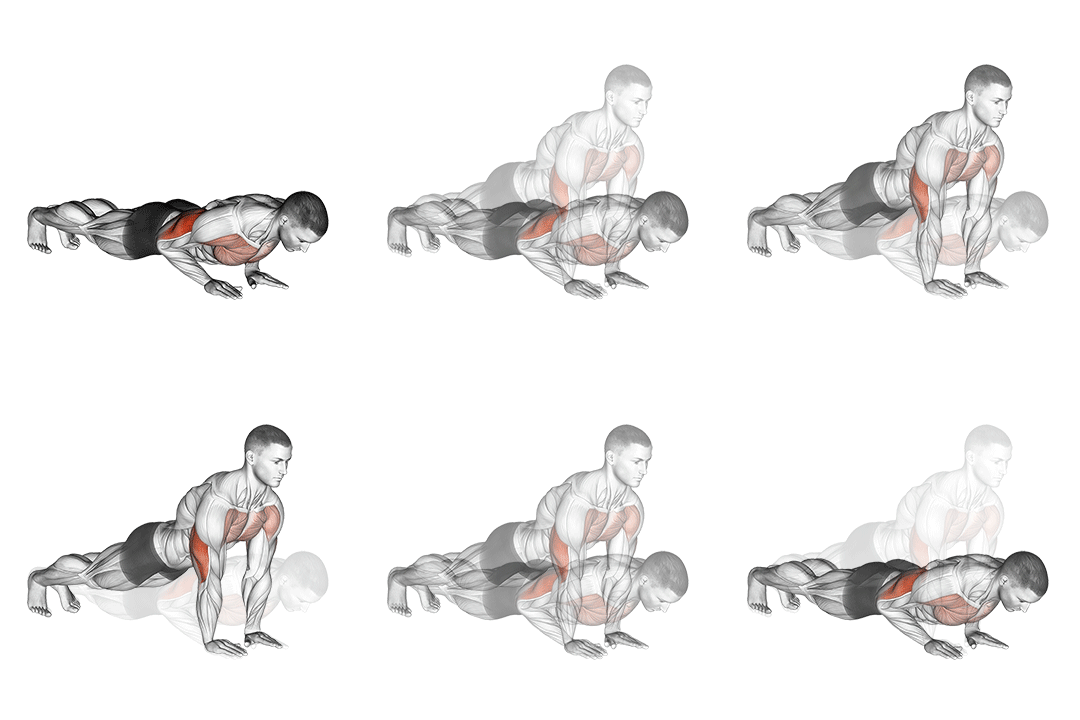
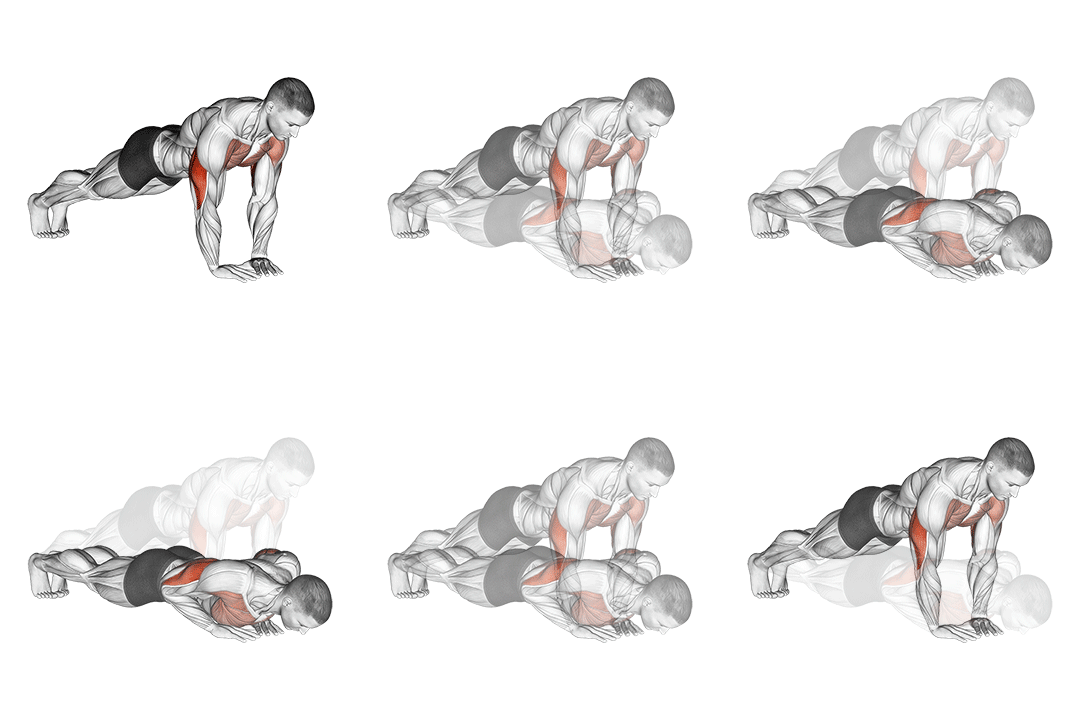
The diamond push-up sets the hands close together directly under the chest, with the index fingers and thumbs touching to form a diamond shape. This is the most tricep-focused push-up variation possible — the narrow base puts almost all the load on the triceps and the inner chest, with the outer chest and shoulders getting minimal involvement. It's significantly harder than both standard and close-grip push-ups for the same body weight. The exercise has a deserved reputation as a tricep size-builder. The combination of full body-weight load, full range of motion, and the elbow tracking required for the diamond hand position creates a strong stimulus for tricep hypertrophy. People who add 3 sets of diamond push-ups to their weekly programming for 8-12 weeks often see visible upper arm changes, even without any change in their other training. The trade-off is the demand on the elbow joint. The narrow hand position concentrates load on a small area, and trainees who jump into high volumes too quickly often develop elbow tendinopathy. The exercise rewards patience: build slowly, prioritize form over reps, and don't program it more than twice per week in the first few months of using it.
Why train the Diamond Push-up?
- The most tricep-focused push-up variation possible without equipment.
- Builds visible upper arm size and strength when programmed consistently.
- Trains the inner chest more than wide-grip variations, contributing to balanced chest development.
- Requires no equipment and works in any space that supports a standard push-up.
- Improves elbow tracking under load — a skill that carries over to all pressing variations.
- Useful intermediate-to-advanced exercise for trainees who have already mastered standard and close-grip push-ups.
How to do the Diamond Push-up: step by step
- 1Start in a high plank position with your hands close together, forming a diamond shape with your thumbs and index fingers.
- 2Keep your body in a straight line from head to toe, engaging your core and glutes.
- 3Lower your chest towards the diamond shape formed by your hands, keeping your elbows close to your body.
- 4Pause for a moment at the bottom, then push yourself back up to the starting position.
- 5Repeat for the desired number of repetitions.
Muscles worked
Primary
triceps
Secondary
chest, shoulders
Common mistakes to avoid
Letting the elbows flare to the sides
The diamond hand position requires the elbows to track close to the torso. If they flare wide, you're stressing the rotator cuff while losing the tricep emphasis. Keep elbows tucked tight to the ribs throughout the rep.
Performing them on a hard floor without warming up the wrists
The narrow hand position creates more wrist extension than wider push-ups. Spend 30-60 seconds on wrist mobility before the first set. If wrists hurt during sets, switch to a fist position or use push-up handles to reduce extension.
Cutting depth as fatigue sets in
When the triceps tire, depth shortens to keep reps moving. Maintain full chest-to-near-floor depth on every rep. Half-range diamond push-ups train a partial movement and don't build the strength claimed.
Going to failure on every set
Diamond push-ups recruit a lot of tricep tissue with each rep, and grinding to failure compounds elbow stress. Stop sets 1-2 reps short of failure for the first month of training the movement; you can train harder once your tendons have adapted.
Programming them too frequently in the first month
Enthusiastic trainees hit diamond push-ups every other day and develop golfer's elbow within weeks. Limit to twice per week for the first 4-6 weeks, then reassess based on how your elbows feel.
Easier and harder variations
Easier
Close-grip push-ups (hands roughly shoulder-width) are the standard regression. Or perform diamond push-ups on knees to reduce load while keeping the hand position. Build to 8-10 close-grip push-ups before attempting full diamond push-ups.
Harder
Decline diamond push-ups (feet elevated) increase load on the triceps further. Or progress to one-arm tricep extensions, weighted diamond push-ups, or rings dips for advanced tricep work.
Alternative exercises
Close-grip push-up
Same tricep emphasis with a slightly easier hand position. Use as a regression or as volume work alongside diamond push-ups.
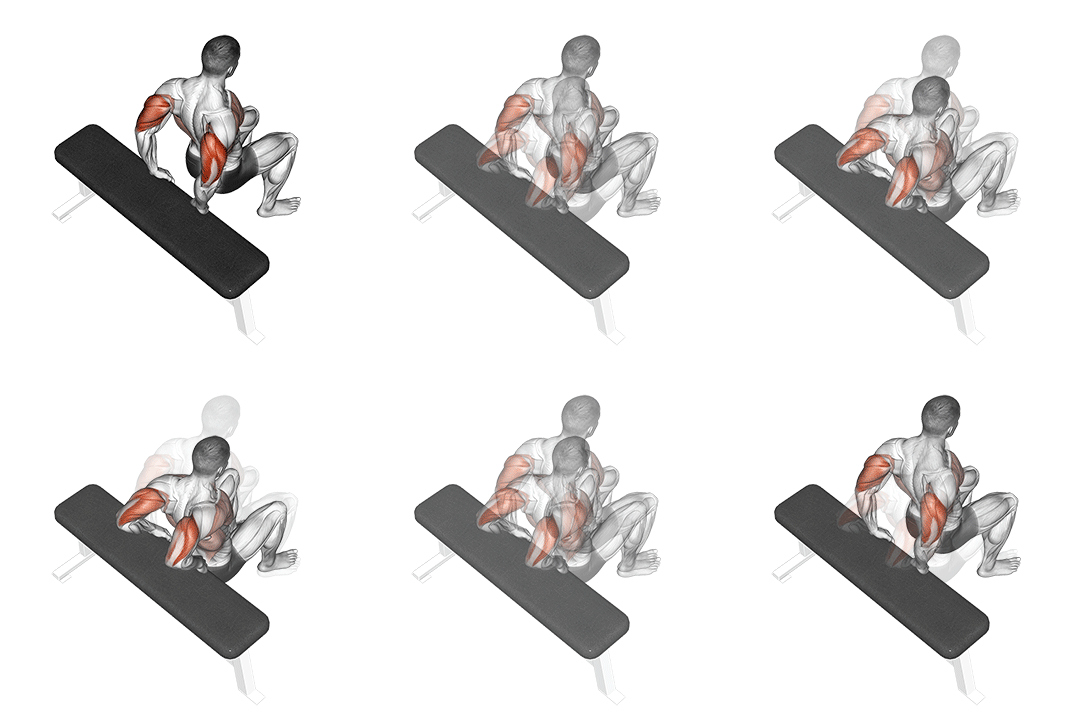
Triceps dip
Different pressing plane (vertical instead of horizontal) with similar tricep focus. Pair both in a session for complete tricep development.
Diamond push-up on knees
Same hand position with reduced load. The right regression for trainees building toward full diamond push-ups.
How to program the Diamond Push-up into your training
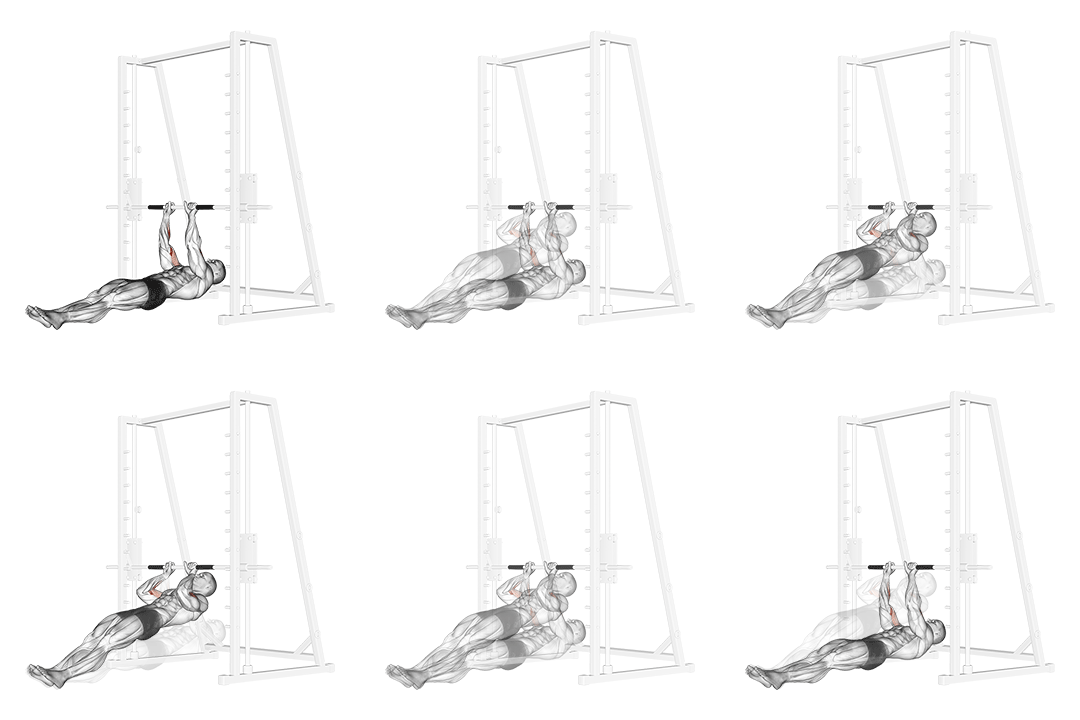
Diamond push-ups work best as a tricep-focused secondary exercise after primary chest work, or as the main movement in a tricep-emphasis day. Sets and reps: 3 sets of 6-12 reps with 90-120 seconds rest. Total weekly volume of 30-60 reps is the sweet spot — going beyond that often leads to elbow tendinopathy in the first 2-3 months of training the movement. In a chest-focused session: standard push-ups for 4 sets of 8-12 (main movement), diamond push-ups for 3 sets of 6-10 (tricep emphasis), inverted rows for 3 sets of 8-10 (balance). Done twice per week. As a finisher: 2 sets of diamond push-ups to near-failure at the end of an upper-body session. The intensity adds useful tricep volume even when you're already fatigued. For focused tricep development, run a 6-8 week block where diamond push-ups are programmed twice per week. Progress from 3 sets of 6 to 3 sets of 12, then increase difficulty (decline variation or weight) rather than continuing to add reps. Do not program diamond push-ups on the same day as heavy dips or other tricep-intensive work. The cumulative load on the elbows and front-shoulders is excessive.
Recovery and frequency
The triceps recover relatively quickly, but the elbows take more cumulative load from diamond push-ups than from any other push-up variation. 48 hours between sessions is the minimum, and 72 hours is safer in the first month of training. Golfer's elbow (medial epicondylitis) is the most common overuse injury from this exercise. Symptoms include pain on the inside of the elbow during or after sets. If you notice it, back off frequency immediately and add forearm and wrist mobility work — light stretches and band-resisted tricep extensions. Most cases resolve in 2-4 weeks of reduced loading; ignored cases can take months. Wrist tightness is also common. Daily wrist circles and the kneeling palm stretch (hands flat on floor, fingers pointing back, gentle lean back) maintain the joint mobility this exercise demands.
Frequently asked questions
How many sets and reps of diamond push-ups should I do?
3 sets of 6-12 reps with 90-120 seconds rest. Build to 3 sets of 12 strict reps before progressing to harder variations like decline diamond push-ups.
How often should I train the diamond push-up?
1-2 times per week, especially in the first month of using the movement. The elbows need recovery time; diamond push-ups three or more times per week often leads to tendinopathy.
Are diamond push-ups effective for tricep growth?
Yes — they're one of the best bodyweight tricep-builders. The combination of full body weight, full range, and tight elbow tracking creates a strong stimulus for tricep hypertrophy.
Why do my elbows hurt during diamond push-ups?
Either you jumped into high volume too quickly, your elbows are flaring outward (form error), or you have pre-existing elbow issues that this exercise aggravates. Reduce volume, fix elbow tracking, and add forearm mobility work. If pain persists, consult a physical therapist.
Diamond push-ups vs triceps dips: which is better?
Different tools. Diamond push-ups load the triceps in the horizontal plane with the chest involved. Dips load them in the vertical plane with more shoulder involvement. For complete tricep development, both have value; for limited time, dips usually scale to higher volumes more easily.
Can I do diamond push-ups every day?
Not without elbow issues. The narrow hand position concentrates load and requires more recovery than wider variations. Stick to 1-2 dedicated diamond sessions per week, even at low volume.
Useful tools for this exercise
Build a workout with the Diamond Push-up
Puna gives you guided bodyweight workouts you can do anywhere — no equipment, no gym, just structured progressions that build real strength.