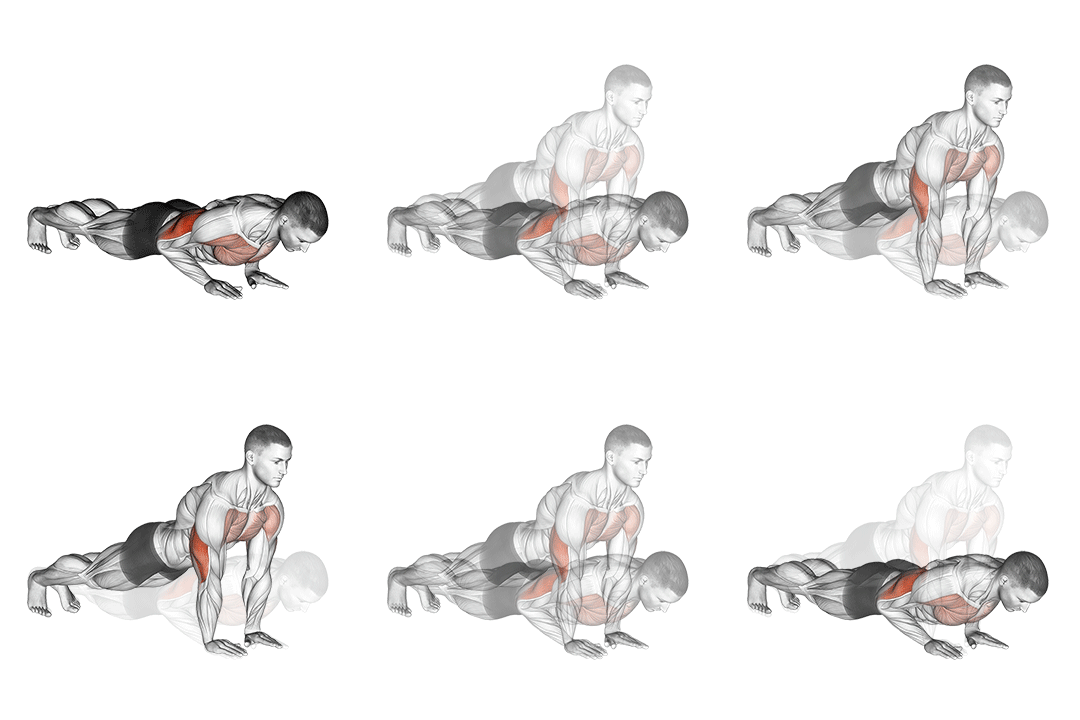
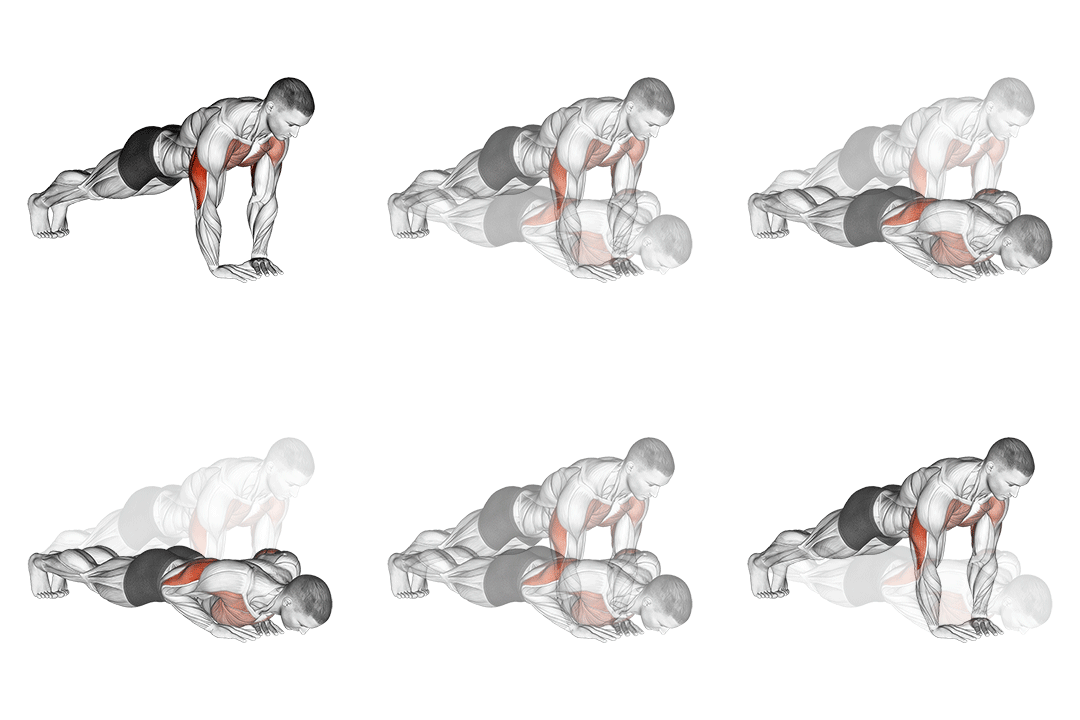
Triceps Press
beginner strength exercise · body weight · targets triceps
- Body part
- upper arms
- Primary target
- triceps
- Equipment
- body weight
- Difficulty
- beginner
The triceps press is a stripped-down standing bodyweight movement that loads the back of the upper arm through a vertical pushing pattern. From a standing position with arms extended forward, you bend the elbows to lower the body slightly while keeping the upper arms tight to the sides, then press back to the start. It's a compromise exercise — the load isn't bodyweight in the sense that a push-up is, but the movement pattern teaches the triceps to extend the elbow under continuous tension. This exercise sits in an unusual niche. It's not the strongest triceps builder in a bodyweight arsenal — diamond push-ups, parallel bar dips, and body-ups all load the triceps harder. What it offers instead is accessibility and joint friendliness: the standing position eliminates the shoulder loading that comes with most other triceps work, making it a safe option for older adults, people rehabilitating shoulder injuries, or anyone with anterior shoulder tightness who can't tolerate dips and body-ups. It's also useful as a high-rep finisher at the end of a session, where the goal is fatigue rather than maximum load. For general fitness, the triceps press fits as accessory work in any upper-body program. For people building back up after injury, it serves as a gentle reentry to triceps loading. For high-volume shoulder-friendly training, it pairs well with banded triceps work or as a circuit component when push-up volume is already high. The trade-off is that it won't build serious triceps strength on its own — at some point you need heavier loading, whether through dips, weighted variations, or bodyweight progressions.
Why train the Triceps Press?
- Loads the triceps with minimal shoulder strain — useful for people who can't tolerate dips or body-ups.
- Provides a safe reentry point for trainees rehabilitating shoulder issues who still want triceps work.
- Doubles as a finisher exercise at the end of upper-body sessions, accumulating volume without joint stress.
- Requires no equipment and minimal space — usable anywhere from a hotel room to a small office.
- Trains the triceps through continuous tension rather than impact-loaded reps, which is gentler on tendons.
- Pairs well with shoulder-friendly pulling work for balanced upper-body sessions in deload weeks.
How to do the Triceps Press: step by step
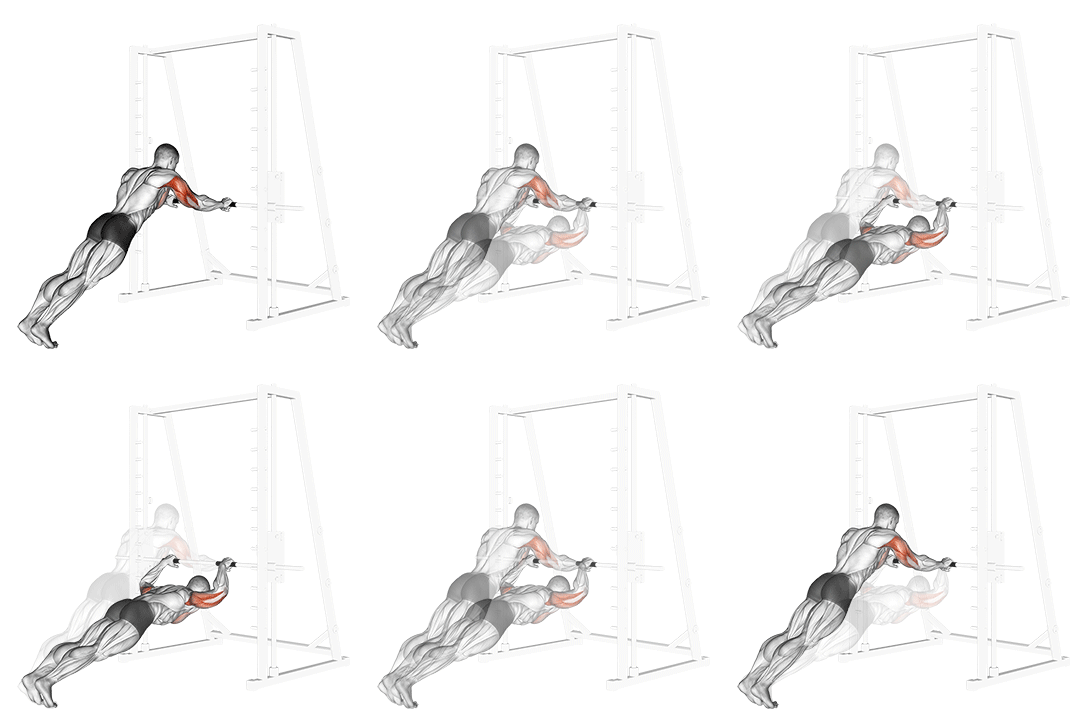
- 1Stand with your feet shoulder-width apart and your knees slightly bent.
- 2Extend your arms straight out in front of you, parallel to the ground.
- 3Bend your elbows and lower your body towards the ground, keeping your upper arms close to your sides.
- 4Pause for a moment at the bottom, then push yourself back up to the starting position.
- 5Repeat for the desired number of repetitions.
Muscles worked
Primary
triceps
Secondary
shoulders
Common mistakes to avoid
Letting the elbows flare to the sides
The elbows must stay tight to the sides throughout the movement. Flared elbows shift load away from the triceps and into the shoulder capsule, which defeats the entire purpose of choosing this exercise. Imagine pinning a small object between each elbow and your ribcage.
Using the legs to bounce up
The exercise is meant to load the triceps, not become a quarter-squat with arm motion. Keep the legs static — knees slightly bent at the start position and unchanged throughout the press. If you find yourself dipping the knees to assist, you're using too much resistance or fatiguing too fast.
Lowering past the vertical line
When the body lowers, the path should travel straight down — not forward. Hinging forward at the hips changes the loading angle and reduces the triceps emphasis. Keep the torso vertical throughout the descent and ascent.
Rushing through reps
Without significant resistance, the triceps press only works if you control tempo deliberately. Aim for 2 seconds down and 2 seconds up; the time under tension is what creates the training stimulus. Fast reps with no load train nothing useful.
Skipping when push-ups already feel sufficient
If push-ups handle your triceps work fine, the triceps press adds limited value. It's most useful as a complement when push-ups feel inappropriate — during shoulder rehabilitation, on deload weeks, or as a high-rep finisher. Don't replace genuine pressing with this if pressing is available.
Easier and harder variations
Easier
Reduce the depth of the lower position — bend the elbows only slightly. The shorter range of motion reduces the demand on the triceps and is appropriate for absolute beginners or anyone with elbow sensitivity.
Harder
Slow the tempo to 4 seconds down and 4 seconds up — the extreme tempo dramatically increases triceps work despite no load increase. Or hold a household object (water jug, backpack with books) between the hands during the press to add resistance. For real progression, transition to diamond push-ups, which load the triceps far more intensely.
Alternative exercises
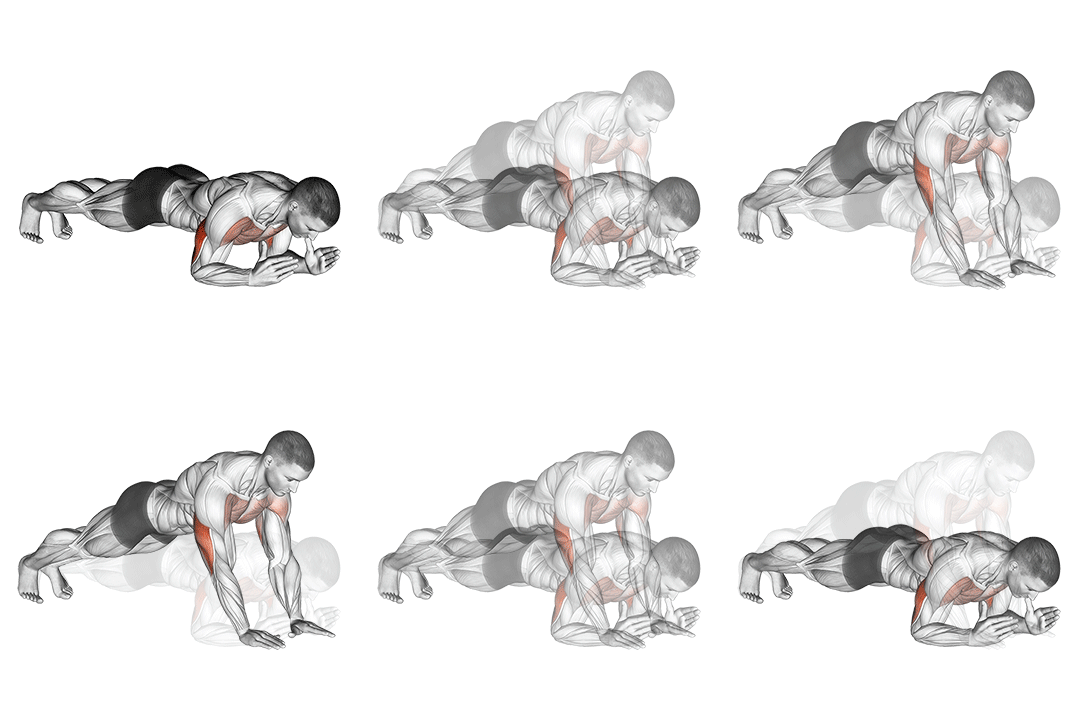
Diamond push-up
Loads the triceps significantly more than the standing press. The natural progression for anyone who has outgrown the triceps press.
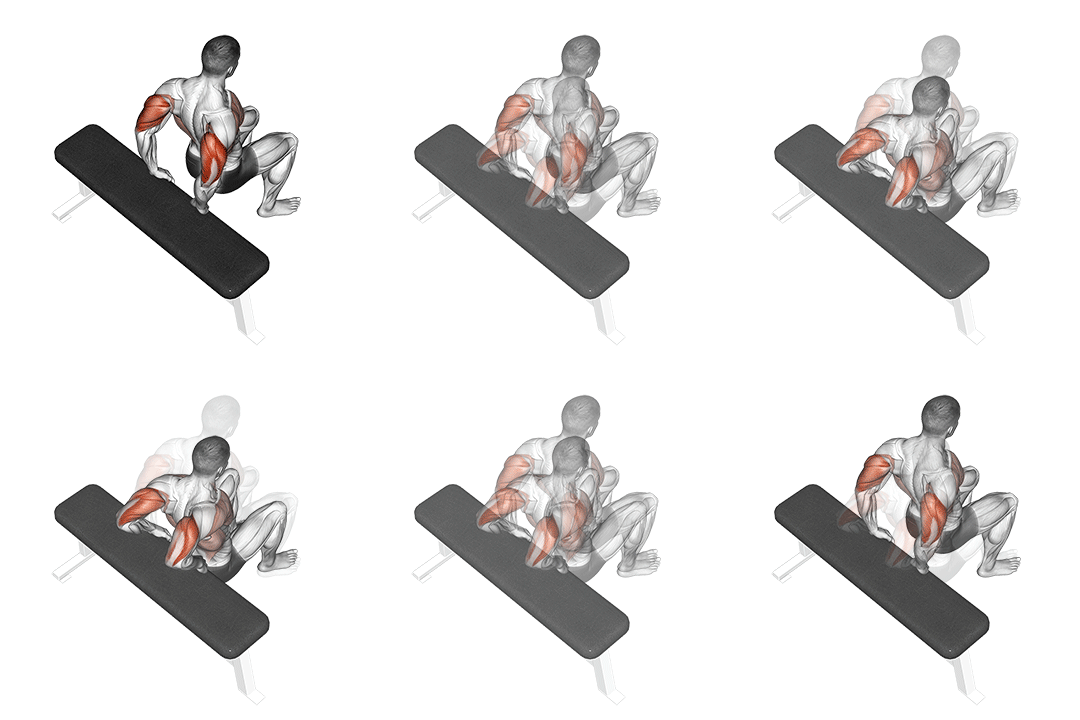
Bench dip
Gravity-loaded triceps work using a bench and bodyweight. More intense than the standing press but more shoulder-stressful too.
Resistance band triceps press-down
Adds variable load to the same elbow extension pattern. Useful for higher resistance without joint strain. Pairs well with the standing press in a high-volume session.
How to program the Triceps Press into your training
The triceps press is most useful as accessory or finisher work, not as a main pressing exercise. Programmed thoughtfully it complements heavier pressing; replacing real pressing with it slows progress. Sets and reps: 3-4 sets of 15-20 reps with 30-45 seconds rest. The light load means high reps are appropriate. Aim for the burn — the last few reps should feel hard. Total weekly volume of 100-200 reps drives most adaptation. Frequency: 2-3 times per week works well, more than other triceps exercises because the joint stress is low. Daily is acceptable in a circuit context where total volume per session stays moderate. As a finisher: 2 sets of 25-30 reps to failure at the end of an upper-body session. The high-rep burnout adds triceps volume without taxing the joints, which is useful when push-up volume is already capped. In a circuit: 30 seconds of triceps presses, 10 push-ups, 30 seconds of squats, 20 seconds rest. Repeat 6-10 times for a full-body cardio-strength hybrid that hits the triceps without overloading them. For shoulder rehabilitation reentry: 3 sets of 12-15 reps, 2-3 times per week, while heavier work is restricted. The light load lets the triceps maintain training stimulus while the shoulder recovers. Don't program this as your only triceps work if you have access to push-ups. Push-ups load the triceps harder and build more usable strength.
Recovery and frequency
The triceps press has minimal recovery cost — the load is light and the joint stress is low. 24-48 hours between sessions is the maximum needed; many trainees tolerate daily training without issue. Because the load is so light, the most common complaint isn't soreness but a sense of having wasted training time. If sets feel easy and there's no muscle fatigue, you're either using too short a range of motion or rushing tempo. Slow down and increase range; the difference is dramatic. Standard triceps soreness in the muscle belly fades within 24-48 hours and indicates appropriate stimulus. No special recovery protocols apply beyond sleep, hydration, and reasonable nutrition.
Frequently asked questions
How many sets and reps of triceps presses should I do?
3-4 sets of 15-20 reps with 30-45 seconds rest. The load is light, so high rep ranges are appropriate. The last few reps of each set should feel challenging.
How often should I do the triceps press?
2-3 times per week is ideal. Daily training is fine if total volume stays moderate per session. Joint stress is low, so the recovery demands are smaller than with dips or push-ups.
Is this a good triceps builder?
Honestly, no — at least not as your primary triceps work. The load is too light for serious strength gain. It earns its place as a shoulder-friendly accessory or as a finisher when joint stress is a concern.
Triceps press vs diamond push-up: which is better?
Diamond push-up loads the triceps significantly more and builds usable pressing strength. The triceps press wins on shoulder friendliness and as a finisher. If shoulders are healthy and you can do diamond push-ups, those are the better choice.
Can I do this exercise while recovering from a shoulder injury?
Often yes, but check with a physiotherapist first. The standing position eliminates most shoulder loading, making this exercise unusually shoulder-friendly. Many people use it as a triceps maintenance exercise during pressing restrictions.
Why don't I feel anything during the exercise?
Two likely causes. First, your range is too short — bend the elbows further so the upper arm goes through more flexion. Second, your tempo is too fast — slow each rep to 2-3 seconds in each direction. With both fixes, the burn arrives quickly.
Useful tools for this exercise
Build a workout with the Triceps Press
Puna gives you guided bodyweight workouts you can do anywhere — no equipment, no gym, just structured progressions that build real strength.