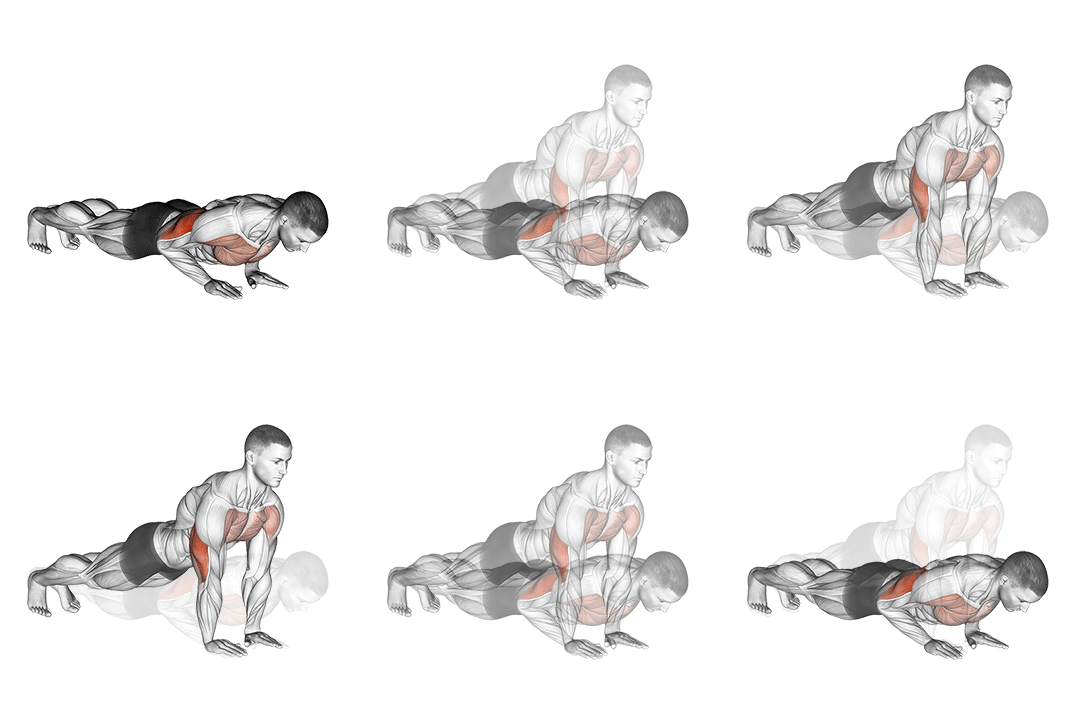
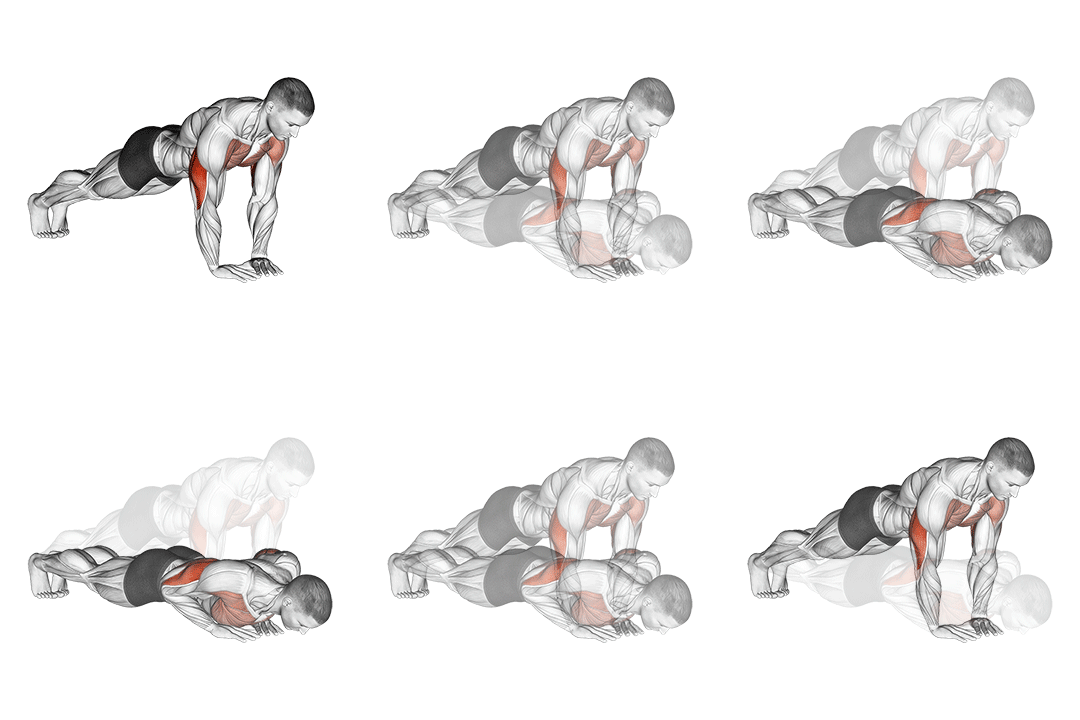
Triceps Dips Floor
beginner strength exercise · body weight · targets triceps
- Body part
- upper arms
- Primary target
- triceps
- Equipment
- body weight
- Difficulty
- beginner
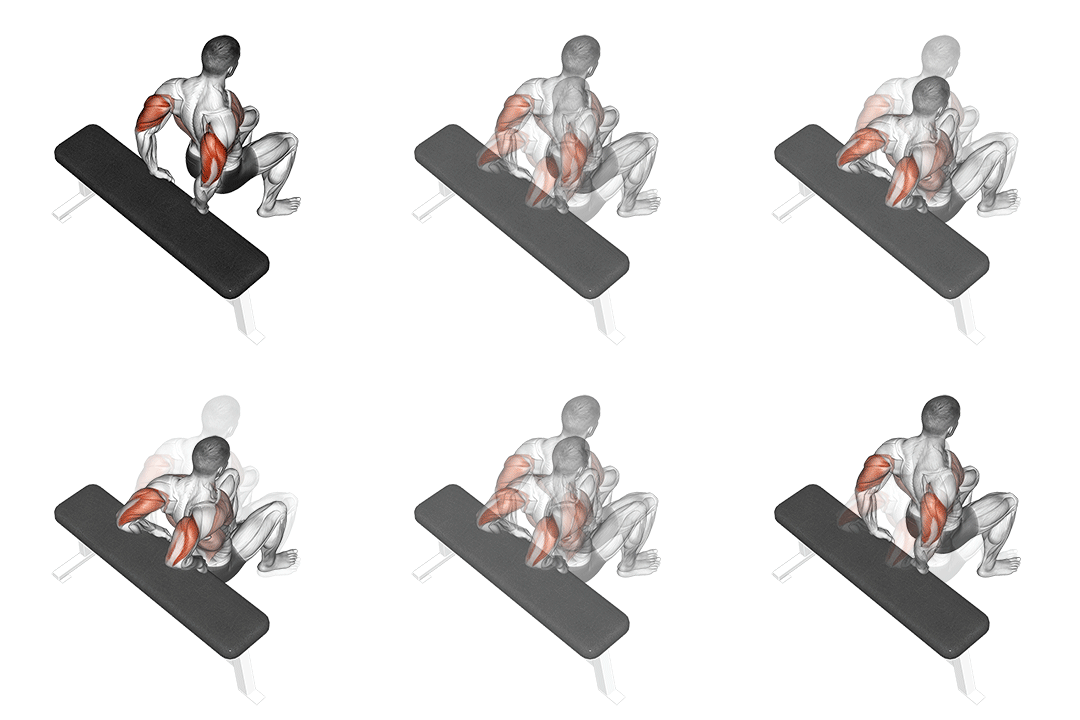
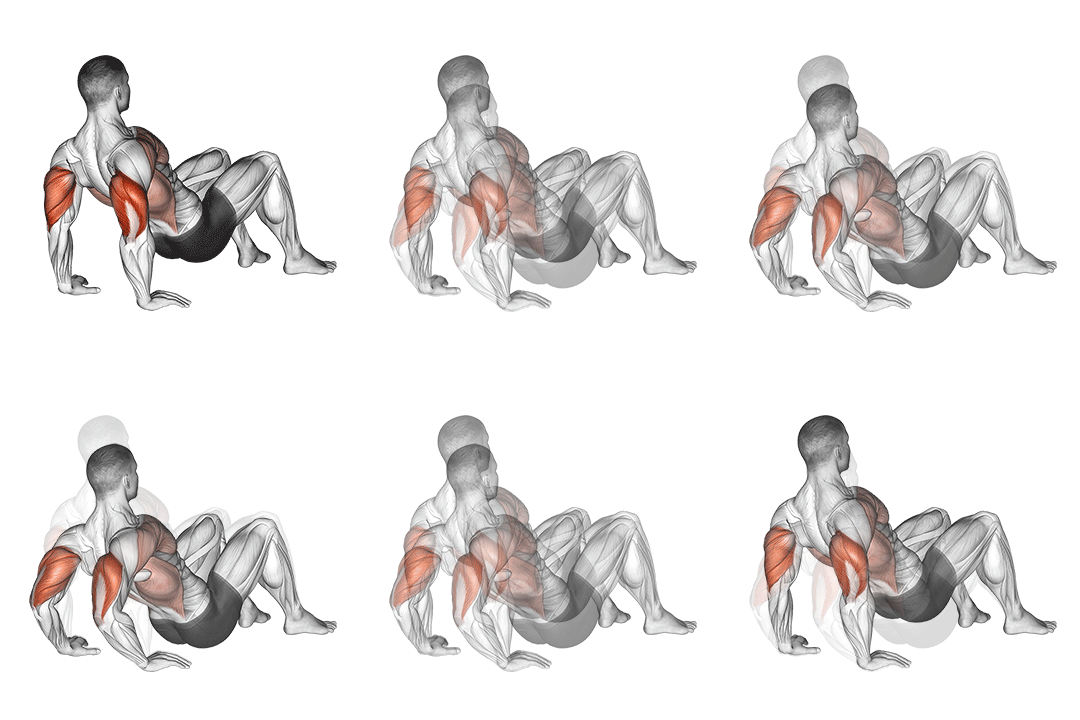
The triceps dip on the floor is one of the most accessible tricep exercises in any program — performed seated on the floor with hands behind the hips, fingers pointing toward the feet, you press through the hands to lift the hips off the floor and then bend the elbows to lower back down. The exercise loads the triceps with a fraction of the body weight that bench dips would, making it the right entry point for beginners building tricep strength from a deconditioned starting point. It's particularly useful when no bench or other elevated surface is available. Hotel rooms without proper exercise equipment, outdoor settings, or beginners working out at home can all benefit from this floor-based dip variation. The reduced load means rep counts can be higher than bench dips, making the exercise useful for endurance work or as a warm-up before heavier pressing. Like all dip variations, the form fundamentals matter — elbows tracking back rather than flaring wide, shoulders packed down rather than shrugged, controlled tempo rather than bouncy reps. Master the floor version with these fundamentals in 2-4 weeks before progressing to bench dips, where the same form errors carry more risk because of the increased load.
Why train the Triceps Dips Floor?
- Most accessible tricep exercise — works with absolutely no equipment.
- Useful entry point for beginners building tricep strength.
- Easy to do anywhere — works in hotel rooms, outdoor settings, or any open floor space.
- Lower load makes higher rep counts possible for endurance work.
- Teaches the dip pattern (elbows back, shoulders packed) before progressing to bench dips.
- Safer than bench dips for trainees with shoulder sensitivity due to reduced load.
How to do the Triceps Dips Floor: step by step
- 1Sit on the edge of a chair or bench with your hands next to your hips, fingers pointing forward.
- 2Slide your butt off the front of the chair with your legs extended in front of you.
- 3Straighten your arms, keeping a little bend in your elbows to keep tension on your triceps and off your elbow joints.
- 4Slowly bend your elbows to lower your body toward the floor until your elbows are at about a 90-degree angle.
- 5Once you reach the bottom of the movement, press down into the chair to straighten your elbows, returning to the starting position.
- 6Repeat for the desired number of repetitions.
Muscles worked
Primary
triceps
Secondary
chest, shoulders
Common mistakes to avoid
Letting the elbows flare out to the sides
Wide elbows shift load away from the triceps and into the front of the shoulders. Keep the elbows tracking straight back over the wrists, not flaring outward — narrow tracking is what makes it a tricep exercise.
Letting the hips drop fully to the floor between reps
If the hips touch the floor between reps, the tension drops and the exercise becomes a series of disconnected reps. Hover the hips just above the floor at the bottom — maintain constant tension throughout the set.
Going too deep too fast
Lowering until the shoulders dip below the elbows can stress the anterior shoulder capsule. Stop when the upper arms are roughly parallel to the floor — this is full range without the joint stress of going further.
Hands placed too far forward of the hips
If your hands are shifted in front of your sit bones, the angle puts more stress on the wrists. Position the hands directly under the shoulders, fingers pointing toward your feet, with the wrists in line with the shoulders.
Bouncing out of the bottom
Using momentum to rebound from the descent uses tendon elasticity instead of muscle force. Pause for half a second at the bottom of every rep — the muscle does its work in that pause.
Easier and harder variations
Easier
Bend the knees more sharply (closer to the body) to reduce the load. Or perform with feet flat on the floor with knees bent at 90 degrees — this is the standard 'easier' variation.
Harder
Straighten the legs out in front of you (instead of bent knees). Elevate the feet on a chair or low surface for more body weight on the arms. Or progress to bench dips, then to parallel-bar dips.
Alternative exercises
Bench dip
Same exercise with hands on a bench instead of the floor. Higher load due to more body weight on the arms.
Triceps dip with bench leg
Same setup as floor dips but with one leg elevated. Adds a unilateral component that increases stability demand.
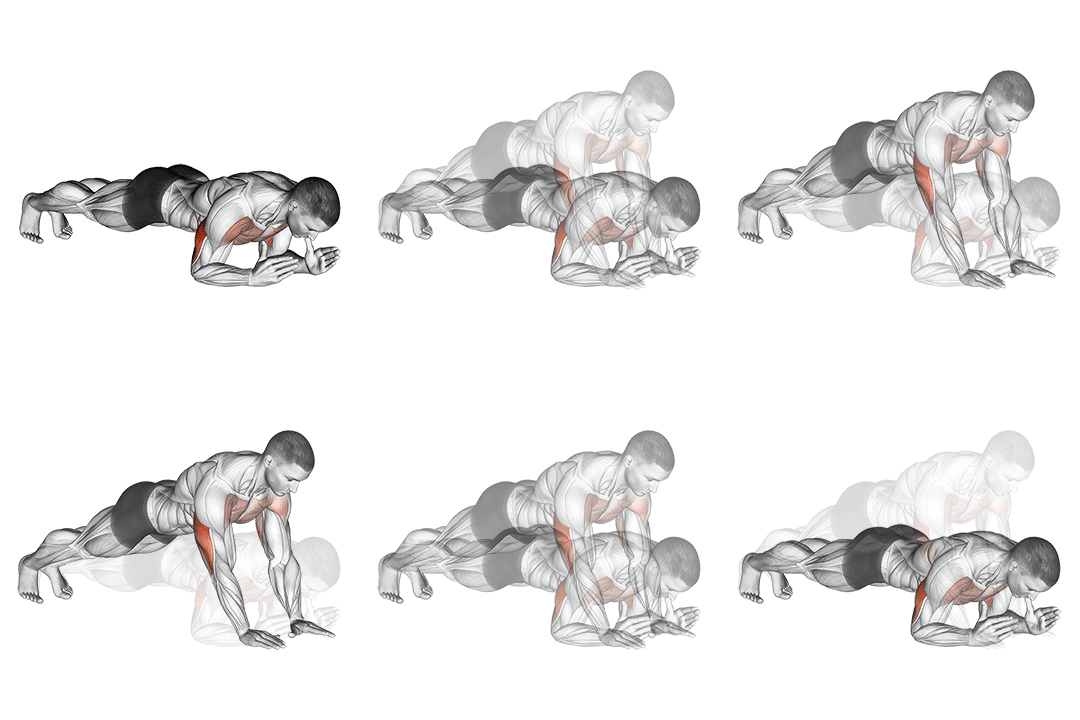
Diamond push-up
Different position (horizontal pressing) but similar tricep focus. Useful pairing for complete tricep development.
How to program the Triceps Dips Floor into your training
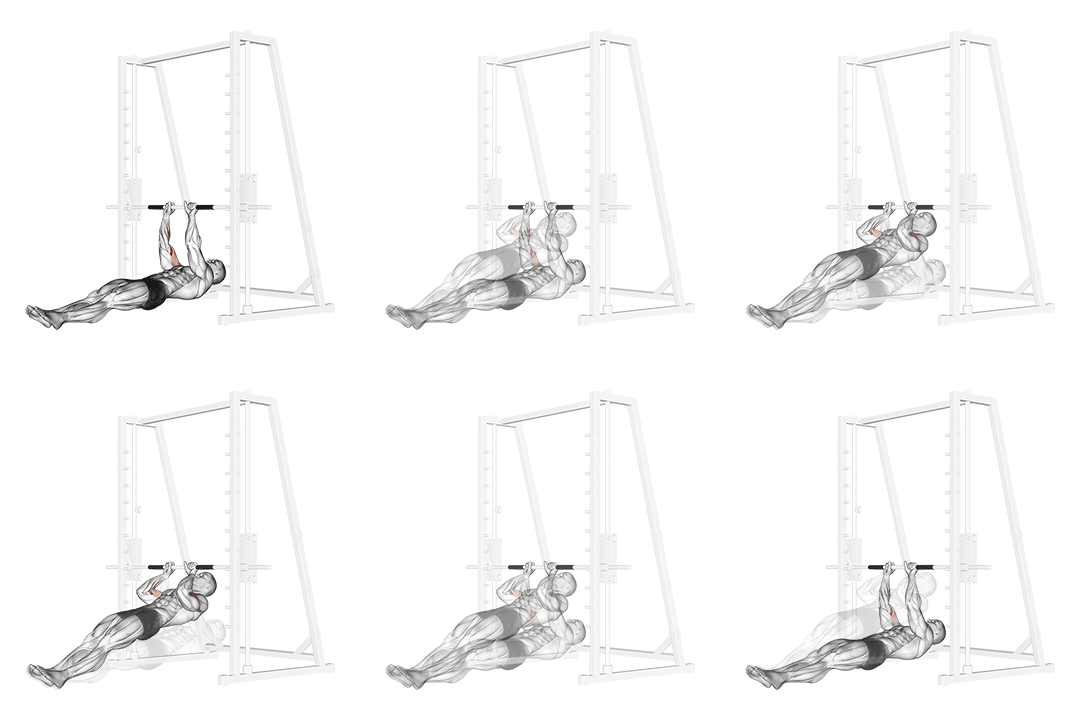
Floor triceps dips work as either a primary tricep exercise for beginners or as a warm-up for trained athletes. For beginners (working toward bench dips): 3-4 sets of 8-15 reps with 60-90 seconds rest. Programmed twice per week. Once you hit 3 sets of 15 strict reps, progress to bench dips. As warm-up for trained athletes: 1-2 sets of 12-15 reps before heavier tricep work. The light load primes the triceps without depleting them. As a finisher: 2-3 sets of 15-20 reps at the end of an upper body session. High-rep finishers build endurance without specialized equipment. In a beginner full-body session: 3 sets of 10 floor triceps dips, 3 sets of 8-10 push-ups (or modified), 3 sets of 8-10 inverted rows or band rows, 3 sets of 12-15 squats. Done 2-3 times per week. Do not program floor triceps dips on the same day as bench dips, diamond push-ups, or other tricep-intensive work. The cumulative load is excessive for a beginner program.
Recovery and frequency
Floor triceps dips have low recovery cost — daily training is fine for most people. Higher session frequencies than bench dips are tolerable due to the reduced load. Wrist tightness from the unusual hand position (fingers pointing back) is the most common feedback. Wrist circles and gentle extension stretches before each session help. The shoulders take less load than in bench dips, so anterior shoulder fatigue is rare.
Frequently asked questions
How many sets and reps of floor triceps dips should I do?
3-4 sets of 8-15 reps with 60-90 seconds rest. Build to 3 sets of 15 strict reps before progressing to bench dips.
How often should I train floor triceps dips?
2-3 times per week. The reduced load allows higher session frequency than bench or parallel-bar dips.
Floor triceps dips vs bench dips: which is better?
Floor dips are the easier, more accessible regression. Bench dips are the next progression with significantly more load. Use floor dips while building strength; progress to bench dips when 3 sets of 15 floor dips feel easy.
Are floor triceps dips effective?
For beginners, yes — they create enough stimulus to drive early strength gains. For trained athletes, the load is too low for ongoing strength gains. Use them as a warm-up or accessory once you can do bench dips.
Can I do floor triceps dips daily?
Spread out, yes — daily low-volume work (5-10 reps multiple times per day) builds tendon tolerance gradually. For high-volume or near-failure training, every other day with full rest is better.
Why do my wrists hurt during floor triceps dips?
The fingers-back hand position puts the wrists in significant extension, which can cause discomfort especially in trainees new to the position. Build wrist mobility daily, and switch to a fist position or push-up handles if discomfort persists.
Useful tools for this exercise
Build a workout with the Triceps Dips Floor
Puna gives you guided bodyweight workouts you can do anywhere — no equipment, no gym, just structured progressions that build real strength.