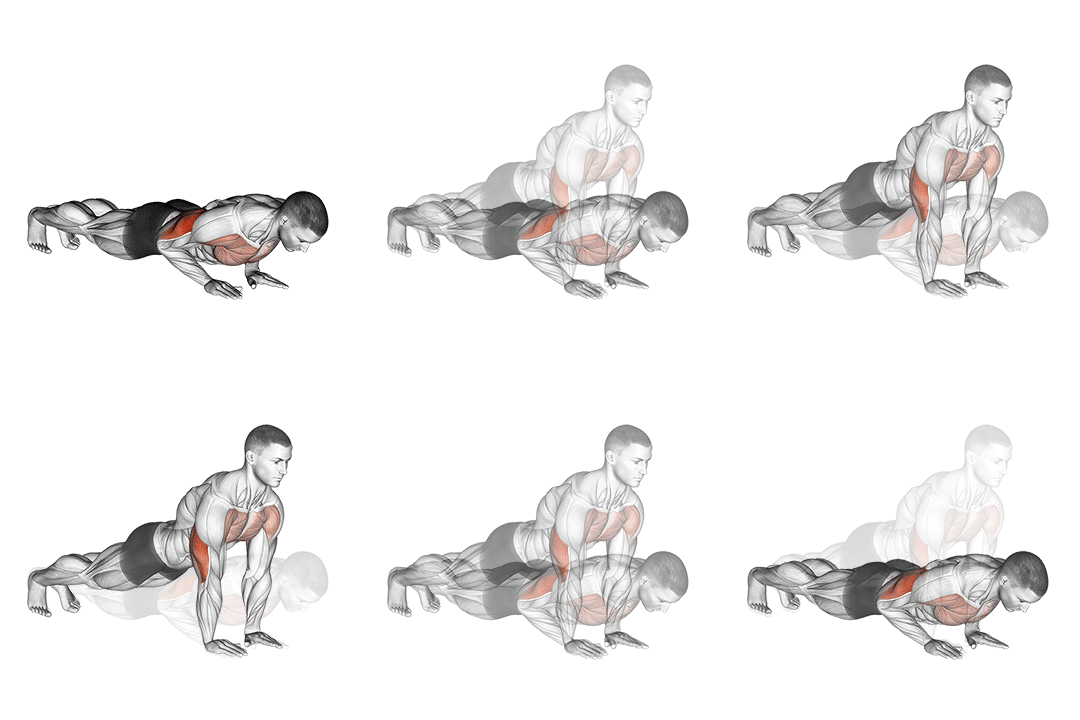
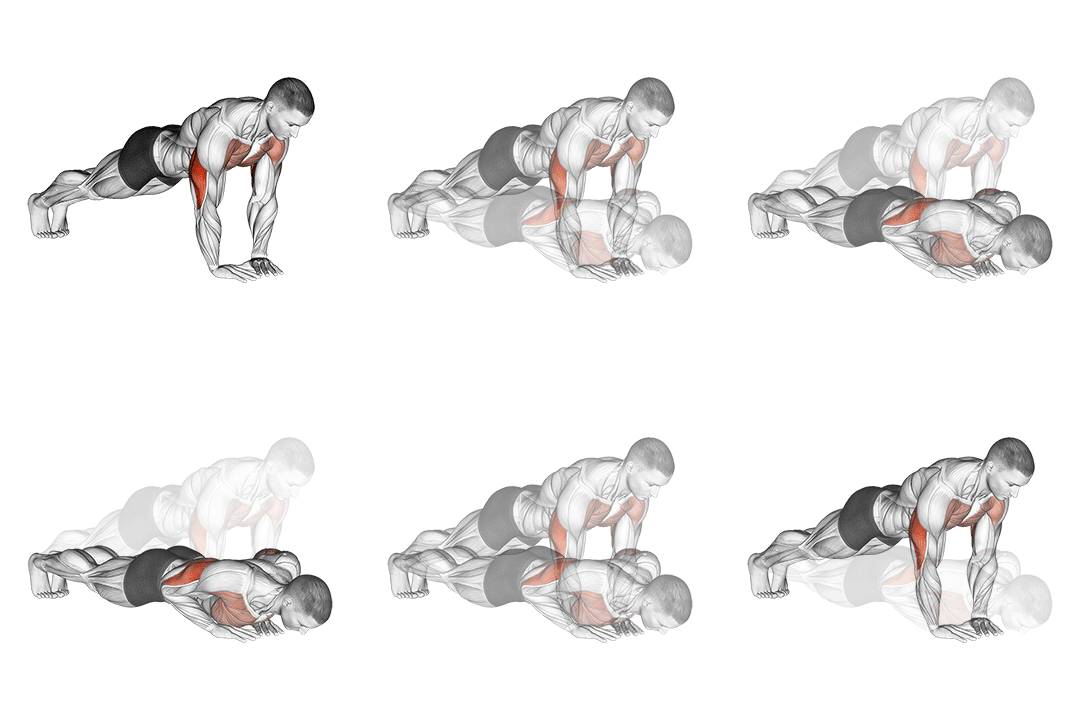
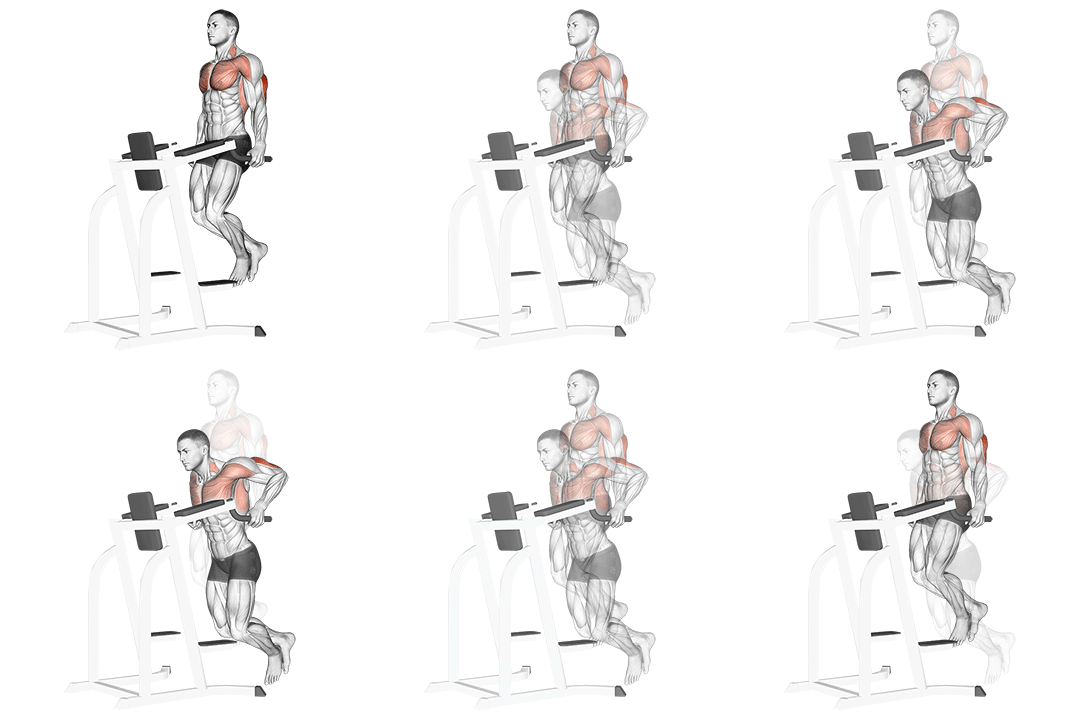
Triceps Dip
beginner strength exercise · body weight · targets triceps
- Body part
- upper arms
- Primary target
- triceps
- Equipment
- body weight
- Difficulty
- beginner
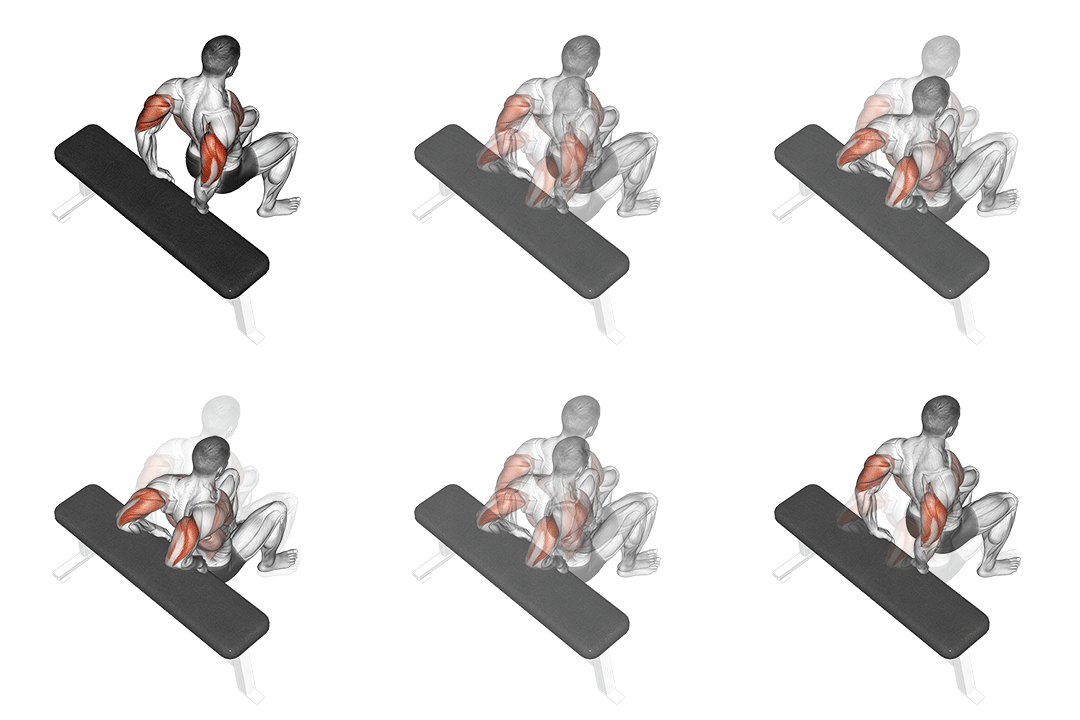
The triceps dip is the bodyweight tricep exercise — performed with hands behind you on a bench, chair, or low bar, you lower your body by bending the elbows and press back up. Unlike push-ups, which split load between chest and triceps, the dip puts the bulk of the work directly on the triceps, particularly the long head. That makes it one of the highest-leverage triceps exercises you can do without weights. It scales smoothly: bend the knees and keep the feet on the floor for a regression, extend the legs straight for the standard version, elevate the feet on a second bench for added load, or progress to parallel-bar dips for the bigger calisthenics version. The exercise is simple enough that beginners can use it productively, but the depth and shoulder loading need respect — the same form errors that ruin push-ups (shoulders shrugging, elbows flaring) cause real shoulder problems in dips because the body is unsupported in the bottom position. Programmed weekly alongside push-up work, dips fill the tricep-development gap that horizontal pressing alone leaves. A 3-month focused dip block can add visible size and strength to the upper arms even for trainees who already have a strong push-up base.
Why train the Triceps Dip?
- Targets the triceps directly, especially the long head, more effectively than most push-up variations.
- Builds shoulder stability in the descended position, which transfers to overhead pressing and gymnastics work.
- Requires only a bench, chair, or low bar — no specialized equipment needed.
- Scales smoothly from beginner (bent knees) to advanced (parallel bars, weighted) for years of progression.
- Provides a useful pressing alternative when wrists hurt during traditional push-ups (different wrist angle).
- Combined with push-ups, gives you complete upper-body horizontal pressing development at zero cost.
How to do the Triceps Dip: step by step
- 1Sit on the edge of a bench or chair with your hands gripping the edge, fingers pointing forward.
- 2Slide your butt off the bench, supporting your weight with your hands.
- 3Bend your elbows and lower your body towards the ground, keeping your back close to the bench.
- 4Pause for a moment at the bottom, then push yourself back up to the starting position.
- 5Repeat for the desired number of repetitions.
Muscles worked
Primary
triceps
Secondary
chest, shoulders
Common mistakes to avoid
Shrugging the shoulders up to the ears
When fatigue hits, the shoulders ride up toward the ears, removing the triceps from the work and stressing the upper traps. Pack the shoulders down (drive them away from the ears) before each rep and maintain that position throughout.
Flaring the elbows out to the sides
Wide elbows shift load away from the triceps and into the front of the shoulders — the most vulnerable position for the joint. Keep the elbows tracking straight back over the wrists, not flaring outward.
Going too deep too early
Lowering until the shoulders are below the elbows can stress the anterior shoulder capsule. Stop when the upper arms are roughly parallel to the floor (or slightly below) — going further isn't more effective and increases injury risk.
Hands placed too far in front of the hips
If your hands are shifted forward of your sit bones, the angle puts more stress on the wrists and shoulders. Position the hands directly under the shoulders, fingers pointing toward your feet.
Bouncing out of the bottom
Using momentum to rebound out of the descent uses tendon elasticity instead of muscle force. Pause for a beat at the bottom of every rep — that pause separates strength training from a momentum drill.
Easier and harder variations
Easier
Bend the knees and keep the feet flat on the floor close to your hands. The closer the feet to the bench, the easier the exercise. Build up to straight-legged dips (feet extended in front), then to elevated-feet dips on a second bench.
Harder
Elevate the feet on a second bench or chair so the body is roughly horizontal. Add weight by placing a plate on your lap. Or progress to parallel-bar dips (chest dip variation) for full body weight on the arms.
Alternative exercises
Chest dip
Same pressing pattern but performed on parallel bars with full body weight on the arms. The bigger version of the exercise — significantly harder and a true calisthenics milestone.
Close-grip push-up
Hands close together under the chest. Targets the triceps with a different angle — useful contrast to dips in a complete tricep program.
Diamond push-up
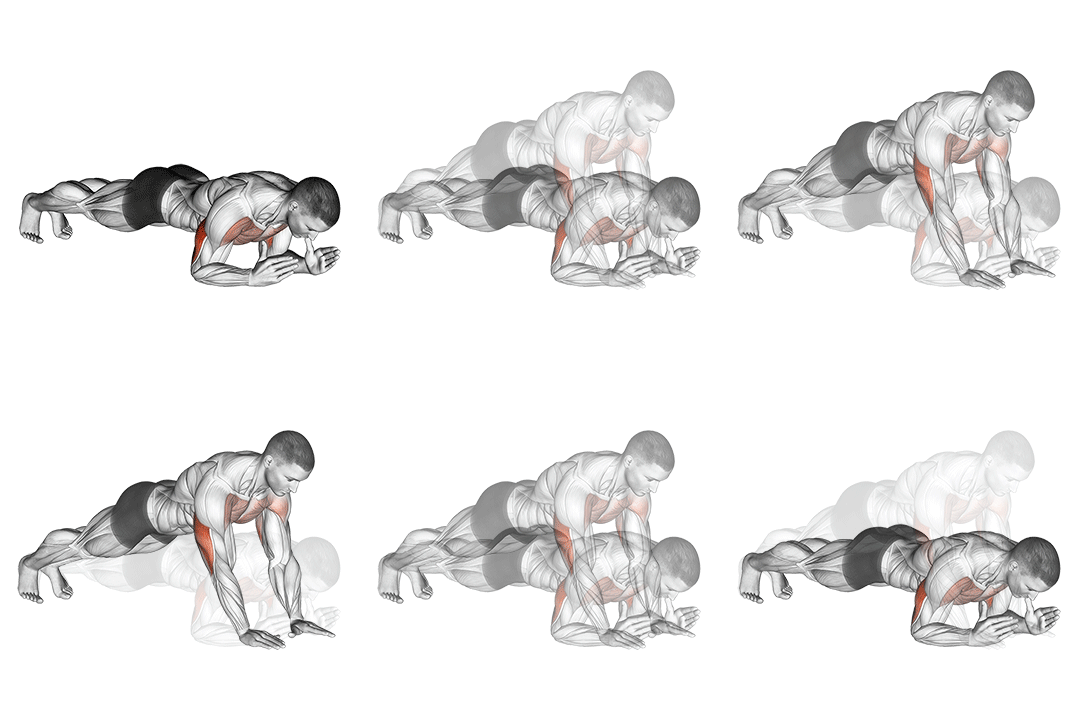
Hands form a diamond shape directly under the chest. Even more triceps emphasis than close-grip, performed in the horizontal plane.
How to program the Triceps Dip into your training
Triceps dips work well as a secondary press in a horizontal pressing session. Place them after push-ups or after heavier pressing work, when the triceps are warm but not yet exhausted. Sets and reps: 3-4 sets of 8-15 reps with 60-90 seconds rest. Total weekly volume of 50-150 reps drives most strength and size gains for the triceps. A balanced upper body session: 4 sets of 8 push-ups, 4 sets of 8 inverted rows, 3 sets of 10 dips, 3 sets of 10 face pulls or band pull-aparts. Done 2-3 times per week, this builds well-rounded upper body strength and size. For focused triceps development, run a 6-week block where dips are programmed twice per week with progressive load — start at 3 sets of 10, add 1 rep per set per week, and add weight (a small plate on the lap) once you hit 3 sets of 15. Most trainees see visible upper arm changes in this kind of focused block. Avoid programming dips on the same day as heavy overhead pressing — both load the front of the shoulder, and cumulative volume can lead to anterior shoulder fatigue or impingement. Alternate days work better.
Recovery and frequency
The triceps recover faster than larger muscle groups, so 48 hours between dip sessions is generally enough. The shoulders take more cumulative load and are usually the limiting recovery factor — if the front of the shoulder feels achy after dip days, reduce frequency or volume. Wrists also take a bit of stress in the bench dip position because of the angle. Wrist circles and gentle extension stretches before each session help. If wrist discomfort persists, switch to parallel bars or push-up handles for a more neutral wrist position. Sleep, hydration, and protein intake cover the rest of recovery — no specialized protocols needed.
Frequently asked questions
How many sets and reps of triceps dips should I do?
3-4 sets of 8-15 reps with 60-90 seconds rest. Build to 3 sets of 15 strict reps before progressing to elevated-feet variations or adding weight.
How often should I train the triceps dip?
2-3 times per week. The triceps recover quickly, but the front of the shoulder takes cumulative load — give the joint 48 hours between dip sessions.
Are triceps dips bad for the shoulders?
Done with proper depth and form, no — they build shoulder stability in the descended position. The risk comes from going too deep too fast or shrugging the shoulders up at the bottom of the rep. Both are form errors, not flaws of the exercise itself.
Triceps dips vs close-grip push-ups: which is better?
Different tools. Triceps dips load the long head of the triceps more and add a vertical pressing component. Close-grip push-ups stay horizontal and emphasize the medial head. For complete triceps development, both have value.
Can I do dips every day?
Spread out, yes — daily low-volume work (5-10 reps multiple times per day) is fine and can build skill and tendon tolerance. For high-volume or near-failure training, every other day with full rest is better.
Why does my shoulder hurt during dips?
Usually one of three things: going too deep, shoulders shrugging at the bottom, or pre-existing rotator cuff issues. Reduce depth, pack the shoulders down, and review form. If pain persists, see a physical therapist before continuing.
Useful tools for this exercise
Build a workout with the Triceps Dip
Puna gives you guided bodyweight workouts you can do anywhere — no equipment, no gym, just structured progressions that build real strength.