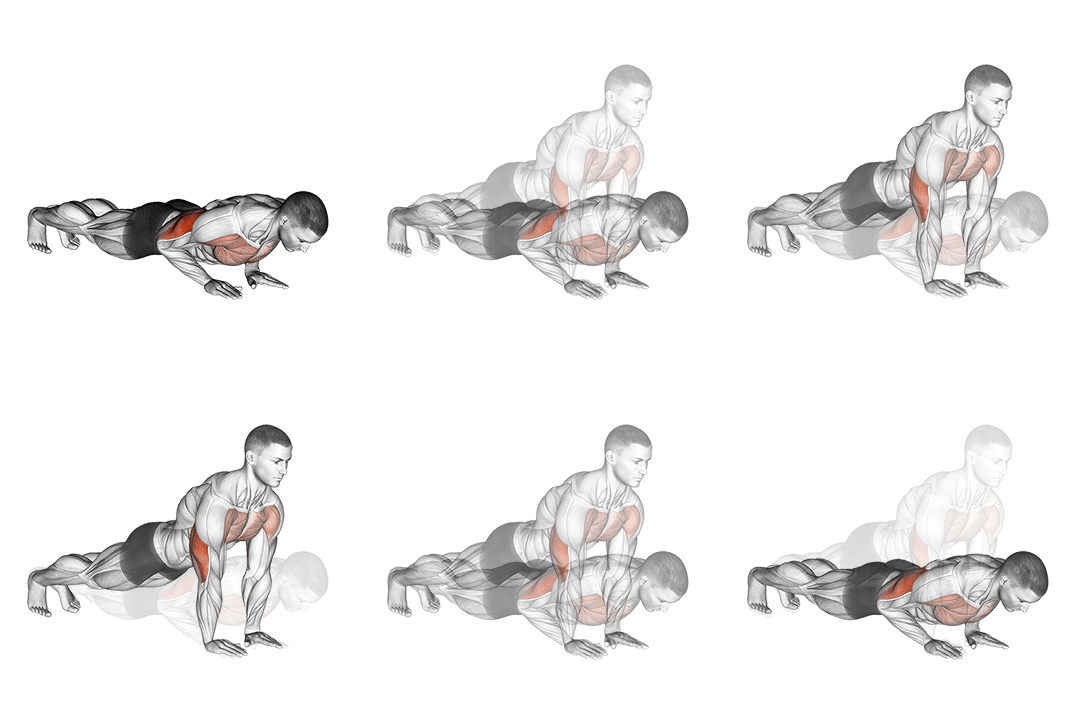
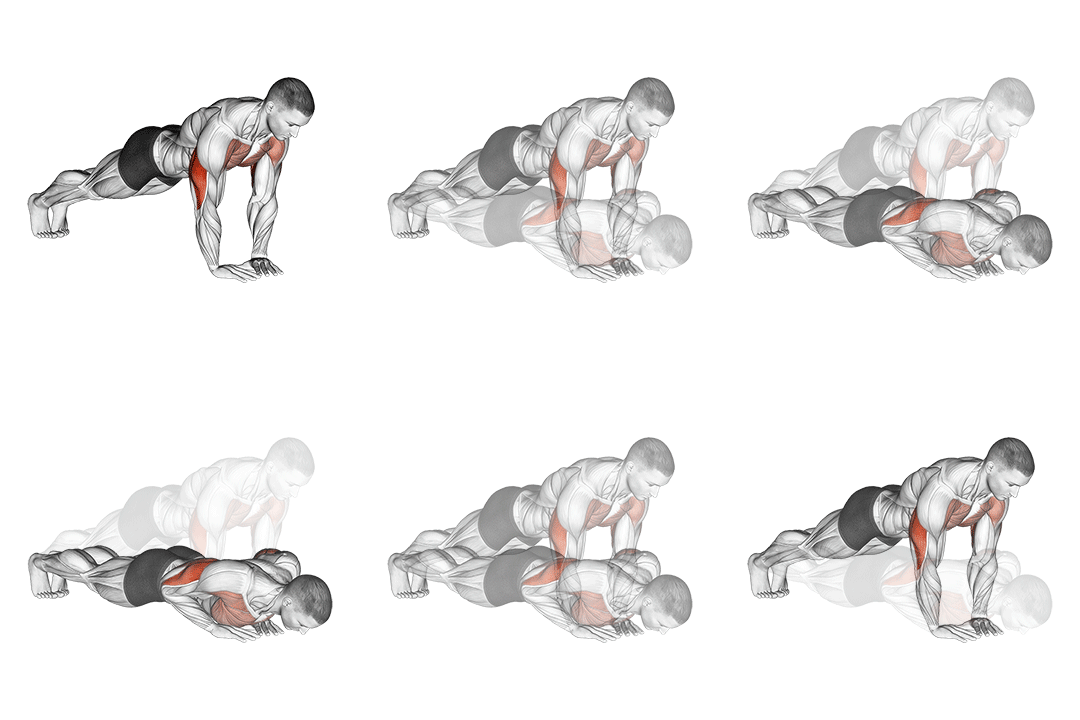
Three Bench Dip
advanced strength exercise · body weight · targets triceps
- Body part
- upper arms
- Primary target
- triceps
- Equipment
- body weight
- Difficulty
- advanced
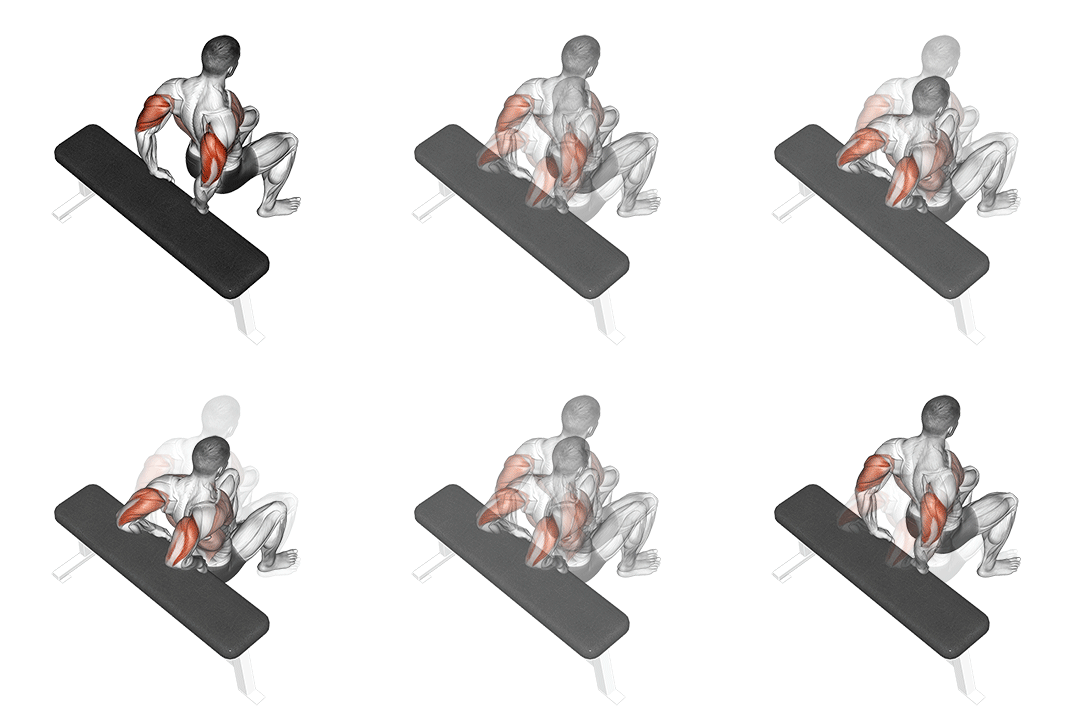
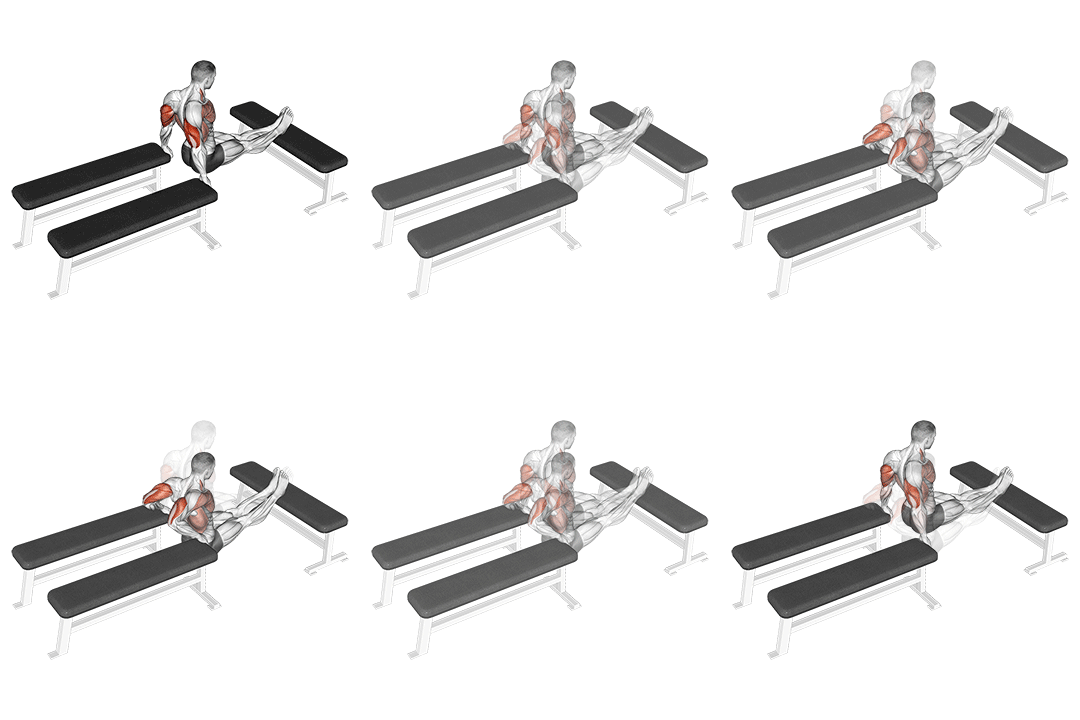
The three bench dip is an advanced bench dip variation that uses three benches arranged so the trainee performs a deeper-range dip than standard bench dips allow. Typically two benches support the hands at hip height while the body hangs between them, with feet elevated on a third bench in front. The combined setup allows for greater hip-down depth than standard bench dips, increasing the load and range on the triceps. It's a niche variation that requires specific equipment availability — three matching benches arranged correctly. When the setup is available, three bench dips provide a demanding tricep exercise that bridges standard bench dips and parallel-bar dips. Most trainees who can do 10+ standard bench dips with feet elevated can manage only 5-8 three-bench dips in their first attempts. Like all dip variations, the form fundamentals matter — elbows tracking back, shoulders packed down, controlled tempo. The increased depth available in the three-bench setup makes excessive depth easier to fall into; respect the same depth limit (upper arms parallel to the floor at the bottom) regardless of equipment.
Why train the Three Bench Dip?
- Allows greater range of motion than standard bench dips.
- Bridges standard bench dips and parallel-bar dips.
- Builds tricep strength with body-weight loading.
- Useful when parallel bars aren't available but multiple benches are.
- Scales with added weight (a plate on the lap).
- Provides progression for trainees who have outgrown standard bench dips.
How to do the Three Bench Dip: step by step
- 1Sit on a bench with your hands gripping the edge, fingers pointing forward.
- 2Slide your butt off the bench, supporting your weight with your hands.
- 3Place your feet on a second bench and, if using a third, elevate your legs further.
- 4Bend your elbows and lower your body until your upper arms are parallel to the ground.
- 5Push yourself back up to the starting position.
- 6Repeat for the desired number of repetitions.
Muscles worked
Primary
triceps
Secondary
chest, shoulders
Common mistakes to avoid
Going too deep at the bottom
The three-bench setup makes excessive depth tempting. Stop when the upper arms are roughly parallel to the floor — going below stresses the anterior shoulder capsule.
Letting the elbows flare wide
Wide elbows shift load away from the triceps. Keep elbows tracking straight back over the wrists.
Using mismatched bench heights
All three benches should be similar height. Significantly different heights create awkward angles that stress the lower back and shoulders.
Letting the shoulders shrug to the ears
Pack the shoulders down throughout the rep.
Choosing this before mastering standard bench dips
Build to 3 sets of 12 strict standard bench dips with feet elevated before adding the third bench.
Easier and harder variations
Easier
Standard bench dips with feet elevated on a single second bench (between-benches dip). Or standard bench dips with feet on the floor.
Harder
Add weight (a plate on the lap). Slow the tempo. Or progress to parallel-bar chest dips.
Alternative exercises
Between-benches dip
Two-bench version with feet elevated on a single second bench. More common setup with similar benefits.
Parallel-bar chest dip
Standard advanced dip variation. Better equipment for full chest dip work.
Weighted bench dip
Add load to standard bench dips. Different progression path.
How to program the Three Bench Dip into your training
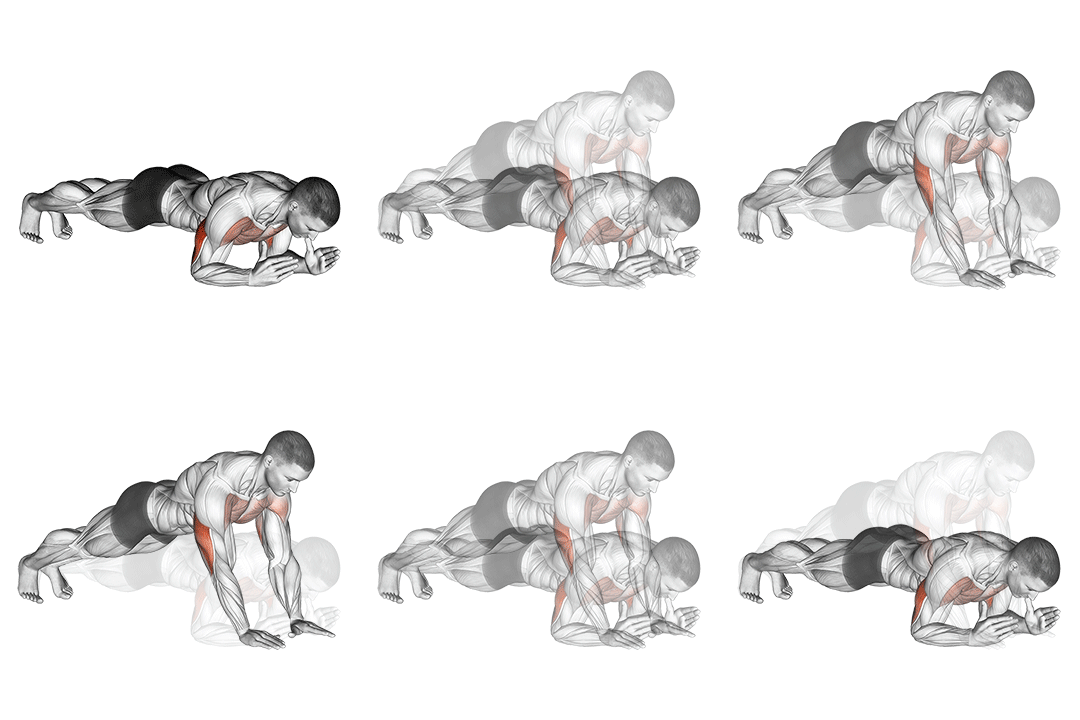
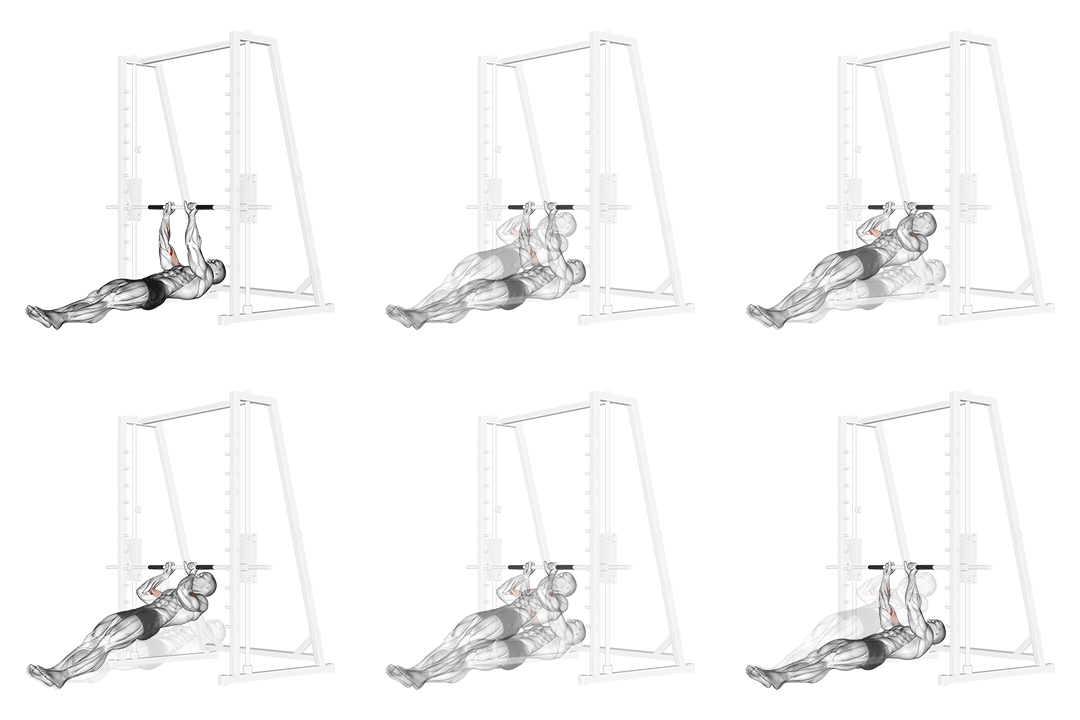
Three bench dips work as accessory tricep work when the equipment setup is available. Sets and reps: 3 sets of 6-10 reps with 90-120 seconds rest. In an upper body session: 4 sets of 8 push-ups, 3 sets of 8 three bench dips, 4 sets of 8 inverted rows, 3 sets of 30-second front planks. Done twice per week.
Recovery and frequency
Three bench dips have the same recovery cost as other heavy dip variations. 48-72 hours between sessions is the right cadence.
Frequently asked questions
How many sets and reps should I do?
3 sets of 6-10 reps with 90-120 seconds rest.
How often should I train this exercise?
2 times per week with 48-72 hours between sessions.
Three bench dips vs parallel-bar dips: which is better?
Parallel-bar dips are usually preferred when available — better equipment for the full dip pattern. Use three bench dips when parallel bars aren't accessible.
Why three benches?
Two benches support the hands; one supports the feet. The arrangement allows for greater dip depth than standard bench dips with feet on the floor.
Are three bench dips safe?
When equipment is solid and form is good, yes. When benches shift or trainees go too deep, no — shoulder strain is the main risk.
What if I only have two benches?
Use the between-benches dip variation (feet elevated on the second bench, hands on the first). Functionally similar.
Useful tools for this exercise
Build a workout with the Three Bench Dip
Puna gives you guided bodyweight workouts you can do anywhere — no equipment, no gym, just structured progressions that build real strength.