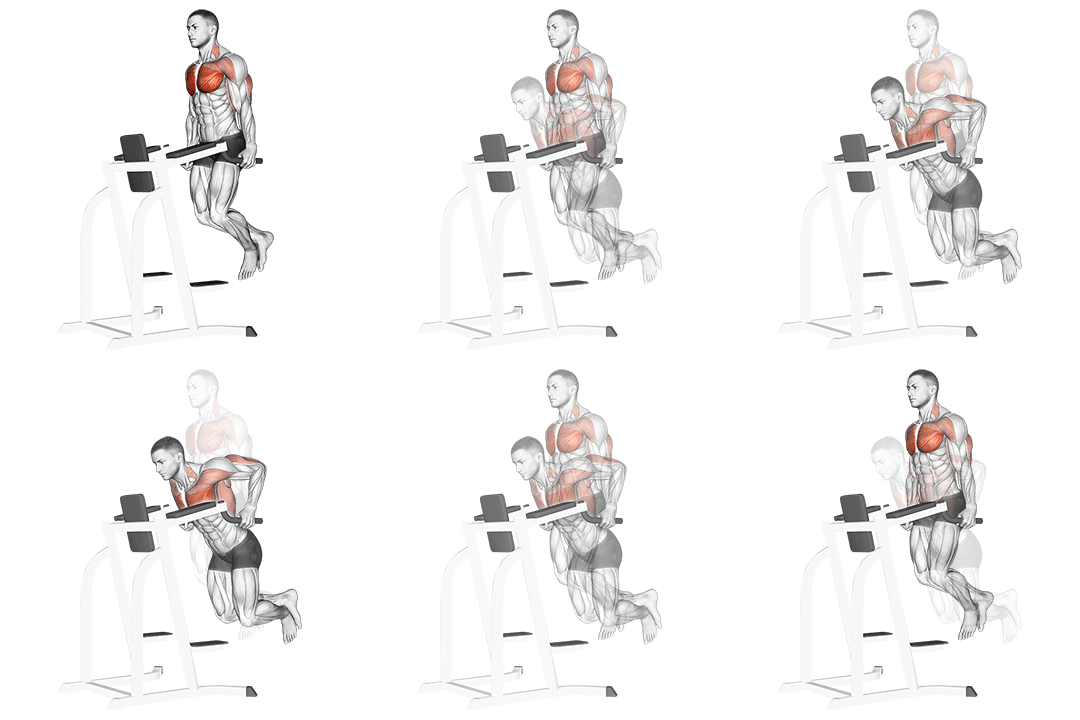
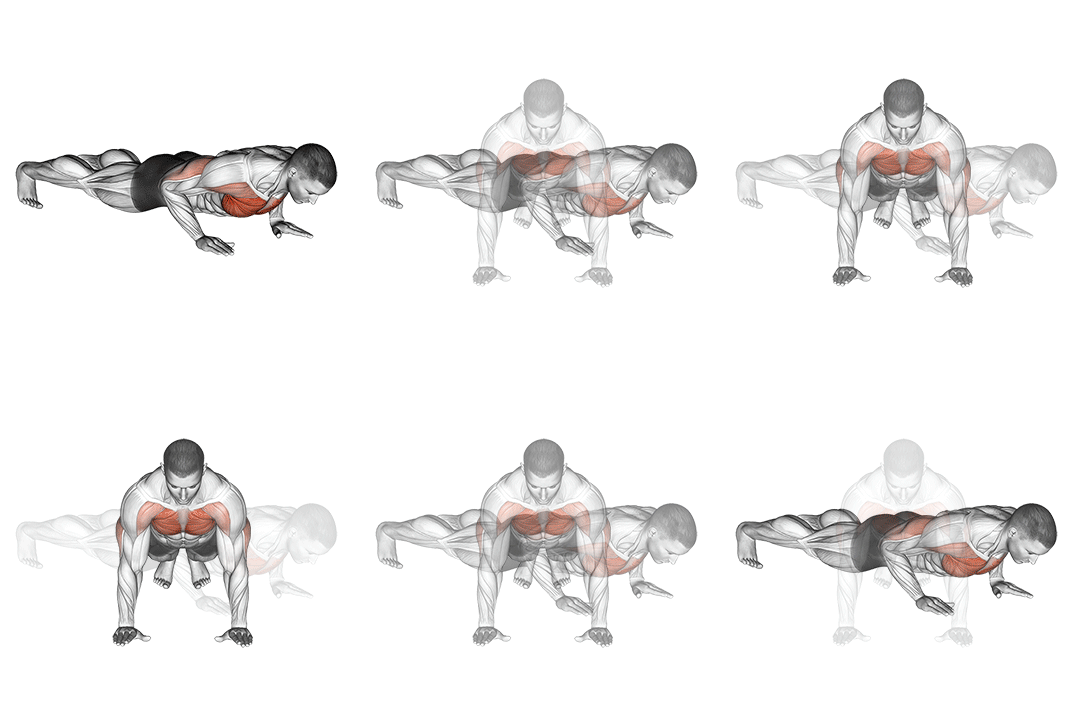
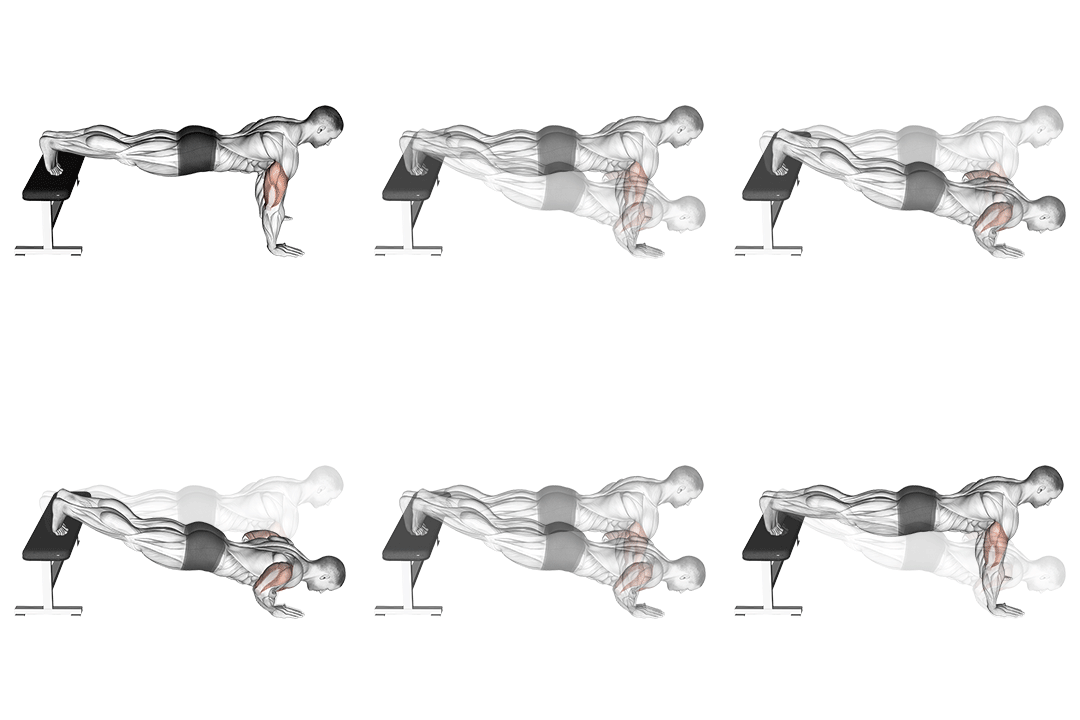
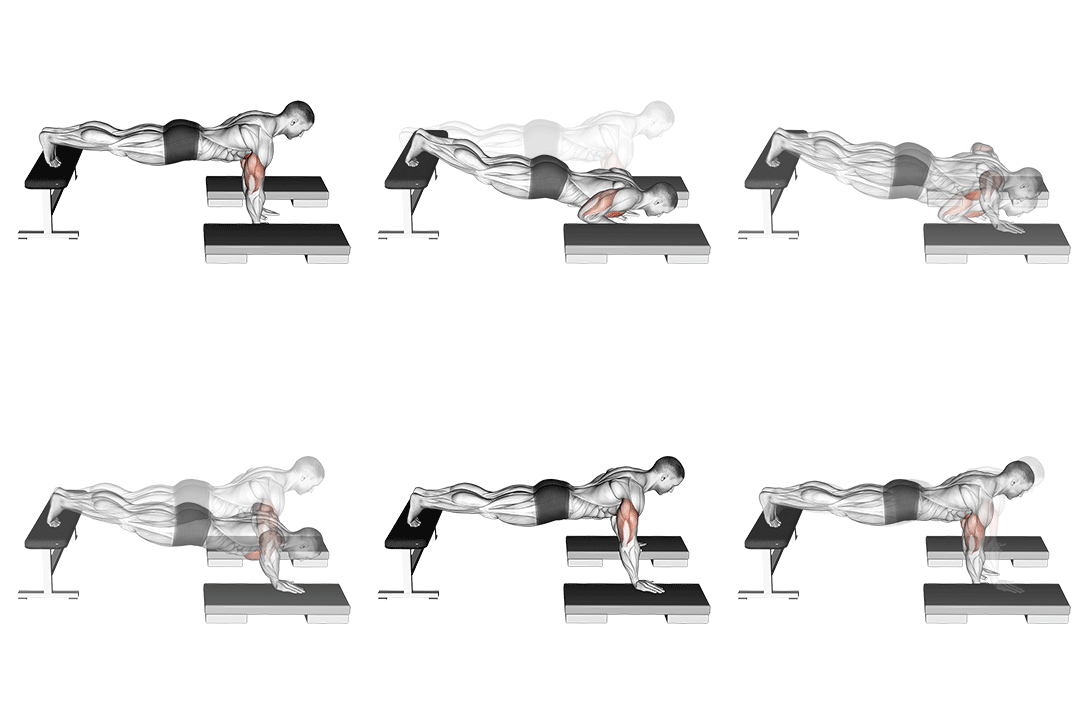
Suspended Push-up
advanced strength exercise · body weight · targets pectorals
- Body part
- chest
- Primary target
- pectorals
- Equipment
- body weight
- Difficulty
- advanced
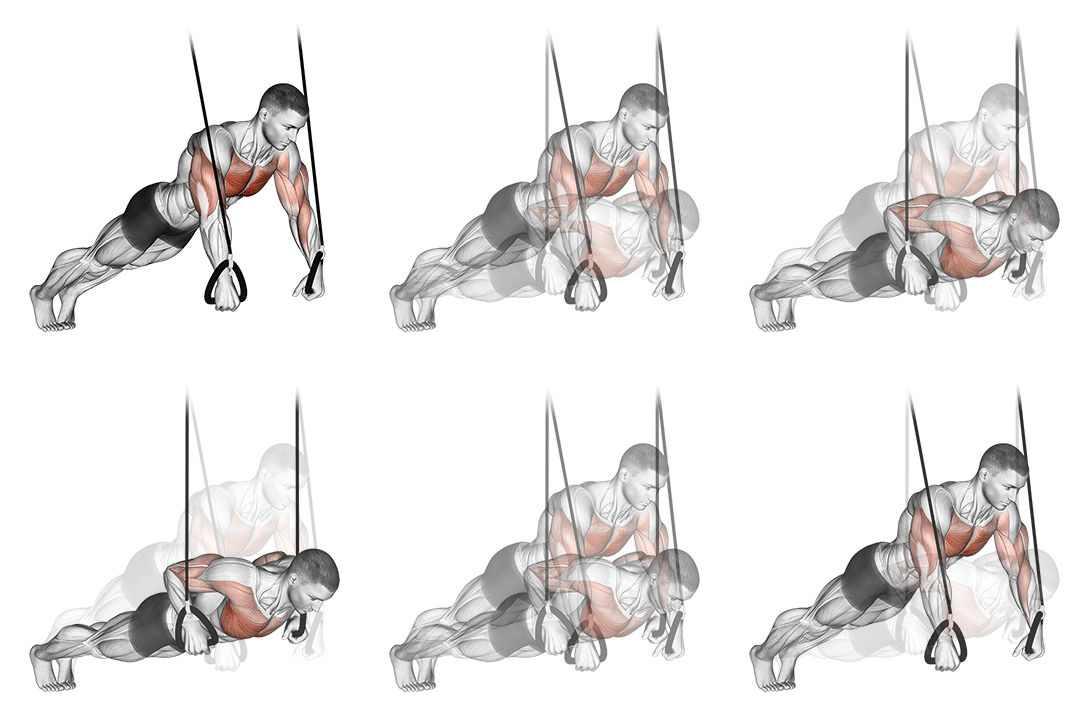
The suspended push-up is performed using suspension straps (TRX, rings, or similar equipment) instead of a fixed surface. The handles hang from above and bear your hands; you press through them to perform the push-up while the entire body has to fight the instability of the moving handles. The result is a push-up variation that adds significant stabilizer demand to the standard pressing pattern. What the suspension trainer adds is shoulder and core challenge. The handles want to move in any direction your hands push, which forces the rotator cuff and serratus anterior to work much harder than they do in a standard push-up. Most trainees who can do 20+ standard push-ups can manage only 8-12 suspended push-ups per set in their first attempts. The instability isn't free — it costs reps but builds qualities standard push-ups don't. It's a useful variation for athletes who need shoulder stability for sport (climbing, gymnastics, throwing sports) and for trainees adding variety to push-up programming. The trade-off is the equipment requirement — without TRX, rings, or similar, you can't replicate the exercise. Programmed once or twice a week alongside standard push-ups, suspended push-ups add stabilizer development that standard variations don't provide.
Why train the Suspended Push-up?
- Adds significant stabilizer demand to the standard push-up pattern.
- Trains the rotator cuff and serratus anterior in unstable conditions.
- Carries over to athletic movements requiring shoulder stability under load.
- Reduces wrist stress compared to floor push-ups (the handles allow neutral wrist position).
- Adds variety to push-up programming.
- Scales by adjusting handle height and body angle.
How to do the Suspended Push-up: step by step
- 1Find a suspension trainer and adjust it to an appropriate height.
- 2Stand facing away from the anchor point and hold the handles with an overhand grip.
- 3Walk your feet forward, leaning your body forward until your weight is supported by the suspension trainer.
- 4Keep your body straight from head to heels, engage your core, and lower your chest towards the handles.
- 5Push through your chest and arms to return to the starting position.
- 6Repeat for the desired number of repetitions.
Muscles worked
Primary
pectorals
Secondary
triceps, shoulders, core
Common mistakes to avoid
Letting the handles drift in different directions
If the handles move asymmetrically during the rep, you've lost stabilizer control. Press through both handles evenly and keep them parallel throughout. The challenge is to control the instability, not let it control you.
Going too low at the bottom
The instability makes excessive depth harder to control. Stop when the chest reaches the level of the handles, not below. Going further can stress the shoulders in vulnerable positions.
Setting up at the wrong angle
Body angle controls difficulty — more vertical = easier, more horizontal = harder. Adjust the handle height or your foot position so the last few reps of each set feel hard but doable.
Choosing this before mastering standard push-ups
If you can't yet do 12 strict standard push-ups, suspended push-ups will be too unstable to perform productively. Build standard push-up strength first.
Using straps that aren't properly anchored
Suspension trainers must be anchored to a load-rated point (high-rated door anchor, beam, or rated ceiling mount). Don't trust temporary setups — failed straps under load cause real injuries.
Easier and harder variations
Easier
Stand more vertical (closer to upright) to reduce the load. Or perform on knees instead of toes. Or shorten the strap length so the handles are higher up.
Harder
Lower the handle height for more horizontal body position. Add a tempo (3-5 seconds per phase). Or progress to ring push-ups with rings turned out (advanced gymnastic stability work).
Alternative exercises
Standard push-up
The bilateral baseline. Master before attempting suspended variations.
Ring push-up
Same suspended principle using gymnastic rings. Even more demanding due to rotational freedom of the rings.
Push-up on stability ball
Different way to add instability — hands on a stability ball instead of suspended handles. Different demands but similar stabilizer training.
How to program the Suspended Push-up into your training
Suspended push-ups work as a primary or secondary pressing exercise for trainees with access to suspension trainers. Sets and reps: 3-4 sets of 6-12 reps with 60-90 seconds rest. Total weekly volume of 30-60 reps drives most adaptations. In an upper body session: 4 sets of 8 suspended push-ups (main pressing), 4 sets of 8 inverted rows (balanced pulling), 3 sets of 10 face pulls (shoulder health), 3 sets of 30-second front planks (core). Done twice per week. For athletes building stabilizer strength, alternate weeks between suspended push-ups and standard push-ups for variety. Do not pair with heavy bilateral pressing in the same session — the cumulative shoulder load is excessive.
Recovery and frequency
Suspended push-ups load the chest, shoulders, triceps, and stabilizers. 48-72 hours between sessions is the right cadence. The shoulder stabilizers can stay sore for 2-3 days during the first weeks of training. Watch for shoulder discomfort — the unstable position can stress the rotator cuff if form breaks down. Sharp shoulder pain is a stop signal.
Frequently asked questions
How many sets and reps of suspended push-ups should I do?
3-4 sets of 6-12 reps with 60-90 seconds rest.
How often should I train suspended push-ups?
2-3 times per week with 48-72 hours between sessions.
Suspended vs standard push-ups: which is better?
Different tools. Standard push-ups are more accessible and build basic pressing strength. Suspended push-ups add stabilizer demand. Use both — standard for primary work, suspended for stabilizer development.
Do I need TRX for suspended push-ups?
TRX, rings, or any suspension trainer rated for body weight works. Don't improvise with non-rated straps — failure under load can cause serious injury.
Are suspended push-ups good for shoulder health?
When done properly, yes — they strengthen the rotator cuff and stabilizers. When done with poor form (going too deep, letting handles drift), they can stress the shoulder. Form matters.
Can I do suspended push-ups every day?
Not at high volume. Lower-volume work twice per week is sustainable; daily training leads to shoulder stabilizer fatigue and increased injury risk.
Useful tools for this exercise
Build a workout with the Suspended Push-up
Puna gives you guided bodyweight workouts you can do anywhere — no equipment, no gym, just structured progressions that build real strength.