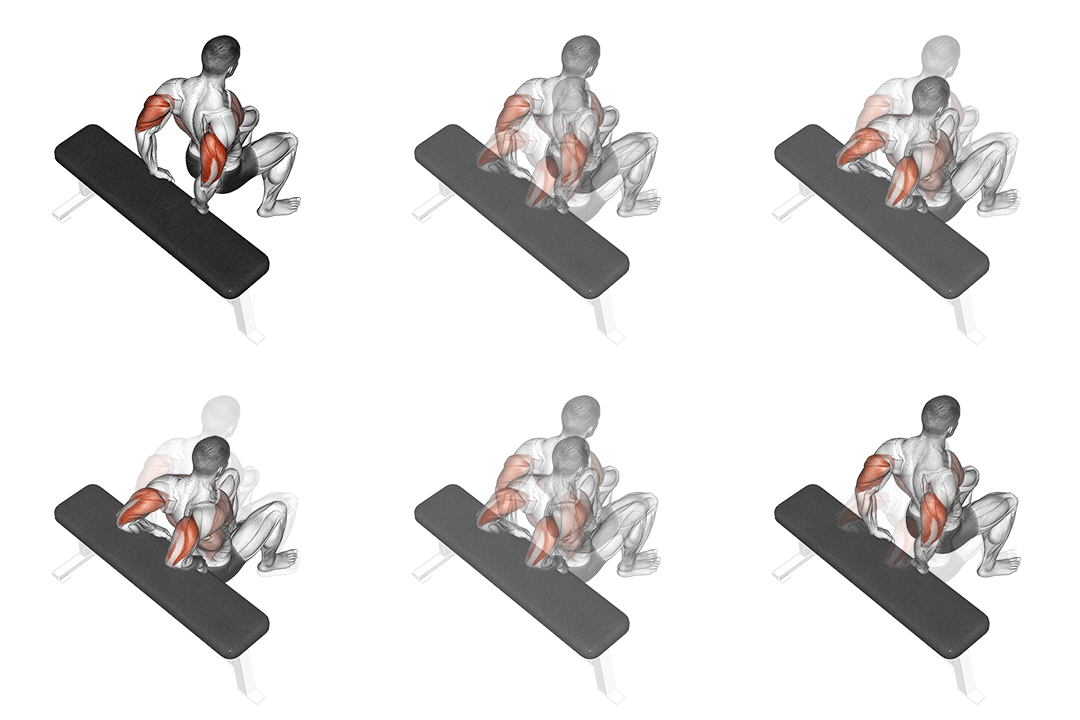
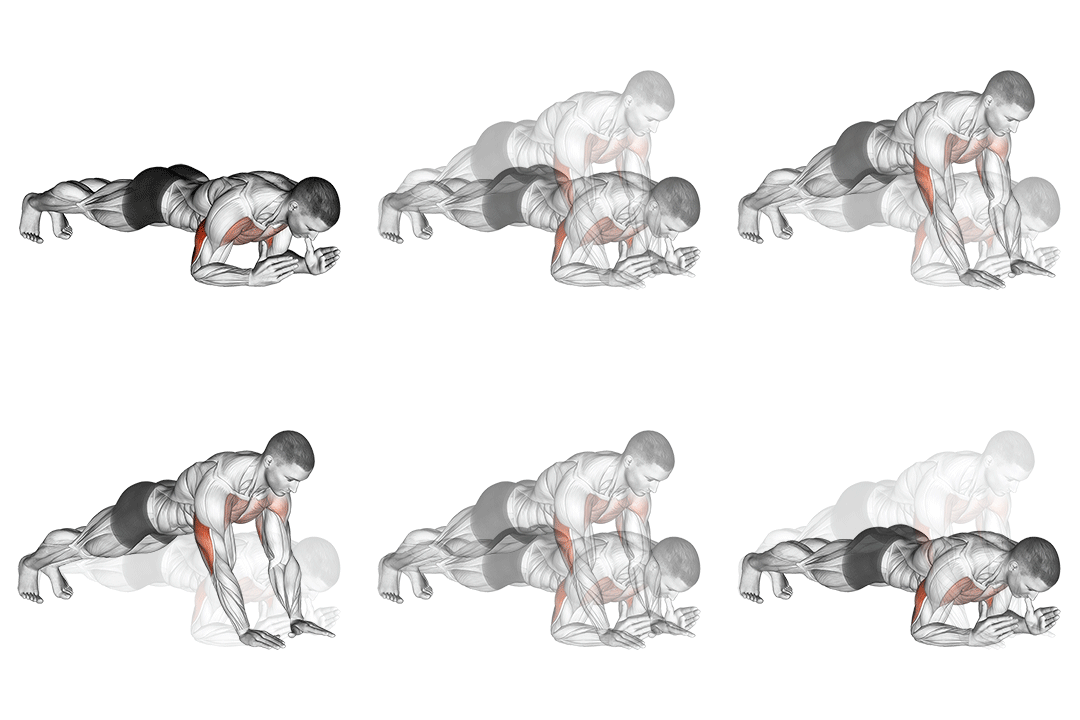
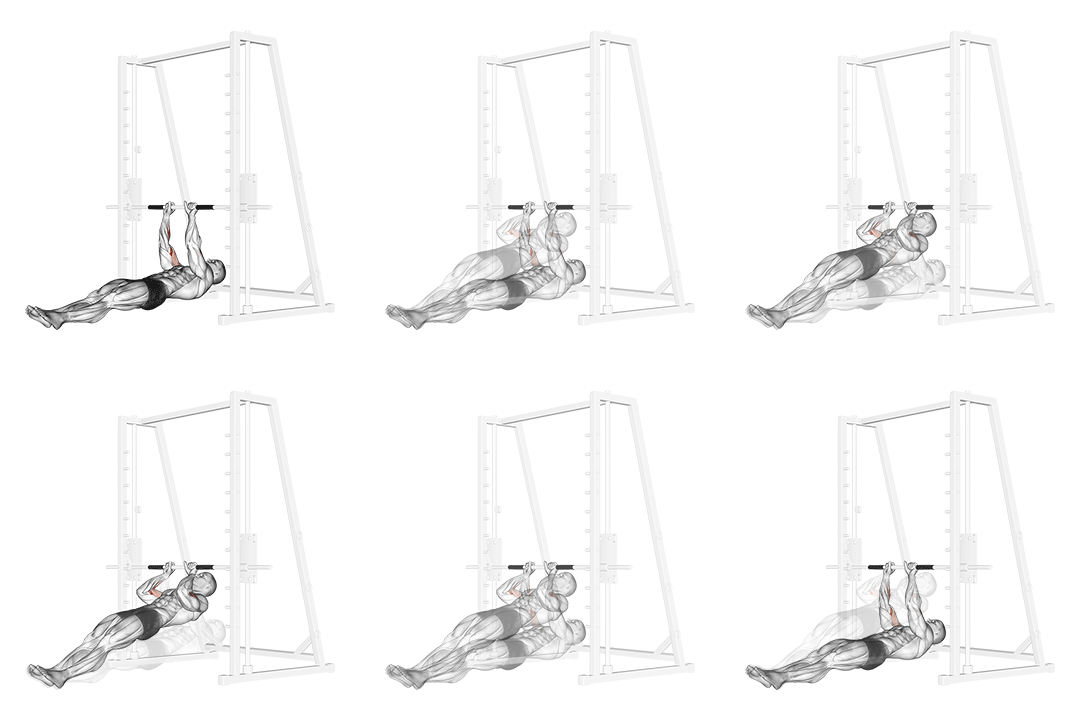
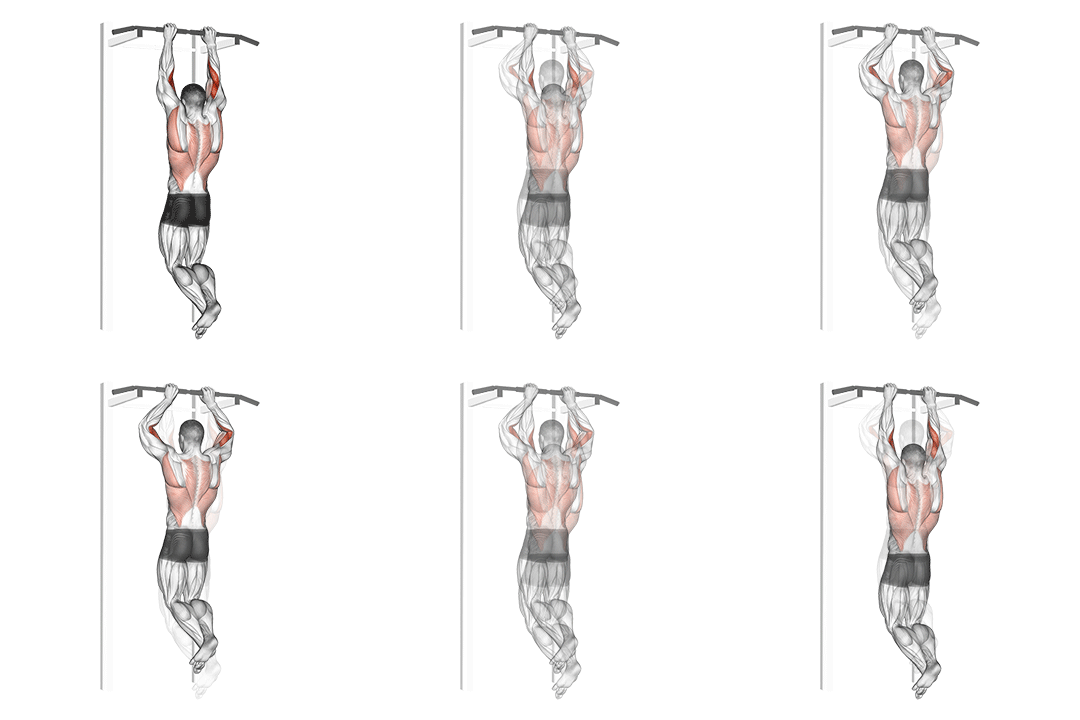
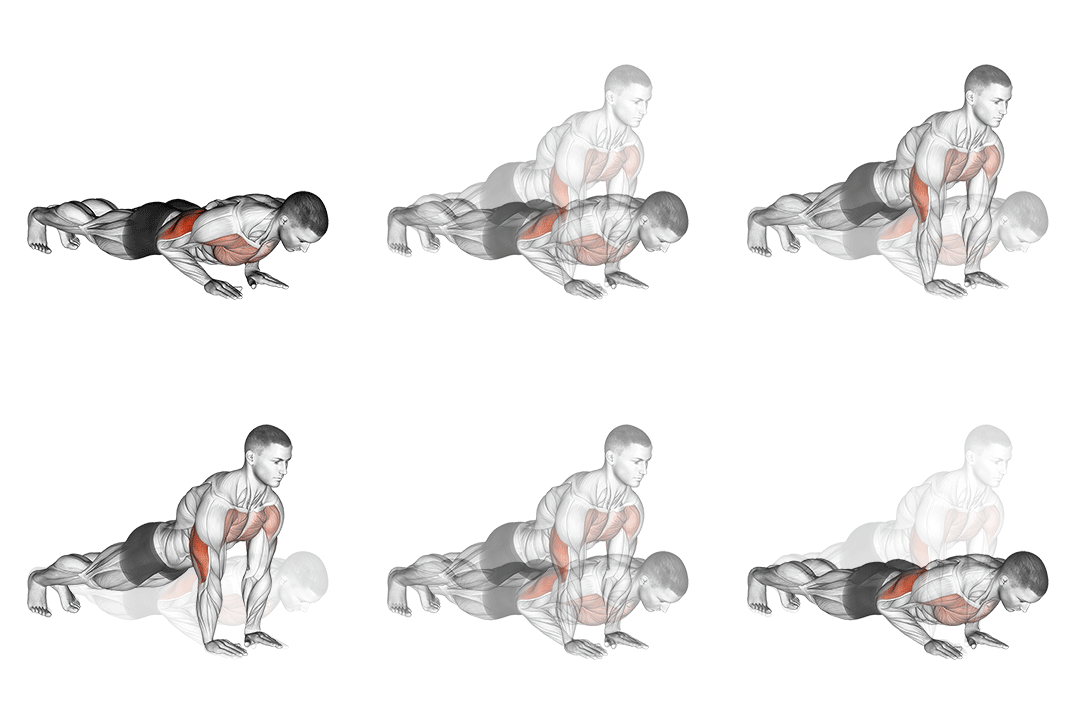
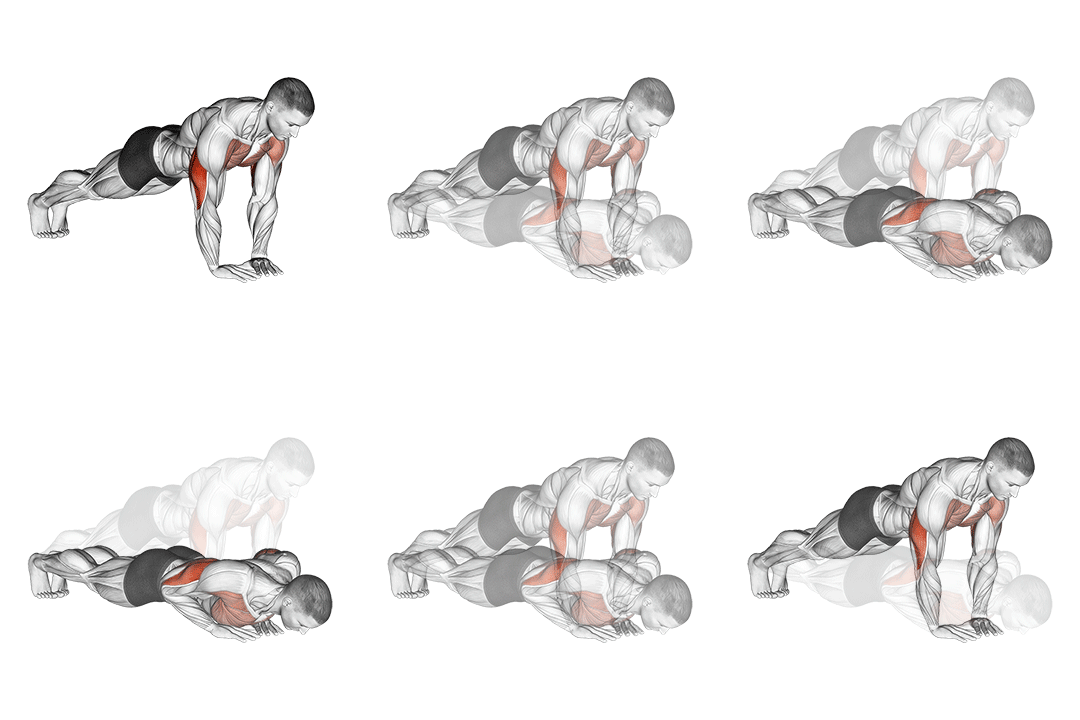
Stalder Press
advanced strength exercise · body weight · targets triceps
- Body part
- upper arms
- Primary target
- triceps
- Equipment
- body weight
- Difficulty
- advanced
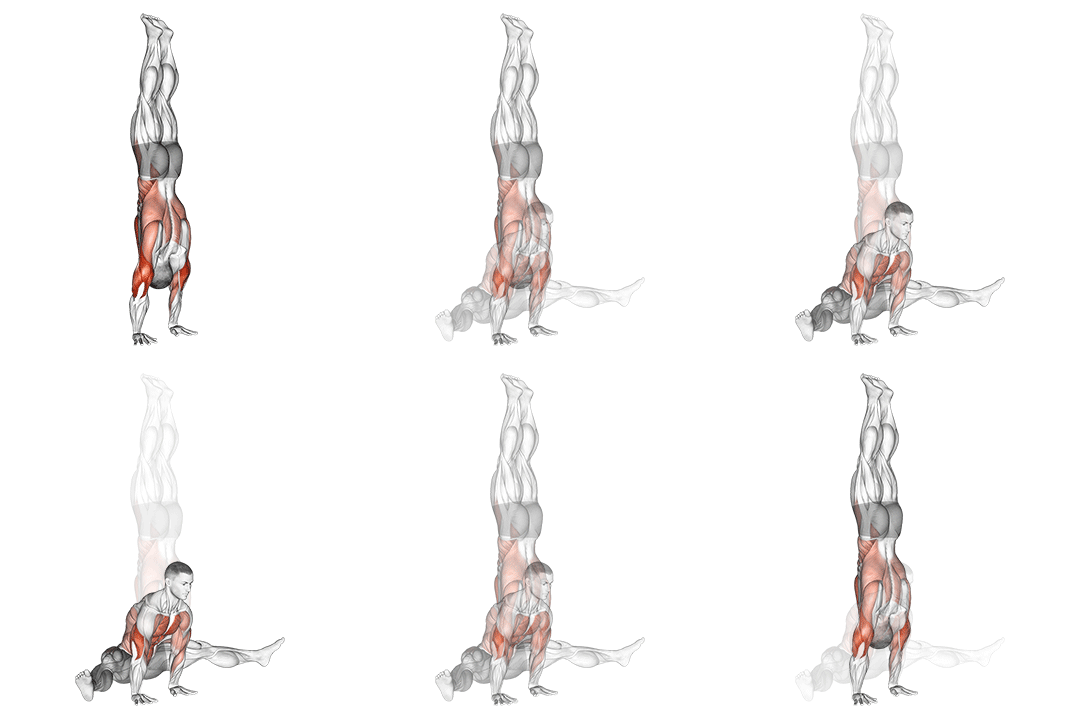
The stalder press is a gymnastic strength element where you lower from a standing position, pressing the arms downward while squatting, then return to standing with the arms back overhead. Despite its inclusion in bodyweight strength catalogs, the version described here — without rings or parallettes — is a stripped-down approximation of the full skill. The real stalder press in gymnastics involves pressing from an inverted position into a handstand through a straddle compress, and demands serious shoulder, core, and pressing strength. The bodyweight version trains the underlying movement pattern without the equipment. For most home trainees, the stalder press functions as a hybrid mobility-strength drill. The deep squat with arms overhead trains thoracic extension under load, the press-down phase engages the triceps and shoulders, and the full range demands ankle and hip mobility along with core control. None of this builds the kind of strength a real gymnastic stalder press demands, but the pattern itself is useful for athletes who want overhead-mobility-with-strength training without the technical commitment of full gymnastic progressions. Where this drill earns its place is as a mobility-emphasis movement at the start of a session, or as a coordination exercise for trainees who struggle to integrate squat-pattern with overhead-pattern movement. As a strength builder for triceps or shoulders, it's outclassed by simpler exercises (push-ups, dips, presses). As a movement skill that trains the body to coordinate hips, core, and shoulders simultaneously, it has genuine value when programmed thoughtfully.
Why train the Stalder Press?
- Trains thoracic extension under load through the overhead-arm-with-deep-squat position.
- Improves coordination between hip flexion, ankle dorsiflexion, and overhead arm position.
- Doubles as a warm-up movement that prepares the shoulders, hips, and ankles in one drill.
- Builds the core stability needed to maintain overhead arm position during loaded squat patterns.
- Provides a movement-quality foundation for trainees pursuing more advanced gymnastic skills.
- Pairs naturally with handstand work and full squat practice for compound mobility-strength training.
How to do the Stalder Press: step by step
- 1Start by standing with your feet shoulder-width apart and your arms extended overhead.
- 2Bend your knees slightly and engage your core.
- 3Lower your body down into a squat position while keeping your arms extended overhead.
- 4As you squat down, press your arms down towards the ground, engaging your triceps.
- 5Pause for a moment at the bottom of the squat, then push through your heels to stand back up while simultaneously raising your arms back overhead.
- 6Repeat for the desired number of repetitions.
Muscles worked
Primary
triceps
Secondary
shoulders, core
Common mistakes to avoid
Letting the arms drift forward
The arms must stay vertically overhead throughout the squat — biceps next to the ears. Letting the arms drift forward defeats the thoracic extension training and reduces the demand on the shoulders. If you can't keep the arms vertical, your overhead mobility is the limiting factor; address that before progressing.
Heels lifting at the bottom of the squat
When the heels rise at the bottom, the stretch reflex from the calves shortens the squat range and shifts loading toward the toes. Press the heels down deliberately throughout. If they want to lift, ankle mobility limits the range — reduce squat depth or work ankle dorsiflexion separately.
Arching the lower back to fake overhead reach
If the shoulders can't reach truly vertical, the lower back will compensate by extending. This places shear stress on the lumbar spine. Keep the ribs down and the abs braced. The overhead reach should come from honest shoulder flexion, not from lumbar extension.
Pressing too aggressively in the descent
The press-down phase is meant to be a coordination drill, not a heavy isometric. Pressing aggressively against nothing produces shoulder tension without useful adaptation. Engage the triceps and shoulders deliberately but moderately.
Treating it as strength rather than mobility-with-coordination
The exercise is too light to drive serious strength adaptation. Trainees who load it as if it were a strength exercise miss its actual benefit (movement quality) and are disappointed by the weak strength gains. Use it for what it actually offers — mobility, coordination, pattern training.
Easier and harder variations
Easier
Reduce squat depth — go only to a quarter or half squat rather than full depth. This is appropriate for trainees with restricted ankle or hip mobility. Or perform without the press-down component, focusing solely on the overhead squat with arms vertical.
Harder
Add a deliberate isometric hold at the bottom of the squat (5-10 seconds with arms overhead and pressing). Or progress toward parallette versions where the press-down has actual resistance from elevated hand position. For trainees pursuing the full gymnastic skill, work on straddle compress holds and tucked-to-extended pike presses.
Alternative exercises
Squat to overhead reach
Simpler version of the same pattern without the press-down component. Use this if the stalder press feels too complex or too dependent on mobility you don't yet have.
Overhead squat
Loaded version with weight held overhead through the squat. Builds genuine strength to express the mobility under load. Requires barbell or kettlebell.
Wall-supported handstand press
Trains the actual pressing strength that the stalder press hints at. Significant skill prerequisite but builds the inverted strength gymnasts use.
How to program the Stalder Press into your training
The stalder press fits best as a warm-up or movement-skill drill, not as a main strength exercise. The load is too light for serious strength adaptation; the value is in the movement pattern and mobility integration. As a warm-up: 1-2 sets of 8-10 reps performed slowly, before any strength session. The overhead reach with deep squat prepares the shoulders, hips, and ankles simultaneously, replacing what would otherwise be three separate drills. As a daily mobility primer: 2-3 sets of 10 reps performed at moderate pace, every morning or before any extended sitting. The compound movement compounds over weeks into noticeably better posture and squat depth. As a movement-skill drill: 3-4 sets of 6-8 reps with 30-second rest, with deliberate focus on form. Done 2-3 times per week as part of a larger gymnastic strength training plan, this builds the coordination foundation for harder skills. For those pursuing gymnastic strength: pair with tucked planches, L-sit holds, and pike compress drills. The stalder press is one piece of a larger set of skills, not a standalone goal. Don't program this as a strength exercise expecting strength gains; the load doesn't support it. Don't program it as a primary mobility drill expecting it to fix major restrictions; it requires already-decent mobility to perform correctly. Its sweet spot is as a movement-quality drill for trainees who already have the basics.
Recovery and frequency
Recovery cost is essentially zero when programmed at the appropriate volume. The light load and the mobility-emphasis nature mean the exercise doesn't tax the muscular or skeletal system meaningfully. Daily practice is safe. The main warning signs are sharp pain in the shoulder, lower back, or knees during reps. These typically indicate form errors — usually arched lower back, heels lifting, or arms drifting forward — rather than overuse. Address the form, and the discomfort resolves. For ordinary mobility work, recovery is immediate and the practice can be repeated as often as useful. No special protocols needed beyond sleep, hydration, and reasonable joint mobility maintenance.
Frequently asked questions
How many sets and reps of the stalder press should I do?
1-2 sets of 8-10 reps as a warm-up, or 3-4 sets of 6-8 reps as movement-skill work. The light load means high reps drive most adaptation; quality of movement matters more than fatigue.
How often should I do this exercise?
Daily as a warm-up is fine. As skill work, 2-3 times per week. There's no real recovery cost so frequency rarely becomes a problem.
Is this a real strength exercise?
Not in the traditional sense — the load is too light to drive serious strength adaptation. Where it shines is mobility and coordination training. Trainees who treat it as a strength exercise are usually disappointed.
What's the difference between this and the squat to overhead reach?
The squat to overhead reach is the simpler version focused purely on mobility. The stalder press adds the press-down phase, which engages the triceps and shoulders during the descent. Use the basic version if mobility is the goal; this version if movement coordination is the goal.
Will this help my squat or overhead press?
Indirectly. Better thoracic extension and hip mobility mean better squat depth and easier overhead positioning under heavy load. But it doesn't replace the strength work itself; it supports it.
Can I progress from this toward the real gymnastic stalder press?
Eventually, yes — but the progression is long. Real gymnastic stalder presses require pike compress strength, straddle holds, and inverted pressing strength. Start with L-sits, tuck planches, and wall handstand work, and consider working with a gymnastics coach for serious skill development.
Useful tools for this exercise
Build a workout with the Stalder Press
Puna gives you guided bodyweight workouts you can do anywhere — no equipment, no gym, just structured progressions that build real strength.