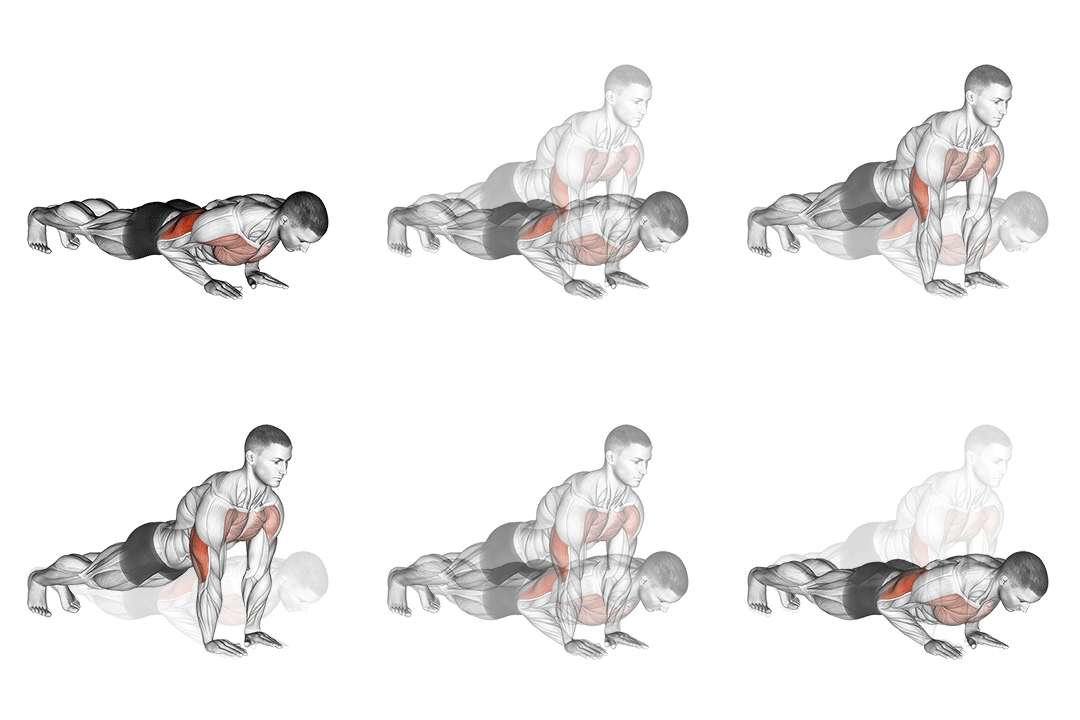
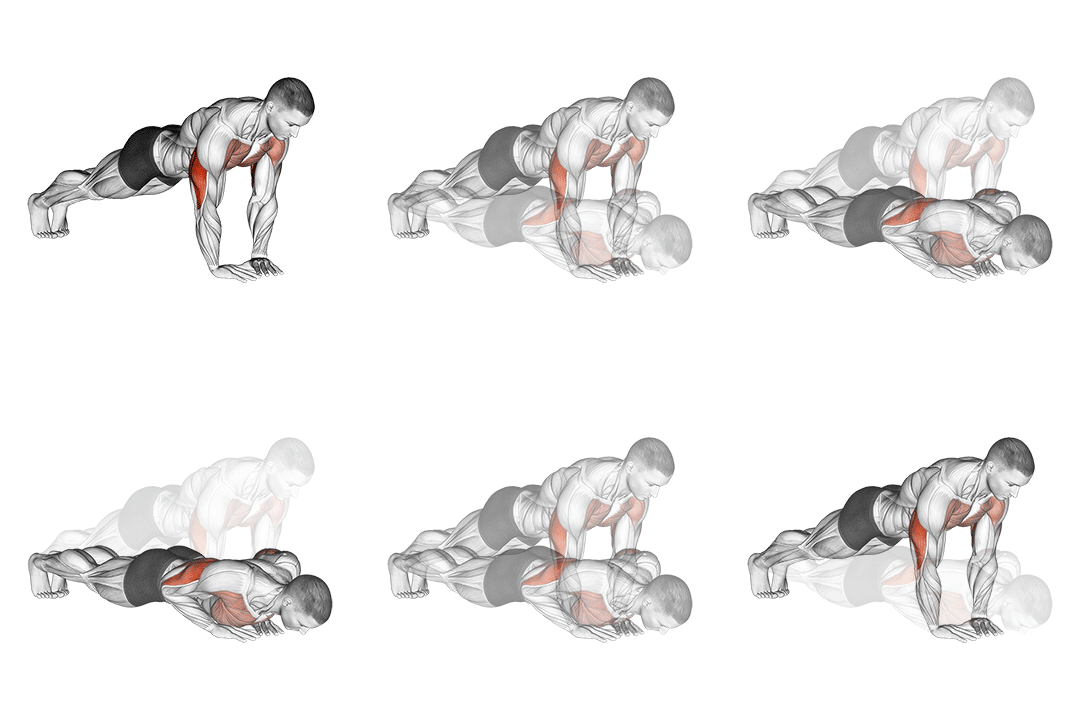
Side Push-up
intermediate strength exercise · body weight · targets triceps
- Body part
- upper arms
- Primary target
- triceps
- Equipment
- body weight
- Difficulty
- intermediate
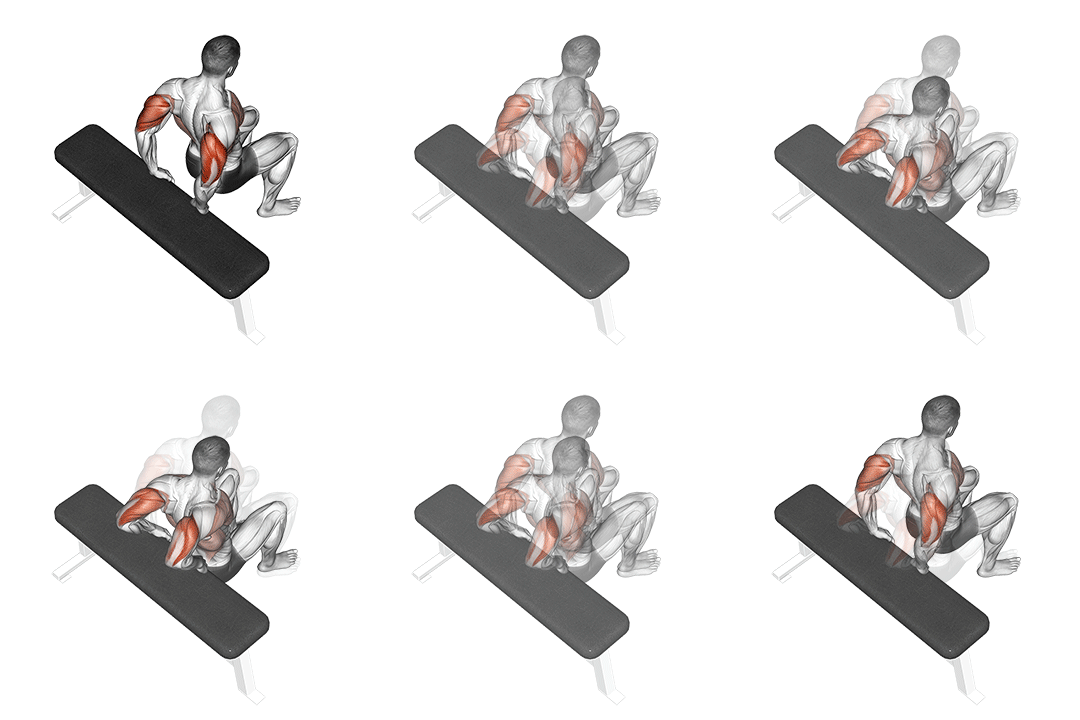
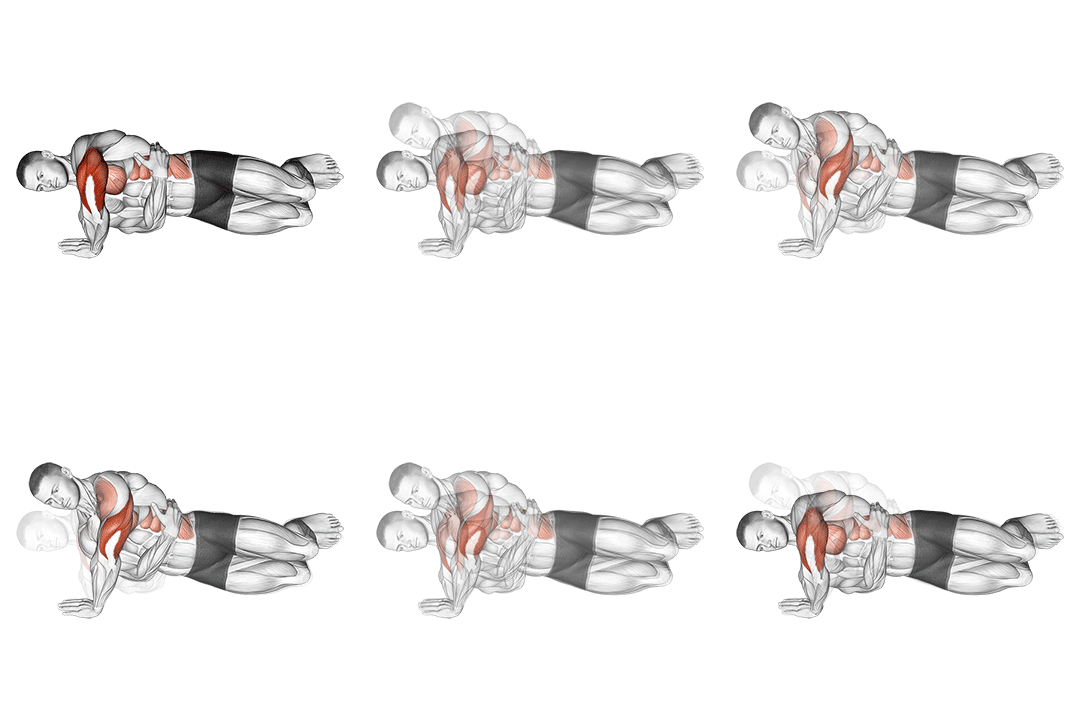
The side push-up is an unusual push-up variation performed lying on one side, supporting yourself with one arm pressed against the floor while the other arm rests at your side or on the body. From the side-lying position, you press the upper body up by bending and extending the supporting arm — essentially performing a single-arm horizontal press with the body in a sideways orientation. This variation primarily targets the tricep of the supporting arm and provides significant rotational core challenge. Unlike most push-up variations that train both arms simultaneously, the side push-up isolates one arm at a time, exposing strength asymmetries and providing unilateral upper-body strength work without specialized equipment. It's an intermediate-to-advanced exercise that requires significant baseline strength to perform productively. Most trainees who can do 15+ standard push-ups can manage only 3-5 strict side push-ups per side in their first attempts. The exercise rewards patience — built up gradually over 4-8 weeks, it produces unilateral pressing strength and oblique stability that translate well to athletic and gymnastic movements.
Why train the Side Push-up?
- Trains unilateral pressing strength, particularly tricep and shoulder.
- Provides rotational core challenge alongside the pressing work.
- Reveals strength asymmetries between left and right sides.
- Builds toward more advanced unilateral exercises like one-arm push-ups.
- Requires no equipment beyond a clear floor area.
- Adds variety to push-up programming when standard variations have become routine.
How to do the Side Push-up: step by step
- 1Start by lying on your side with your legs extended and stacked on top of each other.
- 2Place your bottom hand on the ground directly under your shoulder, fingers pointing forward.
- 3Press through your bottom hand to lift your body off the ground, keeping your legs straight and your core engaged.
- 4Extend your top arm straight up towards the ceiling, creating a straight line from your head to your heels.
- 5Lower your body back down to the starting position with control.
- 6Repeat for the desired number of repetitions, then switch sides.
Muscles worked
Primary
triceps
Secondary
shoulders, chest, core
Common mistakes to avoid
Twisting the body to lever up
Some trainees rotate the body during the press to use trunk rotation as additional force. The body should stay sideways throughout — only the supporting arm bends and extends.
Letting the supporting elbow flare wide
Wide elbows shift load away from the triceps and into the front of the shoulders in vulnerable positions. Keep the supporting elbow tracking close to the ribs throughout the rep.
Going too low at the bottom
Lowering until the supporting shoulder dips below the elbow concentrates load on the anterior shoulder capsule. Stop when the upper arm is roughly parallel to the floor.
Choosing it before mastering standard push-ups
If you can't yet do 15 strict standard push-ups, side push-ups will be too demanding to perform productively. Build standard push-up strength first.
Doing too many reps per side too quickly
The unilateral loading creates more shoulder fatigue than bilateral push-ups. Build slowly — start with 2-3 sets of 3-5 reps per side and progress over weeks.
Easier and harder variations
Easier
Reduce the range — only press partway up. Or perform from a knee-supported side-lying position to reduce the load.
Harder
Add a brief hold at the top (1-3 seconds). Slow the tempo (3-5 seconds per phase). Or progress to one-arm push-up training, which is the next progression in unilateral pressing.
Alternative exercises
One-arm push-up
True unilateral push-up performed in standard prone position. The advanced progression beyond side push-ups.
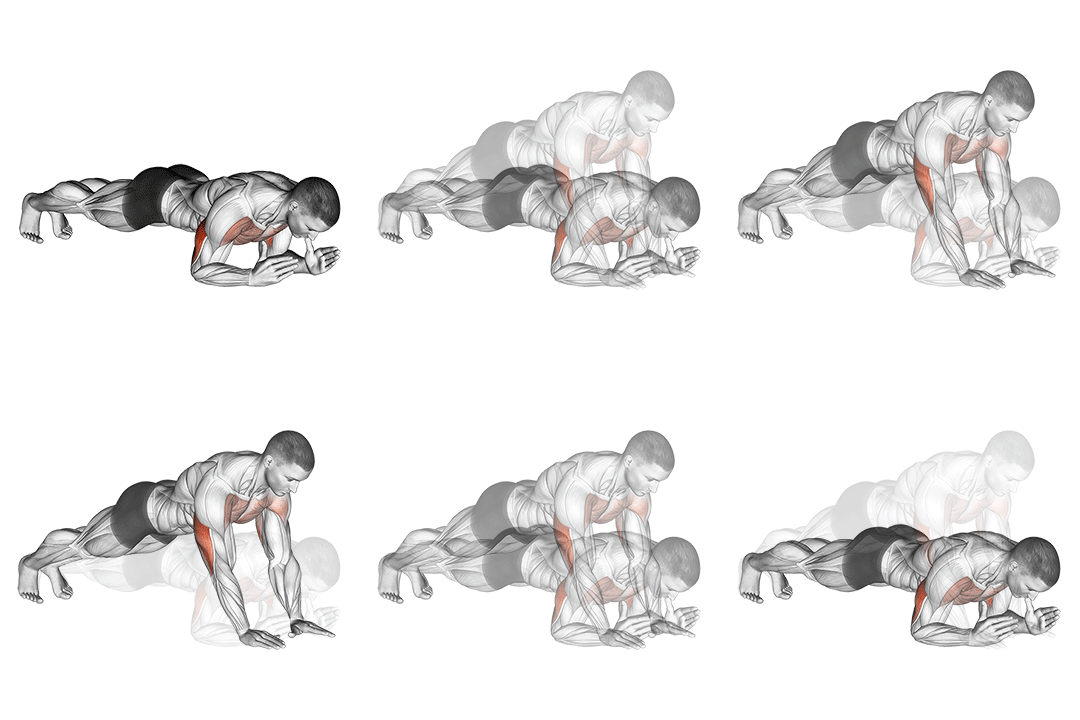
Standard push-up
The bilateral baseline. Master before attempting the side variation.
Side plank with arm reach
Static version that builds the same lateral position strength without the pressing component.
How to program the Side Push-up into your training
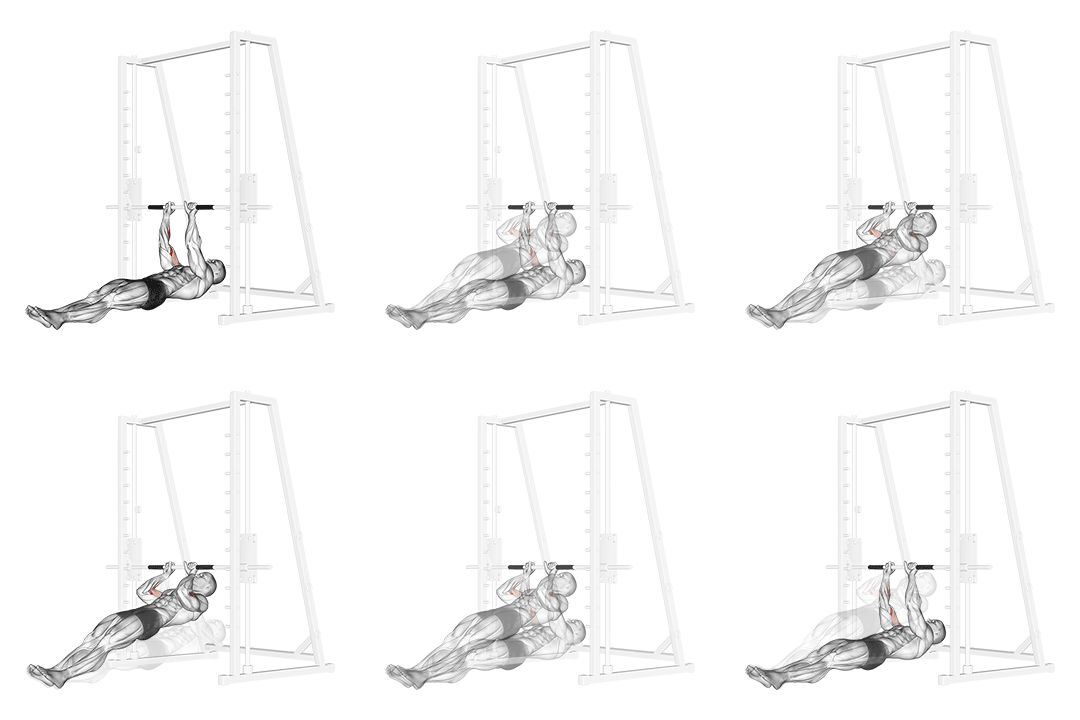
Side push-ups work as accessory unilateral pressing work, not as a primary pressing exercise. Pair with standard push-ups and other pressing work for complete upper body development. Sets and reps: 3 sets of 4-8 reps per side with 60-90 seconds rest. Total weekly volume of 12-25 reps per side. In an upper body session: 4 sets of 8 push-ups (main bilateral pressing), 3 sets of 5 side push-ups per side (unilateral work), 3 sets of 8 inverted rows (balanced pulling), 3 sets of 30-second hollow holds (core). For athletes building toward one-arm push-ups, alternate weeks between side push-ups and other unilateral progressions (archer push-ups, assisted one-arm push-ups). Do not program side push-ups on the same day as heavy bilateral pressing. The cumulative shoulder load is excessive.
Recovery and frequency
Side push-ups load the triceps, anterior delts, and obliques unilaterally. 48-72 hours between dedicated sessions is the right cadence. The shoulders take the most cumulative load — if they feel achy, reduce frequency. Lateral shoulder soreness in the first 1-2 weeks is normal. Sharp pain at the front of the shoulder during sets is a stop signal — back off immediately and reassess form.
Frequently asked questions
How many sets and reps of side push-ups should I do?
3 sets of 4-8 reps per side with 60-90 seconds rest. Total weekly volume of 12-25 reps per side.
How often should I train the side push-up?
1-2 times per week with 48-72 hours between sessions.
Side push-ups vs standard push-ups: which is better?
Different tools. Standard push-ups are the foundation; side push-ups are unilateral specialty work. Use standard push-ups as primary; add side push-ups as accessory once you can do 15+ standard reps.
Should I count one rep as both sides or each side separately?
Each side separately. Counting per side reveals asymmetries and gives clearer progression tracking.
Why is one side so much harder than the other?
Almost everyone has unilateral strength asymmetry. The dominant-arm side is usually 5-15% stronger. The asymmetry typically narrows within 6-12 weeks of equal-rep practice.
Are side push-ups good for fat loss?
They contribute to overall training volume but no single exercise drives fat loss. Total weekly training and nutrition do the heavy lifting.
Useful tools for this exercise
Build a workout with the Side Push-up
Puna gives you guided bodyweight workouts you can do anywhere — no equipment, no gym, just structured progressions that build real strength.