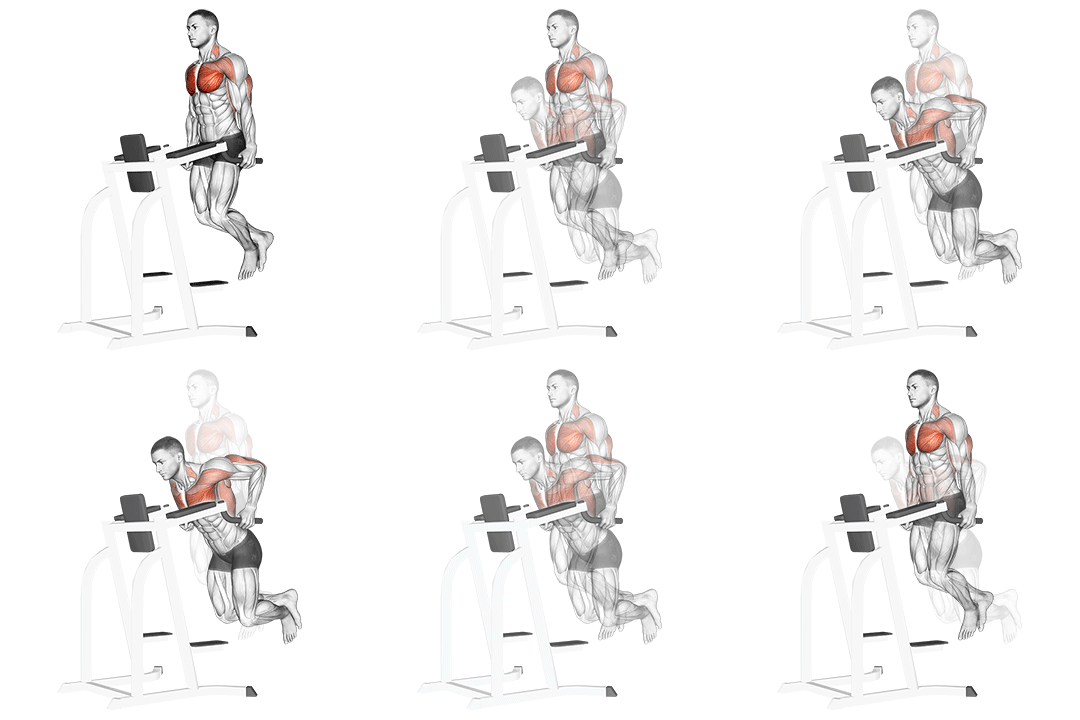
Shoulder Tap Push-up
intermediate strength exercise · body weight · targets pectorals
- Body part
- chest
- Primary target
- pectorals
- Equipment
- body weight
- Difficulty
- intermediate
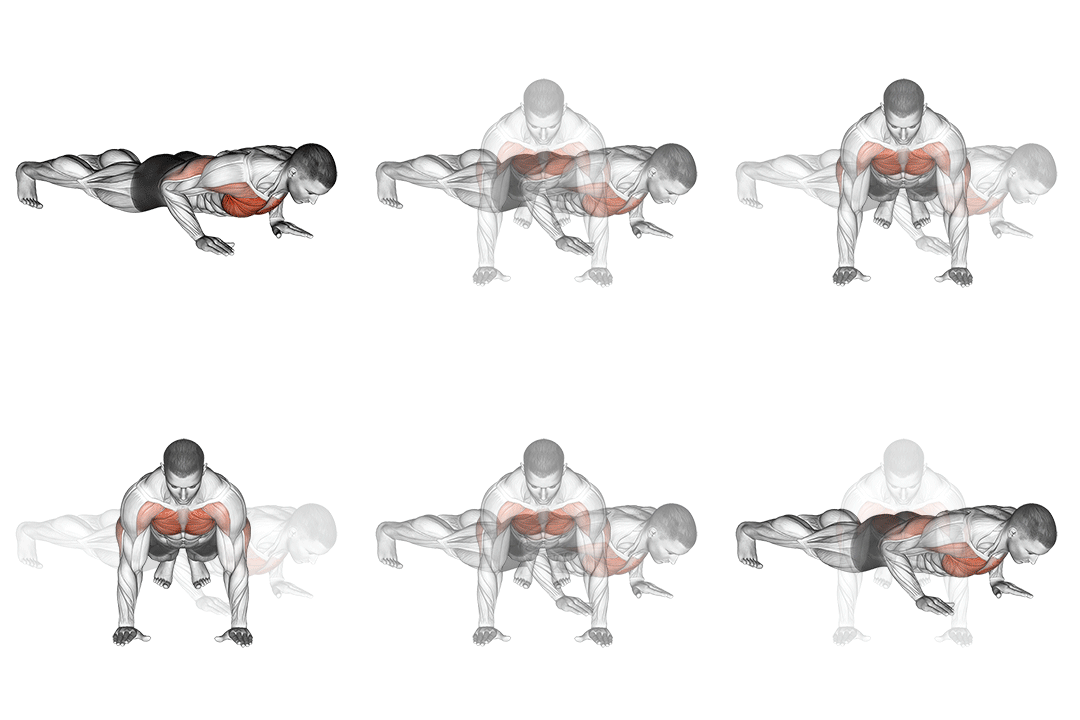
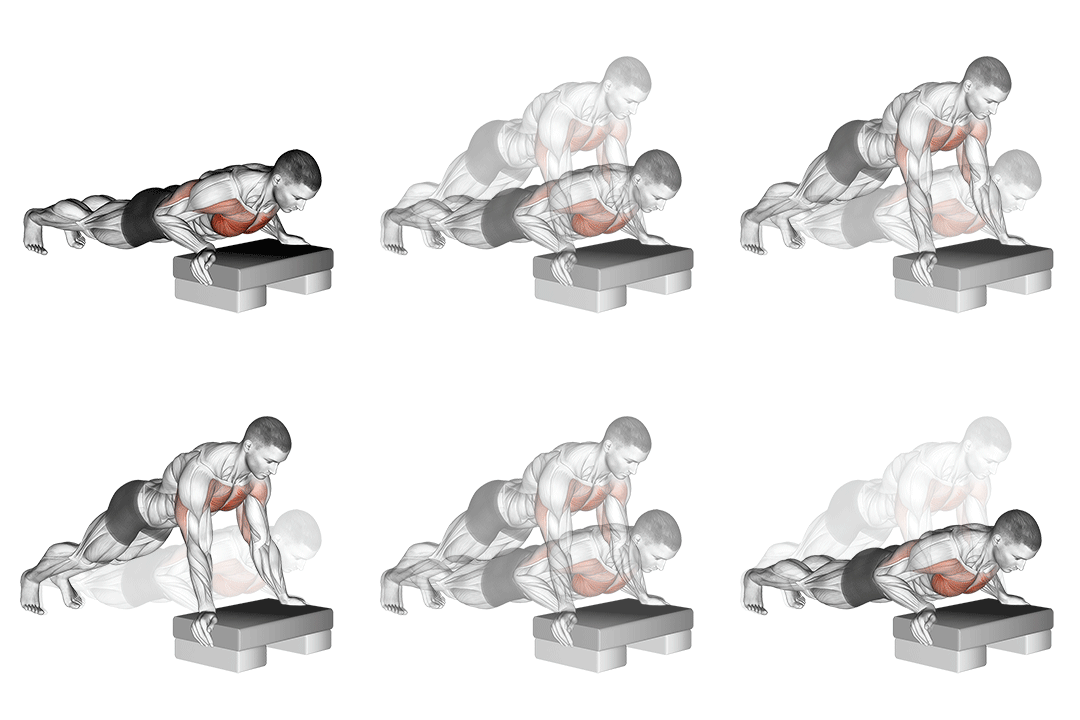
The shoulder tap push-up adds an anti-rotation core challenge to a standard push-up: between reps, while in the top plank position, you lift one hand off the floor and tap the opposite shoulder, then return and repeat with the other hand. That brief moment of single-arm support forces the obliques and serratus to fire hard to keep the hips from twisting — turning a chest exercise into a full-body coordination drill. The shoulder tap is what makes the exercise valuable. Most people can do reasonable push-ups, but few can do them while keeping the hips perfectly square as one hand lifts off. The temptation is to twist the body to compensate, which defeats the purpose. The hard work happens in the trunk, fighting that rotation. It's a useful intermediate-level exercise that bridges plain push-ups and harder unilateral variations like archer or one-arm push-ups. By learning to stabilize on a single arm in the static plank position first, you build the foundation for the eventual unilateral pressing strength. It's also a smart pick when you're traveling and want to add variety without needing equipment — the added complexity makes the same body weight feel like a meaningful progression.
Why train the Shoulder Tap Push-up?
- Builds anti-rotation core strength specifically — one of the most functionally useful core qualities for sport and daily life.
- Reveals trunk asymmetries that hidden push-ups don't expose.
- Trains shoulder stability on a single arm in a static position, building toward harder unilateral pressing.
- Adds variety to push-up programming when standard reps have become routine.
- Increases time-under-tension per rep, which can improve pressing endurance.
- Activates the serratus anterior more than standard push-ups due to the unilateral support.
How to do the Shoulder Tap Push-up: step by step
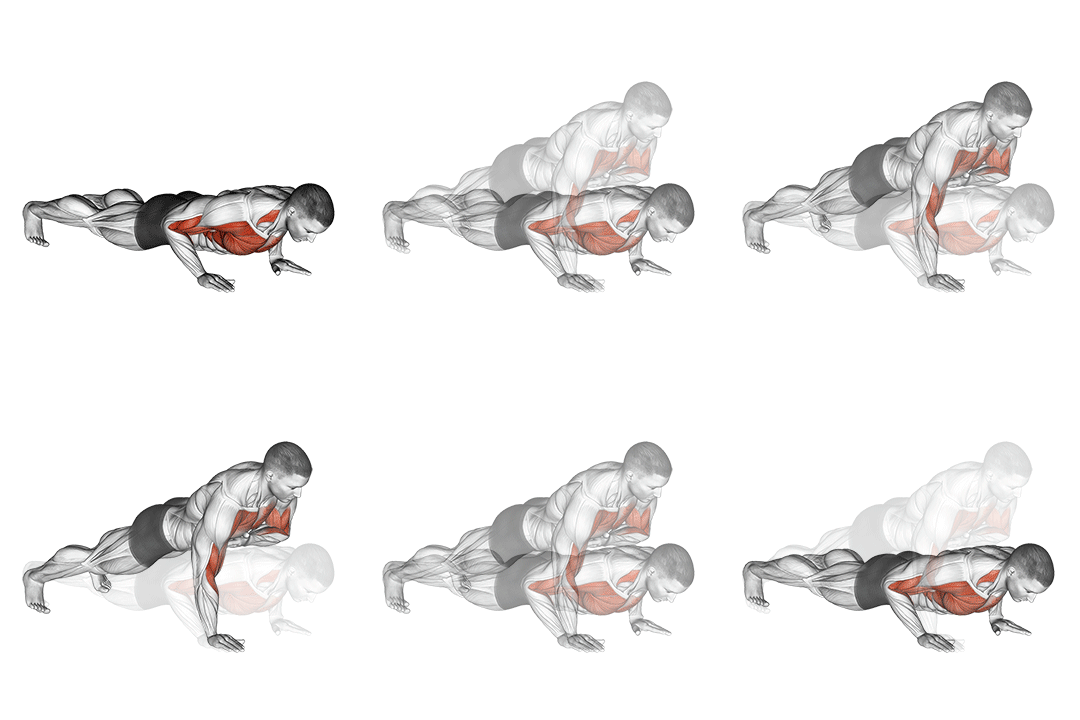
- 1Start in a high plank position with your hands slightly wider than shoulder-width apart and your body in a straight line from head to heels.
- 2Lower your body towards the ground by bending your elbows, keeping them close to your sides.
- 3As you push back up, lift your right hand off the ground and tap your left shoulder.
- 4Return your right hand to the ground and repeat the push-up, this time lifting your left hand and tapping your right shoulder.
- 5Continue alternating shoulder taps with each push-up repetition.
- 6Maintain a stable core and avoid excessive hip rotation throughout the exercise.
- 7Repeat for the desired number of repetitions.
Muscles worked
Primary
pectorals
Secondary
triceps, core
Common mistakes to avoid
Rotating the hips during the shoulder tap
If the hip on the lifted-hand side rises, the core has lost the fight. Brace harder before each tap and tap with control — the hips should stay perfectly parallel to the floor throughout.
Spreading the feet narrow
Narrow feet make the balance challenge dramatically harder. Set your feet hip-width apart or wider for the first weeks of training the movement; you can narrow them as your stability improves.
Rushing the taps
Whipping the hand up and back uses momentum and skips the actual core work. Move slowly: lift the hand, hold for a beat, tap the shoulder, return with control. Each tap should take 1-2 seconds.
Sacrificing push-up depth to manage the taps
When the taps feel hard, people start cutting depth on the push-up portion. Maintain full chest-to-near-floor depth on every rep — partial push-ups with full taps build a worse pattern than full push-ups with smaller taps.
Holding the breath through the rep
The added complexity makes people brace and stop breathing. Exhale on the press, breathe on the tap, breathe on the descent — keep airflow steady so the core can work through the full range.
Easier and harder variations
Easier
Drop the shoulder tap and do strict push-ups until you can manage 3 sets of 12 reps cleanly. Then add taps from a high plank position only (no push-up between), to learn the anti-rotation challenge in isolation.
Harder
Add a push-up between every tap (push-up, tap right, push-up, tap left). Or progress to plank with hand-to-opposite-knee taps. For pure unilateral progression, work on archer push-ups.
Alternative exercises
Plank shoulder tap
Same anti-rotation challenge without the push-up between taps. Useful as a regression or as a pure core exercise.
Archer push-up
Wide hand stance with one arm doing most of the work per rep. Builds toward true one-arm push-up strength while keeping both hands on the ground.
Renegade row
Push-up plus alternating dumbbell row instead of taps. Different upper-body component but similar anti-rotation core demand.
How to program the Shoulder Tap Push-up into your training
Shoulder tap push-ups work best as a primary or secondary press in workouts where you want to add core complexity. They're not ideal for hypertrophy-focused chest work — the coordination demand limits the rep counts you can hit at high quality. Sets and reps: 3 sets of 6-10 reps per side with 60-90 seconds rest, total 12-20 reps per set including both sides. Build slowly — most people can knock out 15+ regular push-ups but struggle with 8 strict shoulder taps in their first sessions. A balanced session: shoulder tap push-ups as primary press (3-4 sets), inverted rows or pull-ups as primary pull, then a posterior chain exercise (bridge or single-leg deadlift), then a finisher of plyometric or cardio work. Done 2-3 times per week, this builds both pressing strength and trunk stability. For athletic populations, this fits well in a warm-up superset. Do 2-3 sets of 5 shoulder tap push-ups per side as part of the dynamic warm-up before sport practice — wakes up the chest, shoulders, and obliques without depleting capacity. Avoid programming this same week as heavy unilateral upper body work (single-arm presses, archer push-ups) — the cumulative shoulder load adds up fast.
Recovery and frequency
The combined demand on chest, shoulders, and obliques means shoulder tap push-ups can leave you sore in the side of the rib cage and lateral shoulder during the first few weeks. That's normal activation soreness and fades within 2-3 weeks of regular training. 48 hours between sessions is enough recovery for most people. The chest and triceps don't get hammered as hard as in standard high-rep push-ups, but the shoulder stabilizers fatigue more than rep count alone suggests. Watch for anterior shoulder fatigue and reduce frequency or volume if the joint feels achy. Foam roll the lats and chest weekly to maintain the thoracic mobility this exercise assumes.
Frequently asked questions
How many sets and reps of shoulder tap push-ups should I do?
3 sets of 6-10 reps per side with 60-90 seconds rest. Quality of trunk stability matters more than rep count — stop the set when you can't keep the hips square during the tap.
How often should I train the shoulder tap push-up?
2-3 times per week. The chest and shoulders need 48 hours of recovery between sessions, especially given the unilateral support phase.
Should I count one rep as both shoulders or each shoulder separately?
Each shoulder separately. Counting both as one rep is fine for total set time, but for programming clarity it's better to track per-side reps so you don't accidentally favor one side.
Why is one shoulder tap so much harder than the other?
Trunk asymmetry — the dominant-arm side usually feels easier because the body is more practiced at stabilizing for that arm. The asymmetry typically narrows within 6-12 weeks of equal-rep practice.
Are shoulder tap push-ups good for fat loss?
They're a solid metabolic conditioning piece because they recruit many muscles, but no single exercise drives fat loss. Total weekly training volume and nutrition do the heavy lifting.
Can I do shoulder tap push-ups if I can't yet do regular push-ups?
Better to nail the regular push-up first. Adding the rotation complexity on top of a shaky pressing pattern reinforces bad form. Build to 10 clean push-ups before adding the shoulder tap.
Useful tools for this exercise
Build a workout with the Shoulder Tap Push-up
Puna gives you guided bodyweight workouts you can do anywhere — no equipment, no gym, just structured progressions that build real strength.