Ring Dips
advanced strength exercise · body weight · targets triceps
- Body part
- upper arms
- Primary target
- triceps
- Equipment
- body weight
- Difficulty
- advanced
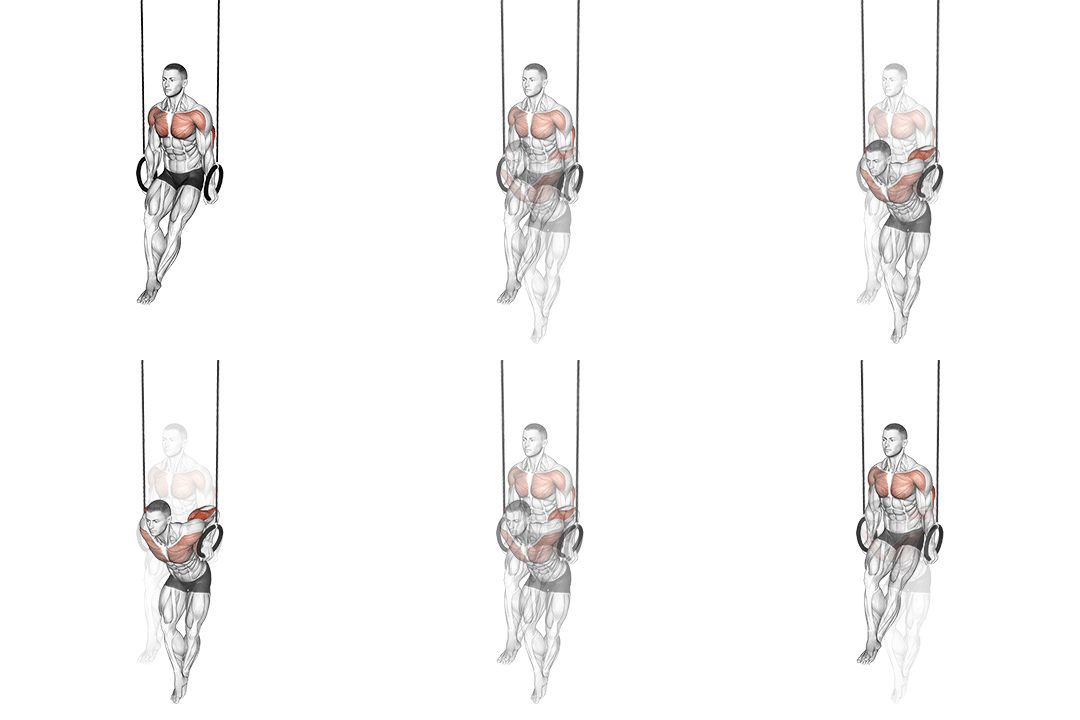
The ring dip is a chest dip variation performed on gymnastic rings instead of fixed parallel bars. The rings hang freely and add significant instability to the dip pattern — the rings want to rotate and swing in any direction your hands push, forcing the chest, shoulders, and triceps to work harder while the stabilizers fight the unstable equipment. Most trainees who can do 10+ strict parallel-bar dips can manage only 4-6 ring dips in their first attempts. What the rings add is shoulder and tricep development through stabilizer recruitment that fixed bars don't provide. The combination of full body weight on the arms plus the instability of the rings creates one of the most demanding bodyweight pressing exercises in any program. For athletes seeking maximum chest and tricep strength from calisthenics, ring dips are essential. It's an advanced exercise that requires significant baseline pressing strength. The path runs through standard parallel-bar dips, then ring support holds, then negative ring dips, then full ring dips. Skipping steps usually results in shoulder strain or the embarrassing failure of the rings sliding apart mid-rep.
Why train the Ring Dips?
- Adds significant stabilizer demand to standard chest dip work.
- Builds chest, tricep, and shoulder strength simultaneously.
- Carries over to gymnastics and ring training.
- Trains shoulder stability under unstable load conditions.
- Provides advanced calisthenics goal.
- Scales further with weight or rings turned out (ultra-advanced).
How to do the Ring Dips: step by step
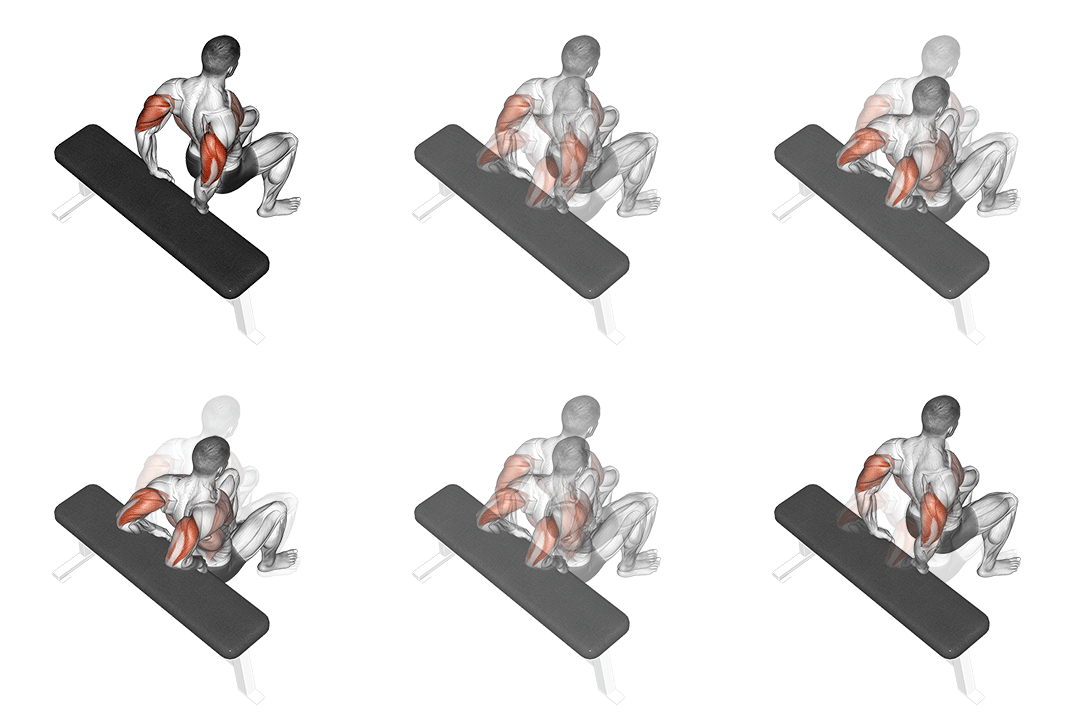
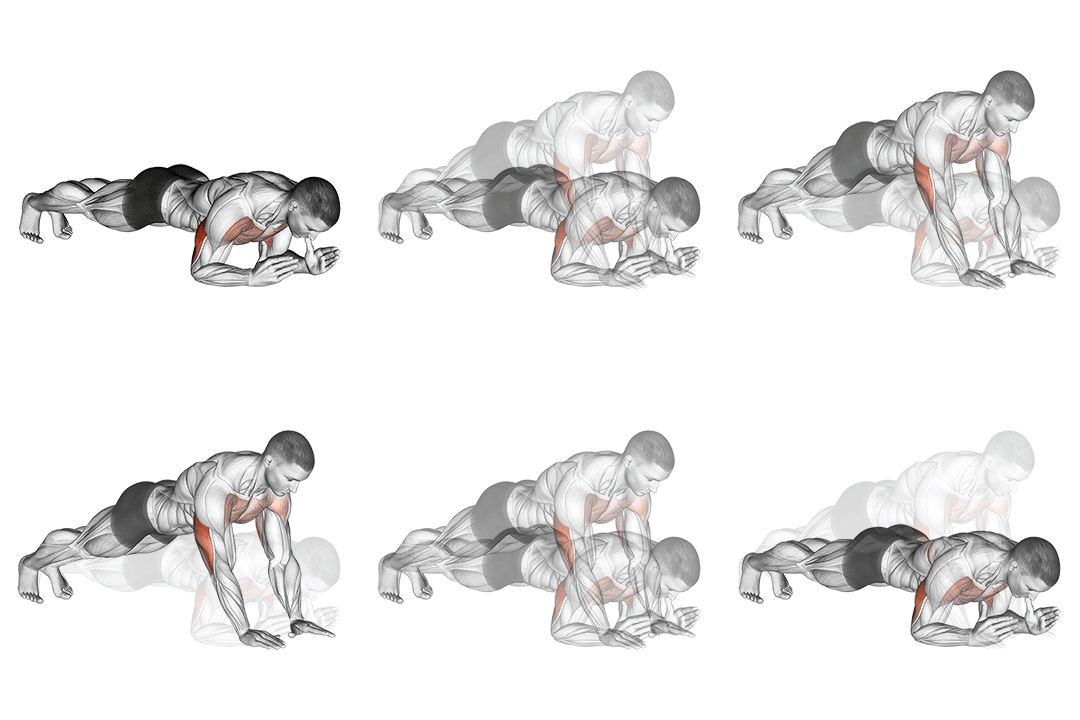
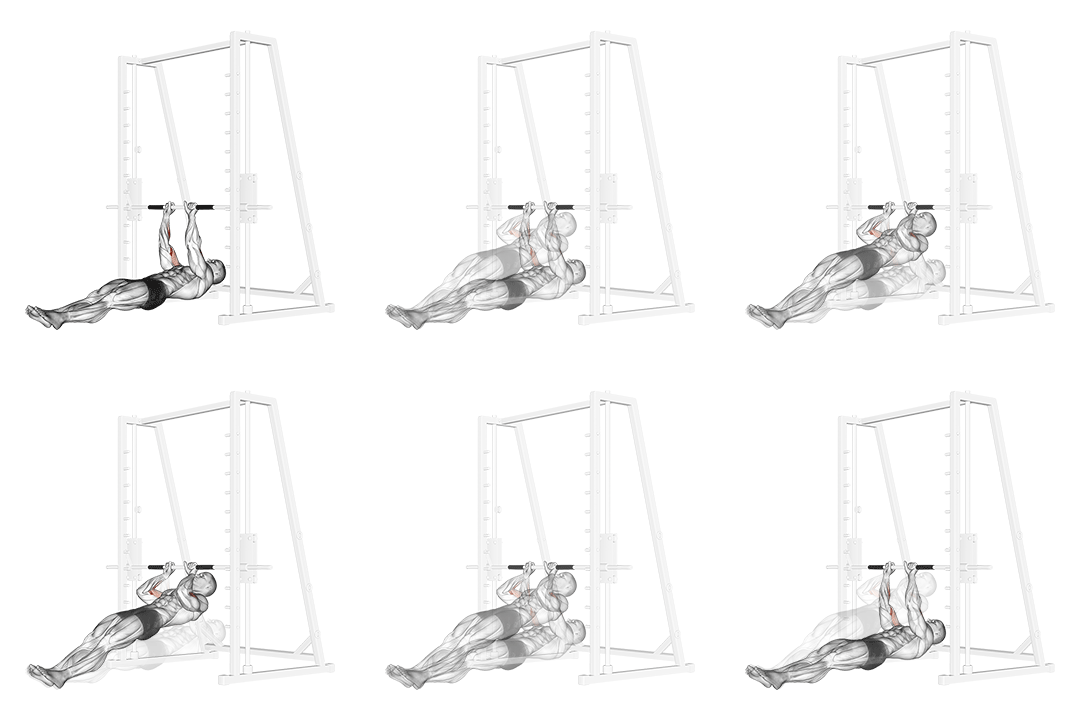
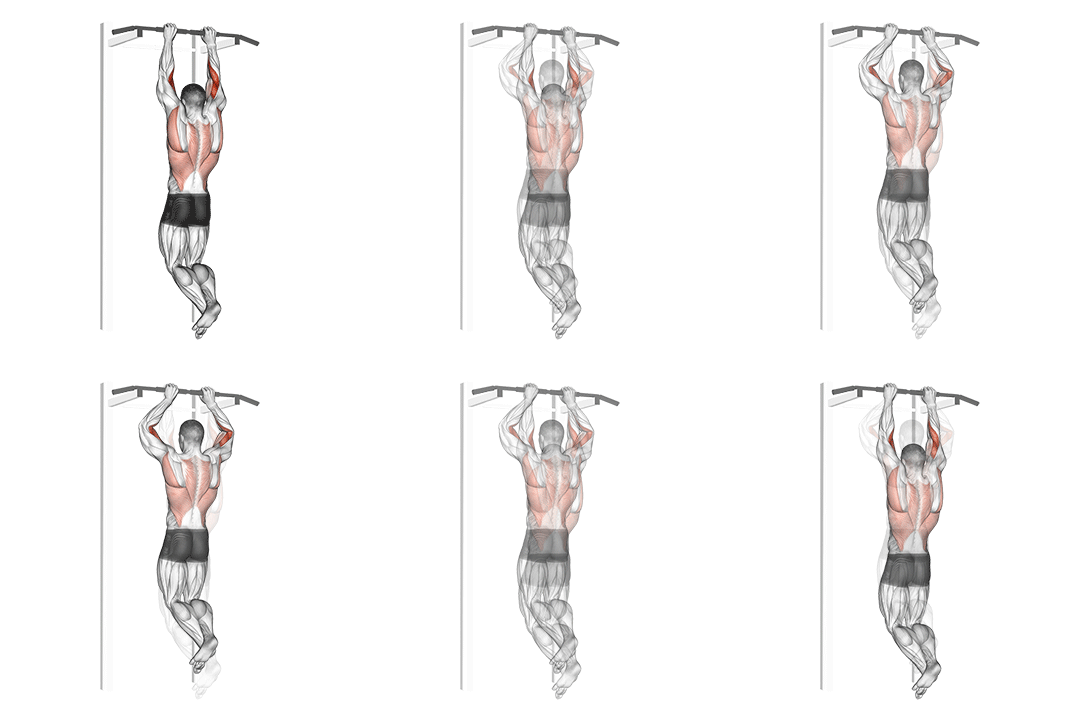
- 1Start by hanging from the rings with your arms fully extended and your body straight.
- 2Lower your body by bending your elbows until your shoulders are below your elbows.
- 3Push yourself back up to the starting position by straightening your arms.
- 4Repeat for the desired number of repetitions.
Muscles worked
Primary
triceps
Secondary
chest, shoulders
Common mistakes to avoid
Letting the rings drift in different directions
If the rings move asymmetrically, you've lost stabilizer control. Press through both rings evenly and keep them parallel throughout.
Going too deep at the bottom
Stop when the upper arms are roughly parallel to the floor. Going below stresses the anterior shoulder capsule heavily.
Skipping prerequisite work
Don't attempt full ring dips until you have 10+ strict parallel-bar dips, ring support holds (30+ seconds), and negative ring dips locked in.
Setting the rings too low or unstable
Rings need to be at the right height (allowing full hang) and properly anchored. Improvised setups fail under load.
Performing them with cold shoulders
Spend 5-10 minutes on shoulder mobility before the first set.
Easier and harder variations
Easier
Parallel-bar dips. Ring support holds (top position only). Negative ring dips. Or banded ring dips with assistance.
Harder
Add weight (a vest or weight belt). Slow the tempo. Or progress to ring dips with rings turned out (ultra-advanced gymnastic stability work).
Alternative exercises
Parallel-bar chest dip
Standard equipment version without instability. Easier baseline.
Suspended dip on TRX
Same instability principle using TRX straps instead of rings.
Weighted chest dip
Progressive overload through weight on parallel bars. Different progression path.
How to program the Ring Dips into your training
Ring dips are advanced specialty work for trainees with the prerequisite strength. Sets and reps: 3-4 sets of 3-8 reps with 90-120 seconds rest. In an upper body session: 3-4 sets of ring dips (early in the session when fresh), 4 sets of 8 standard chest dips (volume work), 4 sets of 8 pull-ups (balanced pulling), 3 sets of 30-second hollow holds (core). Do not program more than twice per week.
Recovery and frequency
Ring dips are extremely demanding on the chest, shoulders, and stabilizers. 72 hours between sessions is the right cadence.
Frequently asked questions
How many sets and reps should I do?
3-4 sets of 3-8 reps with 90-120 seconds rest.
How often should I train ring dips?
1-2 times per week with 72 hours between sessions.
Ring dips vs parallel-bar dips: which is better?
Different tools. Parallel-bar dips are more accessible. Ring dips add stabilizer demand. Use parallel-bar dips for primary work; add ring dips for stabilizer development once parallel-bar dips feel easy.
Are ring dips bad for the shoulders?
For trained athletes with proper progression, no. For untrained or rushed trainees, yes — anterior shoulder strain is common.
Do I need gymnastic rings?
Yes — fixed parallel bars or even TRX straps don't replicate the full demand of gymnastic rings. Quality rings rated for body weight are required.
Will ring dips give me a bigger chest?
Yes — they're one of the most effective bodyweight chest builders. Combined with pull-ups and standard pressing, they drive significant chest development for advanced trainees.
Useful tools for this exercise
Build a workout with the Ring Dips
Puna gives you guided bodyweight workouts you can do anywhere — no equipment, no gym, just structured progressions that build real strength.