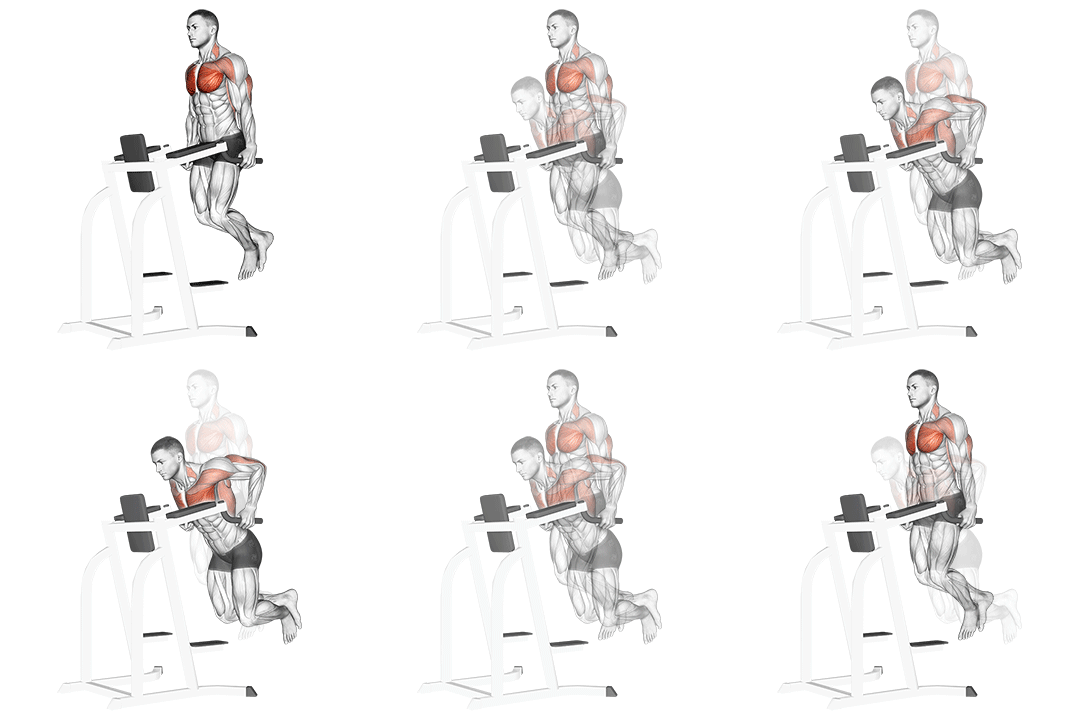
Raise Single Arm Push-up
advanced strength exercise · body weight · targets pectorals
- Body part
- chest
- Primary target
- pectorals
- Equipment
- body weight
- Difficulty
- advanced
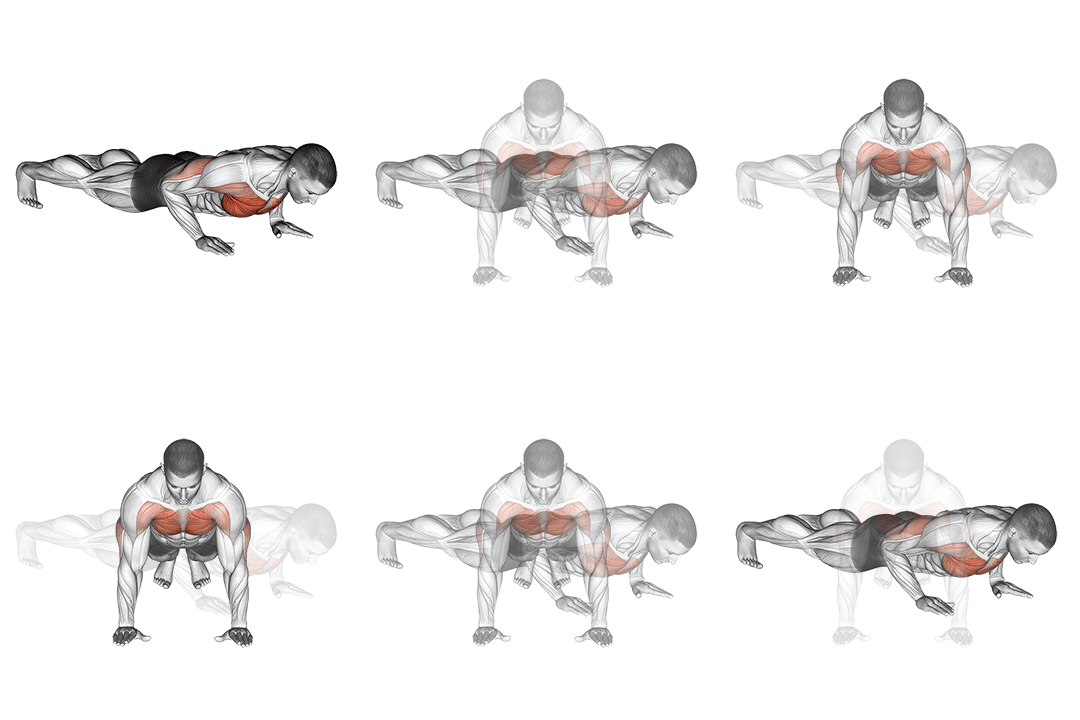
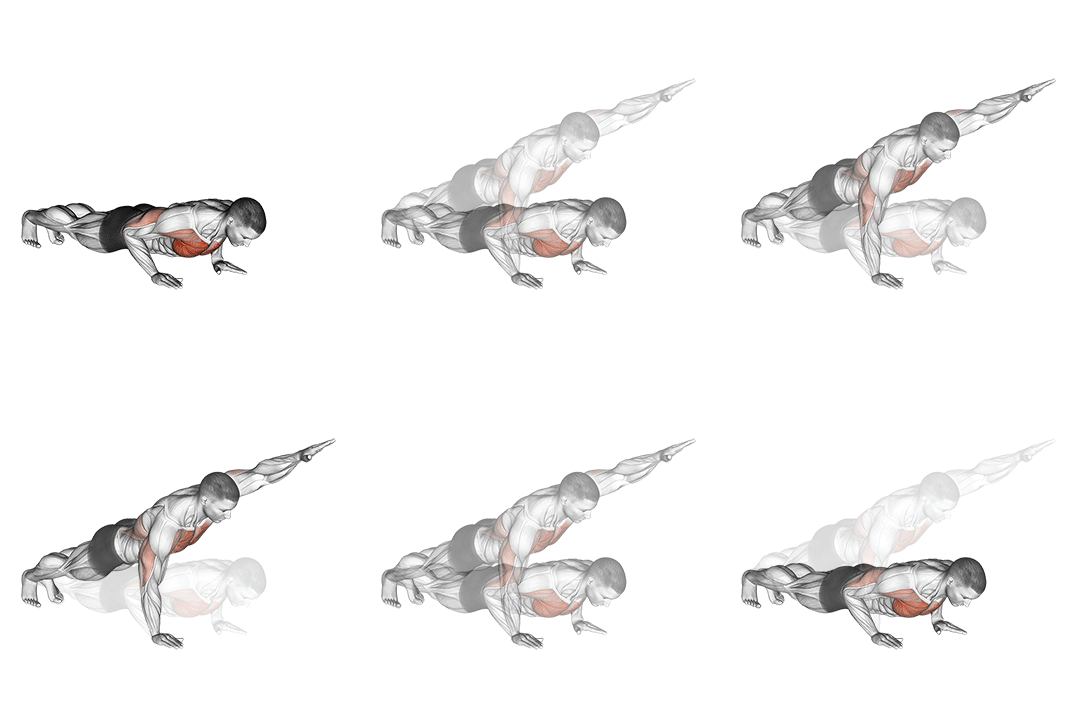
The raise single arm push-up combines a standard push-up with an alternating arm raise — at the top of each rep, you lift one arm off the floor and reach it forward (like Superman's pose) before returning to start and pressing into the next rep. The combination loads the chest and triceps through the push-up, then loads the supporting arm and the entire core through the single-arm reach phase. This is an advanced push-up variation that demands strict baseline strength and excellent trunk stability. Most trainees who can do 15+ standard push-ups can manage only 4-6 raise single-arm push-ups per side cleanly in their first attempts. The asymmetric loading of the reach phase forces the body to fight rotation while supporting full body weight on a single arm momentarily. It's the natural progression after shoulder tap push-ups for trainees building toward one-arm push-up training. Where shoulder taps lift the arm only briefly, the raise single-arm version holds the arm extended for longer, building greater unilateral support tolerance. Run for 4-8 weeks alongside standard pressing work, it builds the trunk strength and unilateral pressing readiness needed for harder variations.
Why train the Raise Single Arm Push-up?
- Combines pressing with anti-rotation core work for full upper-body training.
- Builds toward one-arm push-up progression by training unilateral support tolerance.
- Reveals trunk asymmetries between the two sides.
- Adds variety to push-up programming when standard reps have become routine.
- Trains coordination alongside strength.
- Requires no equipment.
How to do the Raise Single Arm Push-up: step by step
- 1Start in a push-up position with your hands slightly wider than shoulder-width apart and your feet together.
- 2Extend one arm straight out to the side, parallel to the ground.
- 3Lower your body towards the ground by bending your elbows, keeping your back straight and core engaged.
- 4Push back up to the starting position, using your chest muscles to lift your body.
- 5Repeat with the other arm extended.
Muscles worked
Primary
pectorals
Secondary
triceps, shoulders, core
Common mistakes to avoid
Twisting the body during the arm raise
When you lift one arm, the body wants to rotate toward the lifted-arm side. Brace the abs hard before the lift and keep both hip points facing the floor. The body should stay perfectly square throughout the reach.
Cutting depth on the push-up to manage the reach
Adding the arm reach makes the exercise harder, so the temptation is to cut push-up depth. Maintain full depth (chest near the floor) on every rep — partial push-ups train a worse pattern.
Lifting the arm too high
Trying to reach the arm straight up toward the ceiling makes the rotation challenge impossible. Reach forward (parallel to the floor) instead — the goal is unilateral support, not high reaching.
Spreading the feet narrow
Narrow feet make the balance challenge dramatically harder. Set your feet hip-width apart or wider, especially in the first weeks of training the movement.
Choosing this before mastering shoulder tap push-ups
Build to 8 strict shoulder tap push-ups per side before attempting the raise variation. Without that foundation, you'll likely use rotation to compensate.
Easier and harder variations
Easier
Shoulder tap push-ups (briefer arm lift, no extended reach). Or perform from a knee-supported position to reduce the load.
Harder
Hold the extended-arm position for 3-5 seconds before returning. Add a leg lift on the same side as the reaching arm. Or progress to one-arm push-up training.
Alternative exercises
Shoulder tap push-up
Same anti-rotation challenge with a shorter arm lift. The standard regression.
Plank with arm raise
Same unilateral support without the push-up. Useful as a regression or warm-up.
Renegade row
Push-up plus alternating dumbbell row. Different upper-body component but similar anti-rotation core demand.
How to program the Raise Single Arm Push-up into your training
Raise single arm push-ups work as accessory pressing or core work, not as the primary chest exercise. Pair with standard push-ups for primary chest work and other movements. Sets and reps: 3 sets of 4-8 reps per side with 60-90 seconds rest. The added complexity cuts your usable rep count significantly. In an upper body session: 4 sets of 8 push-ups (main pressing), 3 sets of 5 raise single arm push-ups per side (anti-rotation work), 4 sets of 8 inverted rows (balanced pulling), 3 sets of 30-second hollow holds (core). For athletes building toward one-arm push-ups, alternate weeks between this exercise and other unilateral progressions (archer push-ups, side push-ups). Do not program in the same session as heavy bilateral pressing or other intensive shoulder work.
Recovery and frequency
Raise single arm push-ups load the chest, shoulders, and obliques. 48-72 hours between sessions is the right cadence. The shoulders are usually the limiting recovery factor. Lateral shoulder soreness in the first 1-2 weeks is normal. Sharp pain at the front of the shoulder during sets is a stop signal.
Frequently asked questions
How many sets and reps of raise single arm push-ups should I do?
3 sets of 4-8 reps per side with 60-90 seconds rest.
How often should I train raise single arm push-ups?
1-2 times per week with 48-72 hours between sessions.
Should I count one rep as both sides or each side separately?
Each side separately. Counting per side reveals asymmetries and gives clearer progression tracking.
Why is one side so much harder than the other?
Trunk asymmetry — the dominant-arm side usually feels easier. The asymmetry typically narrows within 6-12 weeks of equal-rep practice.
Are raise single arm push-ups good for chest growth?
Less effective than focused chest exercises. The complexity cuts the rep counts you can accumulate, which limits hypertrophy. Use them for the rotational core and unilateral pressing benefits, not chest building.
Can I do these if I can't do regular push-ups?
No — build to 15+ strict push-ups first. Adding complexity on top of a shaky pressing pattern reinforces bad form.
Useful tools for this exercise
Build a workout with the Raise Single Arm Push-up
Puna gives you guided bodyweight workouts you can do anywhere — no equipment, no gym, just structured progressions that build real strength.