Push-up (wall) V. 2
beginner strength exercise · body weight · targets pectorals
- Body part
- chest
- Primary target
- pectorals
- Equipment
- body weight
- Difficulty
- beginner
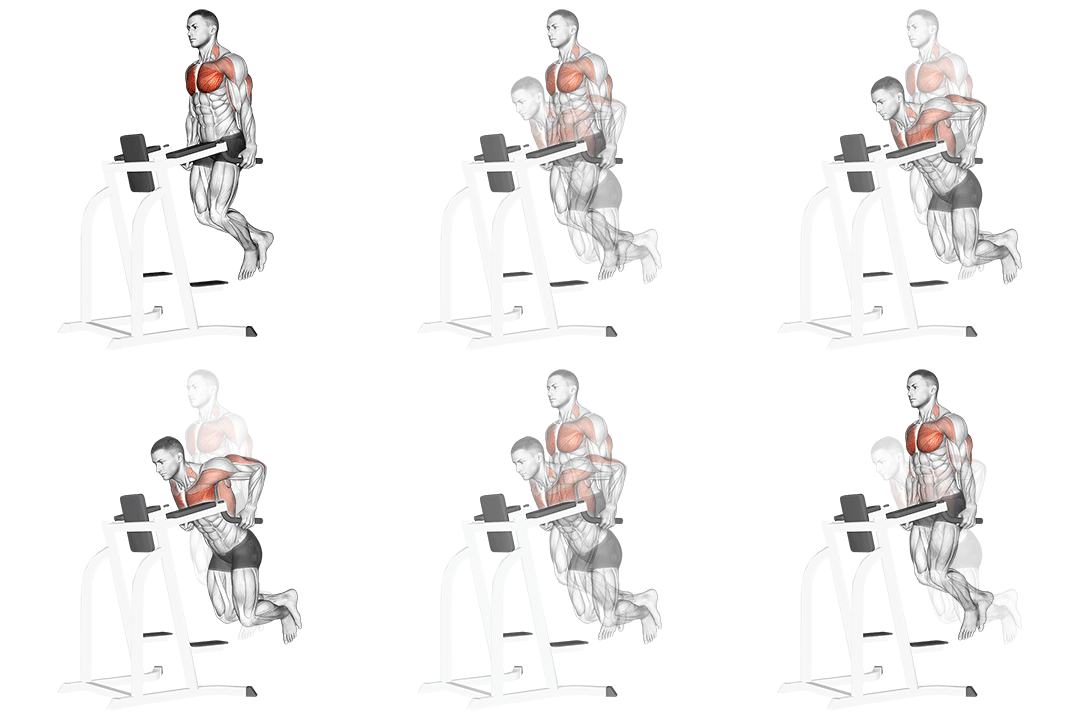
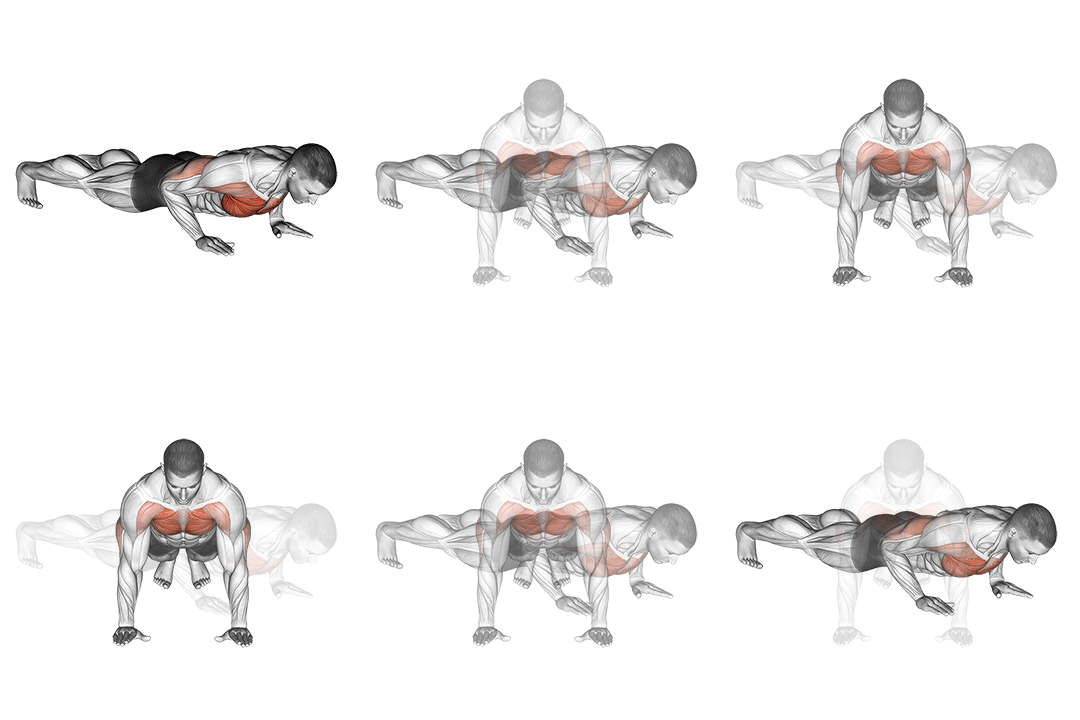
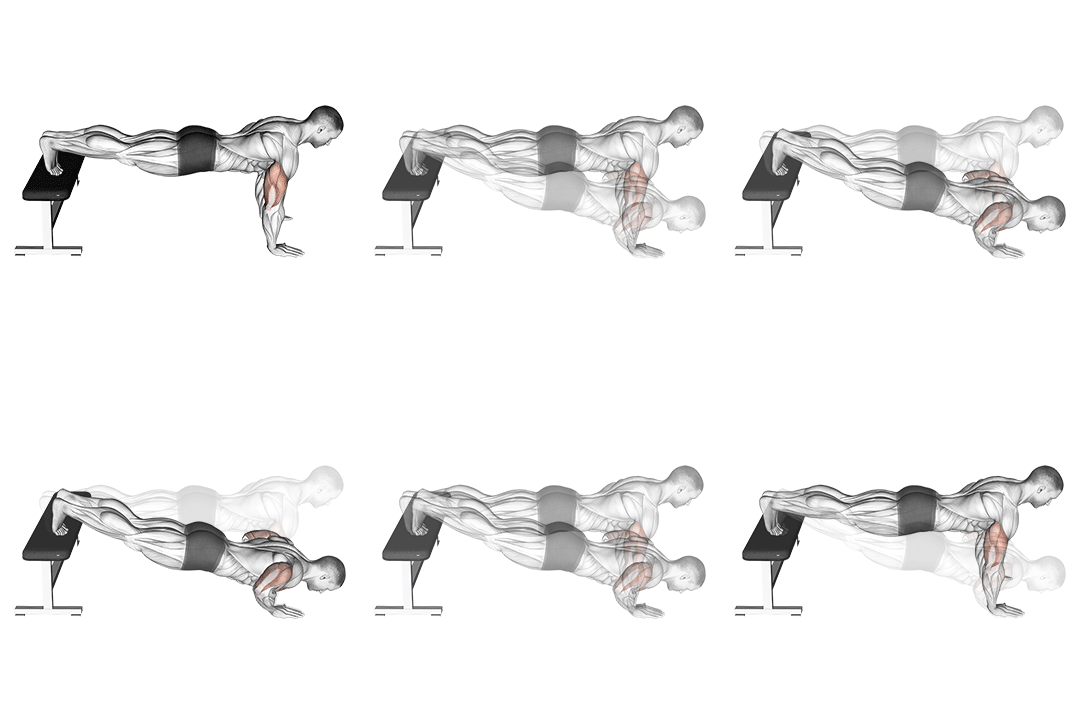
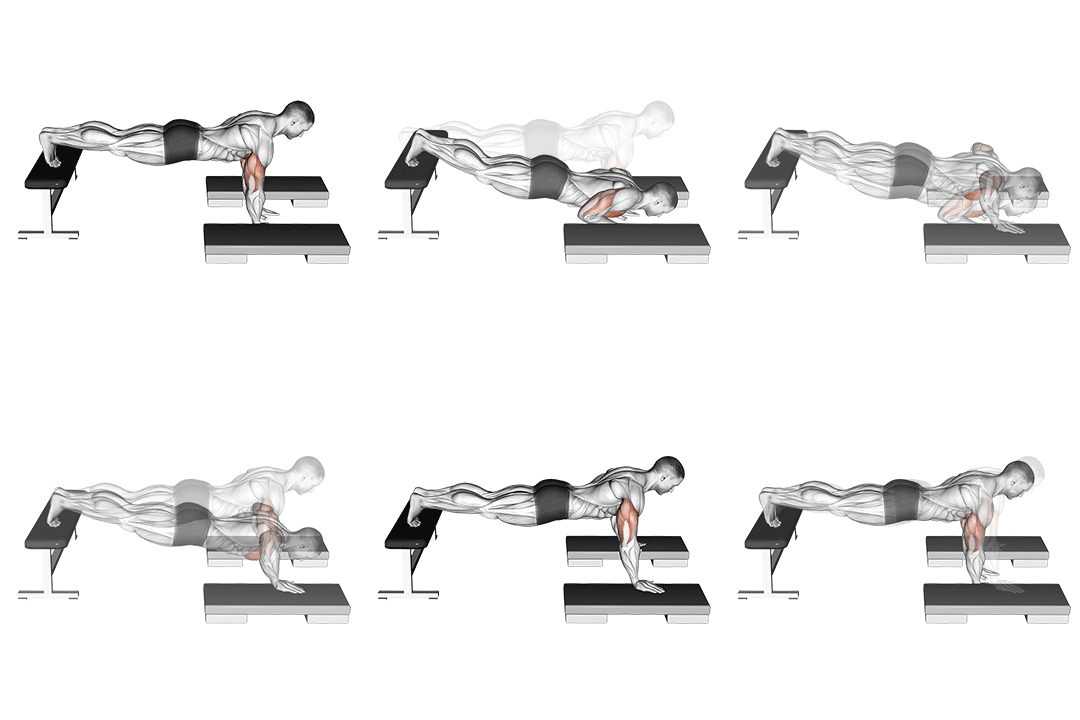
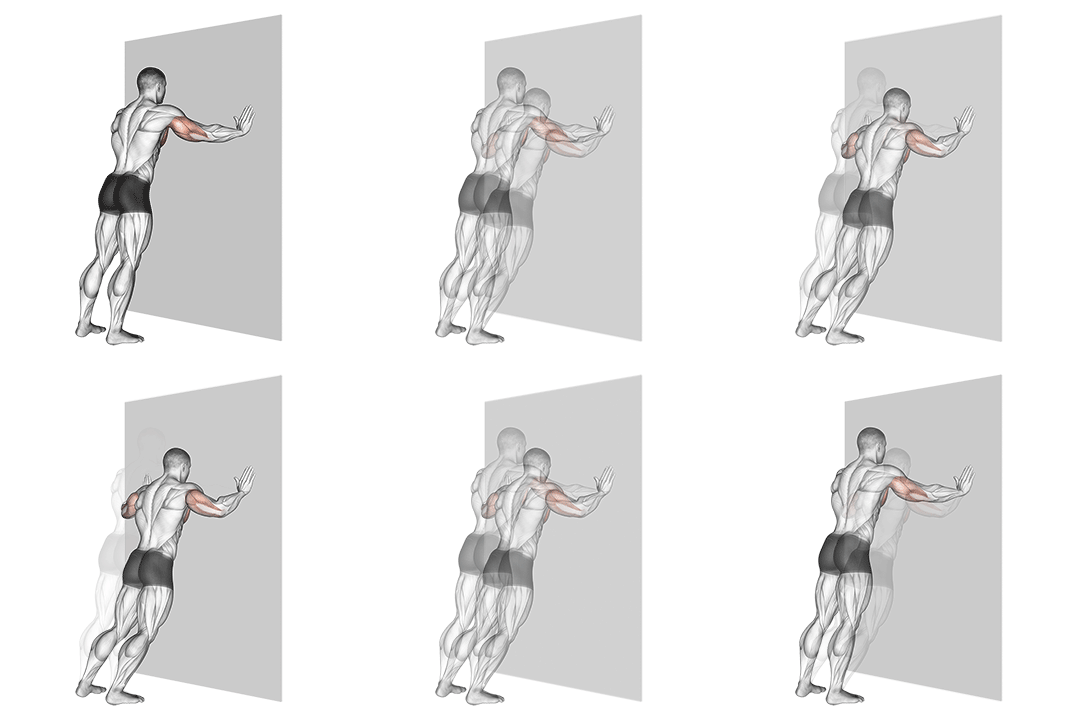
The wall push-up (variation 2) is a slight modification of the basic wall push-up — typically with hand position adjusted (closer or wider) or stance varied to change the angle of loading. Like the standard wall push-up, it remains the most accessible push-up variation, performed standing with hands pressed against a wall and the body angled forward. The value of having multiple wall variations is that beginners can rotate between them to keep the same exercise feeling fresh while building the same fundamental strength. A few weeks of standard wall push-ups followed by a few weeks of variation 2 (and vice versa) can help maintain training novelty without progressing to a harder load that beginners aren't ready for. Like the standard version, this is a stepping stone — most people graduate within 2-4 weeks to incline push-ups on a kitchen counter or bench. The goal isn't to stay at wall variations forever; it's to build the connective tissue tolerance, basic press pattern, and joint readiness that harder variations demand. For seniors or significantly deconditioned trainees, however, wall push-ups in their various forms can serve as a permanent staple.
Why train the Push-up (wall) V. 2?
- Lowest entry barrier of any push-up variation — accessible to almost any fitness level.
- Conditions wrists, elbows, and shoulders for higher-load variations.
- Allows beginners to practice push-up mechanics without strength being a barrier.
- Variations within the wall family let beginners rotate exercises without progressing too fast.
- Doubles as a warm-up for stronger trainees before heavier pressing work.
- Useful in rehabilitation contexts under medical supervision.
How to do the Push-up (wall) V. 2: step by step
- 1Stand facing a wall, about arm's length away.
- 2Place your hands on the wall at shoulder height, slightly wider than shoulder-width apart.
- 3Step back with your feet, keeping them hip-width apart.
- 4Engage your core and keep your body in a straight line from head to heels.
- 5Bend your elbows and lower your chest towards the wall, keeping your body straight.
- 6Pause for a moment, then push yourself back to the starting position.
- 7Repeat for the desired number of repetitions.
Muscles worked
Primary
pectorals
Secondary
triceps, shoulders
Common mistakes to avoid
Standing too close to the wall
If your feet are right under the wall, the exercise becomes trivial. Step back so when your arms extend, you're at a slight forward lean. Adjust distance to find the right level of challenge.
Breaking at the hips instead of the elbows
Some people hinge at the hips rather than bending the elbows. Keep the body in a straight line from heels to head — only the elbows bend.
Letting the hands slide outward on the wall
Hands should stay anchored where you placed them. If they shift, the exercise loses precision. Position hands at the chosen width and keep them there throughout the set.
Skipping wall push-ups because they 'look easy'
Many beginners insist on starting with floor or knee push-ups, then practice bad form for weeks. Wall variations are humbling to do strict — give them a real attempt before assuming you've outgrown them.
Locking the elbows hard at the top
Aggressive lockout puts unnecessary stress on the joint. Press to full extension but stop just short of jamming the elbows — the muscles should be doing the holding, not the bones.
Easier and harder variations
Easier
Standing very close to the wall (almost touching) makes the press minimal. Use as a starting point and step back as strength develops.
Harder
Move the feet further from the wall (greater forward lean). Once 3 sets of 20 reps feel easy at significant lean, progress to incline push-ups on a kitchen counter or sturdy table.
Alternative exercises
Standard wall push-up
The most common wall variation. Same fundamental exercise with conventional hand placement.
Incline push-up on counter
The natural progression after wall variations. Hands on a counter or bench instead of vertical wall.
Wall plank hold
Hold the top position of a wall push-up for 30-60 seconds. Builds endurance and shoulder positioning awareness.
How to program the Push-up (wall) V. 2 into your training
Wall push-up variations work best as a 2-4 week introduction phase, not as a permanent exercise (with exceptions noted below). Introduction phase: 3 sessions per week, 3 sets of 10-20 reps with 60-90 seconds rest. Progress to incline push-ups when 3 sets of 20 feel easy. For true beginners or rehabilitation contexts: start with 2 sets of 8-10 reps, twice per week. Add reps and sets gradually. As warm-up for stronger trainees: 1-2 sets of 15-20 reps before heavier pressing work. For seniors or significantly deconditioned trainees, wall push-up variations can be a permanent staple. Build to 3 sets of 25-30 reps for chest and shoulder maintenance. Alternate between wall variations (standard, this v.2, etc.) every 2-3 weeks during the introduction phase to keep training novel and address slightly different angles of loading.
Recovery and frequency
Wall push-ups have minimal recovery cost given the light load. Daily training is fine for most people. The most likely soreness is in the chest and front delts during the first 1-2 weeks, especially if these muscles haven't been worked recently. That fades quickly. If wrists feel achy, switch to a fist position or push-up handles. Standard recovery practices cover the rest.
Frequently asked questions
How many sets and reps of wall push-up v.2 should I do?
3 sets of 10-20 reps with 60-90 seconds rest, performed 2-3 times per week. Once 3 sets of 20 feel easy, progress to incline push-ups.
How often should I train the wall push-up v.2?
2-3 times per week is typical, but daily is fine for low-volume practice. The light load means recovery isn't a major concern.
What's the difference between wall push-up and wall push-up v.2?
The variations differ slightly in hand placement or stance — usually narrower or wider grip than the standard. Use both interchangeably as introductory pressing exercises; the differences are too subtle to drive distinct adaptations.
How long should I do wall push-ups before moving on?
Most people graduate within 2-4 weeks. Build to 3 sets of 20 reps with feet at meaningful distance from the wall, then move to incline push-ups.
Are wall push-ups effective for chest building?
For absolute beginners, yes — they create enough stimulus to drive early adaptations. For trained individuals, the load is too light for hypertrophy. Use them as warm-up or introduction.
Can I do wall push-ups during pregnancy?
Generally yes, though confirm with your healthcare provider. Wall push-ups avoid the prone position that becomes uncomfortable later in pregnancy and load minimally on the abdominal wall.
Useful tools for this exercise
Build a workout with the Push-up (wall) V. 2
Puna gives you guided bodyweight workouts you can do anywhere — no equipment, no gym, just structured progressions that build real strength.