Push-up Plus
intermediate strength exercise · body weight · targets pectorals
- Body part
- chest
- Primary target
- pectorals
- Equipment
- body weight
- Difficulty
- intermediate
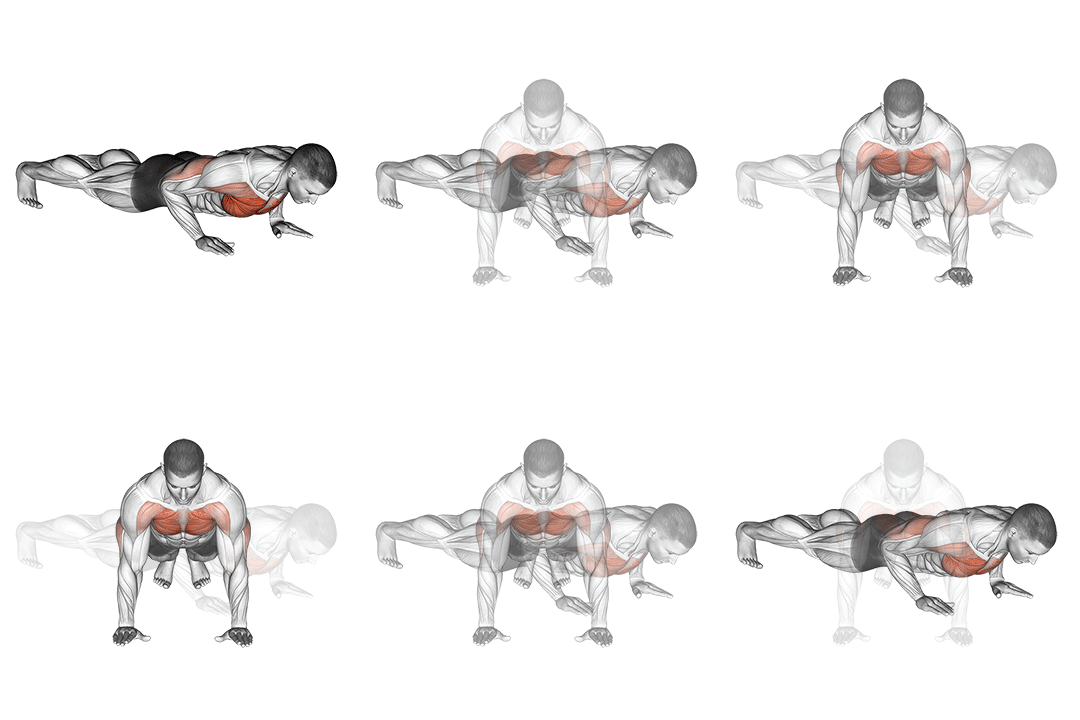
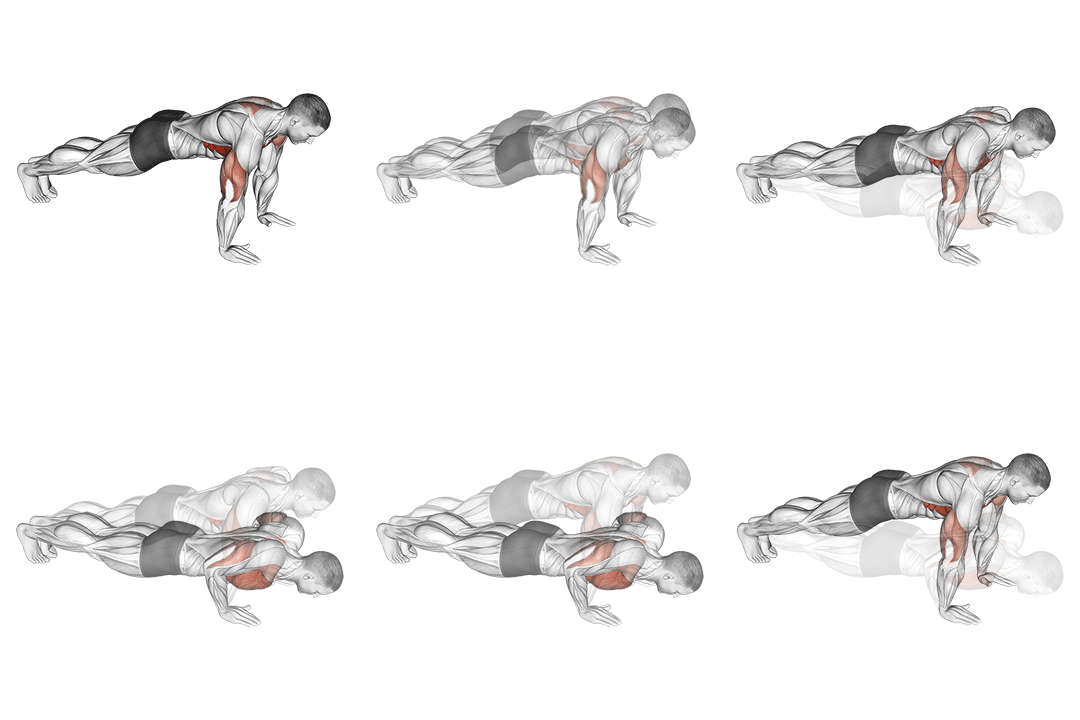
The push-up plus combines a standard push-up with an added scapular protraction at the top of each rep. After completing the upward press of a normal push-up, you continue pressing the body away from the floor by driving the shoulder blades apart (protraction). The 'plus' refers to that extra serratus anterior contraction beyond normal lockout — a small additional movement that meaningfully changes which muscles work. The value comes from the serratus anterior recruitment. Most push-ups end at full elbow lockout, missing the serratus protraction phase entirely. The push-up plus adds this phase, which is critical for shoulder health and proper pressing mechanics. The serratus pulls the shoulder blade around the rib cage during pressing — when it doesn't engage, the shoulder blade winged out (visible as 'scapular winging') and pressing strength stalls. It's particularly useful for trainees with shoulder issues, postural problems, or who have plateaued on standard push-ups. The added serratus work often produces immediate benefits: cleaner push-up form, better shoulder positioning, and reduced impingement-related discomfort. Programmed twice per week as a primary or secondary push-up variation, it builds serratus strength that standard push-ups miss.
Why train the Push-up Plus?
- Combines standard push-up benefits with focused serratus anterior work.
- Improves shoulder blade mechanics — addresses scapular winging and impingement.
- Useful for trainees with shoulder issues or postural problems.
- Builds the serratus strength that supports overhead pressing and pull-ups.
- Adds variety to push-up programming when standard reps have plateaued.
- Requires no equipment.
How to do the Push-up Plus: step by step
- 1Start in a high plank position with your hands slightly wider than shoulder-width apart and your body in a straight line from head to heels.
- 2Lower your body towards the ground by bending your elbows, keeping them close to your sides.
- 3Once your chest is just above the ground, push through your hands to extend your arms and lift your upper body up.
- 4At the top of the movement, protract your shoulder blades by pushing your upper back towards the ceiling.
- 5Pause for a moment, then reverse the movement by retracting your shoulder blades and lowering your body back down to the starting position.
- 6Repeat for the desired number of repetitions.
Muscles worked
Primary
pectorals
Secondary
triceps, shoulders
Common mistakes to avoid
Skipping the 'plus' portion
If you end the rep at standard lockout without the additional protraction, you're just doing a regular push-up. The plus is the most important part — pause at the top of each rep and drive the shoulder blades apart for 1-2 seconds.
Letting the elbows bend during the protraction
The protraction phase requires straight arms. If the elbows bend during the 'plus,' you're not getting the serratus engagement. Lock the elbows at the top before initiating the scapular movement.
Sagging hips during the rep
Like all push-up variations, the body should stay straight from heels to head. Sagging hips engage the lower back instead of the core. Brace the abs throughout.
Going too fast through the protraction
The plus phase needs deliberate engagement. Pause at the top of every rep and feel the shoulder blades pull apart and forward. Without the deliberate squeeze, the serratus barely engages.
Doing it without serratus awareness
If you can't feel the muscle along the side of your rib cage working, the protraction isn't happening. Practice scapular push-ups (arms straight throughout) first to develop awareness, then bring that awareness to push-up plus.
Easier and harder variations
Easier
Perform from kneeling push-up position to reduce load while keeping the protraction. Or do scapular push-ups (arms straight throughout) first to learn the protraction movement.
Harder
Add weight (a plate on the back). Slow the tempo significantly. Or progress to handstand push-ups with active scapular engagement.
Alternative exercises
Scapular push-up
Same protraction movement performed with arms straight throughout. Useful as a regression or as a focused serratus drill.
Standard push-up
The bilateral baseline. Push-up plus adds the serratus emphasis on top.
Bear crawl
Different exercise that activates the serratus during quadrupedal locomotion. Useful complement for serratus development.
How to program the Push-up Plus into your training
Push-up plus works as either a primary or secondary pressing exercise. The added serratus engagement makes it especially useful for trainees with shoulder issues or postural problems. Sets and reps: 3 sets of 8-12 reps with 60-90 seconds rest. Total weekly volume of 50-100 reps drives most adaptations. In an upper body session: 4 sets of 8 push-up plus (main pressing with serratus emphasis), 4 sets of 8 inverted rows (balanced pulling), 3 sets of 10 face pulls (shoulder health), 3 sets of 30-second hollow holds (core). For athletes with shoulder issues or postural problems: 2-3 sessions per week with push-up plus as the primary pressing exercise, alongside band pull-aparts and other shoulder-health work. As warm-up before heavier pressing: 1-2 sets of 8-10 reps. Activates the serratus before main work.
Recovery and frequency
Push-up plus recovers similarly to standard push-ups — 48 hours between sessions is plenty. The added serratus engagement may produce slight rib-cage soreness in the first 1-2 weeks of training, which fades quickly. Standard push-up recovery practices apply. Watch for shoulder fatigue and back off if it appears.
Frequently asked questions
How many sets and reps of push-up plus should I do?
3 sets of 8-12 reps with 60-90 seconds rest.
How often should I train push-up plus?
2-3 times per week as part of a structured program.
Push-up plus vs standard push-up: which is better?
Different tools. Standard push-ups train the chest and triceps primarily. Push-up plus adds serratus engagement that standard push-ups miss. For shoulder health and trainees with postural issues, push-up plus is better. For pure chest development, standard push-ups are sufficient.
Will push-up plus help my pull-ups?
Indirectly — by improving serratus and shoulder blade mechanics, it can support better pulling form. The serratus is involved in stabilizing the shoulder during both pressing and pulling work.
How do I know if I'm doing the protraction correctly?
Feel the muscle along the side of your rib cage working. The body should rise an additional 1-2 inches at the top of each rep due to the scapular movement. If you can't feel anything, slow down and consciously drive the shoulder blades apart at the top.
Are push-up plus good for scapular winging?
Yes — they're often used in physical therapy specifically for that purpose. The added serratus engagement directly addresses the muscle weakness that causes winging.
Useful tools for this exercise
Build a workout with the Push-up Plus
Puna gives you guided bodyweight workouts you can do anywhere — no equipment, no gym, just structured progressions that build real strength.