Push-up On Lower Arms
intermediate strength exercise · body weight · targets triceps
- Body part
- upper arms
- Primary target
- triceps
- Equipment
- body weight
- Difficulty
- intermediate
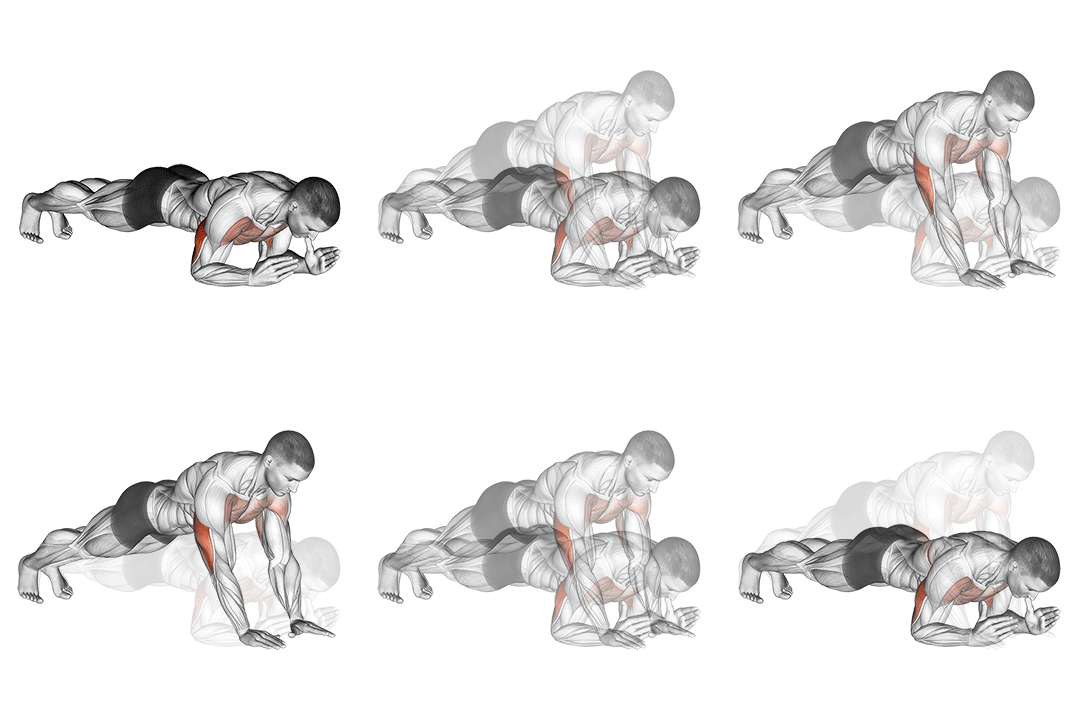
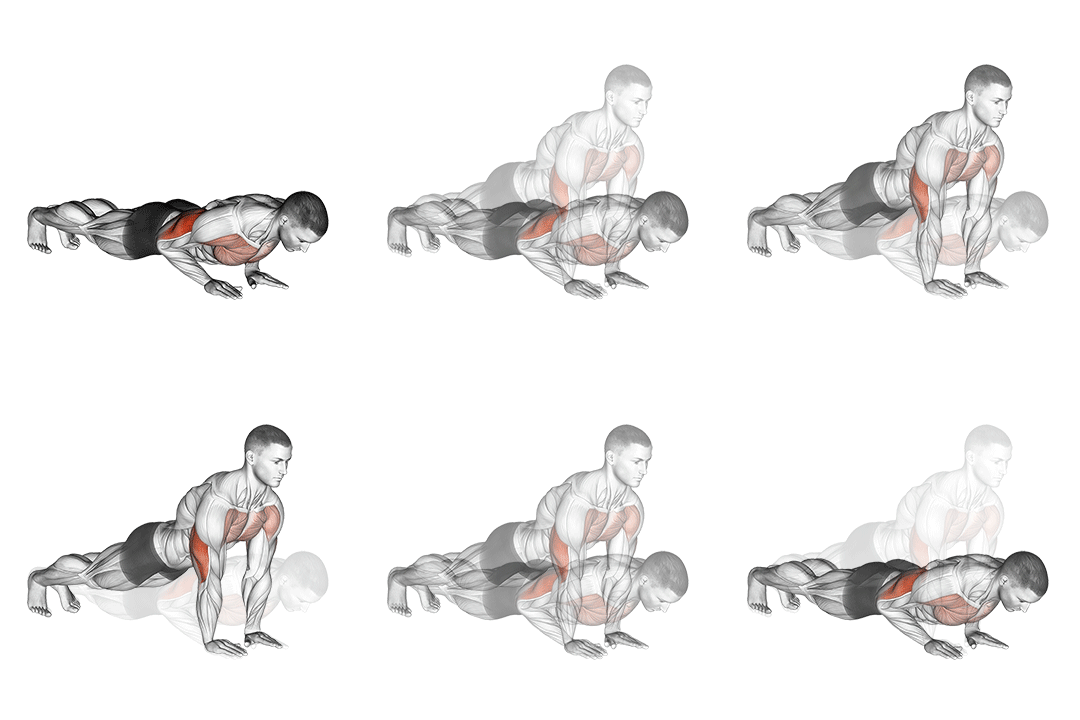
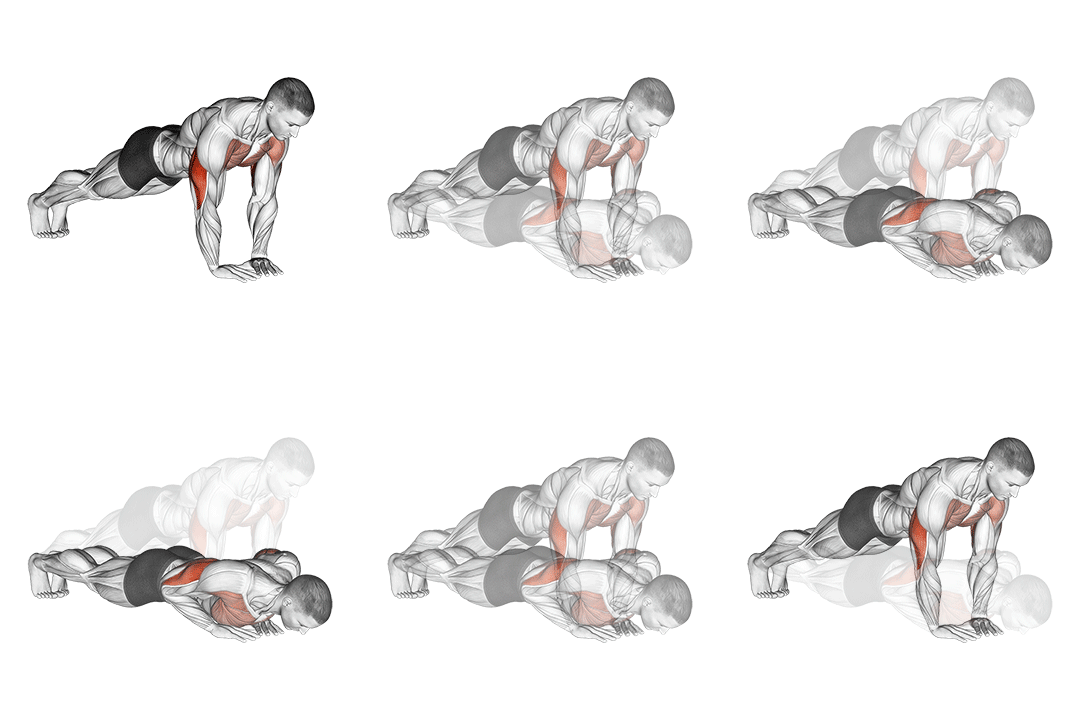
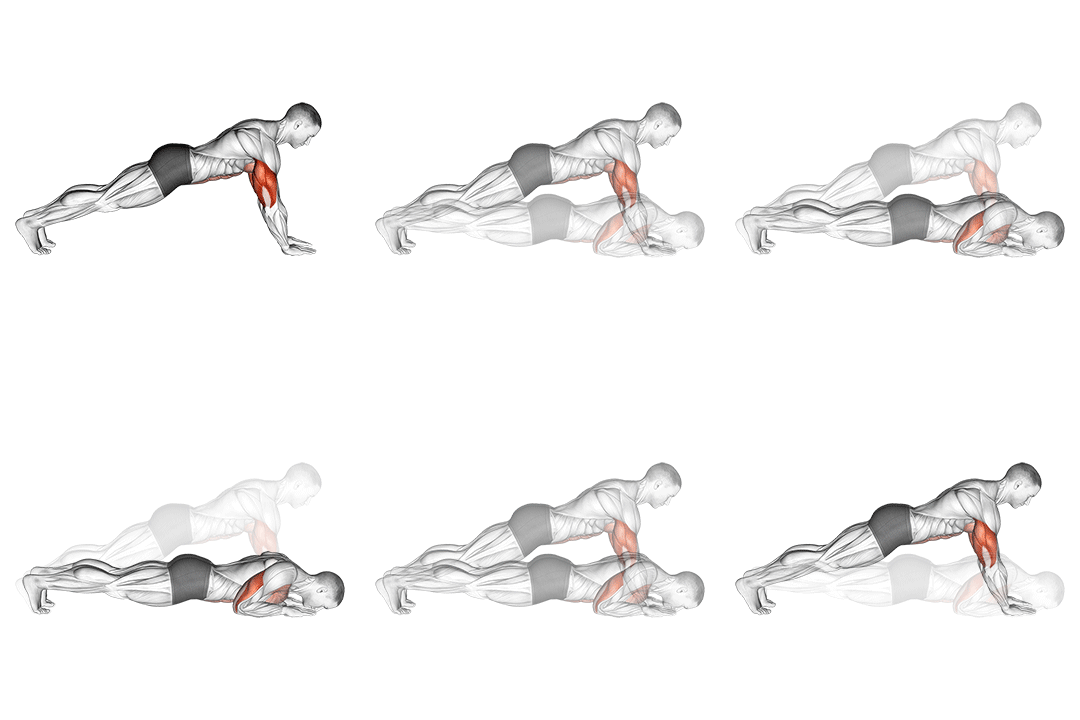
The push-up on lower arms — also called the forearm push-up — is performed from a forearm plank position rather than a standard high plank. From the forearm plank with elbows directly under the shoulders, you raise the body by extending the forearms slightly (almost a shrug pattern from the elbows) and lower back down. The result is a small-amplitude pushing exercise that primarily targets the triceps and the muscles around the shoulder blade. It's significantly different from a standard push-up. The reduced range of motion limits the chest involvement that makes a regular push-up valuable; instead, the focus shifts to the serratus anterior (the muscle that protracts the shoulder blade) and the triceps in their lockout position. The exercise is more useful as an accessory or warm-up than as a primary chest builder. It's also useful as a rehabilitation exercise (under medical guidance) for trainees recovering from wrist or shoulder issues. The forearm position eliminates wrist extension stress, and the small range reduces shoulder demand. Programmed cautiously, it provides pressing pattern work without the joint demands of standard push-ups.
Why train the Push-up On Lower Arms?
- Trains the serratus anterior more directly than standard push-ups.
- Eliminates wrist stress — useful for trainees with wrist issues.
- Provides pressing pattern work at reduced shoulder demand.
- Low recovery cost — can be programmed daily as rehab or postural work.
- Useful as a rehabilitation exercise under medical guidance.
- Requires no equipment beyond a soft surface for the forearms.
How to do the Push-up On Lower Arms: step by step
- 1Start in a plank position with your forearms on the ground and elbows directly below your shoulders.
- 2Engage your core and keep your body in a straight line from head to toe.
- 3Lower your chest towards the ground by bending your elbows, keeping them close to your body.
- 4Pause for a moment at the bottom, then push yourself back up to the starting position.
- 5Repeat for the desired number of repetitions.
Muscles worked
Primary
triceps
Secondary
chest, shoulders
Common mistakes to avoid
Letting the hips sag
Like all plank-based exercises, the body should stay straight from heels to head. Sagging hips engage the lower back instead of the core. Brace the abs hard throughout the rep.
Going too far up at the top
The exercise is small-amplitude by design. Don't try to make it look bigger by pressing the body too high — that just turns it into an awkward variation of a different exercise.
Letting the head drop
Keep the neck in line with the spine throughout. Eyes on the floor in front of the elbows, head neutral.
Treating it as a chest exercise
It's not — the chest barely engages. Use it for serratus anterior work, tricep lockout strength, or wrist-friendly pressing pattern training, not for chest development.
Doing too many reps without focus on the squeeze
The value comes from feeling the serratus anterior contract at the top of each rep. Slow down — pause briefly at the top with a deliberate scapular protraction squeeze.
Easier and harder variations
Easier
Perform on knees instead of toes to reduce the load. Or reduce the range further (smaller lifts).
Harder
Add weight (a small plate on the upper back). Slow the tempo (3-5 seconds per phase). Or progress to push-up plus from a high plank position, which combines this serratus work with full push-up range.
Alternative exercises
Push-up plus
Standard push-up with an added serratus protraction at the top of each rep. More comprehensive for both chest and serratus development.
Scapular push-up
Same scapular movement performed in high plank with arms straight. Different position, same serratus focus.
Forearm plank
Static version of the forearm position. Useful complement for core endurance.
How to program the Push-up On Lower Arms into your training
Push-ups on lower arms work as accessory or specialized work, not as a primary pressing exercise. Pair with standard push-ups (for chest), pull-ups (for back), and other primary movements. Sets and reps: 3 sets of 10-20 reps with 30-60 seconds rest. Total weekly volume of 60-150 reps drives most adaptations. As warm-up: 1-2 sets of 10-15 reps before pressing or overhead work. Activates the serratus anterior so it engages properly during heavier lifts. For postural correction (people working on shoulder positioning): 2 sets of 12-15 reps daily as a corrective drill. For rehabilitation use (under medical guidance): 2-3 short sessions per week as part of return-to-pressing programming. The wrist-friendly position is often appropriate when wrists are recovering. Do not program as the only pressing exercise — it doesn't load the chest enough for primary development.
Recovery and frequency
Push-ups on lower arms have very low recovery cost. The reduced load and small range mean daily training is generally fine, especially at moderate volume. The forearms take some load from the position. Forearm tightness is common in early weeks. Standard recovery practices cover the rest.
Frequently asked questions
How many sets and reps of push-ups on lower arms should I do?
3 sets of 10-20 reps with 30-60 seconds rest.
How often should I train push-ups on lower arms?
2-3 times per week as accessory work; daily at moderate volume is fine for rehabilitation or postural correction.
Are push-ups on lower arms effective for chest development?
No — the chest barely engages. Use them for serratus anterior work, tricep lockout, or wrist-friendly pressing, not for chest building.
Push-ups on lower arms vs scapular push-ups: what's the difference?
Scapular push-ups are performed from a high plank position with arms straight. Push-ups on lower arms are performed from a forearm plank with elbows bent. Both train the serratus anterior; both are useful.
Can I do push-ups on lower arms with wrist pain?
Yes — the forearm position eliminates wrist extension, making this one of the most wrist-friendly pressing exercises. Useful for trainees rehabbing wrist issues under medical guidance.
Why don't I feel my chest working?
Because the chest barely engages in this exercise. The reduced range and forearm position load the serratus anterior and triceps, not the chest. If you want chest work, use standard push-ups instead.
Useful tools for this exercise
Build a workout with the Push-up On Lower Arms
Puna gives you guided bodyweight workouts you can do anywhere — no equipment, no gym, just structured progressions that build real strength.