Push And Pull Bodyweight
intermediate strength exercise · body weight · targets pectorals
- Body part
- chest
- Primary target
- pectorals
- Equipment
- body weight
- Difficulty
- intermediate
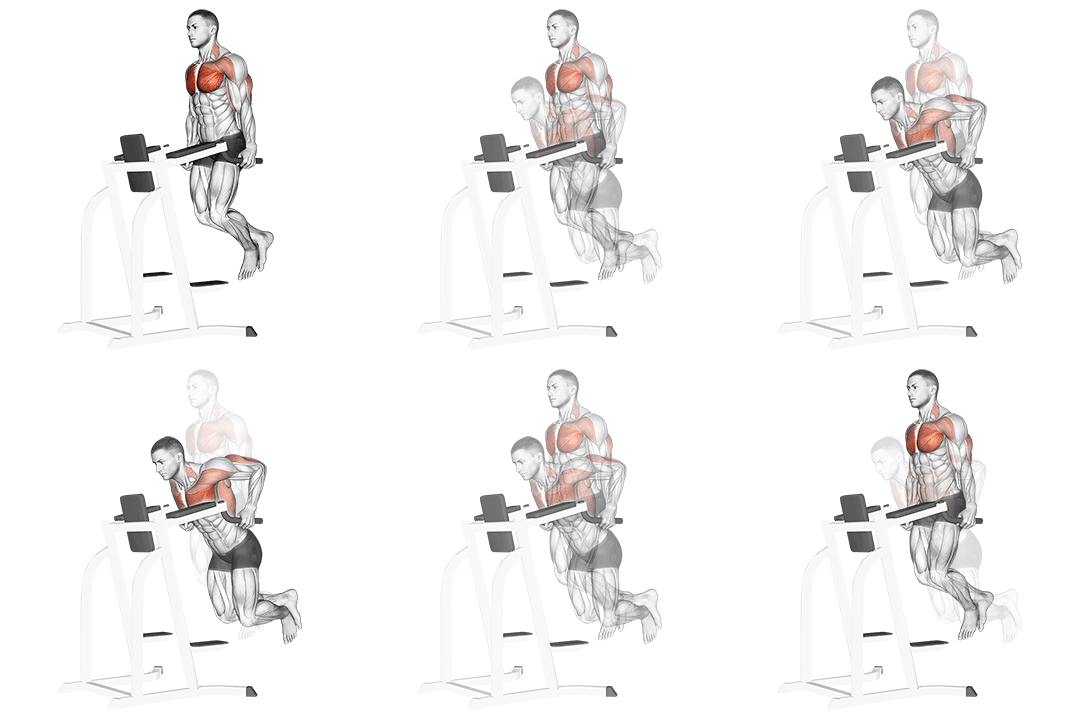
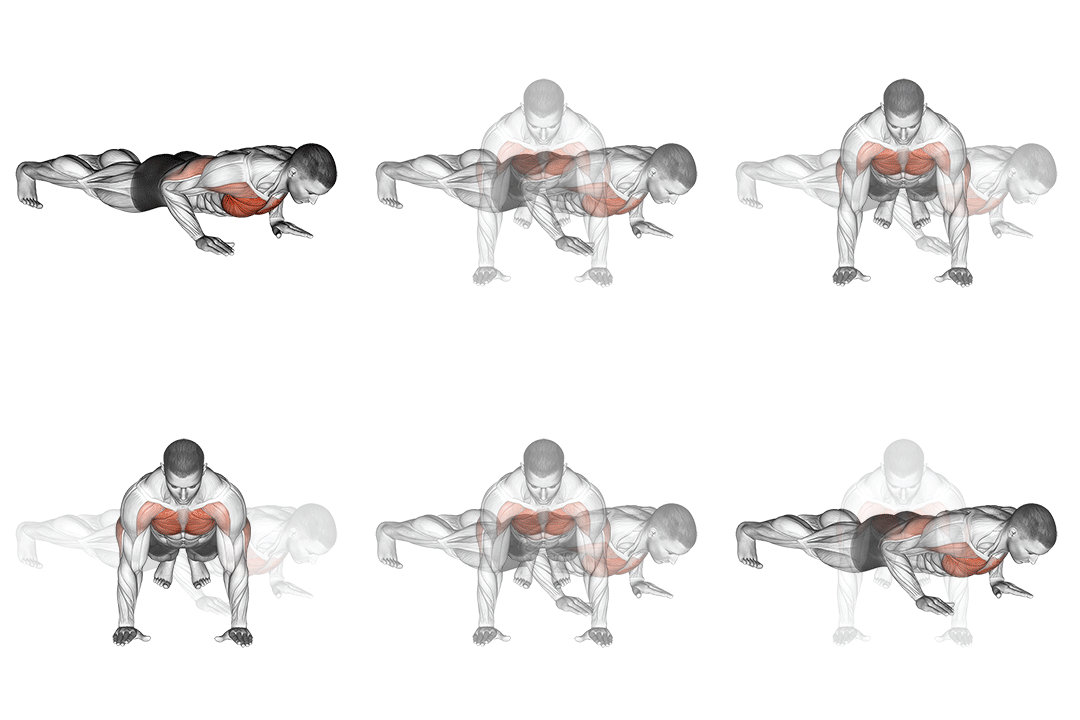
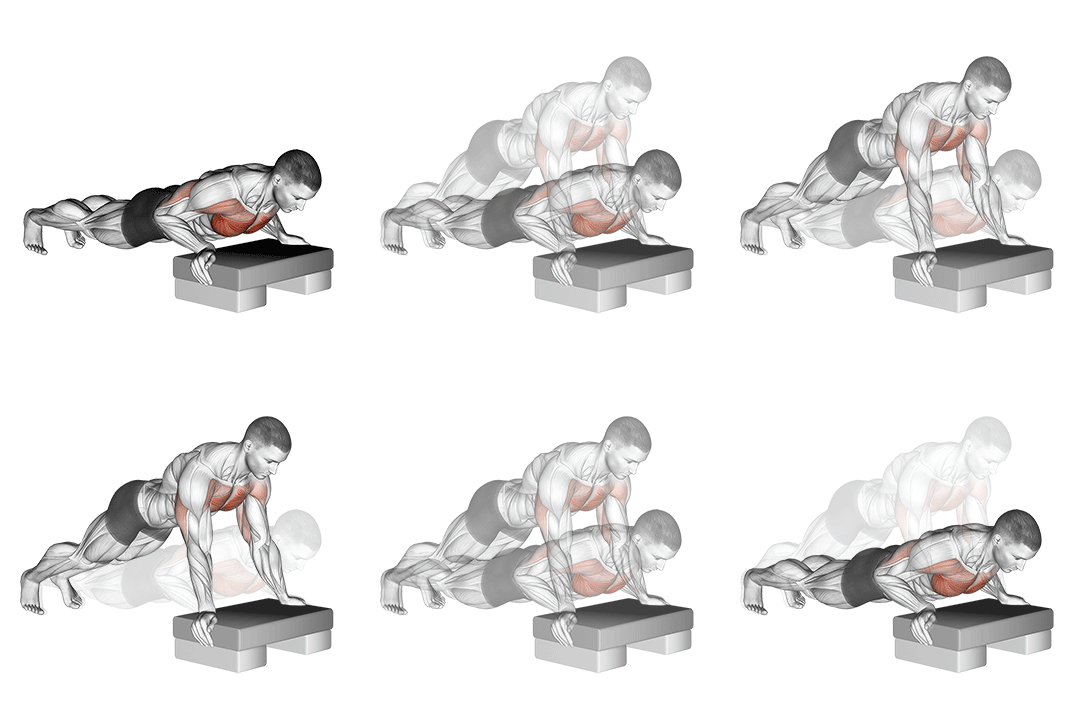
The push and pull bodyweight exercise is an unusual hybrid push-up variation where you perform the standard push-up press-down phase, then add a 'pull' phase that mimics pulling the chest toward the ground from the same plank position. Despite the unusual name suggesting it might be a horizontal pull, the description is essentially two consecutive push-up reps with the second emphasizing the descent — a slow lowering phase as if pulling the body downward, followed by a press back up. This variant fills a teaching role more than a strength-building one. Trainees who struggle to engage the chest properly during push-ups often benefit from this drill because the deliberate 'pull' phase forces conscious eccentric control of the descent. The goal isn't volume or strength gain in the traditional sense — it's teaching the body what controlled chest engagement feels like during both pressing and lowering. After 3-4 weeks of practicing this variant, most trainees notice better chest activation in their standard push-ups and improved control in their lowering phase. For general fitness, this is an optional accessory rather than a primary variant. The added complexity offers value primarily during teaching phases or for trainees specifically working on chest engagement and eccentric control. For trainees with existing good push-up form, standard push-ups and progressive variations cover the strength and mobility needs more directly. Where this exercise earns its place is in the gap between knee push-ups and full push-ups, or as a learning tool for trainees building mind-muscle connection.
Why train the Push And Pull Bodyweight?
- Teaches conscious eccentric control during the lowering phase of a push-up.
- Builds the chest mind-muscle connection that improves engagement in all subsequent pressing work.
- Provides a structured progression drill for trainees transitioning from knee to full push-ups.
- Doubles the effective rep volume per push-up by adding an emphasized descent phase.
- Serves as a useful warm-up drill before heavy chest sessions, priming the chest neurologically.
- Improves chest activation patterns that carry over to other pressing exercises like dips and bench press.
How to do the Push And Pull Bodyweight: step by step
- 1Start in a push-up position with your hands slightly wider than shoulder-width apart and your body in a straight line.
- 2Lower your chest towards the ground by bending your elbows, keeping your body straight.
- 3Push through your palms to extend your arms and return to the starting position.
- 4From the push-up position, pull your chest towards the ground by bending your elbows, keeping your body straight.
- 5Push through your palms to extend your arms and return to the starting position.
- 6Repeat for the desired number of repetitions.
Muscles worked
Primary
pectorals
Secondary
triceps, deltoids
Common mistakes to avoid
Rushing the eccentric phase
The whole point of the 'pull' phase is the slow, controlled descent. Rushing through it eliminates the training benefit entirely. The lowering should take 3-4 seconds with deliberate engagement of the chest muscles throughout. Fast eccentrics defeat the purpose.
Hips sagging during fatigue
As the chest fatigues across the doubled rep volume, the body wants to break alignment. The hips drop, the lower back arches, and the pattern collapses. Brace the abs and glutes throughout — the body should travel as one unit, not in segments.
Letting elbows flare wide
The elbows should track at roughly 45-60 degrees from the torso, even during the slow descent phase. Wide elbows shift load away from the chest and into the shoulder capsule. Imagine pulling the elbows toward the ribs throughout.
Treating it as primary push-up work
If you can do clean full push-ups, this exercise offers limited additional benefit. Use it as an accessory drill for chest engagement, not as a replacement for standard push-up volume. Trainees who lead their program with this variant slow their overall pressing development.
Not actually engaging the chest during the pull phase
The 'pull' is a mental cue, not a real horizontal pulling motion. If you don't actively contract the chest as the body lowers, you're just doing a slow push-up. Visualize squeezing the chest fibers together as the body descends — the active engagement is what creates the training stimulus.
Easier and harder variations
Easier
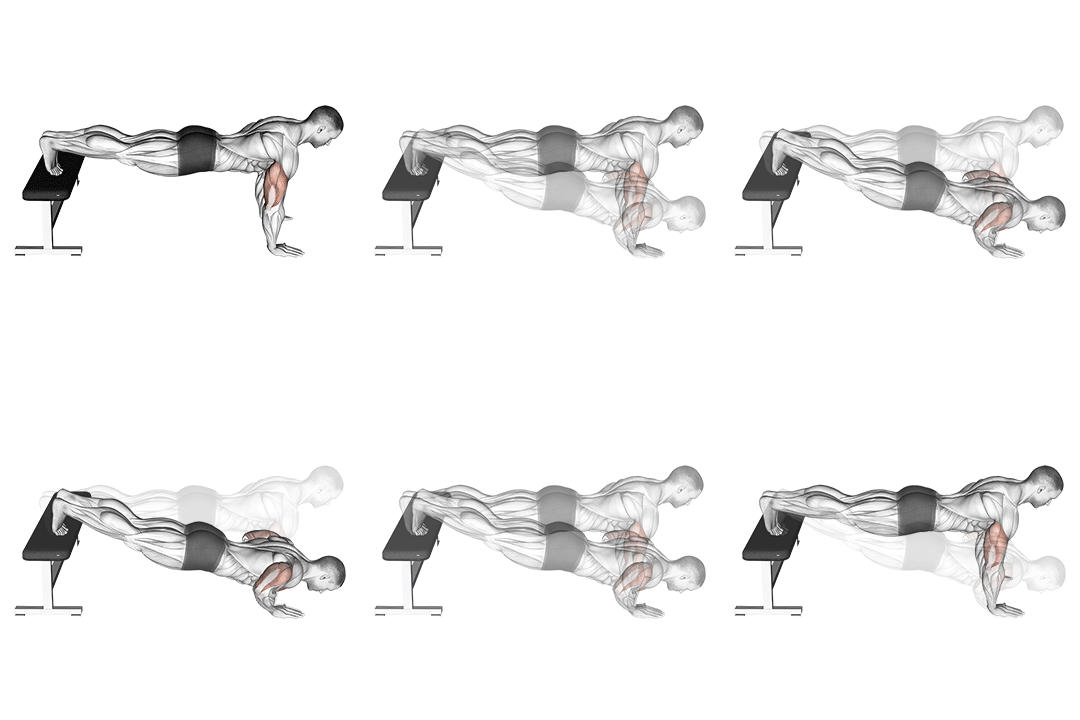
Drop to your knees if a full plank position is too demanding. The kneeling version reduces load enough to focus on the controlled descent without form breakdown. Or perform on an incline (hands on a bench) to reduce overall load while maintaining the deliberate eccentric pattern.
Harder
Add a 2-second pause at the bottom of each pull phase to increase time under tension. Or progress to slow-tempo full push-ups (3 seconds down, 1-second pause at the bottom, 1 second up) — same goal of eccentric control, cleaner execution, more strength building potential.
Alternative exercises
Slow tempo push-up
Cleaner version of eccentric-controlled push-up training. 3 seconds down, 1-second pause at bottom, 1 second up. Same goal as push-and-pull but better execution.
Negative push-up
Pure eccentric training — slow descent to the floor, then reset to the top from the knees. Excellent for building eccentric strength specifically.
Standard push-up
If you can do full push-ups, those build more strength and muscle than push-and-pull variations. Use this for primary chest work.
How to program the Push And Pull Bodyweight into your training
The push and pull exercise fits as an accessory or learning drill, not as a primary push-up variant. As a learning drill: 3 sets of 6-8 reps performed slowly (with deliberate eccentric focus), 2-3 times per week for 3-4 weeks. The goal is mind-muscle connection development. Combine with chest visualization during standard push-ups for compound benefit. As an accessory: 2-3 sets of 8-12 reps after primary push-up volume. The pre-fatigued chest is more receptive to deliberate eccentric work, accumulating useful volume without the joint stress of additional standard push-ups. In a transitional program (knee push-up to full push-up bridge): 3 sets of 6-10 reps, 2-3 times per week, alongside other progression work like negative push-ups and elevated push-ups. The combined approach builds strength faster than any single variation alone. For those new to push-ups: build the foundation first. Don't lead with this exercise — start with elevated push-ups and knee push-ups for basic pattern building, then introduce push-and-pull or similar drills as transition tools. Frequency: 2-3 times per week is appropriate when used as a teaching drill or accessory. The reduced loading per rep (compared to plyometric or weighted variations) makes more frequent training tolerable. Don't program this as a replacement for standard push-ups when those are accessible. Real pressing work builds far more strength than learning drills.
Recovery and frequency
The push and pull variation has lower recovery cost than plyometric push-ups but higher than knee push-ups. 24-48 hours between sessions is sufficient for most trainees. The main warning signs are anterior shoulder discomfort and lower back soreness from sagging during long sets. Anterior shoulder issues warrant reducing volume and reviewing form (especially elbow tracking). Lower back soreness indicates poor plank control and warrants slowing down to maintain alignment throughout sets. Standard chest, shoulder, and triceps soreness fades within 48 hours and indicates appropriate stimulus. The exercise rarely produces overuse issues at moderate volume; its lower intensity and emphasis on form make it relatively safe.
Frequently asked questions
How many sets and reps of push and pull should I do?
2-3 sets of 6-12 reps, depending on context (learning drill at 6-8, accessory at 8-12). Total weekly volume of 30-60 reps is appropriate for most contexts.
How often should I do this exercise?
2-3 times per week as a learning drill or accessory. The reduced load makes more frequent training tolerable, but more isn't necessarily better when the goal is mind-muscle connection.
Is this a real chest builder?
Less effectively than standard push-ups. It's primarily a teaching drill for chest engagement and eccentric control. For pure chest building, standard push-ups and progressive variations are more effective.
Should I use this instead of standard push-ups?
Only if you can't yet do clean standard push-ups, or if you're using it as a deliberate teaching drill. If you can do clean full push-ups, those build strength faster.
Push and pull vs slow tempo push-up: which is better?
Slow tempo push-ups (3 seconds down, 1 second pause, 1 second up) achieve the same goal more cleanly. The push-and-pull is essentially a less-elegant version of the same idea. Most trainees will get more from slow tempo push-ups.
Why don't I feel a big difference from this exercise?
Likely because you're rushing the eccentric phase. The slow controlled descent is what creates the unique stimulus. If reps take less than 3 seconds for the lowering portion, you're doing standard push-ups with extra steps.
Useful tools for this exercise
Build a workout with the Push And Pull Bodyweight
Puna gives you guided bodyweight workouts you can do anywhere — no equipment, no gym, just structured progressions that build real strength.