Overhead Triceps Stretch
beginner stretching exercise · body weight · targets triceps
- Body part
- upper arms
- Primary target
- triceps
- Equipment
- body weight
- Difficulty
- beginner
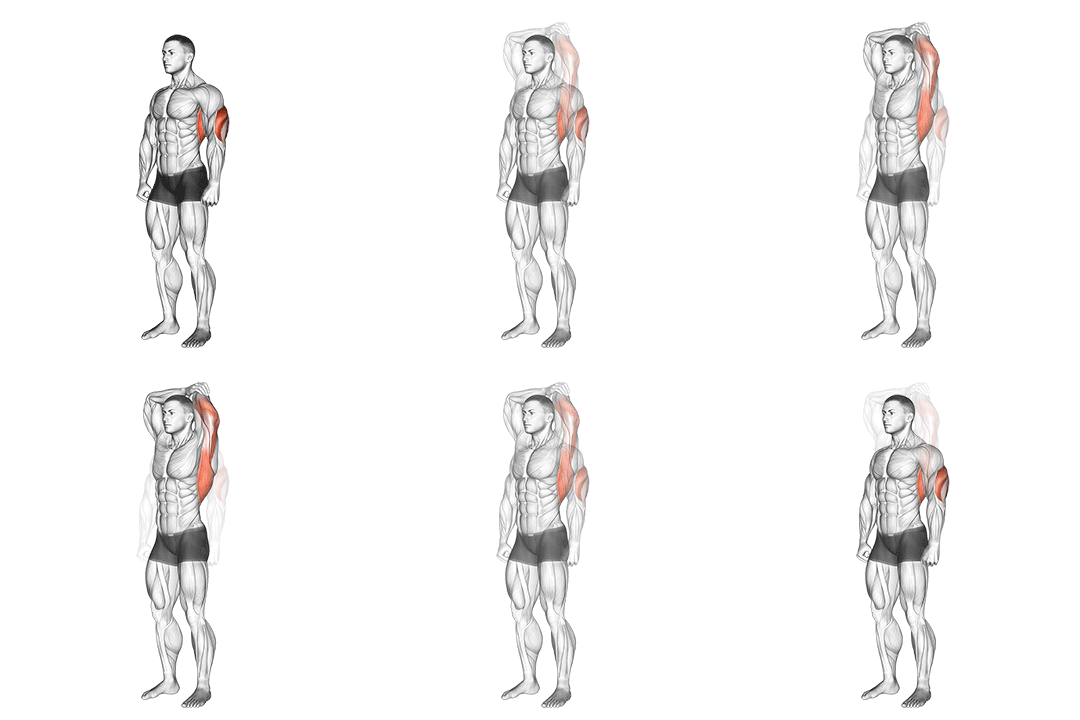
The overhead triceps stretch — performed by reaching one arm overhead, bending at the elbow until the hand drops behind the head, then using the opposite hand to gently pull the elbow toward the opposite ear — is the standard mobility drill for the long head of the triceps. Of the three triceps heads, the long head is the only one that crosses both the elbow and the shoulder, which means it can only be fully stretched when the arm is overhead and the elbow is flexed. This drill puts it in exactly that position. Most trainees who lift seriously develop tight triceps without realizing it, especially those who do high volumes of pressing work. The long head shortens with chronic loaded shoulder extension (every push-up, every press-down, every dip) and rarely gets dedicated lengthening work. The cost shows up as restricted overhead reach, occasional triceps cramping during overhead work, and a subtle tightness behind the upper arm that's easy to dismiss until the stretch reveals how much there was. The overhead triceps stretch costs nothing, takes 60 seconds, and addresses one of the most overlooked tightness patterns in trained adults. Done daily — especially after upper-body sessions or in the evening — it restores resting length to the long head and improves overhead range. Combined with shoulder mobility work and lat stretches, it's a key piece of the overhead reach puzzle that most lifters chase for years without addressing.
Why train the Overhead Triceps Stretch?
- Lengthens the long head of the triceps — the only triceps head that crosses both the elbow and shoulder.
- Improves overhead reach by removing one of the common restrictions to fully vertical arms.
- Reduces post-workout tightness in the back of the upper arm after pressing or pushing sessions.
- Helps prevent triceps cramping during overhead work like handstands, presses, or yoga inversions.
- Pairs naturally with lat stretches and thoracic mobility for a complete overhead-mobility routine.
- Costs nothing and can be done anywhere — at a desk, post-workout, or while watching television.
How to do the Overhead Triceps Stretch: step by step
- 1Stand or sit upright with your feet shoulder-width apart.
- 2Extend one arm overhead, bending at the elbow so that your hand reaches towards the opposite shoulder blade.
- 3With your other hand, gently pull the elbow of the extended arm towards the opposite side of your head, feeling a stretch in your triceps.
- 4Hold the stretch for 15-30 seconds, then release.
- 5Repeat on the other side.
Muscles worked
Primary
triceps
Secondary
shoulders
Common mistakes to avoid
Pulling sideways instead of toward the opposite ear
Pulling the elbow purely sideways stretches the lat and side body but barely touches the triceps. The elbow should travel toward the opposite ear, with the head staying upright. This direction is what isolates the stretch to the long head of the triceps.
Letting the head and torso lean to one side
The body wants to lean toward the working arm to reduce the stretch. Keep the torso vertical, the chest open, and the head facing forward. If you have to lean to reach the position, your shoulder mobility is the limiting factor — work on that separately.
Pulling forcefully with the assisting hand
Aggressive pulling can compress the shoulder joint or strain the rotator cuff. Apply only gentle pressure — the assist should add 10-20% to the stretch, not force the elbow into a deeper position. Time and breath release the tissue, not force.
Bouncing or pulsing the assist
Static stretching means staying still. Bouncing triggers the muscle's protective stretch reflex and shortens it, which is the opposite of what you want. Hold the position without movement, breathe slowly, and let the tissue gradually release.
Holding for 5-10 seconds and moving on
The triceps long head responds to longer holds. A short stretch barely cues the tissue to soften. Hold for 30-45 seconds — you'll feel the stretch deepen on its own about halfway through the hold.
Easier and harder variations
Easier
Skip the assist entirely and just bend the elbow overhead, letting the hand fall behind your head naturally. The unassisted version is mild but accessible to beginners or anyone with shoulder restrictions. It maintains baseline length without aggressively pushing range.
Harder
Add a slight lateral side bend toward the opposite side after positioning the elbow — this engages the lat alongside the triceps. For maximum stretch, lie face-up on a foam roller positioned along the spine, let the working elbow bend overhead, and let gravity assist. The supported supine position releases shoulder tension and amplifies the triceps stretch.
Alternative exercises
Wall triceps stretch
Performed with the working hand placed on a wall behind you — the wall provides leverage and isolates the stretch more deeply. Useful when standard hand-on-elbow assistance feels insufficient.
Lat stretch (cross-body or kneeling)
Lats and triceps work together overhead. Tight lats often masquerade as tight triceps. Pair both stretches in the same routine.
Standing thoracic extension
Different anatomy — addresses upper-back stiffness rather than triceps tightness. But thoracic stiffness is often the hidden cause of overhead range restrictions, so the two complement each other.
How to program the Overhead Triceps Stretch into your training
The overhead triceps stretch is most effective as a brief daily practice rather than a workout-time stretch. The long head responds to consistent low-volume exposure better than to occasional long sessions. Daily routine: 2 sets of 30-45 seconds per arm, performed once or twice per day. Tying the stretch to an existing trigger (post-workout, post-shower, before bed) makes it automatic. Two minutes total per day is enough to maintain length for most trainees. Post-workout protocol: 2 sets of 45 seconds per arm immediately after pressing, push-up, or dip work. The combination of warm tissue and post-exercise activation makes this the highest-value timing window. Most adaptation happens here. Pre-overhead-work warm-up: 1 set of 30 seconds per arm before handstand work, overhead presses, or any vertical pressing. The stretch primes the long head to allow full overhead range without cramping during the work. For lifters with tight triceps and limited overhead reach: 4-5 sessions per day at 30 seconds per arm, paired with lat stretches and thoracic extension work. Visible improvement in overhead range typically appears within 4-6 weeks of daily practice combined with the complementary work. Don't program this as part of a 'mobility day' isolated from the rest of training — daily small doses far outperform infrequent long sessions for tissue length.
Recovery and frequency
The overhead triceps stretch has zero recovery cost. Daily practice is safe and even ideal — the long head adapts to frequent low-volume input far better than to occasional intense sessions. The main warning signs are sharp pain in the shoulder joint (especially the front), pinching sensations during the stretch, or pain rather than stretch sensation in the back of the upper arm. Any of these warrant cessation and a review of technique. Common causes include pulling too forcefully, leaning the torso, or trying to push range that the shoulder mobility doesn't support yet. For ordinary triceps tightness with only stretch sensation, the drill is safe, recovery is immediate, and consistency over 4-6 weeks produces noticeable improvements in overhead range and triceps comfort.
Frequently asked questions
How long should I hold the overhead triceps stretch?
30-45 seconds per arm, ideally 2 sets per side. Holds shorter than 20 seconds don't trigger meaningful release in the long head. Longer than 60 seconds offers diminishing returns.
How often should I stretch my triceps?
Daily is ideal, especially after pressing or push-up sessions. The long head shortens with high-volume training and benefits from consistent daily lengthening to maintain full overhead reach.
Will this stretch help my overhead pressing?
Often yes, when triceps tightness is the limiting factor. Many trainees can't fully lock out overhead because the long head is too short. Daily stretching combined with lat work usually opens up overhead range within 4-6 weeks.
Why does my shoulder hurt during this stretch?
Usually a sign that you're forcing range your shoulder mobility doesn't support. Reduce the assist pressure to almost nothing, and skip the stretch entirely on days when the shoulder feels off. If discomfort persists with gentle technique, see a physiotherapist before continuing.
How is this different from the basic triceps stretch?
It's more targeted — the assisted pull toward the opposite ear specifically loads the long head of the triceps. The basic version (just bending the elbow overhead without assistance) is gentler and accessible to beginners but reaches less depth into the muscle.
Can I do this stretch with a recent shoulder injury?
Depends on the injury. Acute injuries warrant rest and physical therapy guidance. Chronic minor tightness usually responds well to gentle daily stretching. When in doubt, default to the unassisted version, stay well within painless range, and consult a physiotherapist if symptoms persist.
Useful tools for this exercise
Build a workout with the Overhead Triceps Stretch
Puna gives you guided bodyweight workouts you can do anywhere — no equipment, no gym, just structured progressions that build real strength.