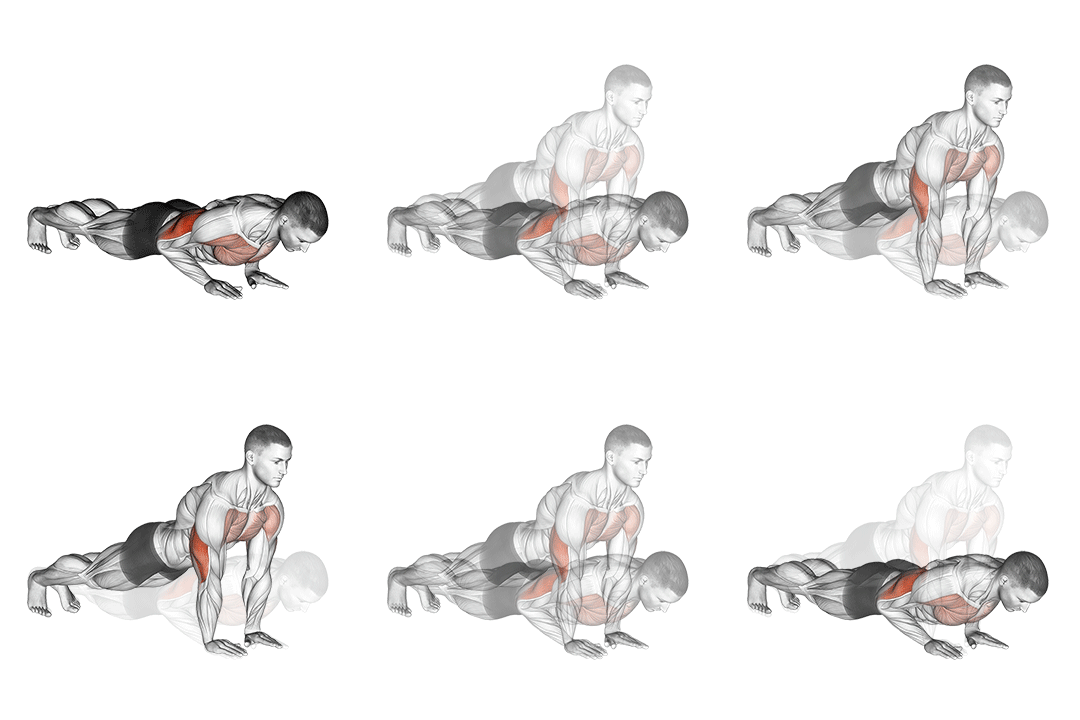
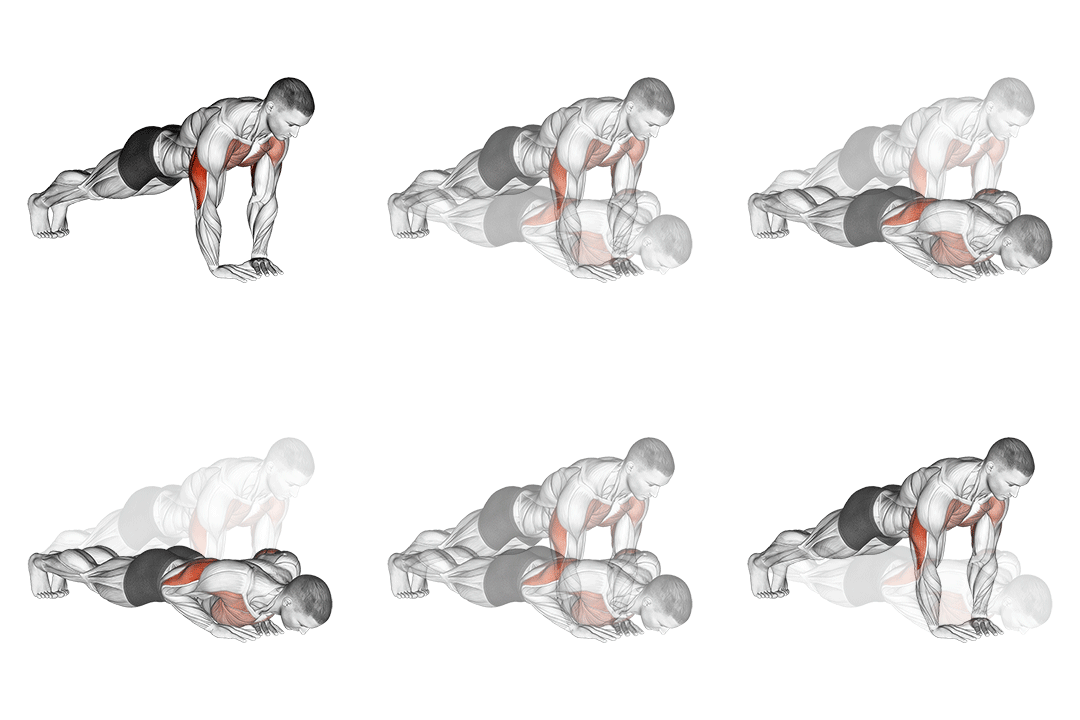
One Arm Dip
advanced strength exercise · body weight · targets triceps
- Body part
- upper arms
- Primary target
- triceps
- Equipment
- body weight
- Difficulty
- advanced
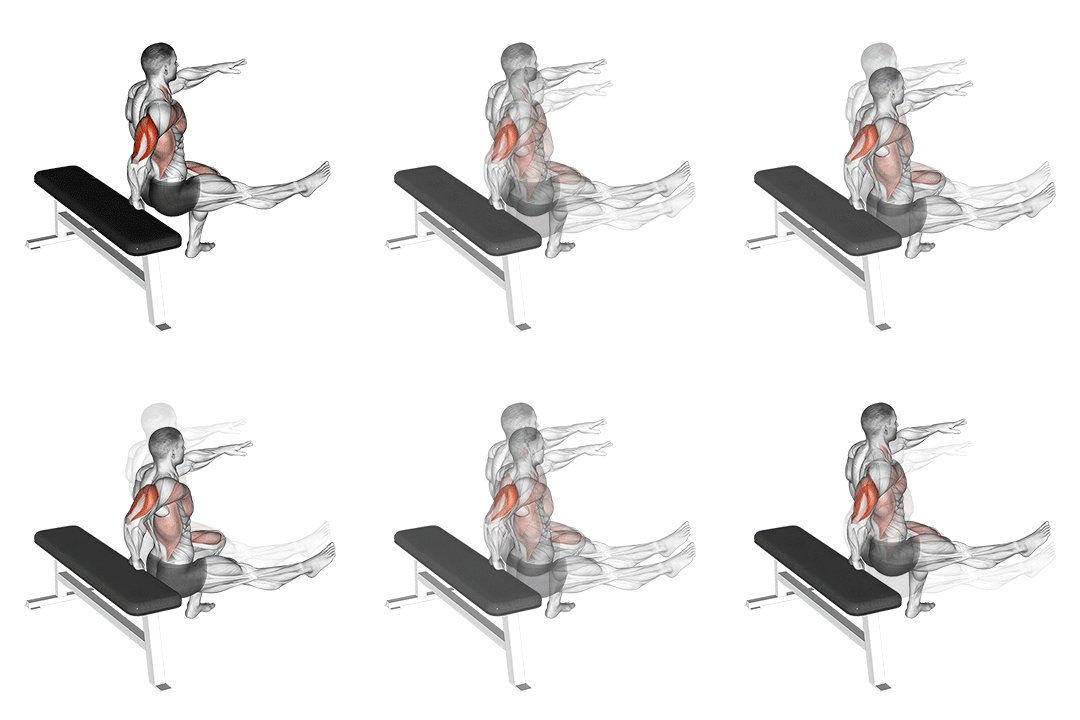
The one arm dip is to dips what the one-arm push-up is to push-ups — the unilateral apex of bodyweight pressing strength. Performed on parallel bars or a sturdy edge, you support your full body weight on a single arm while bending the elbow to lower and press back up. The movement requires not just exceptional tricep and chest strength, but also the shoulder stability and core control to keep the body from twisting through the rep. It's an advanced calisthenics goal that typically takes 1-2 years of dedicated dip training to achieve from a base of 15+ strict parallel-bar dips. The progression isn't a straight line: archer dips (wide hand position, one arm doing more work), then assisted one-arm dips (off-hand on a band or low surface), then negative-only one-arm dips, then partial range, then a full clean rep. Trying to skip steps usually ends in shoulder strain or the embarrassing failure of dropping out of the dip mid-rep. What makes this exercise special is the combined demand it places on every link of the upper body chain. Even compared to weighted dips or one-arm push-ups, the one-arm dip is unique because of how exposed the body is — there's no partner arm to bail you out, no floor to catch you, just your own grip strength and tricep power keeping you suspended.
Why train the One Arm Dip?
- Builds the highest level of bodyweight tricep and pressing strength achievable without equipment beyond a bar.
- Develops grip strength to a degree most pressing exercises don't — the hand has to support the full body.
- Trains anti-rotation core strength under heavy load, with the trunk fighting twist on every rep.
- Carries over to weighted dips, bench press, and most pressing movements because of the strength base it builds.
- Provides a clear and difficult long-term progression goal that motivates years of training.
- Makes regular two-arm dips and most push-up variations feel trivial as a side effect.
How to do the One Arm Dip: step by step
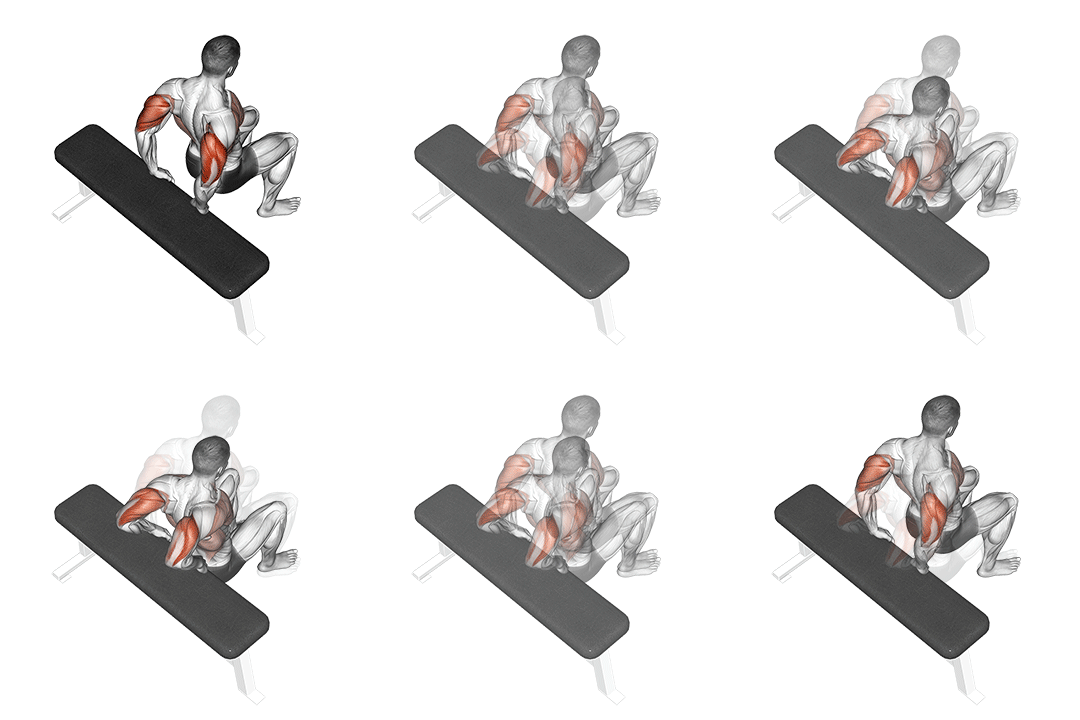
- 1Stand facing away from a bench or chair, with your feet shoulder-width apart.
- 2Place one hand on the bench or chair behind you, fingers pointing towards your body.
- 3Extend your legs out in front of you, keeping your heels on the ground.
- 4Bend your elbows and lower your body towards the ground, keeping your back close to the bench or chair.
- 5Pause for a moment at the bottom, then push through your palms to straighten your arms and return to the starting position.
- 6Repeat for the desired number of repetitions, then switch sides and repeat with the other arm.
Muscles worked
Primary
triceps
Secondary
chest, shoulders
Common mistakes to avoid
Twisting the trunk to fake the rep
When the working arm can't handle the load, the body rotates so the chest and hips face the bar at an angle, which reduces the load. Keep the trunk square — if you have to twist, you're not ready for the full movement and should regress.
Letting the working elbow flare wide
Wide elbows shift the load away from the triceps and into the front of the shoulder — the most vulnerable position for the joint at this load level. Keep the elbow tracking back, close to the ribs, throughout the rep.
Skipping the prerequisite work
Most one-arm dip failures come from people who couldn't yet do clean archer dips or assisted one-arm dips. Don't attempt the full movement until you have 5-8 strict archer dips per side. Rushing the progression is the top cause of shoulder injury in calisthenics.
Going too deep on the descent
At full body weight on a single arm, going past parallel concentrates extreme load on the anterior shoulder capsule. Stop when the upper arm is roughly parallel to the floor — going deeper isn't more impressive, it's just dangerous.
Holding the off-arm in a way that helps
If the off-arm is hooked behind the working arm or pulling on something, you're doing an assisted dip, not a one-arm dip. Hold the off-arm out to the side or behind the back, completely uninvolved.
Easier and harder variations
Easier
Archer dips (wide hand stance with one arm doing 80%+ of the work per rep) are the standard regression. Then assisted one-arm dips with the off-hand on a low surface or a resistance band. Then negative-only one-arm dips (slow descent, push back up with both arms).
Harder
Reduce the depth of the dip slightly, then progressively go deeper as strength improves. Add weight (a vest) for true progressive overload. Or progress to one-arm muscle-ups for the next major calisthenics milestone.
Alternative exercises
Archer dip
The most direct stepping stone. Wide hand stance with one arm doing the bulk of the work. Build to 5-8 strict archers per side before attempting one-arm dips.
Weighted dip
Add a vest or plate for progressive overload on standard parallel-bar dips. Builds raw pressing strength that supports unilateral progression.
Korean dip
Performed on a straight bar instead of parallel bars, with hands behind the body. Different angle that builds shoulder stability needed for one-arm dip progression.
How to program the One Arm Dip into your training
One-arm dip training is low-rep, high-effort, and demands long recovery. Once you've achieved your first rep, programming should respect that. Early phase (first 1-3 reps possible): 4-5 sets of 1-2 reps per side, twice per week, with 2-3 minutes rest between sets. Don't chase reps — chase quality. Pair with archer dips or assisted one-arm dips for volume work in the same session. Building phase (3-6 reps possible): 4-5 sets of 2-4 reps per side, twice per week. Once you hit 3 sets of 5 strict reps per side, start adding weight (a light vest) instead of more reps. Loaded one-arm dips produce strength gains faster than higher reps. Maintenance phase (6+ clean reps): Reduce to once per week as a focused session, with archer dips as the secondary work. The strength is hard-won; you don't need to train it twice a week to keep it. Always pair one-arm dip training with horizontal pulling (rows, pull-ups, especially L-sit variations) to keep the shoulders balanced. Unilateral pressing without enough pulling work creates significant postural and rotator cuff issues over time. For the progression toward your first rep, run 6-10 week cycles alternating between strength-focused training (heavy archer dips, 4 sets of 4-6 reps) and skill-focused training (negative one-arms, low reps, focus on form and trunk stability).
Recovery and frequency
One-arm dips are the most demanding bodyweight pressing exercise on the shoulders, triceps, and especially the anterior shoulder capsule. 72 hours between dedicated sessions is the absolute minimum — most people benefit from 96 hours. The wrist, elbow, and shoulder of the working arm all take significant load. Spend 2-3 minutes on shoulder mobility (sleeper stretch, cross-body stretch) before every session, and don't ignore any sharp shoulder pain — back off immediately if you feel it. Foam roll the chest, lats, and triceps weekly to maintain the soft tissue mobility this kind of training compresses. Sleep is the biggest recovery lever; 8+ hours is non-negotiable in heavy one-arm dip training phases.
Frequently asked questions
How many sets and reps of one-arm dips should I do?
When you first achieve the movement, expect 4-5 sets of 1-2 reps per side. Build to 5-6 reps per side over 6-12 months before adding weight.
How often should I train the one-arm dip?
1-2 times per week max, with 72-96 hours between sessions. The anterior shoulder takes longer to recover from this load than from any other bodyweight pressing movement.
How long does it take to learn a one-arm dip?
From a base of 15+ strict parallel-bar dips, expect 12-24 months of progression work (archer dips, assisted one-arms, negatives). From scratch, plan on 2-3+ years.
Should I learn the archer dip first?
Yes — archer dips are the essential prerequisite. Build to 5-8 strict archer dips per side before serious one-arm dip training. Skipping this step is the most common cause of shoulder injury in trainees attempting one-arm dips.
Are one-arm dips bad for the shoulders?
Done with proper progression and adequate recovery, no — they build shoulder stability. Done by attempting the full movement before prerequisites are in place, yes — anterior shoulder strains and rotator cuff issues are common in rushed trainees.
Will body weight affect my ability to do one-arm dips?
Significantly. The exercise is body-weight-relative, so heavier trainees have to press more absolute load on a single arm. Lighter, leaner trainees usually achieve their first one-arm dip faster, all else equal.
Useful tools for this exercise
Build a workout with the One Arm Dip
Puna gives you guided bodyweight workouts you can do anywhere — no equipment, no gym, just structured progressions that build real strength.