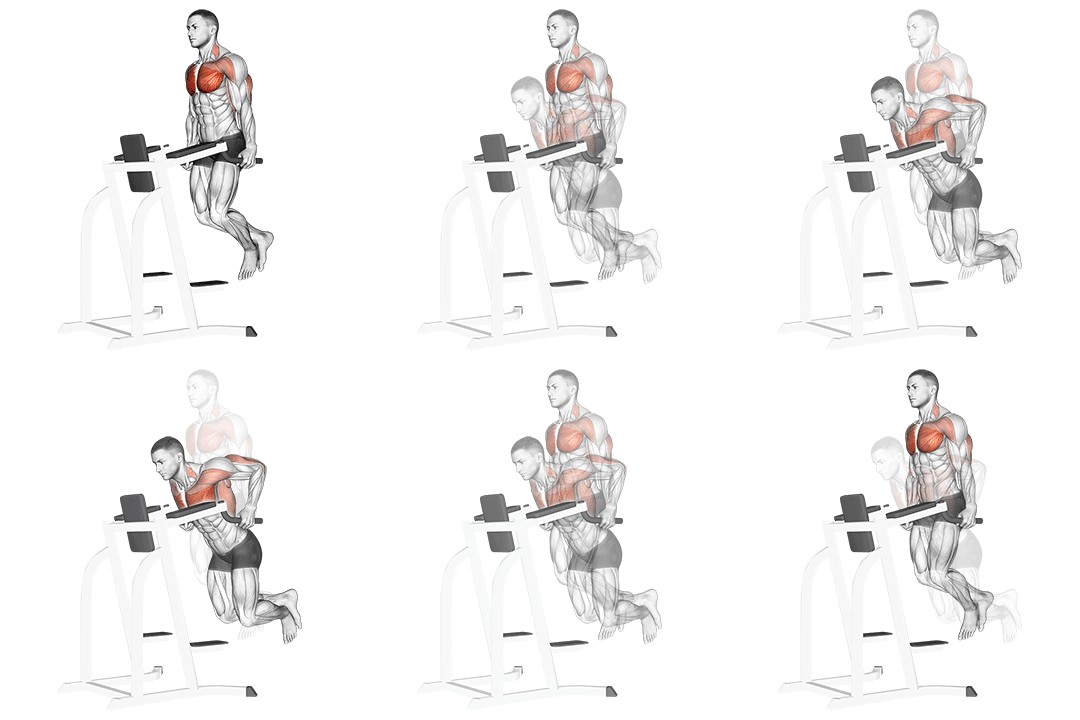
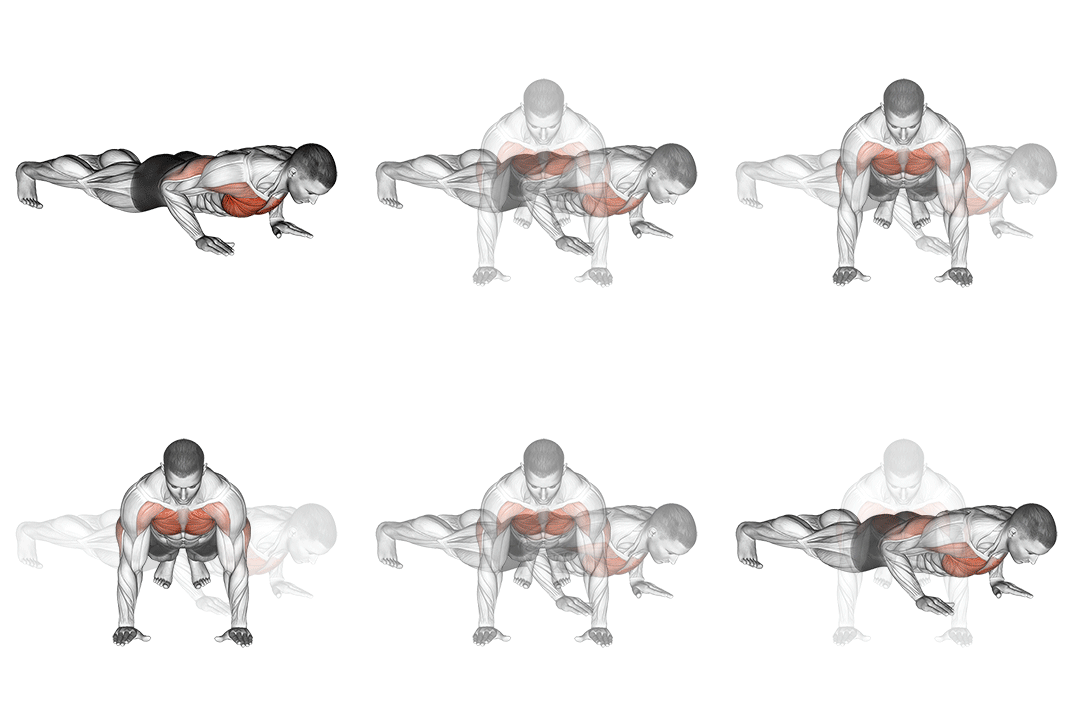
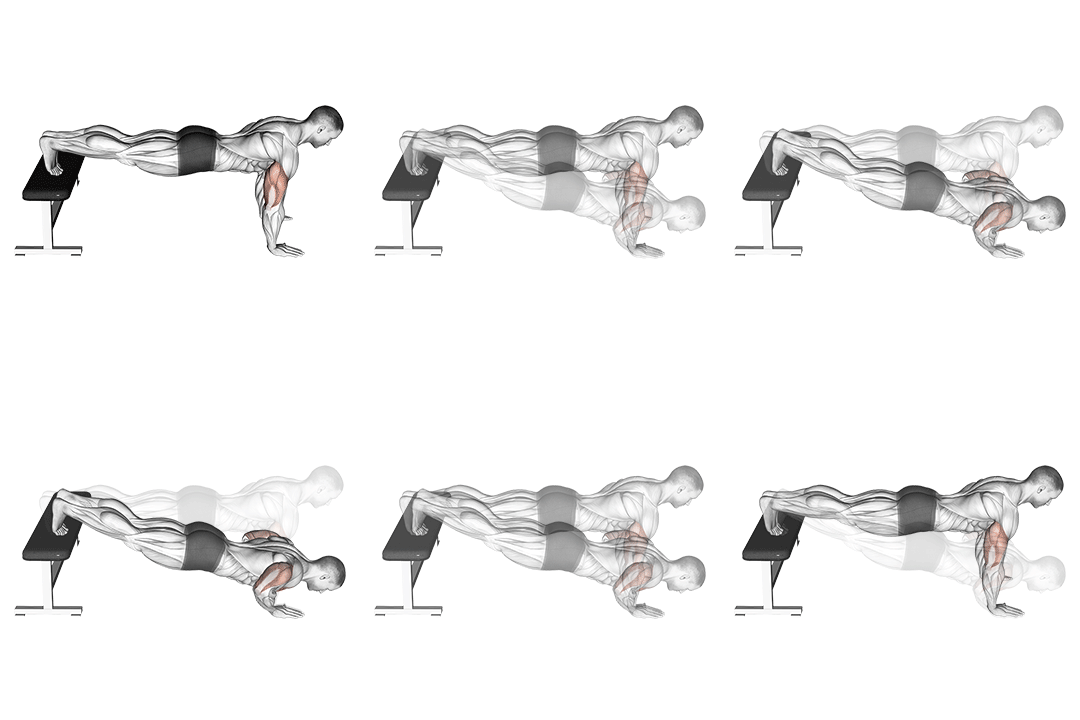
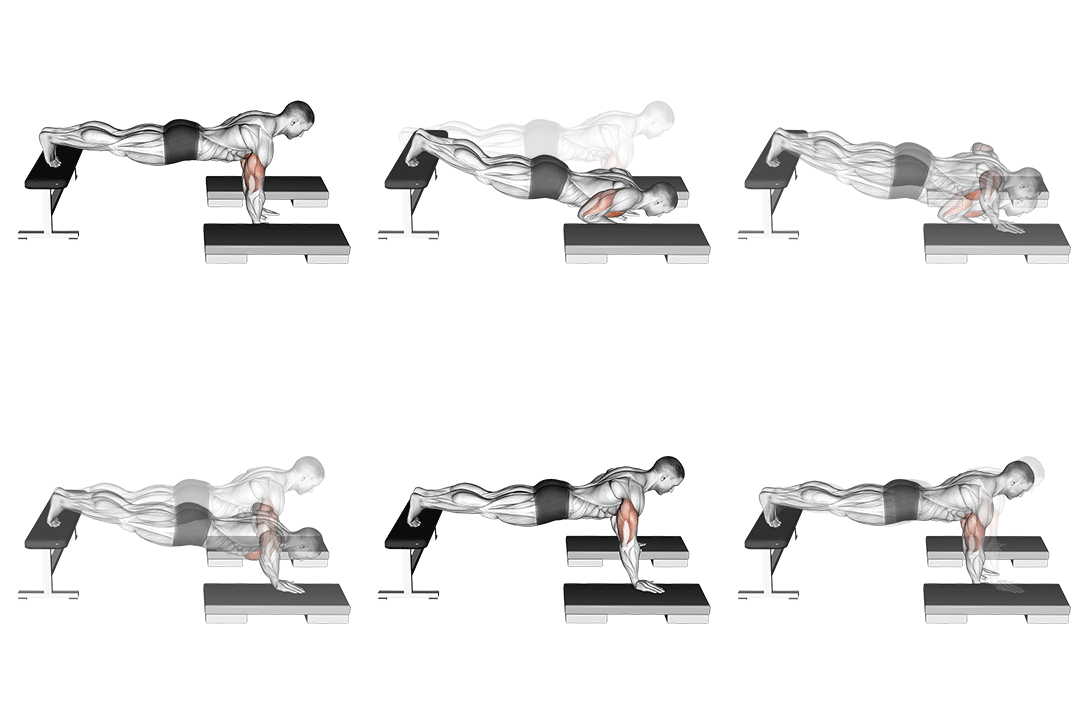
Modified Hindu Push-up (male)
intermediate strength exercise · body weight · targets pectorals
- Body part
- chest
- Primary target
- pectorals
- Equipment
- body weight
- Difficulty
- intermediate
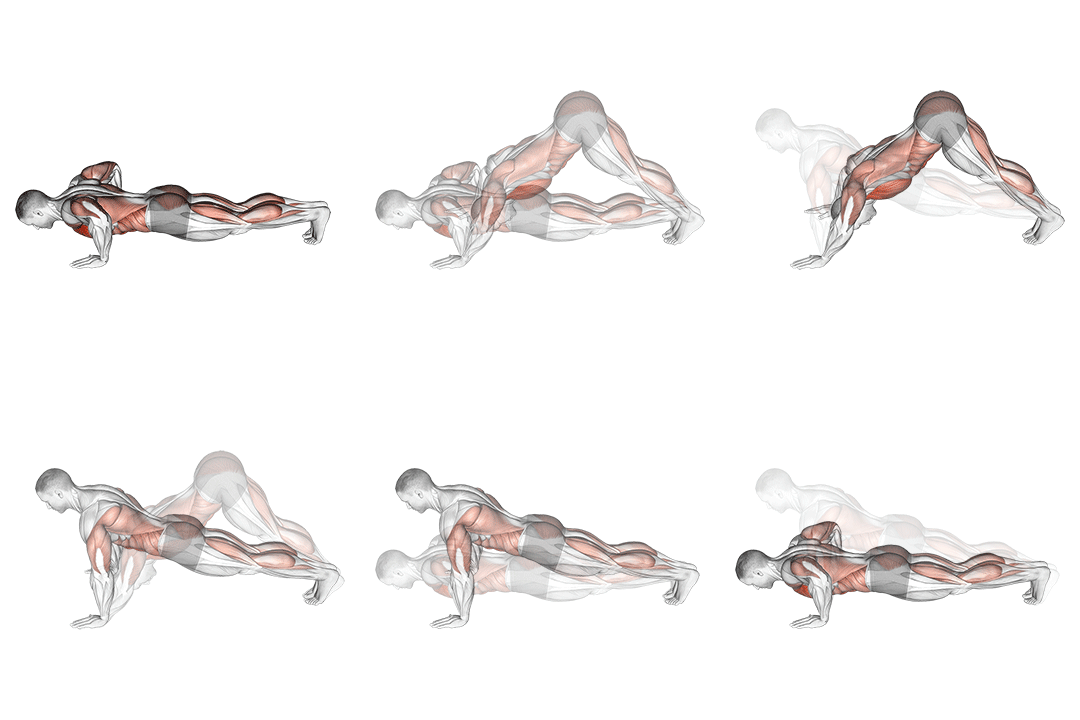
The modified Hindu push-up is a flowing dynamic push-up variation that combines mobility, strength, and coordination in a single fluid movement. Starting in a downward dog position (hips piked high, hands and feet on the floor, body forming an inverted V), you swoop the chest down through and forward, ending in an upward-facing dog position (hips low, chest high, arms extended). The movement reverses to return to the starting position. This is one of the most useful mobility-and-strength hybrids in calisthenics. The exercise loads the shoulders, chest, triceps, and core through a wide range of motion that addresses both pressing strength and shoulder mobility simultaneously. Many trainees who add Hindu push-ups to their warm-up notice immediate improvements in overhead reach and reduced shoulder stiffness. It's also one of the more demanding push-up variations technically. The flowing transition from downward dog to upward dog requires shoulder mobility, core control, and pressing strength all coordinated together. Most beginners who can do standard push-ups can manage only 5-8 strict modified Hindu push-ups in their first attempts. The exercise rewards practice — built up over weeks, the movement becomes a smooth flow that combines strength and mobility benefits.
Why train the Modified Hindu Push-up (male)?
- Combines pressing strength with shoulder and back mobility in one movement.
- Improves overhead reach and reduces shoulder stiffness when programmed regularly.
- Trains coordination through a complex movement pattern.
- Useful as a warm-up before pressing or overhead work.
- Carries over to gymnastics, yoga, and movement-based training systems.
- Requires no equipment.
How to do the Modified Hindu Push-up (male): step by step
- 1Start in a push-up position with your hands slightly wider than shoulder-width apart and your feet hip-width apart.
- 2Lower your body towards the ground, bending your elbows and keeping your core engaged.
- 3As you lower your body, shift your weight back and lift your hips up towards the ceiling, creating an inverted V shape with your body.
- 4Continue to lower your body until your chest is just above the ground, then reverse the movement, pushing your hips back down and extending your arms to return to the starting position.
- 5Repeat for the desired number of repetitions.
Muscles worked
Primary
pectorals
Secondary
triceps, shoulders, core
Common mistakes to avoid
Skipping the downward dog position
The exercise starts in a piked downward dog position, not a high plank. If you skip this position and just do a standard push-up with extended start, you've turned it into a different exercise. Start with hips piked high, body forming an inverted V.
Not coming up into upward dog at the end
The end position should be a clear upward dog — hips low, chest forward and up, arms extended. Stopping at a high plank misses the back extension component that makes Hindu push-ups valuable.
Going through the motion too fast
Speed turns Hindu push-ups into a flailing mess. Move slowly through the entire range — 3-5 seconds per phase. Quality of movement matters far more than rep count.
Cutting depth in the swoop phase
The chest should come close to the floor as you transition from downward dog to upward dog. If the chest stays high throughout the swoop, you're skipping the actual press.
Choosing this before mastering standard push-ups
Hindu push-ups assume baseline pressing strength. Build to 12+ standard push-ups before attempting them productively.
Easier and harder variations
Easier
Reduce range — perform from a higher hip position so the chest doesn't go as low. Or do them on knees instead of toes. Or split into phases (downward dog hold, then move forward separately) to learn the movement.
Harder
Add a hold at each position (3-5 seconds in downward dog and upward dog). Add reps within each end position (multiple downward dog presses before moving forward). Or progress to true Hindu push-ups, which add deeper hip extension.
Alternative exercises
Standard push-up
The bilateral baseline. Master before attempting Hindu push-up variations.
Cobra-to-downward-dog flow
Yoga-based version of similar movement without the press component. Useful as a mobility drill.
Pike push-up
Static pressing in the downward dog position. Builds the shoulder strength needed for Hindu push-up training.
How to program the Modified Hindu Push-up (male) into your training
Modified Hindu push-ups work as warm-up, mobility drill, or accessory pressing work. They're particularly valuable as a daily mobility-and-strength practice. As warm-up: 2 sets of 5-8 slow reps before pressing or overhead training. Wakes up the shoulders and pressing pattern. As accessory pressing: 3 sets of 8-12 reps with 60-90 seconds rest. Programmed twice per week alongside standard pressing. For mobility focus: 3-4 sets of 8-10 reps with focus on full range. Daily practice for 4-8 weeks often produces visible mobility improvements. In a complete upper body session: 3 sets of 8 modified Hindu push-ups (warm-up + mobility), 4 sets of 8 standard push-ups (main pressing), 4 sets of 8 inverted rows (balanced pulling), 3 sets of 30-second hollow holds (core). Daily Hindu push-ups in moderate volume (15-20 reps) are fine and useful as part of a morning mobility routine.
Recovery and frequency
Modified Hindu push-ups have moderate recovery cost — 48 hours between dedicated sessions is plenty. As mobility work, daily moderate-volume practice is also fine. Shoulder fatigue is the most common feedback after sessions. Wrist tightness from the dynamic position is also common in early weeks.
Frequently asked questions
How many sets and reps of modified Hindu push-ups should I do?
3 sets of 8-12 reps with 60-90 seconds rest. As warm-up: 2 sets of 5-8 reps.
How often should I train Hindu push-ups?
2-3 times per week as part of a structured program; daily at moderate volume is also fine for mobility benefits.
Modified Hindu vs standard Hindu push-up: what's the difference?
The modified version typically uses less hip extension at the end and a less aggressive transition. The classical Hindu push-up has deeper hip extension and faster flow. Modified is more accessible and commonly practiced today.
Will Hindu push-ups improve my flexibility?
Yes — particularly shoulder and thoracic spine mobility. Most trainees notice improvements within 4-8 weeks of daily practice.
Are Hindu push-ups good for beginners?
Not as a starting exercise. Build basic push-up strength first; add Hindu push-ups as you develop. They require coordination and mobility that beginners usually don't have yet.
Why do my shoulders fatigue so quickly during Hindu push-ups?
The downward dog and upward dog positions both load the shoulders in less common ranges. The fatigue is often from positions your shoulders aren't yet used to. With consistent practice over weeks, the shoulder endurance in these positions improves significantly.
Useful tools for this exercise
Build a workout with the Modified Hindu Push-up (male)
Puna gives you guided bodyweight workouts you can do anywhere — no equipment, no gym, just structured progressions that build real strength.