Korean Dips
advanced strength exercise · body weight · targets pectorals
- Body part
- chest
- Primary target
- pectorals
- Equipment
- body weight
- Difficulty
- advanced
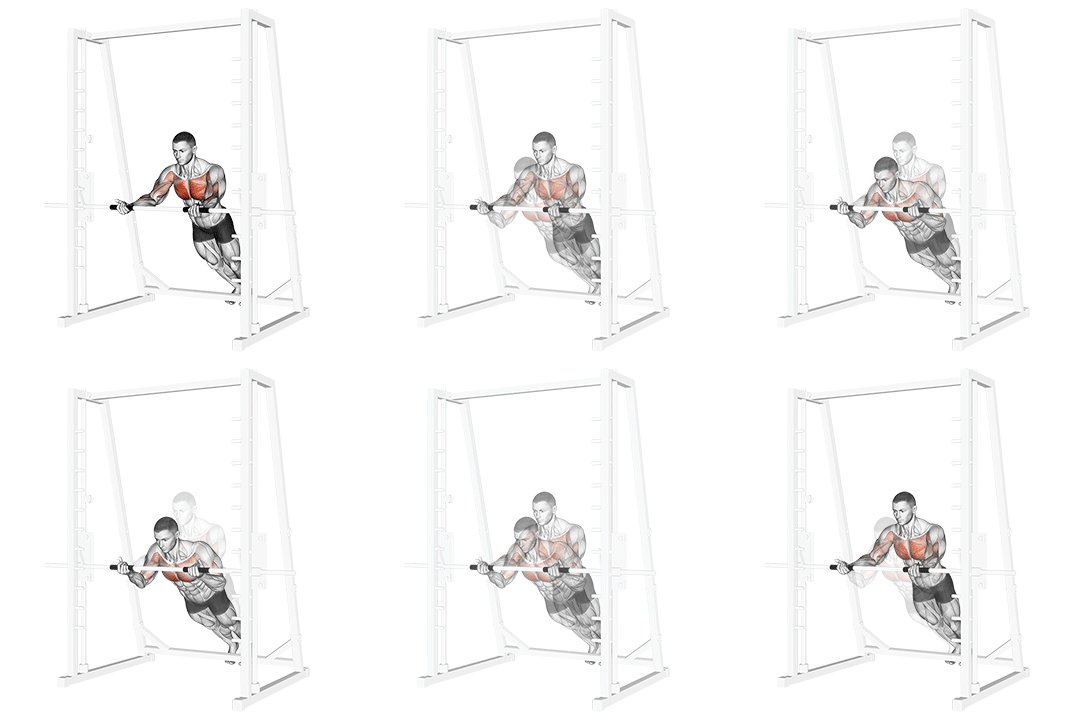
The Korean dip is an advanced bodyweight pressing exercise performed on a straight bar with the hands gripping the bar from behind the body (palms facing back). From a hanging position with arms straight behind the body, you press up by extending the arms, lifting the body until the arms are nearly straight. The unique grip position creates a chest dip variation that emphasizes the lower chest and the front delts in unusual ways. This is one of the most demanding bodyweight pressing exercises in calisthenics, ranking alongside one-arm dips and planche progressions in difficulty. The behind-the-body grip places the shoulders in significant external rotation, requiring exceptional shoulder mobility and stability. Most trainees who can do 15+ standard chest dips can manage only 1-3 Korean dips in their first attempts. Reaching strict Korean dips typically takes 6-18 months of progression from a base of strict chest dips. The path involves significant shoulder mobility work and intermediate progressions like dip support holds in the Korean position. The exercise is best reserved for advanced calisthenics athletes specifically pursuing this challenge — for general fitness, standard chest dips cover most needs without the shoulder demand.
Why train the Korean Dips?
- Builds elite-level pressing strength with unique loading pattern.
- Trains shoulder mobility and stability in extreme positions.
- Carries over to gymnastics movements like back lever and German hangs.
- Provides advanced calisthenics goal for years of training.
- Once mastered, makes standard chest dips feel trivial.
- Requires only a straight bar.
How to do the Korean Dips: step by step
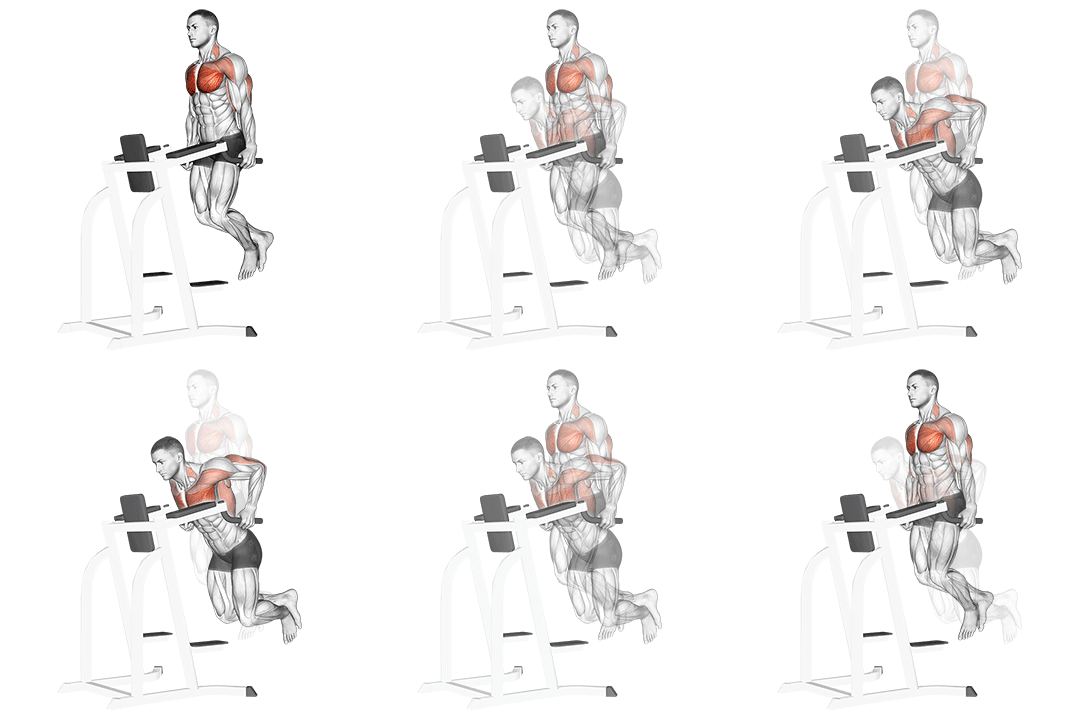
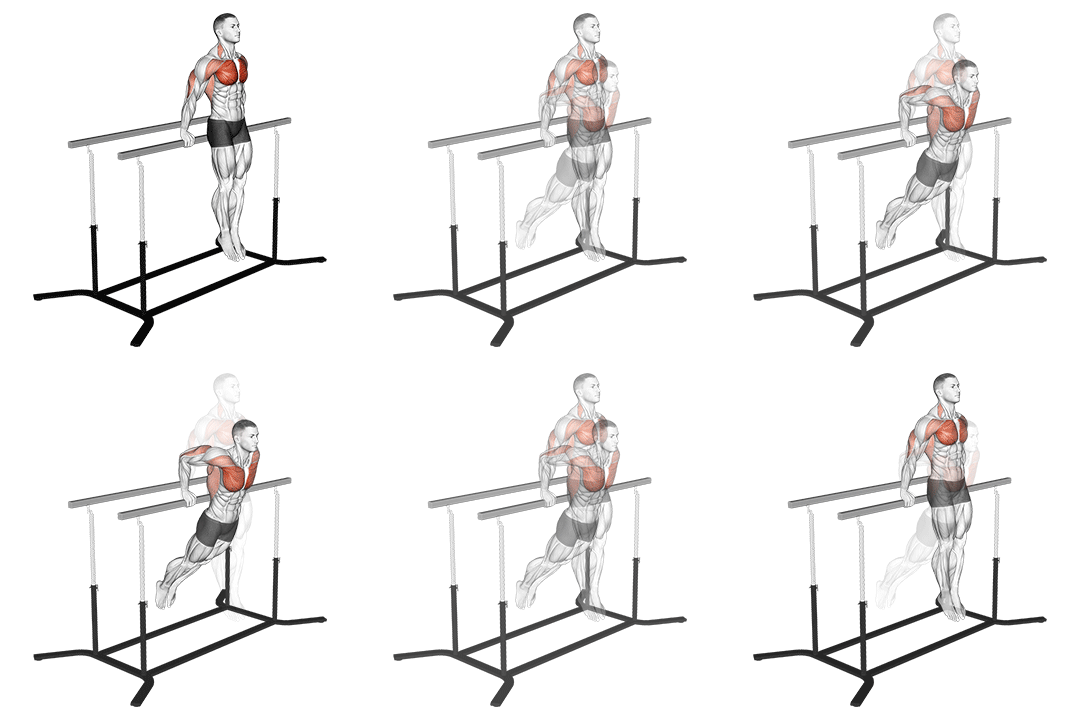
- 1Position yourself between two parallel bars with your arms extended and supporting your body weight.
- 2Lower your body by bending your elbows until your upper arms are parallel to the ground.
- 3Pause for a moment, then push yourself back up to the starting position by straightening your arms.
- 4Repeat for the desired number of repetitions.
Muscles worked
Primary
pectorals
Secondary
triceps, shoulders
Common mistakes to avoid
Attempting without sufficient shoulder mobility
The Korean dip position requires extreme shoulder external rotation. Without that mobility, the exercise can cause serious shoulder injury. Test your German hang tolerance before attempting Korean dips.
Going too deep too fast
The unusual position concentrates load on vulnerable shoulder structures. Build depth gradually over weeks.
Skipping prerequisite work
Don't attempt Korean dips without strict chest dips, German hangs, and Korean dip support holds in your training history. Skipping these is the top cause of injury.
Performing them with cold shoulders
The position needs extensive warm-up. Spend 5-10 minutes on shoulder mobility (band dislocates, German hangs, etc.) before the first set.
Programming high frequency
The shoulder demand requires extensive recovery. Twice per week is the maximum even for advanced trainees.
Easier and harder variations
Easier
German hang holds (passive hang in the Korean position). Korean dip support holds (top position only, no descent). Or band-assisted Korean dips.
Harder
Add weight (advanced trainees only). Slow the tempo. Or progress to one-arm Korean dip work (extremely advanced).
Alternative exercises
Standard chest dip
More accessible chest dip variation. The default before Korean dips.
German hang
Static version of the Korean position. Builds the mobility and tolerance needed.
Back lever progressions
Different gymnastics movement that develops similar shoulder mobility and strength.
How to program the Korean Dips into your training
Korean dips are advanced specialty work. Program them with respect for the shoulder demand. Sets and reps: 3-4 sets of 1-5 reps with 2-3 minutes rest. Total weekly volume of 8-15 reps for advanced trainees. In an upper body session: 3 sets of 2-3 Korean dips (specialty advanced work), 4 sets of 8 standard chest dips (main pressing), 4 sets of 8 pull-ups (balanced pulling), 3 sets of 30-second hollow holds (core). Do not program Korean dips in your first years of calisthenics training. Reserve for trainees with strong chest dip base and demonstrated shoulder mobility.
Recovery and frequency
Korean dips are extremely demanding on the shoulders, particularly the rotator cuff and shoulder capsule. 72-96 hours between sessions is the right cadence. Watch for any sharp shoulder pain — back off immediately if it appears. Daily shoulder mobility, weekly foam rolling of chest and lats, and adequate sleep are all essential during heavy Korean dip training.
Frequently asked questions
How many sets and reps should I do?
3-4 sets of 1-5 reps with 2-3 minutes rest.
How often should I train Korean dips?
1-2 times per week max with 72-96 hours of recovery.
How long does it take to learn Korean dips?
From a base of 15+ strict chest dips and demonstrated German hang ability, expect 6-18 months of progression.
Are Korean dips bad for the shoulders?
For trainees without proper progression and mobility prerequisites, yes — they cause real shoulder injuries. For those with proper preparation, they build shoulder strength in unique ranges.
Should beginners do Korean dips?
No — they're vastly overkill for beginners. Build chest dip strength first. Most general fitness trainees never need Korean dips.
What's the German hang prerequisite?
Hang from a bar with arms behind the body (the bottom position of a Korean dip). If you can't hold a German hang for 30+ seconds without shoulder discomfort, you're not ready for Korean dips.
Useful tools for this exercise
Build a workout with the Korean Dips
Puna gives you guided bodyweight workouts you can do anywhere — no equipment, no gym, just structured progressions that build real strength.