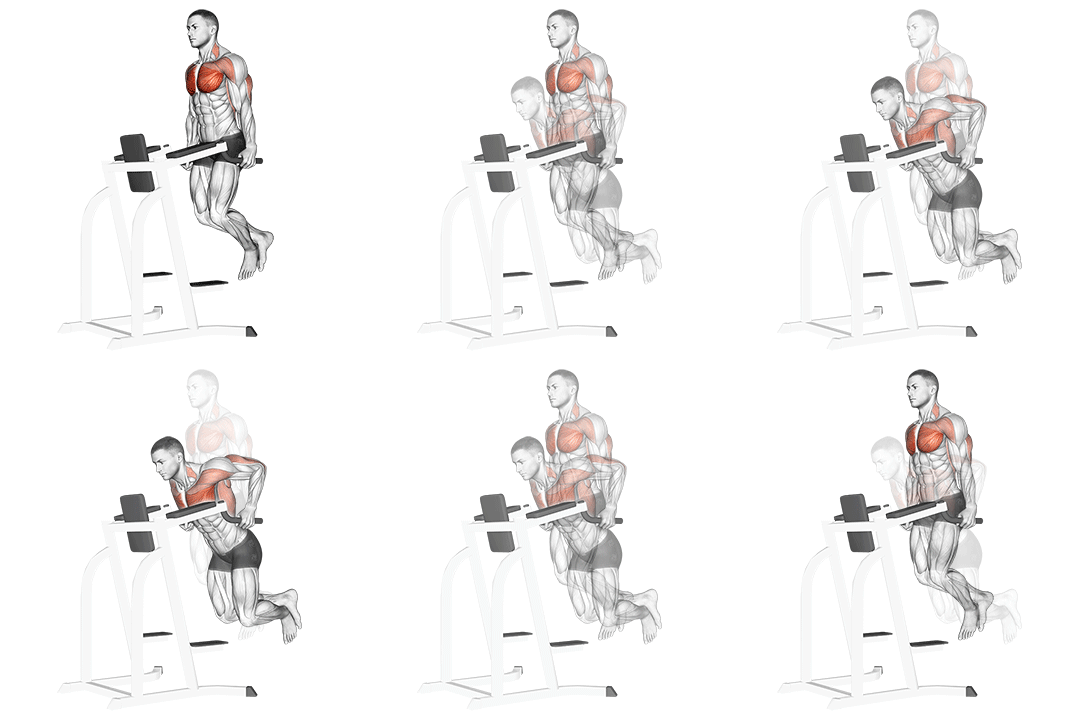
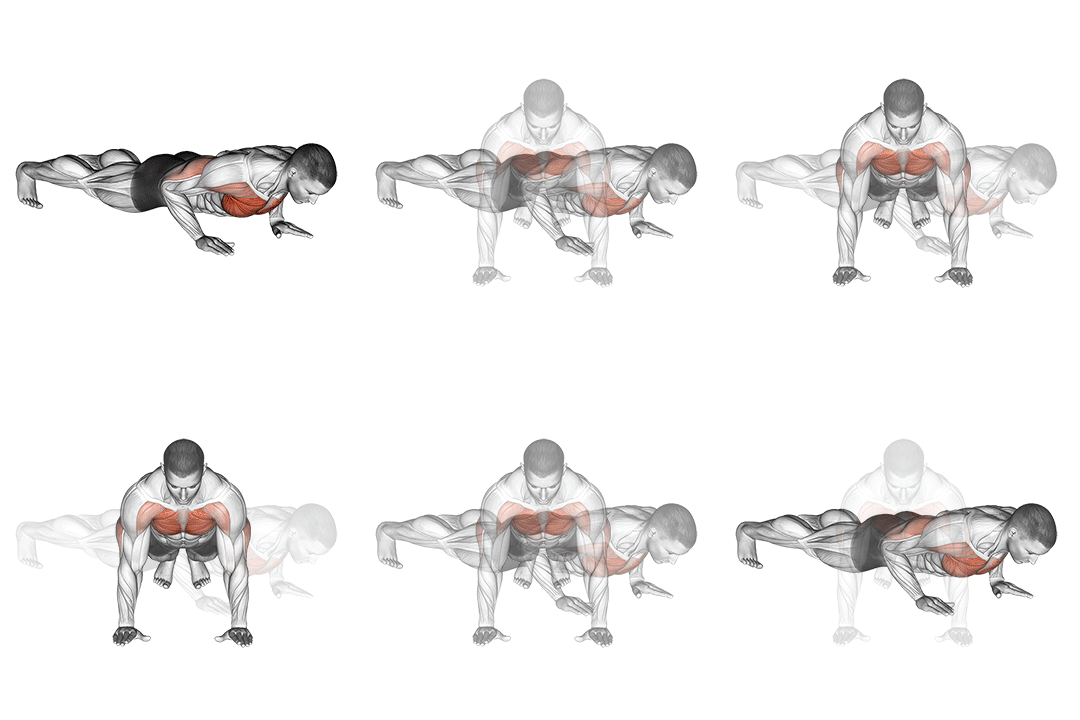
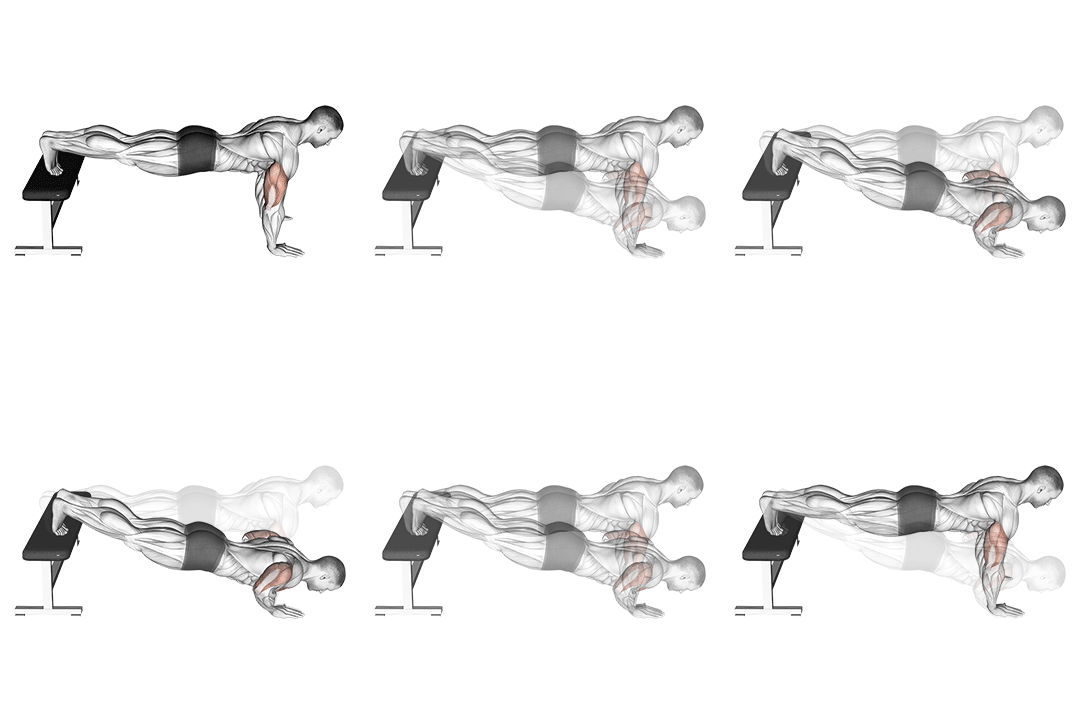
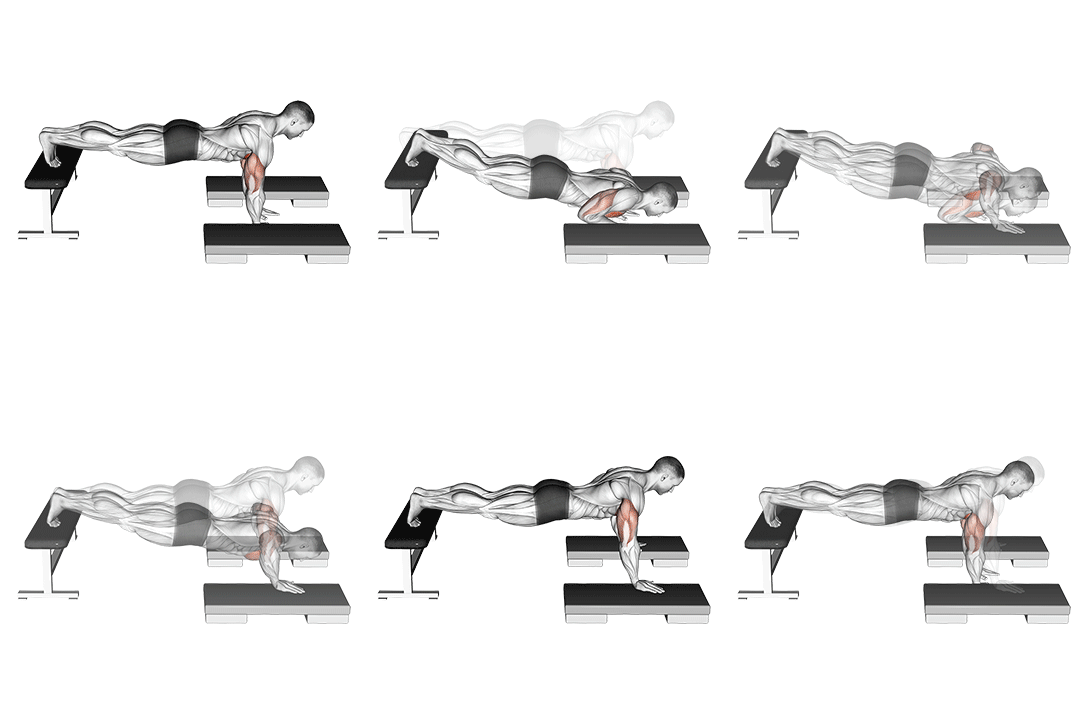
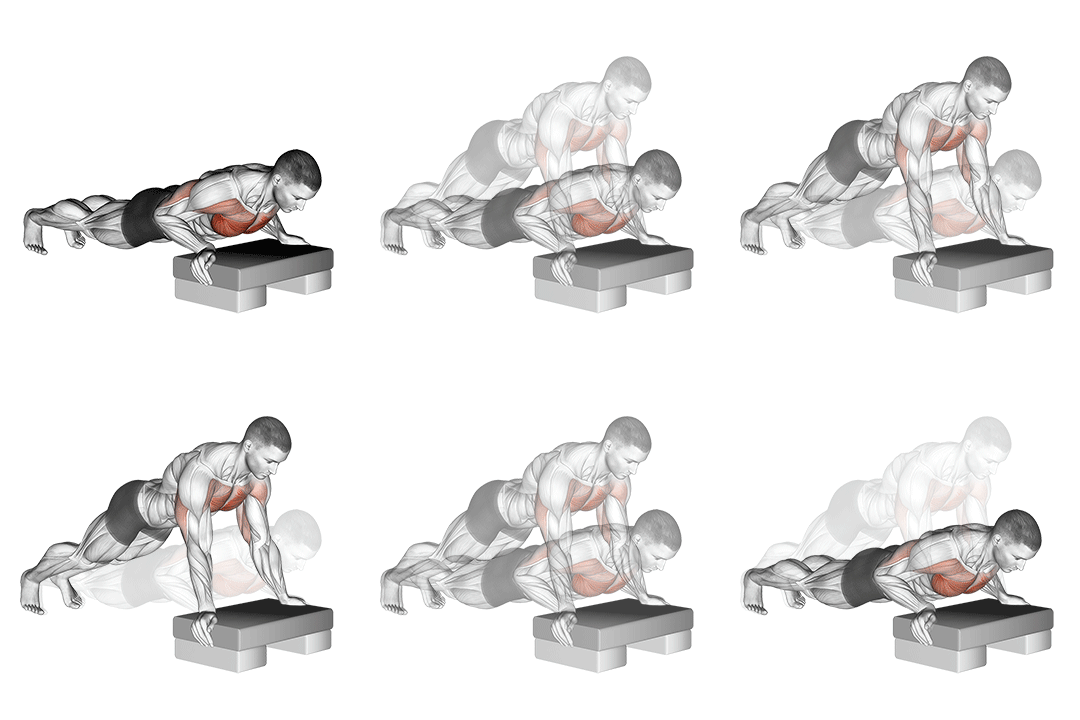
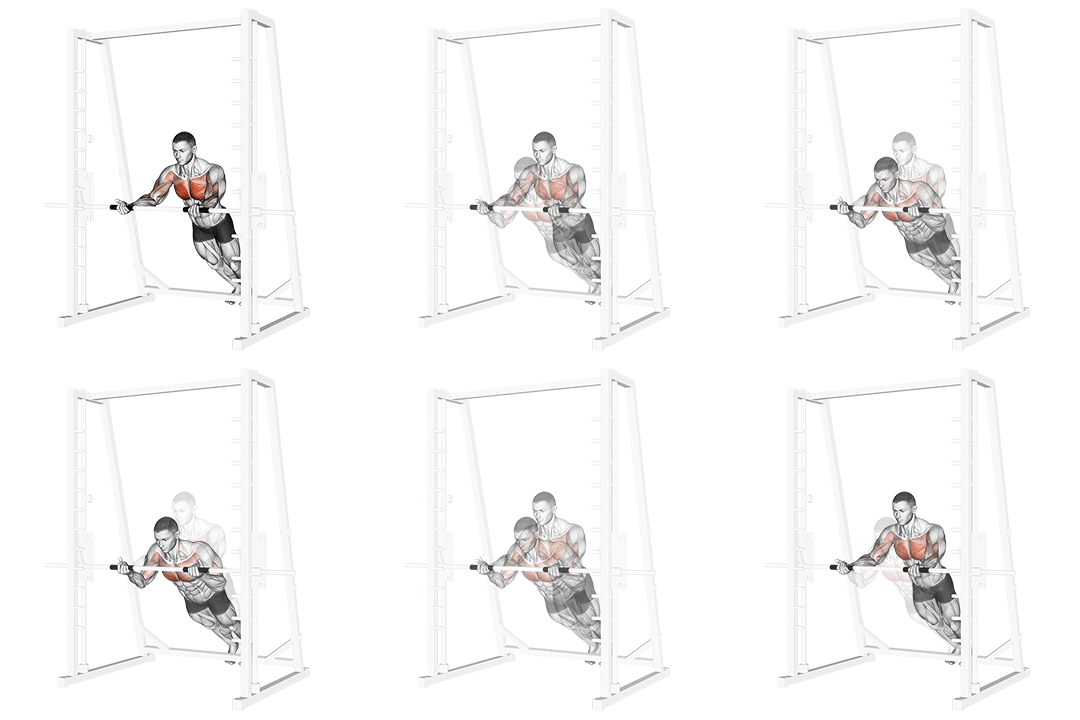
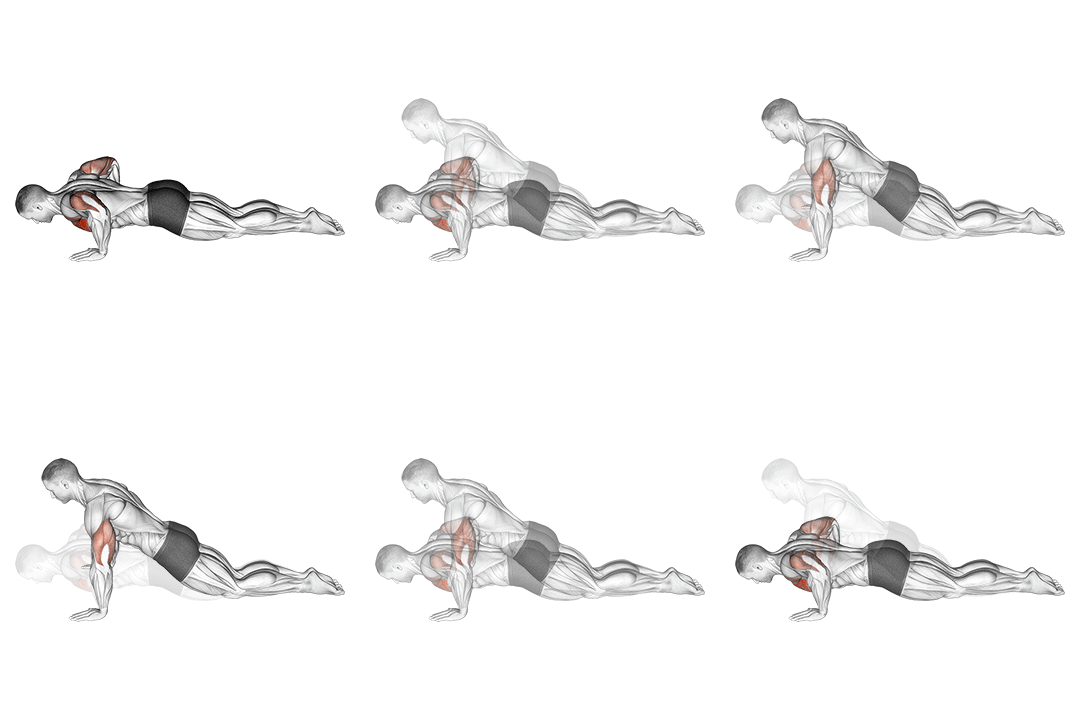
Kneeling Push-up (male)
beginner strength exercise · body weight · targets pectorals
- Body part
- chest
- Primary target
- pectorals
- Equipment
- body weight
- Difficulty
- beginner
The kneeling push-up shifts the pivot point of a standard push-up from your toes to your knees, which reduces the percentage of body weight your arms have to press by roughly 35-45%. That makes it the natural bridge between incline push-ups and floor push-ups — accessible to people who can't yet manage a full floor rep but want the standard horizontal-plane mechanics rather than an elevated angle. The choice between kneeling push-ups and incline push-ups as a regression is largely personal preference. Incline keeps the body in a straight line, which some people find easier to feel correct. Kneeling keeps the press flat to the floor, which mimics the eventual floor push-up position more closely. Both work; pick the one where you can hit 8-12 strict reps and feel the chest and triceps doing the work. Where the kneeling push-up tends to fail people is in form preservation. Because the load is reduced, it's tempting to rush reps or sacrifice depth. The whole point of regressing is to practice excellent technique at a manageable load — burning through 30 sloppy kneeling push-ups builds the wrong patterns. Treat each rep as if it were a full push-up: full depth, controlled tempo, rigid trunk from knees to head.
Why train the Kneeling Push-up (male)?
- Reduces load by 35-45% compared to floor push-ups while preserving the same plane of movement.
- Bridges the gap between incline push-ups and floor push-ups for people who don't tolerate elevation well.
- Teaches the trunk bracing required for full floor push-ups in a more forgiving position.
- Easier on the wrists than some incline setups (depending on the angle of the elevated surface).
- Useful as a high-volume burnout option for stronger trainees at the end of a chest workout.
- Allows higher rep counts than floor push-ups, which can drive endurance adaptations efficiently.
How to do the Kneeling Push-up (male): step by step
- 1Start by kneeling on the ground with your hands shoulder-width apart, fingers pointing forward.
- 2Extend your legs behind you, resting on the balls of your feet, so that your body forms a straight line from head to heels.
- 3Engage your core and lower your body towards the ground by bending your elbows, keeping them close to your sides.
- 4Continue lowering until your chest is just above the ground, then push back up to the starting position by straightening your arms.
- 5Repeat for the desired number of repetitions.
Muscles worked
Primary
pectorals
Secondary
triceps, shoulders
Common mistakes to avoid
Pivoting from the hips instead of the knees
Some people set the knees down but still hinge at the hips, which makes the exercise easier than intended and changes the mechanics. The body should be a straight line from knees to head — no break at the hip joint.
Letting the chest stop short of the floor
Reduced load doesn't mean reduced range. The chest should still come within an inch of the floor on every rep. If you can't, regress further — to incline push-ups or wall push-ups — until you can hit full depth.
Cushioning the knees inadequately
Knees on hard floor get bruised quickly. Use a yoga mat, folded towel, or padded floor — discomfort distracts from form and shortens sessions.
Treating it as 'half a push-up' and rushing through reps
Speed kills technique. Move with control: 1-2 seconds down, brief pause at the bottom, 1-2 seconds up. The reduced load is meant to enable practice of strict form, not faster reps.
Using it indefinitely instead of progressing
Kneeling push-ups are a stepping stone, not a destination. Once you can hit 3 sets of 15 with strict form, attempt floor push-ups — even 1-2 reps. Build from there.
Easier and harder variations
Easier
Wall push-ups or incline push-ups on a counter both reduce load further. If kneeling push-ups already feel too hard, regress to one of those for 2-3 weeks before returning.
Harder
Floor push-ups are the natural next step. Even if you can only do 1-3 floor reps, incorporate them at the start of a workout (when fresh) and finish with kneeling push-ups for volume.
Alternative exercises
Floor push-up
The full version of the exercise. Use it as soon as you can manage even a single clean rep — partial floor push-ups train better than perfect kneeling push-ups.
Eccentric floor push-up
Lower yourself slowly (3-5 seconds) into a floor push-up, then drop to knees to push back up. Builds floor push-up strength faster than staying kneeling.
Incline push-up
Hands on a bench instead of knees on the floor. Same load reduction, different feel — useful to alternate if kneeling becomes uncomfortable.
How to program the Kneeling Push-up (male) into your training
Use kneeling push-ups as your primary pressing variation while you can't yet manage 5+ floor push-ups. 3 sessions per week, 3-4 sets of 8-15 reps with 60-90 seconds rest, with the goal of building total weekly volume from ~80 reps to ~150 reps over 4-6 weeks. A useful hybrid approach for trainees who can do 1-5 floor push-ups: start each pressing session with 2-3 sets of floor push-ups (even if it's just 1-2 reps each), then finish with kneeling push-ups for volume. The floor work builds strength; the kneeling work builds endurance and reinforces the pattern. As a finisher for stronger trainees: 2-3 sets of 20+ kneeling push-ups at the end of a chest workout, after heavier pressing work. The high reps drive blood into the muscles and add useful endurance volume. A complete home workout for someone in the kneeling-push-up phase: 4 sets of 10 kneeling push-ups, 3 sets of 8-10 inverted rows (or assisted), 3 sets of 30-second planks, 3 sets of 12-15 squats. Run 3 times per week. Most people progress out of this phase to floor push-ups within 6-10 weeks.
Recovery and frequency
The lower load of kneeling push-ups means recovery cost is moderate — 48 hours between sessions is sufficient for most people, and you can tolerate higher session frequency than with full push-ups. The knees themselves take some pressure during the exercise. If kneeling pain persists beyond the session itself, switch to incline push-ups instead. The chest and triceps soreness pattern resembles regular push-ups: more pronounced in the first 2-3 weeks of training, fading as adaptation occurs. Standard recovery practices (sleep, hydration, walking) cover the bulk of what's needed.
Frequently asked questions
How many sets and reps of kneeling push-ups should I do?
3-4 sets of 8-15 reps with 60-90 seconds rest. Build to 3 sets of 15 strict reps before attempting floor push-ups as your main pressing exercise.
How often should I train the kneeling push-up?
2-3 times per week. The reduced load allows higher session frequency than full push-ups, but 48 hours between sessions remains the sensible default.
Should I do kneeling push-ups or incline push-ups as a beginner?
Either works — pick the one where you can hit 8-12 strict reps with the last few feeling hard. Incline keeps the body straight; kneeling keeps the press horizontal. Both build toward the same goal.
How long until I can do a regular floor push-up?
Most beginners progress from kneeling to floor push-ups in 6-10 weeks of consistent training. Faster if you have prior strength training experience; slower if starting from a deconditioned baseline.
Are kneeling push-ups good for women?
Yes, but they're not gender-specific. Both men and women benefit from kneeling as a regression. The myth that women should permanently do kneeling push-ups while men do full push-ups isn't supported by anything physiological — both genders can build to floor push-ups using the same progression.
Can I count kneeling push-ups toward my push-up goals?
Treat them as their own metric. They're a different exercise mechanically (different leverage), so progression on kneeling push-ups doesn't translate one-to-one with floor push-up progression. Test your floor push-up max separately.
Useful tools for this exercise
Build a workout with the Kneeling Push-up (male)
Puna gives you guided bodyweight workouts you can do anywhere — no equipment, no gym, just structured progressions that build real strength.