Incline Scapula Push Up
beginner strength exercise · body weight · targets serratus anterior
- Body part
- chest
- Primary target
- serratus anterior
- Equipment
- body weight
- Difficulty
- beginner
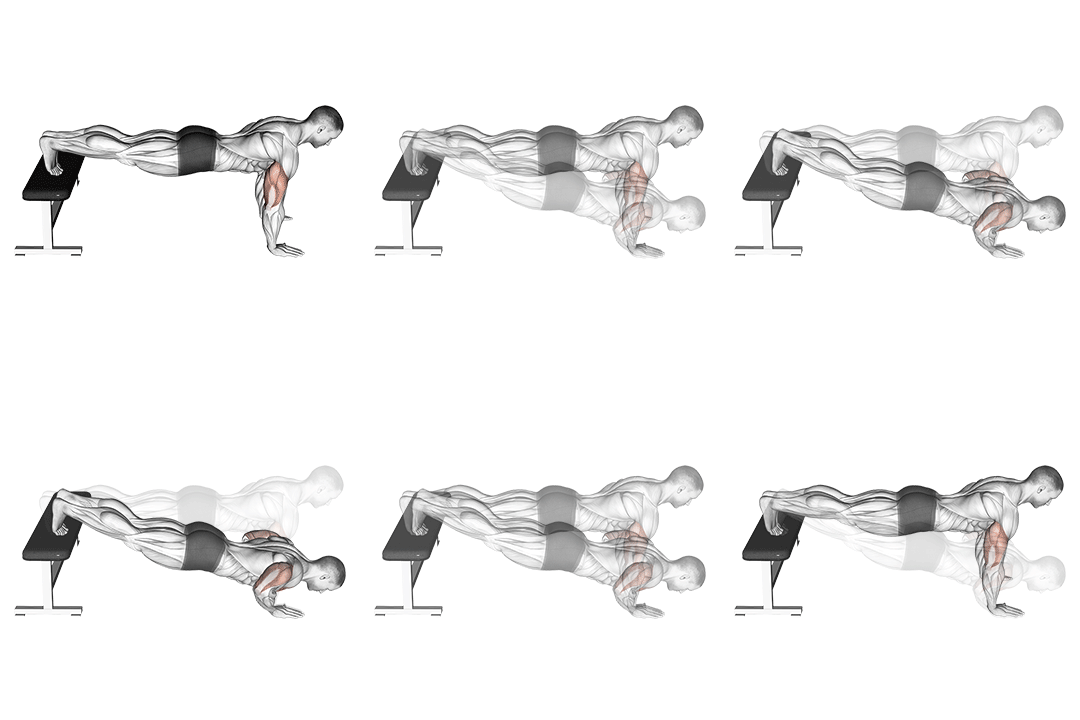
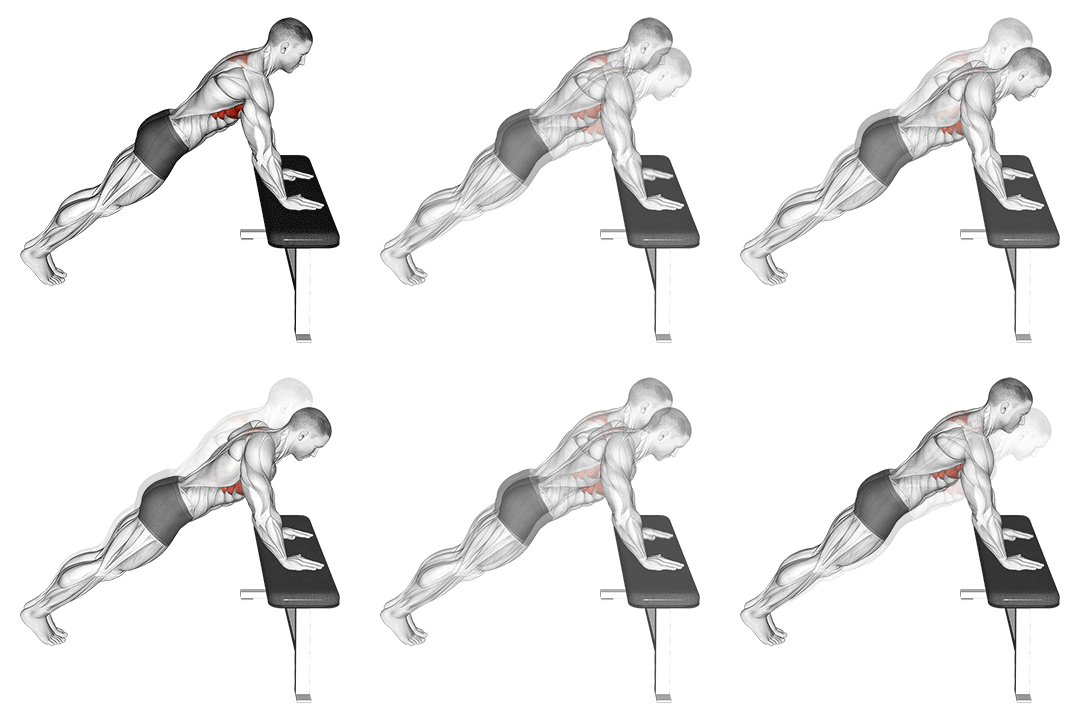
The incline scapula push-up is a small-range exercise that targets the serratus anterior — the often-overlooked muscle that wraps around the rib cage and powers the protraction of the shoulder blades. From an incline push-up position with hands on a bench, you keep the elbows fully locked out throughout the movement, simply allowing the shoulder blades to retract (squeeze together) and protract (spread apart) to create the rep. The arms don't bend; only the scapula moves. This is one of the most under-prescribed exercises in bodyweight training, especially given how universally weak the serratus anterior is in modern adults. The serratus is the muscle that drives the shoulder blade around the rib cage during overhead reach. Weak serratus shows up as shoulder blades that 'wing' (pop out from the back) during push-ups, restricted overhead range that no amount of stretching resolves, and chronic shoulder impingement during pressing work. The scapula push-up directly addresses this weakness. The incline version is the easier introduction — the load on the serratus is reduced compared to floor variations, making it accessible to absolute beginners and trainees with shoulder issues. Built into a regular upper-body routine, 3 sets of 12-15 incline scapula push-ups twice per week strengthens the serratus enough to dramatically improve shoulder mechanics over 4-8 weeks. The improvement carries over to push-ups, overhead pressing, and any motion involving overhead reach. For trainees who have plateaued on shoulder mobility or have nagging shoulder issues during pressing, this exercise is often the missing piece.
Why train the Incline Scapula Push Up?
- Strengthens the serratus anterior, one of the most chronically weak muscles in modern adults.
- Improves shoulder blade mechanics during push-ups, overhead pressing, and reaching movements.
- Eliminates 'shoulder blade winging' that signals serratus weakness in many trainees.
- Provides a shoulder-friendly accessory exercise for trainees recovering from impingement issues.
- Improves overhead range of motion that's often restricted by serratus weakness rather than lat tightness.
- Pairs naturally with band pull-aparts and rows for complete shoulder blade control training.
How to do the Incline Scapula Push Up: step by step
- 1Set up an incline bench at a 45-degree angle.
- 2Place your hands on the bench slightly wider than shoulder-width apart.
- 3Position your feet on the ground, hip-width apart.
- 4Lower your chest towards the bench, keeping your elbows tucked in.
- 5As you lower, retract your shoulder blades, squeezing your scapulae together.
- 6Push through your palms to extend your arms and return to the starting position.
- 7Repeat for the desired number of repetitions.
Muscles worked
Primary
serratus anterior
Secondary
triceps, shoulders
Common mistakes to avoid
Bending the elbows during reps
The whole point of the scapula push-up is isolating the shoulder blade movement from elbow flexion. If the elbows bend, you're doing a regular incline push-up. Keep the arms fully locked out throughout — only the shoulder blades move.
Confusing the motion direction
At the top of the rep (chest pushing away from the bench), the shoulder blades should be protracted (spread apart, wrapping around the rib cage). At the bottom, they should be retracted (squeezed together). Many beginners do this backwards. Visualize pushing the bench away with the shoulder blades, not pulling toward yourself.
Using too small a range of motion
The total range is small but should still be deliberate. Aim for full protraction at the top (shoulder blades fully spread) and clear retraction at the bottom (blades pulled together). Rushing through with a tiny range produces minimal stimulus.
Shrugging the shoulders during protraction
When the shoulder blades protract, the trapezius wants to lift the shoulders toward the ears. This shifts work to the upper traps and away from the serratus. Pack the shoulders down and away from the ears throughout.
Treating it as warm-up only
While excellent as a warm-up, the scapula push-up earns most of its benefit when programmed as deliberate strengthening work. 3 sets of 12-15 reps twice per week as part of an upper-body routine produces meaningful serratus development. One quick warm-up set is too little stimulus.
Easier and harder variations
Easier
Increase the incline angle (steeper bench or hands placed against a wall). The more upright the body, the lower the load on the serratus. This is the right starting point for absolute beginners or anyone with current shoulder issues.
Harder
Reduce the incline angle gradually until you're performing scapula push-ups from the floor (full plank position). For maximum challenge, progress to scapula push-ups from a single arm — significantly more demanding and excellent for serratus development at advanced levels.
Alternative exercises
Floor scapula push-up
Full plank position with the same scapular motion. More demanding load on the serratus. Use after the incline version becomes easy.
Wall slide
Standing exercise that trains shoulder blade upward rotation alongside protraction. Different motion but trains similar tissue. Pair both for complete scapular control work.
Plank to scapula squeeze
Combines a static plank with deliberate scapular retraction-protraction. Builds endurance in the serratus alongside the strength component.
How to program the Incline Scapula Push Up into your training
The incline scapula push-up works well as accessory work in any upper-body session, or as a primary serratus strengthening exercise during dedicated rotator cuff and shoulder health work. As accessory work: 3 sets of 12-15 reps with 30-60 seconds rest, performed 2-3 times per week. Place after primary pressing volume, before any heavy pulling work. Total weekly volume of 70-150 reps is appropriate. As primary serratus strengthening: 4 sets of 15-20 reps with 30 seconds rest, 2-3 times per week. Pair with band pull-aparts and rows for compound shoulder blade training. This is the right structure for trainees specifically addressing shoulder issues or weak serratus. As a warm-up: 1-2 sets of 10 reps before any pressing work. The serratus activation primes the shoulder blade for healthy push-up mechanics. This is supplementary, not the main programming approach. For trainees with shoulder impingement or weak serratus signs (winging blades): 3-4 sessions per week at 3 sets of 15 reps. The increased frequency drives faster serratus adaptation. Within 4-8 weeks of consistent practice, most trainees see noticeable improvement in shoulder blade control and reduced impingement symptoms. Frequency: 2-3 times per week minimum for meaningful adaptation. Daily is fine when serratus weakness is the primary training focus. The recovery cost is low, so frequency rarely becomes problematic. Don't program this as a replacement for actual push-ups — it doesn't build the same strength or muscle. Use it as a complement.
Recovery and frequency
The incline scapula push-up has minimal recovery cost. The load is moderate and the joint stress is low. 24 hours between sessions is sufficient for most trainees; daily training is tolerable when serratus weakness is the primary training focus. The main warning signs are sharp shoulder pain (rather than the dull stretch sensation around the shoulder blade) or pain at the front of the shoulder. Both suggest form issues — either bending the elbows during reps or shrugging the shoulders during protraction. Address form, and the discomfort resolves. Serratus soreness (felt as a dull ache around the upper rib cage and inner shoulder blade) is normal in the first 1-2 weeks of training and indicates appropriate stimulus. Most trainees describe it as 'finally feeling the serratus' for the first time. Standard recovery practices apply — sleep, hydration, reasonable nutrition.
Frequently asked questions
How many sets and reps of incline scapula push-ups should I do?
3 sets of 12-15 reps with 30-60 seconds rest as accessory work. 4 sets of 15-20 reps for serratus-focused training. Total weekly volume of 70-150 reps.
How often should I do this exercise?
2-3 times per week minimum for meaningful adaptation. Daily is fine when serratus weakness is the primary training focus. Recovery cost is low so frequency rarely becomes problematic.
Will this fix my shoulder blade winging?
Often yes — winging is one of the clearest signs of serratus weakness, and the scapula push-up directly addresses that weakness. Within 4-8 weeks of consistent practice, most trainees see noticeable reduction in winging during push-ups and overhead reach.
Why am I not feeling much during the exercise?
Two likely causes. First, your range of motion is too small — push the shoulder blades fully apart at the top and pull them clearly together at the bottom. Second, you're moving too fast — slow each rep to 2 seconds in each direction. With both fixes, the serratus engagement becomes obvious.
Should I do this before or after push-ups?
Before, as a warm-up activation. The pre-activated serratus engages more readily during push-ups, improving shoulder blade mechanics and reducing impingement risk. 1-2 sets of 10 reps before pressing is enough.
Can I do this with shoulder impingement?
Often yes, and it's frequently part of impingement rehabilitation programs. The serratus weakness is often a contributor to impingement, and strengthening it reduces symptoms. Stay within painless range, and consult a physiotherapist if symptoms worsen.
Useful tools for this exercise
Build a workout with the Incline Scapula Push Up
Puna gives you guided bodyweight workouts you can do anywhere — no equipment, no gym, just structured progressions that build real strength.