Incline Push-up (on Box)
beginner strength exercise · body weight · targets pectorals
- Body part
- chest
- Primary target
- pectorals
- Equipment
- body weight
- Difficulty
- beginner
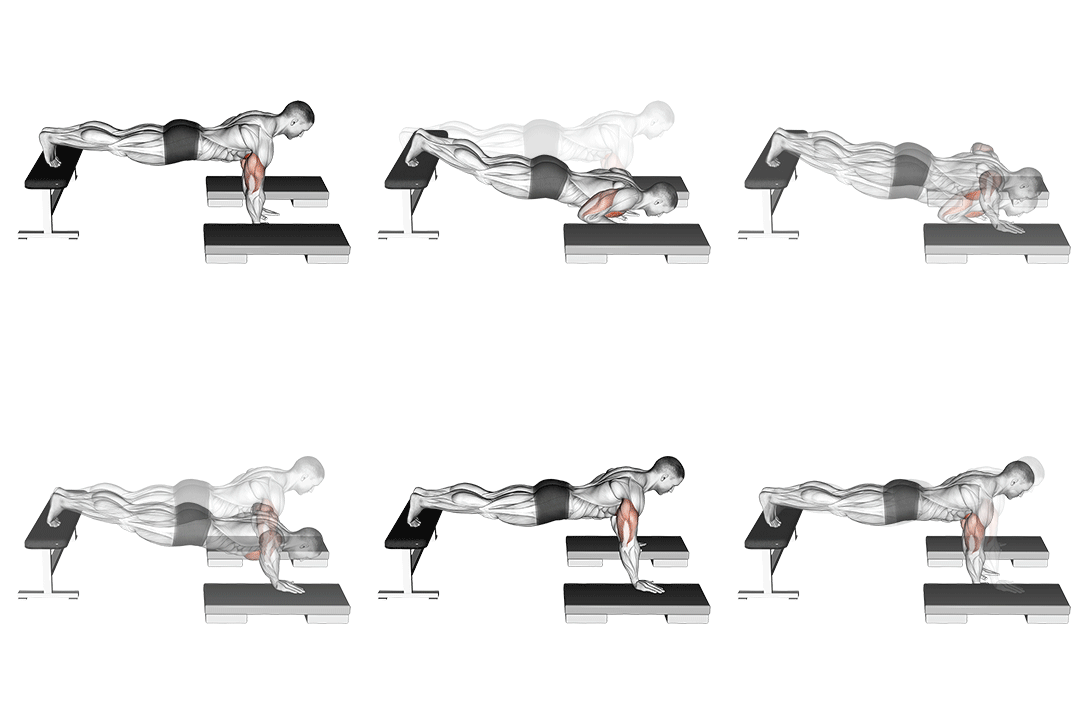
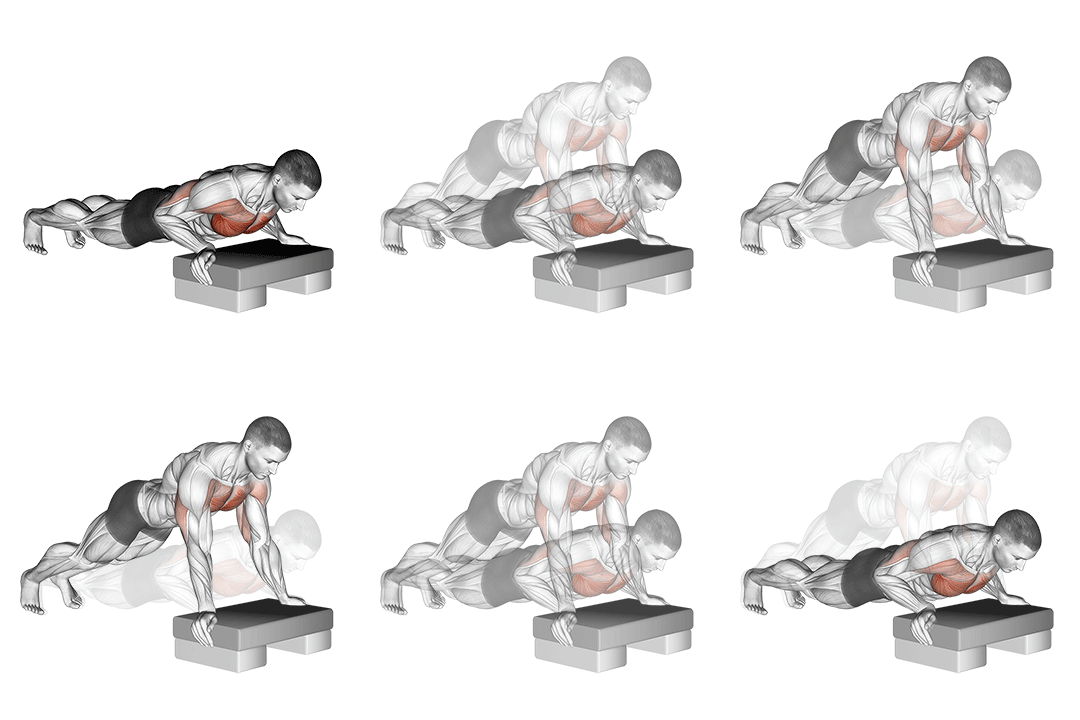
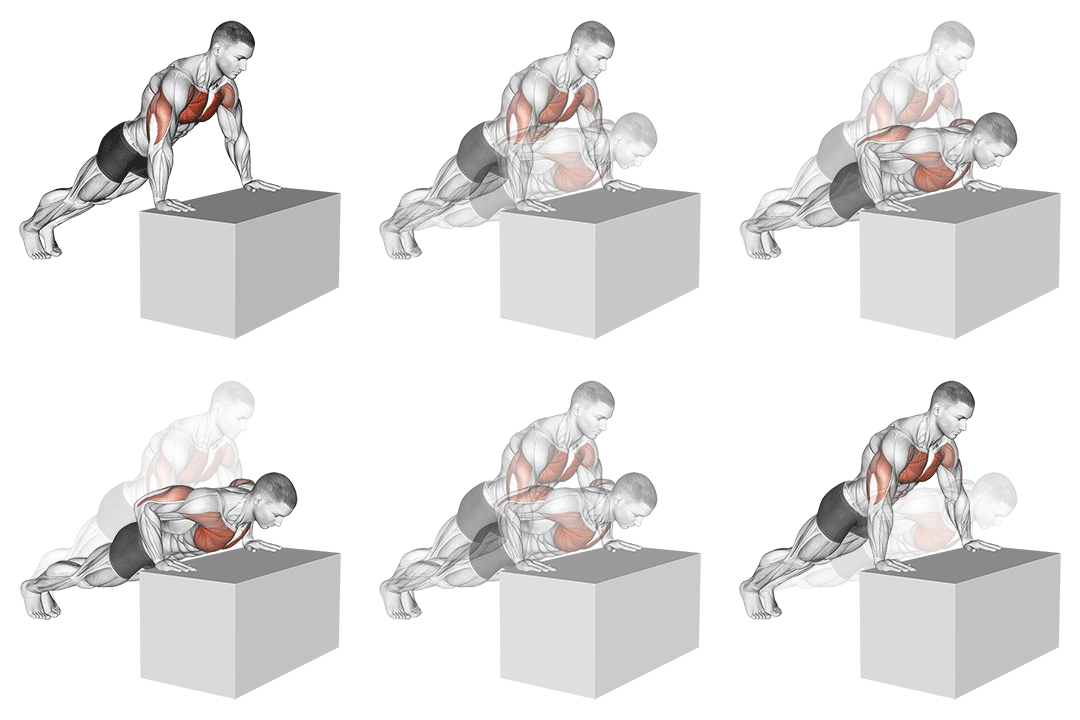
The incline push-up on box is a specific variation of the incline push-up performed with hands on a stable box rather than a wall, counter, or bench. The box-supported version typically allows for a more consistent height (boxes come in standardized sizes) and a more secure hand position than improvised surfaces. The result is the same incline push-up benefits — reduced load through angled positioning — with cleaner equipment setup. It's particularly useful in gym settings where plyometric boxes are common. Trainees who don't have access to benches or counters at the right height for their progression level can use boxes as adjustable surfaces — 12, 18, 24, and 30-inch boxes give precise progression options. Like all incline push-up variations, the goal is gradual progression toward floor push-ups. Most trainees move through this exercise in 2-6 weeks before transitioning to lower surfaces or floor push-ups directly. For seniors or significantly deconditioned trainees, however, box incline push-ups can serve as a permanent staple.
Why train the Incline Push-up (on Box)?
- Stable, consistent surface for incline push-up progression.
- Adjustable difficulty by changing box height.
- Common in gym environments with plyometric box equipment.
- Friendlier on the wrists than floor push-ups due to the angle.
- Useful as a warm-up for trained athletes before heavier pressing.
- Accessible to almost any fitness level.
How to do the Incline Push-up (on Box): step by step
- 1Place your hands on the edge of a box or elevated surface, slightly wider than shoulder-width apart.
- 2Extend your legs behind you, resting on the balls of your feet, creating a straight line from your head to your heels.
- 3Lower your chest towards the box by bending your elbows, keeping your body in a straight line.
- 4Pause for a moment at the bottom, then push yourself back up to the starting position by straightening your arms.
- 5Repeat for the desired number of repetitions.
Muscles worked
Primary
pectorals
Secondary
triceps, shoulders
Common mistakes to avoid
Sagging hips and arched lower back
The body should be a straight line from heels to head. Brace the abs and squeeze the glutes — sagging hips engage the lower back instead of the core.
Hands too far forward of the shoulders
Stretching hands forward shifts load into the shoulders and removes the chest from the equation. Position hands directly under the shoulders, not in front of them.
Choosing too high a box
If 20+ reps feel easy, the box is too tall. Drop to a lower box — incline push-ups only build strength when the last reps feel hard.
Letting elbows flare to 90 degrees
Wide elbows turn the exercise into a shoulder-stress drill. Keep upper arms at roughly 30-45 degrees from the torso.
Bouncing off the box at the bottom
Tapping the chest and rebounding uses tendon elasticity instead of muscle force. Pause for half a second at the bottom of every rep.
Easier and harder variations
Easier
Use a higher box (30+ inches). Or perform wall push-ups for absolute beginners.
Harder
Use lower boxes progressively (24 inches, 18 inches, 12 inches, then floor). Once floor push-ups feel manageable, progress to decline push-ups (feet elevated).
Alternative exercises
Incline push-up on bench
Same exercise on a bench instead of a box. Use whichever is available at your training location.
Knee push-up
Different regression that keeps the body in horizontal position. Pick whichever feels right for your fitness level.
Floor push-up
The natural progression after incline push-ups become easy. Full body weight on the arms in horizontal position.
How to program the Incline Push-up (on Box) into your training
Box incline push-ups work as a 2-6 week introduction phase or as an accessible variation for ongoing programming. Introduction phase: 3 sessions per week, 3 sets of 10-20 reps with 60-90 seconds rest. Progress to lower boxes or floor push-ups when 3 sets of 20 feel easy. For seniors or significantly deconditioned trainees: 2 sessions per week, 3 sets of 8-15 reps. Maintain at this level if floor push-ups remain inappropriate. As warm-up for stronger trainees: 1-2 sets of 15-20 reps before heavier pressing work. In a beginner full-body session: 3 sets of 10 box incline push-ups, 3 sets of 8-10 inverted rows or band rows, 3 sets of 12-15 squats, 3 sets of 30-second planks.
Recovery and frequency
Box incline push-ups have minimal recovery cost — daily training is fine for most people, especially at lower box heights. The most likely soreness is in the chest and front delts during the first 1-2 weeks. Wrist tightness from the position is common; daily wrist circles help.
Frequently asked questions
How many sets and reps of box incline push-ups should I do?
3 sets of 10-20 reps with 60-90 seconds rest. Build to 3 sets of 20 before progressing to a lower box or floor push-ups.
How often should I train box incline push-ups?
2-3 times per week is typical, but daily is fine for low-volume practice.
What box height should I use?
Pick the height where you can hit 8-12 reps with the last 2 reps feeling hard. Adjust as strength develops.
How long should I do box incline push-ups before moving on?
Most people graduate within 2-6 weeks. Build to 3 sets of 20 reps at low box height (12-18 inches), then move to floor push-ups.
Box incline push-up vs bench incline push-up: what's the difference?
Functionally the same exercise. Use whichever is available — boxes are common in gyms; benches and counters work at home.
Are box incline push-ups effective for chest building?
For absolute beginners, yes. For trained individuals, the load is too light for hypertrophy. Use them as a warm-up or progression step.
Useful tools for this exercise
Build a workout with the Incline Push-up (on Box)
Puna gives you guided bodyweight workouts you can do anywhere — no equipment, no gym, just structured progressions that build real strength.