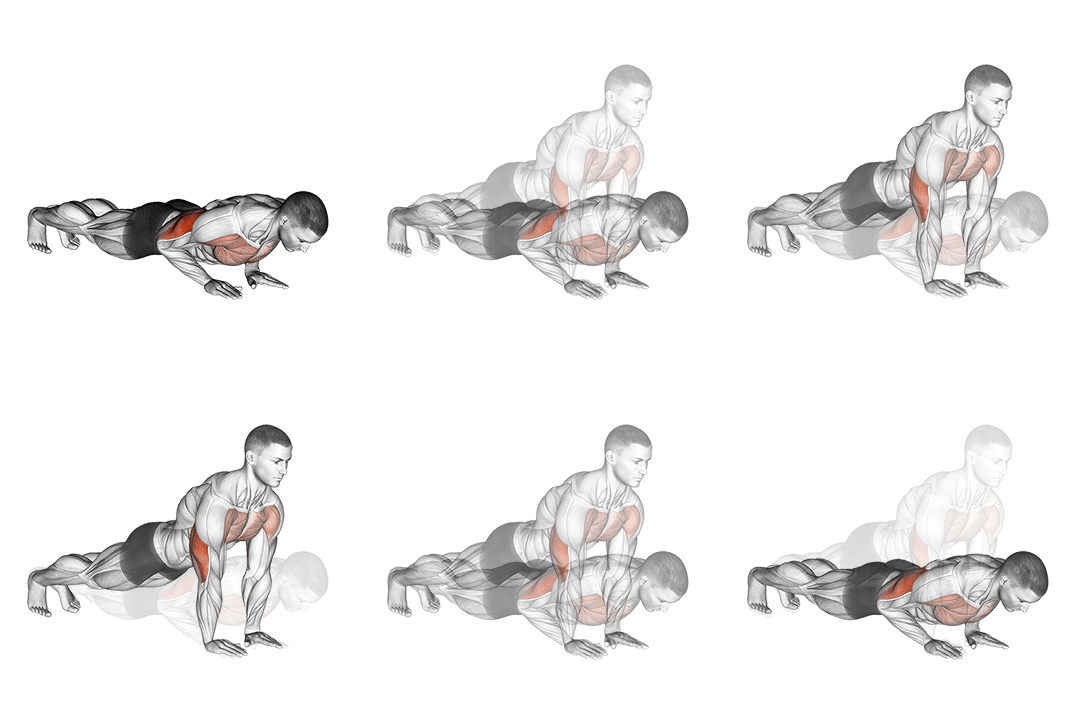
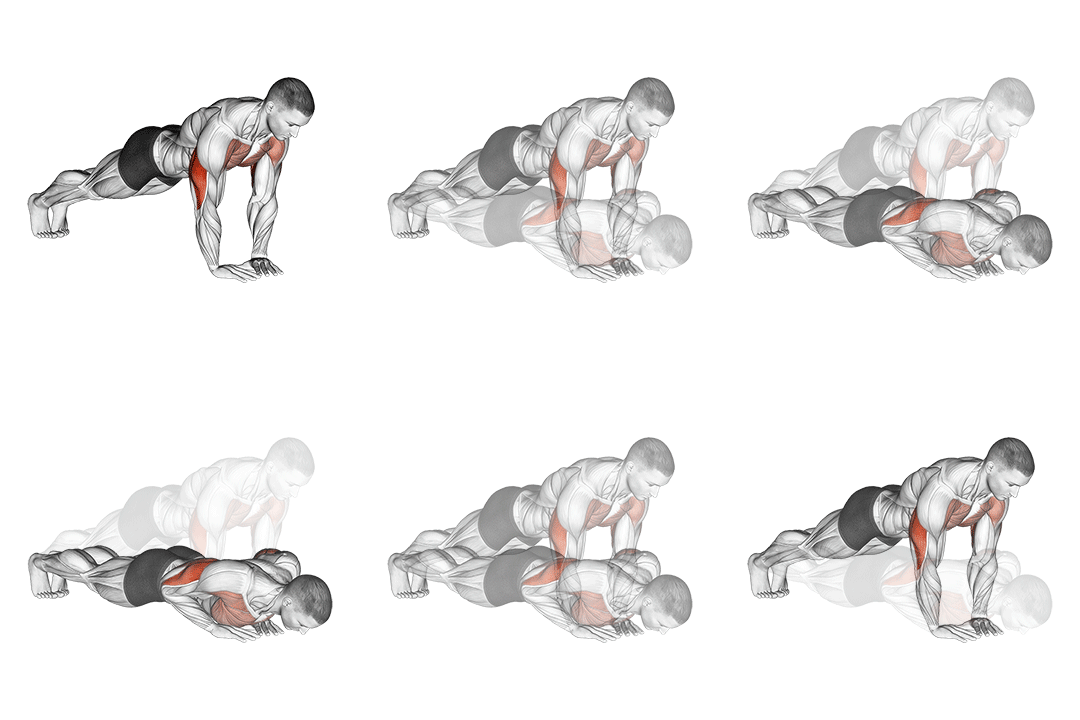
Incline Close-grip Push-up
beginner strength exercise · body weight · targets triceps
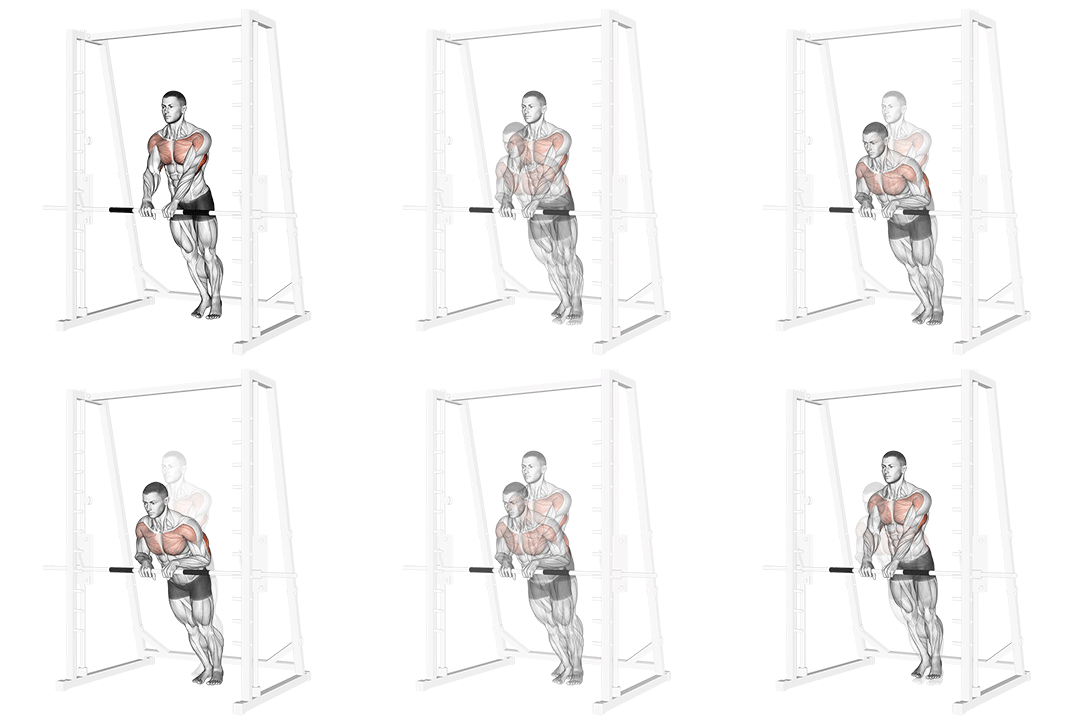
- Body part
- upper arms
- Primary target
- triceps
- Equipment
- body weight
- Difficulty
- beginner
The incline close-grip push-up combines the angle of an incline push-up (hands elevated on a bench or counter) with the hand placement of a close-grip push-up (hands narrower than shoulder-width, often shoulder-width or just inside). The combination gives you a tricep-focused exercise that's still accessible to beginners — the elevated angle reduces total load enough that newcomers can train tricep-emphasis pressing without yet being strong enough for floor close-grip push-ups. It fills a specific gap in beginner programming. Most beginners can't yet do floor close-grip push-ups — the load is too high for the triceps to handle. But they can do incline standard push-ups, which load the chest more than triceps. The incline close-grip variation lets them start training the triceps directly while still working at a manageable difficulty. Once 12-15 strict reps feel easy, they can either lower the surface or move to floor close-grip push-ups. It's also a useful warm-up exercise for trained athletes before heavier tricep work — 1-2 sets of 10-15 reps activates the triceps without depleting them. Or a high-rep finisher at the end of an upper-body session when you want extra tricep volume but the elbows can't handle more load.
Why train the Incline Close-grip Push-up?
- Trains the triceps directly with reduced load — accessible to beginners who can't yet do floor close-grip push-ups.
- Bridges the gap between standard incline push-ups and floor close-grip push-ups.
- Friendlier on the wrists than floor variations because of the angle.
- Useful as a tricep warm-up before heavier pressing for trained athletes.
- Requires only a bench, counter, or step — works in any environment.
- Allows higher rep counts than the floor version, useful for endurance work.
How to do the Incline Close-grip Push-up: step by step
- 1Place your hands on an elevated surface, such as a bench or step, slightly wider than shoulder-width apart.
- 2Extend your legs behind you, resting on the balls of your feet, with your body forming a straight line from head to heels.
- 3Lower your chest towards the elevated surface by bending your elbows, keeping them close to your sides.
- 4Pause for a moment at the bottom, then push yourself back up to the starting position by straightening your arms.
- 5Repeat for the desired number of repetitions.
Muscles worked
Primary
triceps
Secondary
chest, shoulders
Common mistakes to avoid
Letting the elbows flare wide
The whole point of close-grip is that the elbows track close to the torso, loading the triceps. If your elbows flare to 90 degrees, you're back to a regular incline push-up with worse leverage. Keep the elbows tucked tight to the ribs throughout the rep.
Hands too far apart for true close-grip
Hands at standard shoulder-width is a regular incline push-up, not close-grip. For the close-grip emphasis, hands should be at shoulder-width or just inside that — narrow enough to feel the triceps doing the work.
Sagging hips under the difficulty
Even at incline angle, the close-grip variation is harder than standard incline. Brace the abs and squeeze the glutes so the body stays a straight line from heels to head, even if reps drop.
Choosing a surface that's too high
If you can do 20+ reps without the triceps burning, the surface is too high. Drop a few inches — incline close-grip only builds strength when the last reps feel hard.
Bouncing off the surface at the bottom
Tapping the chest and rebounding uses tendon elasticity instead of muscle force. Pause for half a second at the bottom of every rep — that pause is where the triceps actually work.
Easier and harder variations
Easier
Incline standard push-ups (hands at shoulder-width on the same surface) for beginners not ready for the tricep emphasis. Or use a higher surface (wall or counter instead of low bench) to reduce load further.
Harder
Lower the surface (move from bench to step to floor). Or progress to floor close-grip push-ups, then to floor diamond push-ups for maximum tricep loading without weights.
Alternative exercises
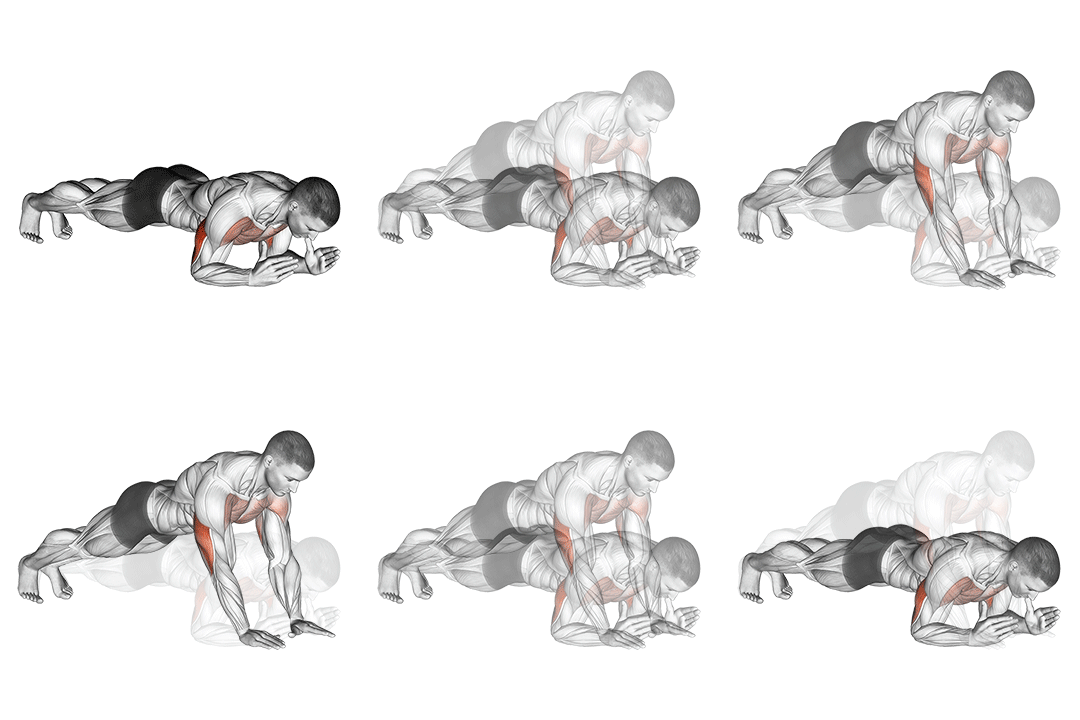
Floor close-grip push-up
The floor version of the same exercise. Higher load through full body weight in horizontal plane.
Diamond push-up
Hands form a diamond directly under the chest. Even more tricep emphasis with maximum load on the elbow.
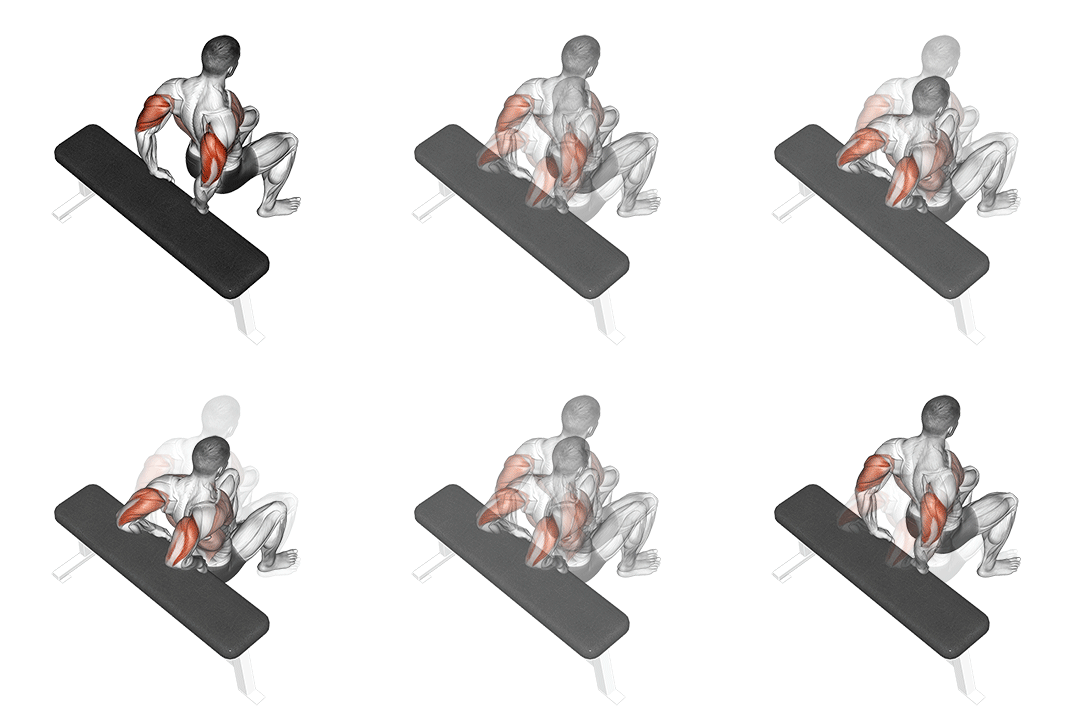
Bench dip
Different position (vertical instead of horizontal) but similar tricep focus. Useful pairing in a complete tricep program.
How to program the Incline Close-grip Push-up into your training
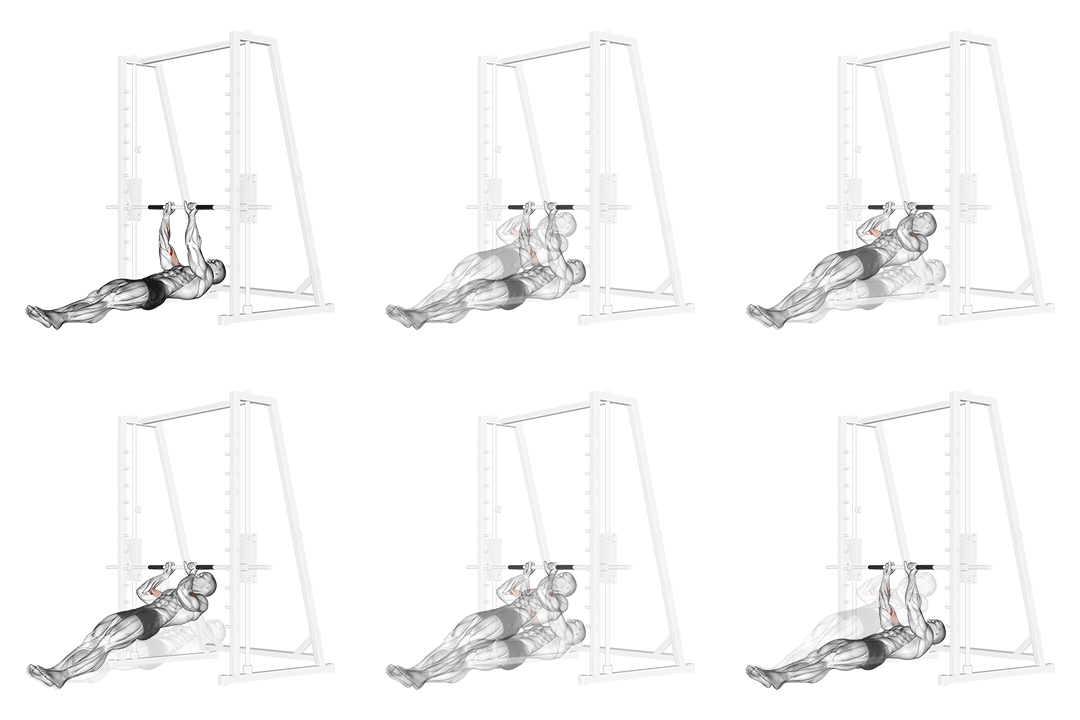
Incline close-grip push-ups work as either a primary tricep exercise for beginners or as a warm-up movement for trained athletes. For beginners (can't yet do floor close-grip push-ups): 3-4 sets of 8-12 reps with 60-90 seconds rest. Programmed twice per week. Once you hit 3 sets of 12-15 reps, lower the surface or move to floor variations. As warm-up for trained athletes: 1-2 sets of 10-15 reps before heavier tricep work like dips or diamond push-ups. The light load wakes up the triceps without depleting them. As a finisher: 2-3 sets of high reps (15-25) at the end of an upper-body session. Useful when you want extra tricep volume but the elbows can't handle more heavy work. In a beginner full-body session: 3 sets of 10 incline close-grip push-ups, 3 sets of 8 inverted rows, 3 sets of 12 squats, 3 sets of 30-second planks. Done 2-3 times per week. Do not program incline close-grip push-ups on the same day as floor close-grip or diamond push-ups — the cumulative tricep load is excessive and slows recovery.
Recovery and frequency
The reduced load of incline close-grip push-ups means recovery cost is moderate — 48 hours between sessions is plenty. Higher session frequency is tolerable than with floor variations. Elbow tendinopathy is the main risk to watch for. The narrower hand position concentrates load on the elbow joint even at reduced overall load. If the inside of the elbow starts feeling sore, reduce volume immediately and add forearm and tricep mobility work. Standard recovery practices (sleep, hydration) cover the rest.
Frequently asked questions
How many sets and reps of incline close-grip push-ups should I do?
3-4 sets of 8-12 reps with 60-90 seconds rest. Build to 3 sets of 12-15 reps before progressing to floor close-grip push-ups.
How often should I train the incline close-grip push-up?
2-3 times per week. The reduced load allows higher session frequency than floor variations.
Incline close-grip vs floor close-grip: which is better?
Incline close-grip is the easier, more accessible version for beginners. Floor close-grip is the harder progression with full body-weight load. Use whichever lets you hit 8-12 strict reps with the last few feeling hard.
When should I move from incline to floor close-grip push-ups?
Once you can do 3 sets of 12-15 strict incline reps with the surface at low bench height. Attempt floor close-grip push-ups; if you can manage 5+ reps, transition fully. If less, alternate between the two for a few weeks until you can.
Are incline close-grip push-ups effective for tricep growth?
For beginners, yes — they create enough stimulus to drive early adaptations. For trained athletes, the load is too light for hypertrophy. Use them as a warm-up or volume work, not as a primary tricep builder.
What surface height should I use?
Pick whatever lets you hit 8-12 reps with the last 2 reps feeling hard. Counter or low bench works for most people. If you struggle with 5 reps even on a counter, regress to wall close-grip push-ups.
Useful tools for this exercise
Build a workout with the Incline Close-grip Push-up
Puna gives you guided bodyweight workouts you can do anywhere — no equipment, no gym, just structured progressions that build real strength.