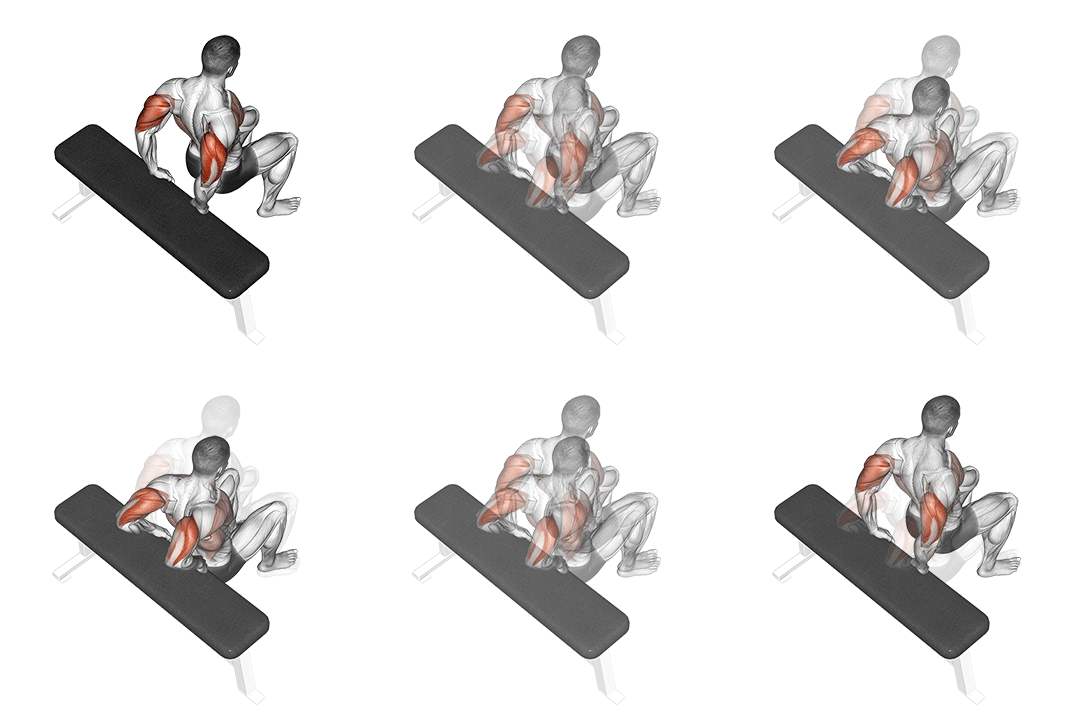
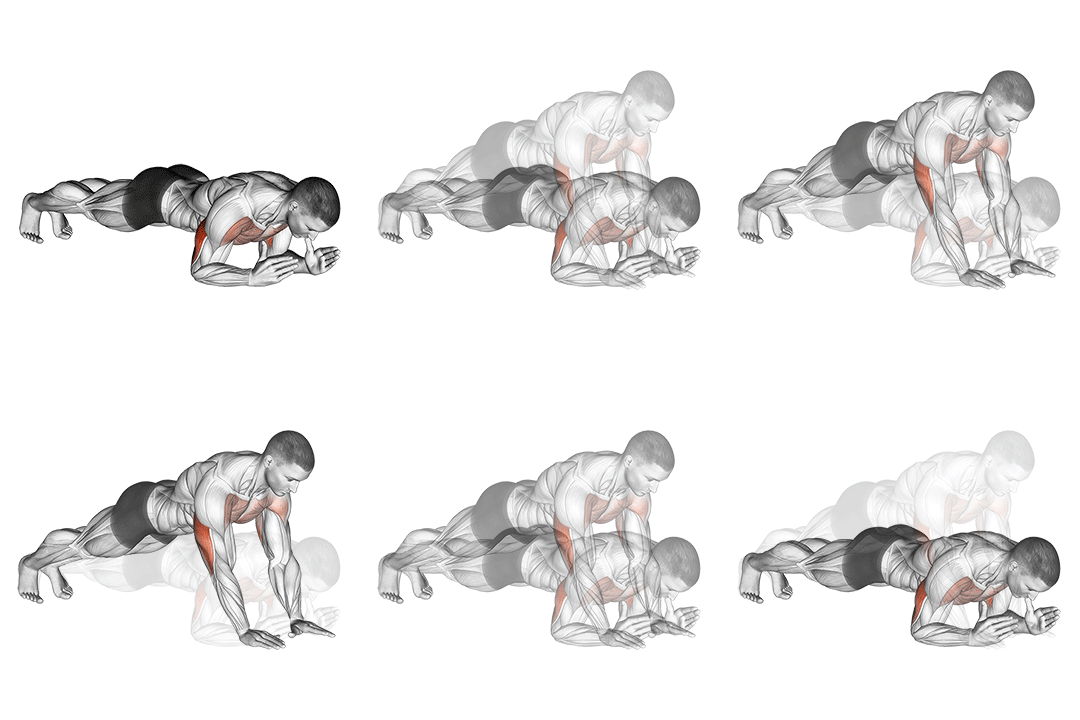
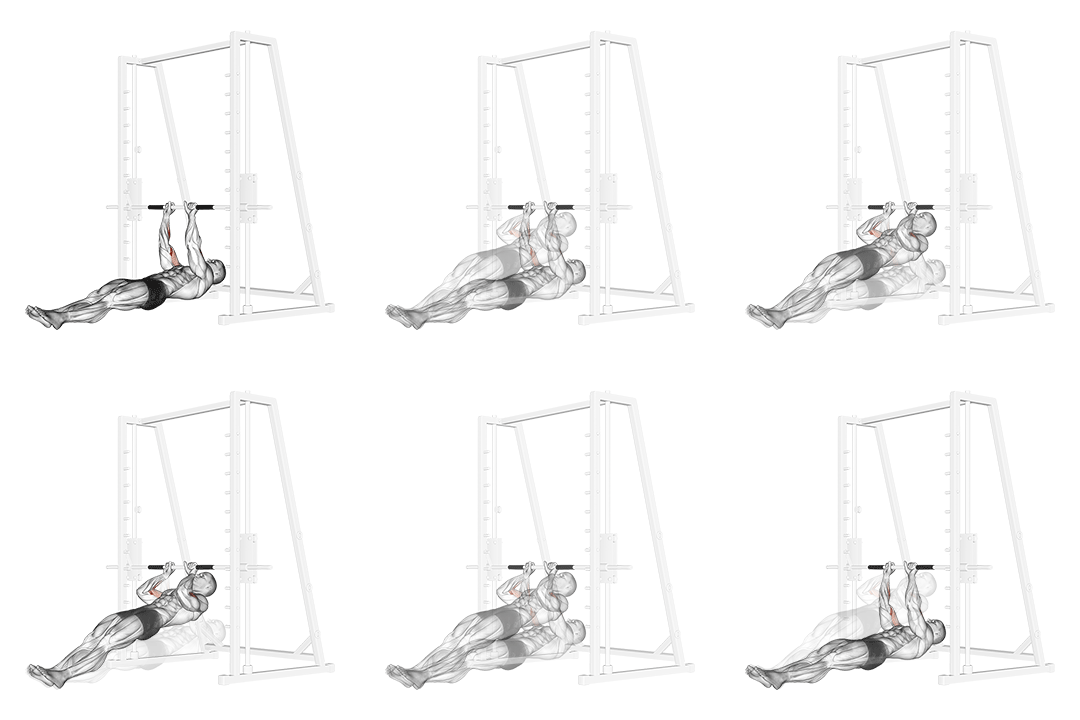
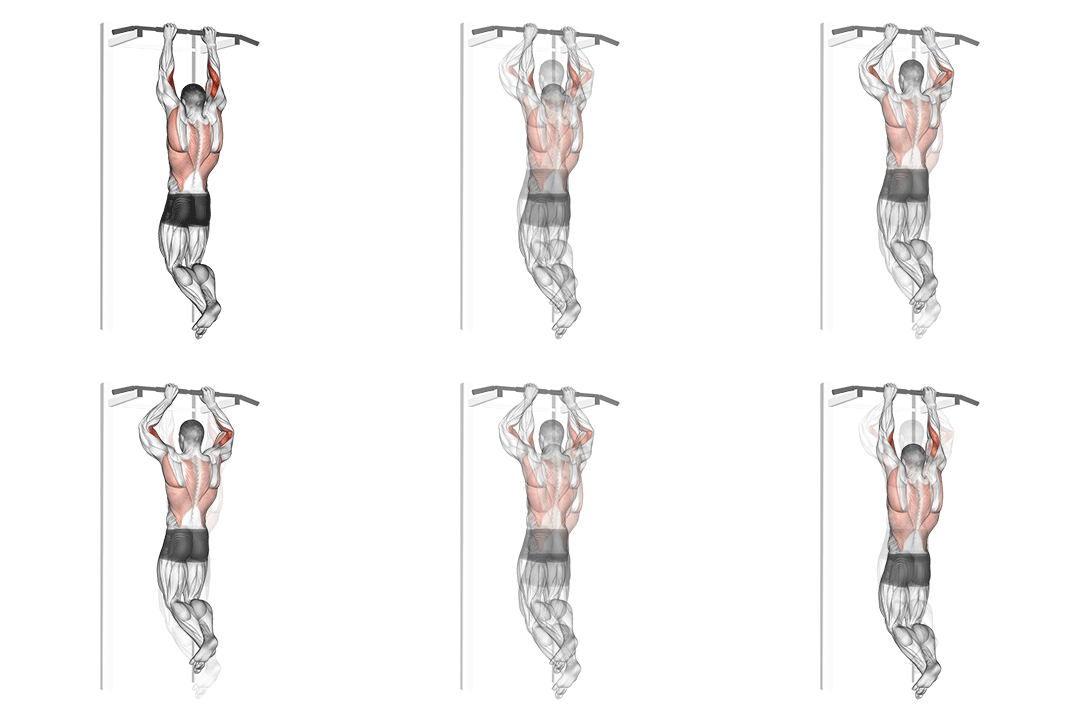
Handstand
advanced balance exercise · body weight · targets triceps
- Body part
- upper arms
- Primary target
- triceps
- Equipment
- body weight
- Difficulty
- advanced
The handstand is a foundational gymnastic skill — and one of the most rewarding bodyweight movements a trainee can pursue. Inverted with the body fully vertical, hands flat on the floor and feet pointed at the ceiling, the entire body weight stacks through the shoulders, arms, and wrists. Done well, a handstand looks effortless. Building one well takes 6-18 months of dedicated practice for most adults starting from zero, sometimes longer. What makes the handstand worth the effort is what it builds along the way. The shoulders develop strength they don't acquire from any pressing exercise — the constant low-grade isometric of supporting bodyweight overhead trains stability, joint integrity, and end-range strength simultaneously. The core engages every second to maintain a straight line; the wrists, often the limiting factor, build tolerance through gradually increased loading. By the time you can hold a free-standing handstand for 30 seconds, your shoulders, core, and wrists have transformed. The path runs through wall-supported variations: chest-to-wall holds (which teach proper alignment), back-to-wall walks (which build entry confidence), kick-up practice (which trains the dynamic entry), and finally free-standing balance practice. Skipping this progression and chasing the free-standing version directly is how most adults develop wrist tendinitis or shoulder impingement and quit. Patient progression keeps the practice productive and the body intact. For trainees willing to commit to daily 5-10 minute sessions, the handstand becomes one of the most satisfying skills in bodyweight training.
Why train the Handstand?
- Builds shoulder strength and joint integrity in ways no pressing exercise can match.
- Develops the core line that supports every other bodyweight skill from L-sits to muscle-ups.
- Improves wrist resilience through gradually loaded inversion — useful for any pressing movement.
- Trains proprioception and balance in a way that carries over to almost every athletic context.
- Provides clear, motivating progression milestones (first kick-up, first wall hold, first 30-second freestand).
- Becomes a lifetime skill — once built, handstands maintain easily with brief regular practice.
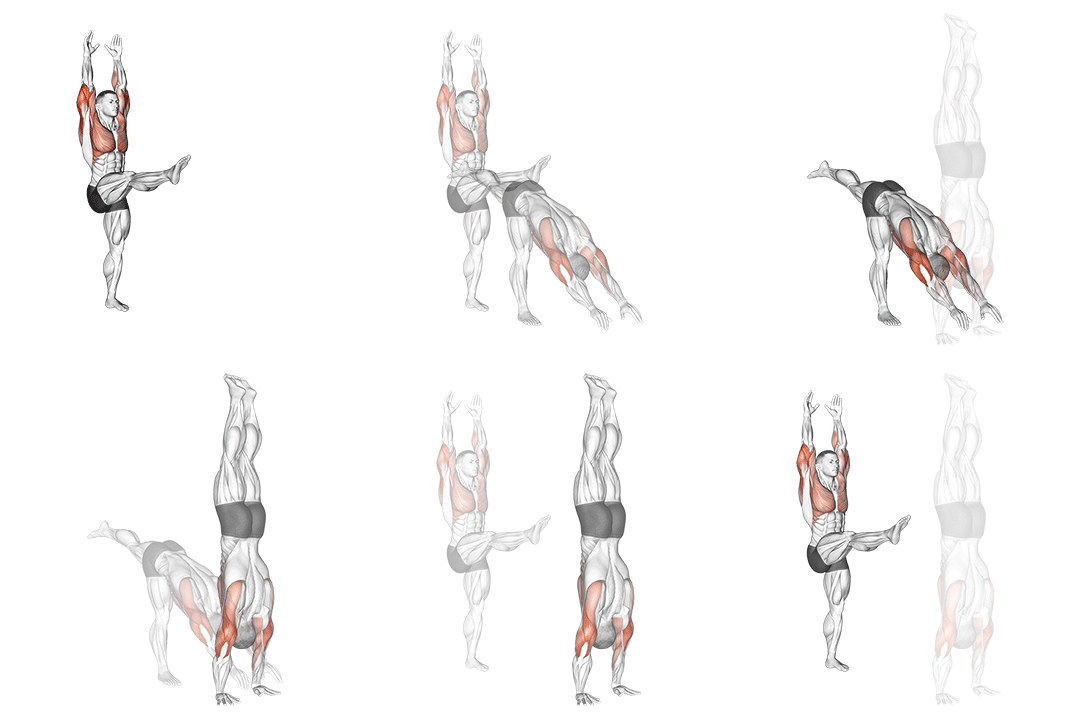
How to do the Handstand: step by step
- 1Find an open space with enough room to perform a handstand.
- 2Place your hands on the ground shoulder-width apart, fingers pointing forward.
- 3Kick your legs up towards the wall, using your core and shoulders to maintain balance.
- 4Once in a handstand position, engage your triceps to support your body weight.
- 5Hold the handstand for as long as you can maintain balance.
- 6To come down, slowly lower your legs back to the ground.
- 7Repeat for the desired number of repetitions.
Muscles worked
Primary
triceps
Secondary
shoulders, core
Common mistakes to avoid
Skipping the wall progressions
Most failed handstand journeys come from people who tried free-standing balance before they had the strength to hold the position itself. Wall progressions are not optional. Chest-to-wall holds for 30-60 seconds, multiple times per week, for 4-8 weeks before attempting freestanding work.
Banana shape (over-arched lower back)
The classic beginner shape — the lower back arches, hips push forward, ribs flare. This shape is unstable, hard on the lower back, and won't progress to free balance. Bracing the abs and squeezing the glutes pulls the body into a true straight line. Practice the line at the wall first; balance second.
Bent arms at the bottom of the press
Bent arms during a handstand collapse the support structure and place stress on the elbows and wrists. The arms must lock out fully throughout the hold. If you can't hold straight arms in a chest-to-wall handstand for 30 seconds, you don't have the prerequisite strength for free balance — keep working on holds.
Wrong hand position
Hands should be shoulder-width apart with fingers spread and slightly turned out (10-15 degrees). Fingers point forward, palms flat. Some trainees place hands too narrow or with fingers pointing inward, which destabilizes the support and stresses the wrists. Get the hand position right first; everything else builds from there.
Not training the wrists separately
Wrist tendinitis is the most common reason people quit handstand training. The wrists need direct preparation — wrist push-ups, prayer stretches, weighted wrist curls — to handle the inversion load. 5-10 minutes of dedicated wrist work per day prevents most issues.
Easier and harder variations
Easier
Start with chest-to-wall handstand holds (face the wall, kick up, hold). This is the strength-building version and the highest priority for most beginners. Progress to back-to-wall walks (kick up against a wall, walk hands closer to the wall while feet walk down). Build to 60-second chest-to-wall holds before attempting free balance.
Harder
Once free-standing 30-second holds are comfortable, add walking handstands, single-arm progressions (lifting one hand briefly), and one-arm handstand work. For maximum challenge, progress to handstand push-ups (HSPUs), then deficit HSPUs (hands on parallettes), then free-standing HSPUs.
Alternative exercises
Pike push-up
Trains the same vertical pressing pattern with much less skill demand. Useful as a strength accessory while building handstand skill.
Wall walk
Walking up the wall into a handstand position. Builds the dynamic strength and confidence to enter the position. Excellent prerequisite drill for handstand work.
Crow pose
Yoga balance pose where the body weight is supported on bent arms with knees on the elbows. Different inversion (and easier) but trains similar wrist and shoulder loading.
How to program the Handstand into your training
Handstand training works best as a frequent, brief practice rather than as occasional long sessions. The skill demands daily exposure for the nervous system to wire the balance and the body to adapt to the inverted position. Daily practice: 5-10 minutes per day. This is non-negotiable for serious progress. Distribute the time across your training week — morning warm-up, mid-day break, end of training session. Skill consolidation happens with frequency. Weekly structure: 4-6 days of handstand work per week. The skill is forgiving of frequent practice because the load on any given session is moderate. A typical week: 4 days of 8-10 minute sessions plus 2 days of 5-minute mini-sessions. Session structure: Always start with wrist preparation (1-2 minutes of mobility and gentle loading). Then 3-5 sets of holds at your current level (chest-to-wall or freestanding), 3-5 sets of kick-up practice if relevant, 2-3 sets of an accessory like wall walks or pike push-ups. End with wrist mobility cool-down. For beginners (no current handstand): focus exclusively on chest-to-wall holds for the first 4-6 weeks. Build to 60-second holds before introducing free-standing kick-ups. The patience pays off — trainees who skip the strength phase typically quit within 2 months from frustration or injury. For maintenance once the skill is built: 3 sessions per week of 5-minute practice maintains the handstand indefinitely. Don't program handstand work on the same day as heavy pressing — the cumulative shoulder load can exceed what the joint tolerates. Keep handstand days lighter on other shoulder-loading exercises.
Recovery and frequency
Handstand training is demanding on the wrists, shoulders, and core. The wrists are usually the limiting recovery factor — sore wrists, especially at the heel of the hand, mean too much volume too fast. 48 hours between hard handstand sessions is the minimum if volume is high. Light skill practice (5-10 minutes of holds) can be done daily. Watch for shoulder impingement signs — pinching pain at the front of the shoulder, popping during reps, decreased shoulder range. If these appear, reduce volume by 50% and add rotator cuff prehab work for 2 weeks before scaling back up. Wrist tendinitis is the second most common issue — sharp pain on the inside or outside of the wrist during or after sessions. Reduce volume immediately and add daily wrist mobility, prayer stretches, and gentle eccentric wrist work. Consistent wrist preparation (5-10 minutes per day) prevents most cases. Sleep, hydration, and protein intake all support the high adaptation demand of skill training.
Frequently asked questions
How long should I hold a handstand?
Build to 30-60 second chest-to-wall holds first. Free-standing holds: aim for 5-10 seconds initially, building to 30 seconds over months. The first balanced 30-second freestanding hold is a major milestone for most trainees.
How often should I practice handstands?
4-6 days per week of brief sessions (5-10 minutes each) is the sweet spot. Skill demands frequency. Heavy-volume days less than 3 times per week to allow shoulder and wrist recovery.
How long does it take to learn a handstand?
Most adults reach a 30-second chest-to-wall hold in 2-4 months and a 30-second free-standing hold in 6-18 months. Younger trainees and those with gymnastic backgrounds progress faster. Patience is the main predictor of success.
Why can't I balance free-standing yet?
Almost always insufficient strength rather than balance issues. If you can't hold a chest-to-wall handstand for 60 seconds with a straight body line, you don't have the strength prerequisite for free balance. Build the holds first; balance follows.
Will handstands hurt my wrists?
They can if you skip wrist preparation or build volume too fast. With consistent wrist mobility work and gradual volume progression, most trainees develop strong, resilient wrists rather than tendinitis. The 5-10 minutes of daily wrist work is non-negotiable.
Should I learn handstand push-ups before free-standing handstands?
No — handstand holds first, push-ups second. The static hold builds the foundational shoulder strength and core line. Pike push-ups can serve as a strength bridge, but pursuing HSPUs before holding a handstand for 30 seconds usually creates form issues that compound later.
Useful tools for this exercise
Build a workout with the Handstand
Puna gives you guided bodyweight workouts you can do anywhere — no equipment, no gym, just structured progressions that build real strength.