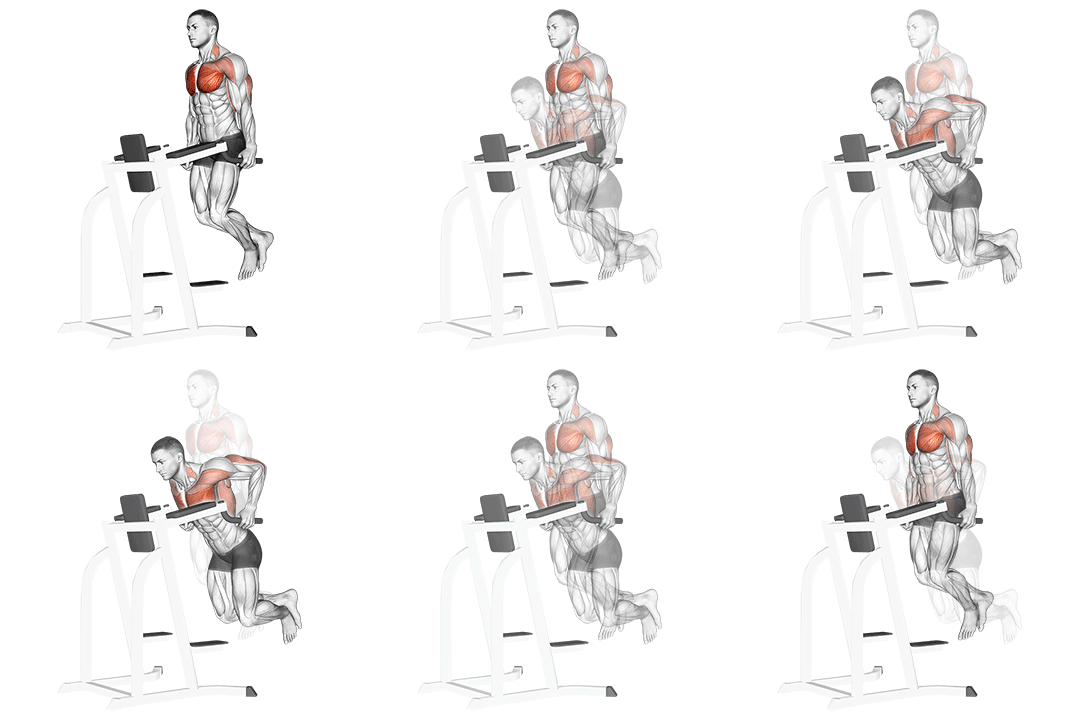
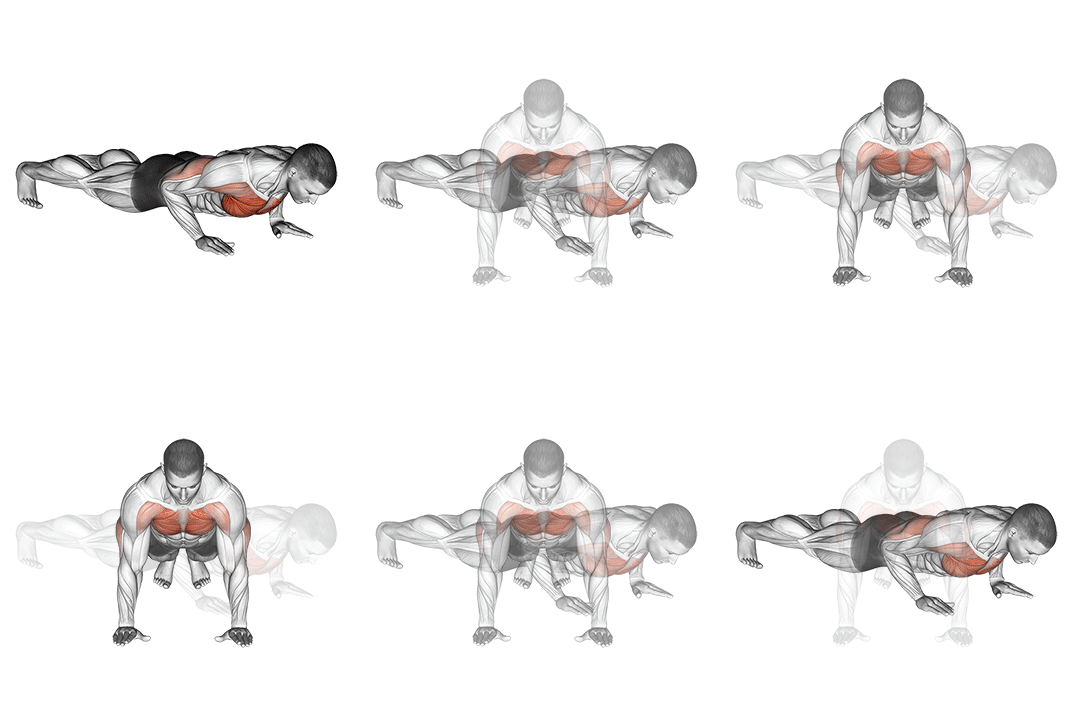
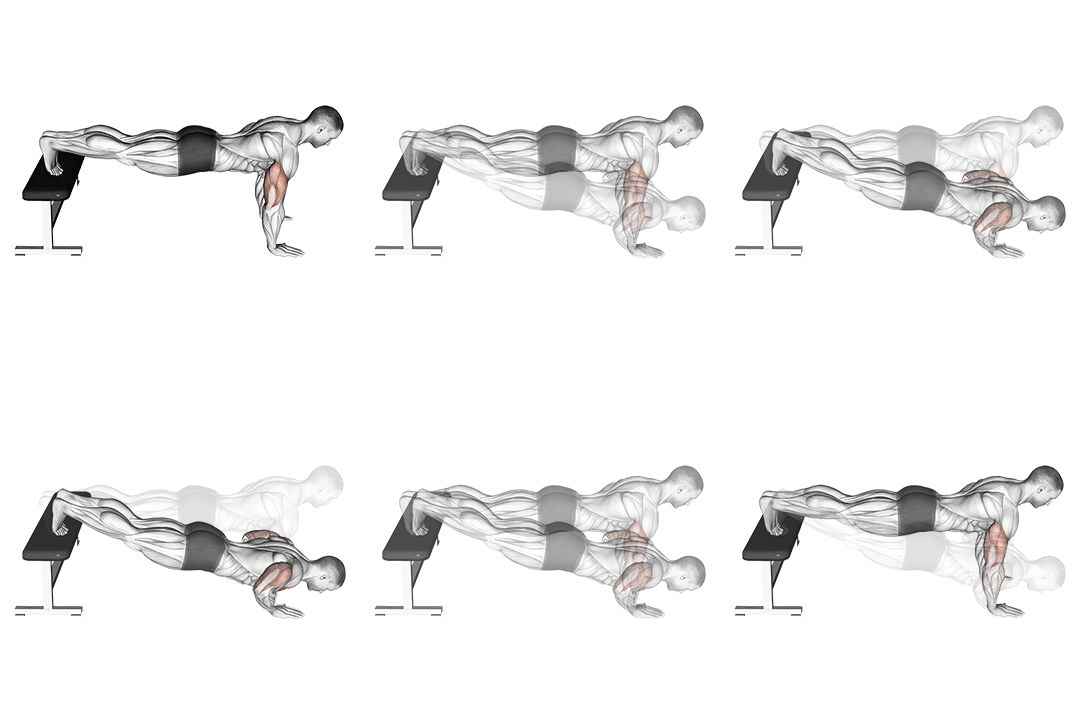
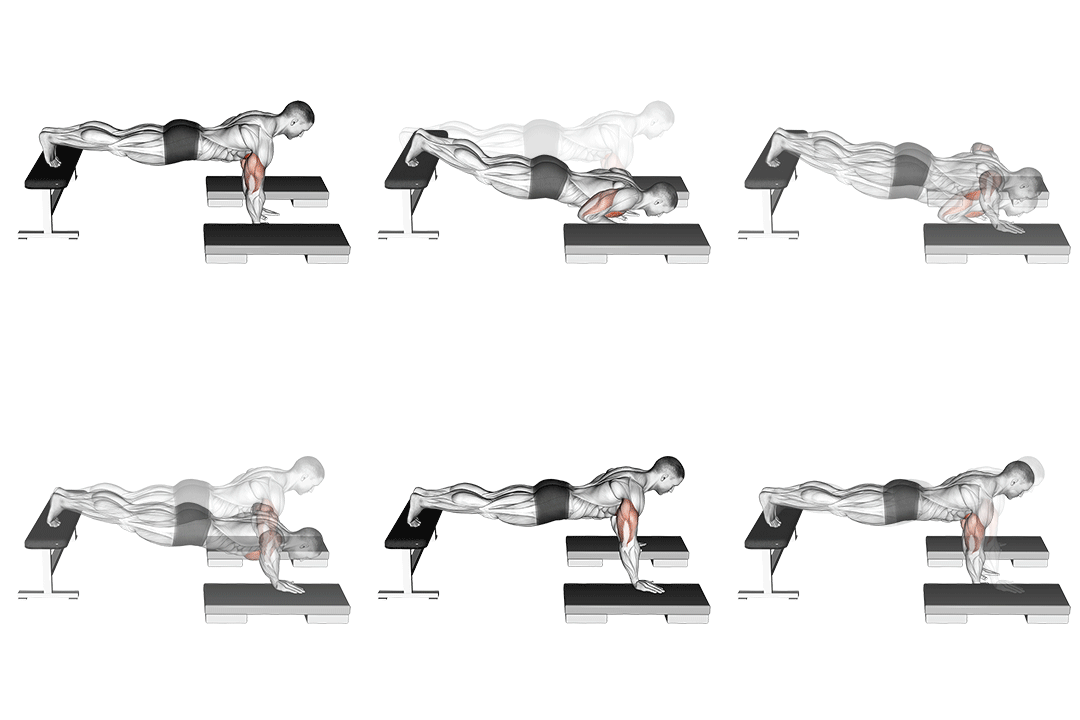
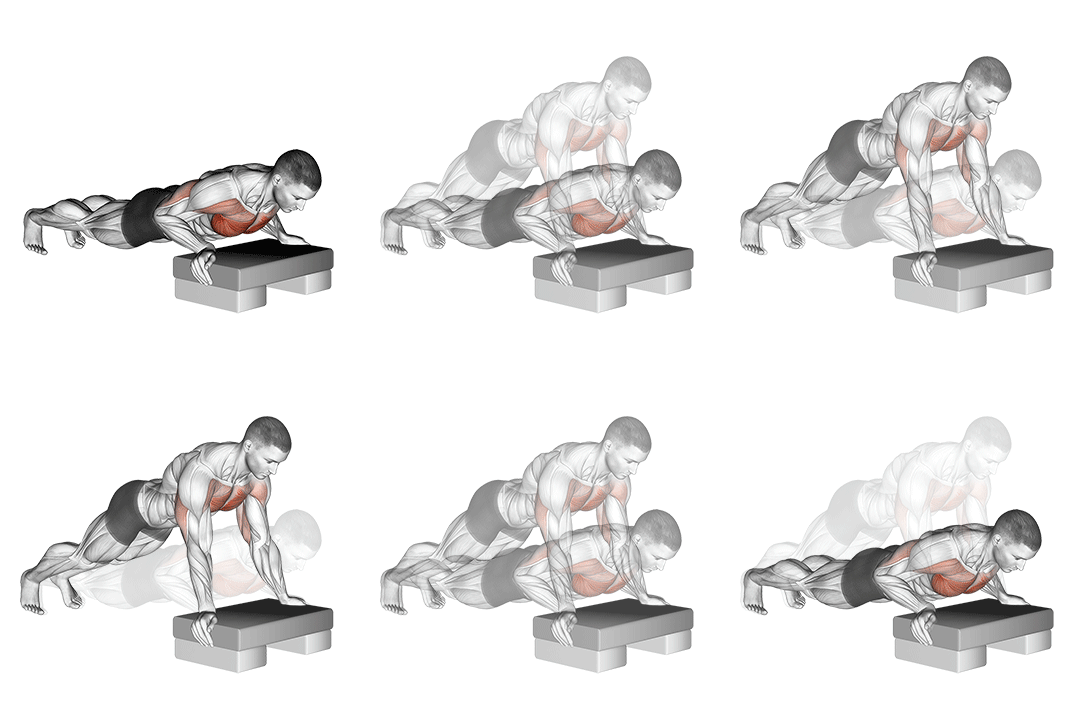
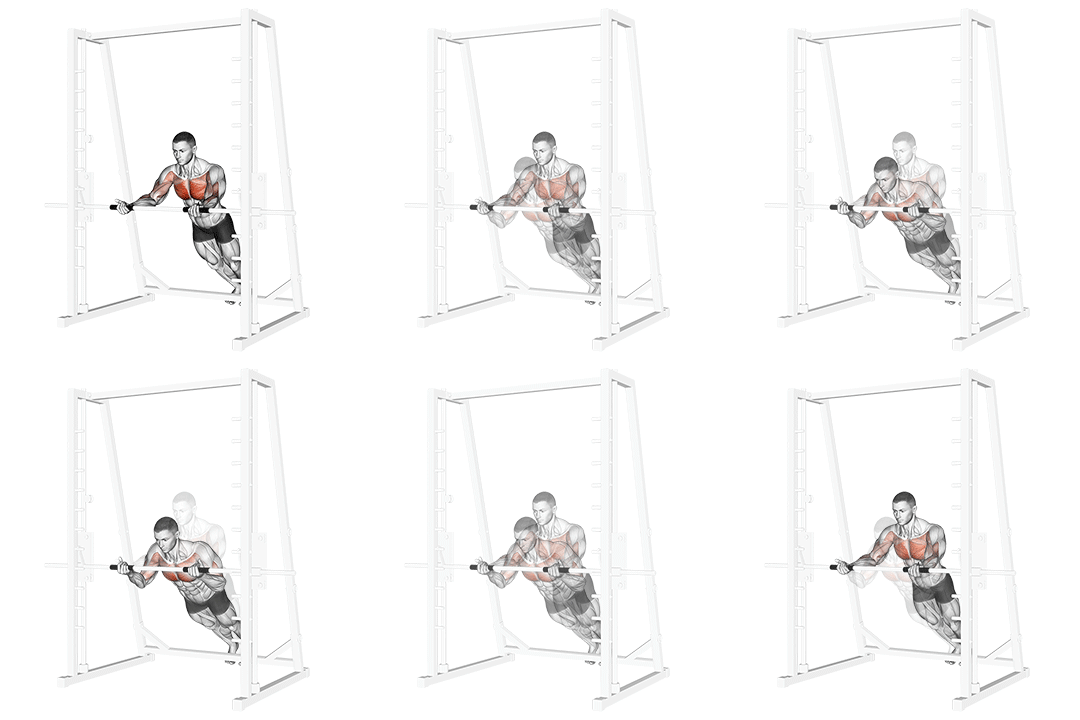
Dynamic Chest Stretch (male)
beginner mobility exercise · body weight · targets pectorals
- Body part
- chest
- Primary target
- pectorals
- Equipment
- body weight
- Difficulty
- beginner
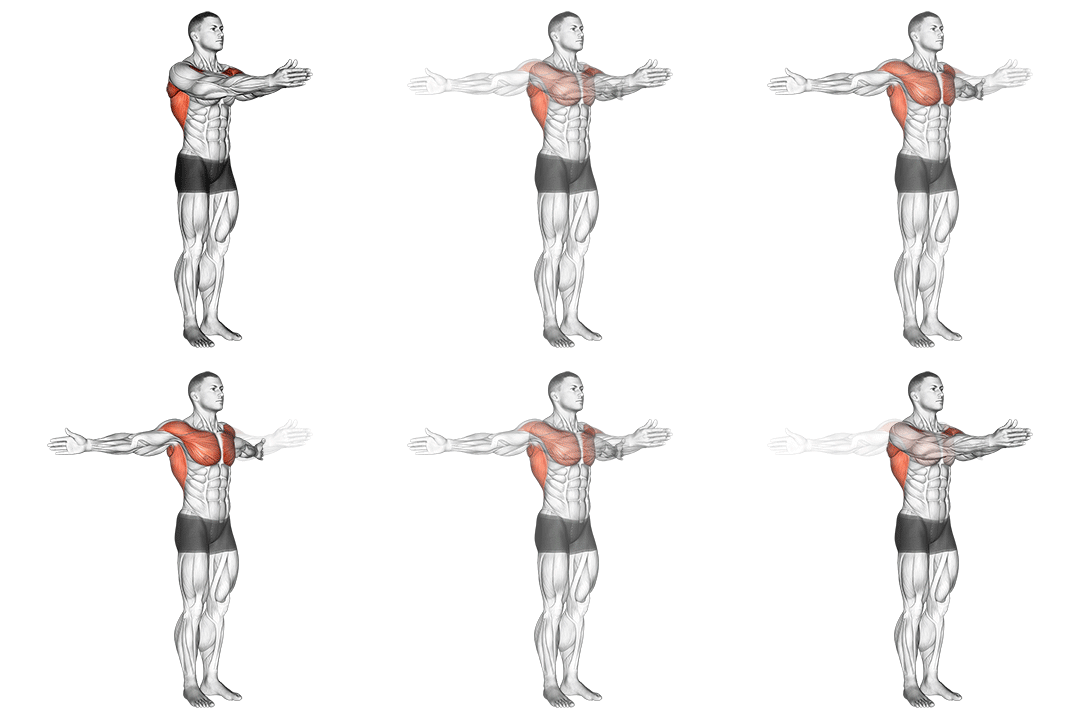
The dynamic chest stretch is a moving mobility drill where you alternate opening the arms wide to the sides with crossing them in front of the body. Unlike static stretches that hold a single position, this drill flows continuously between two positions, training the chest and front of the shoulders through their full range while warming up the surrounding tissue. It's one of the highest-leverage warm-up movements in any upper-body session. What makes this drill particularly useful is its dual function. The wide-arm position lengthens the pecs and front delts; the cross-arm position stretches the rhomboids and rear delts. By alternating between them, a single 60-second drill addresses two of the most common upper-body restrictions in modern bodies — chronically tight chest from forward-leaning desk posture, and chronically tight rear delts from the same compensatory pattern. The continuous motion also pumps blood through the shoulder musculature, raising tissue temperature without any cardiovascular load. For pre-workout warm-ups, the dynamic chest stretch outperforms static chest stretches because it doesn't temporarily reduce muscle force production (a known effect of pre-workout static stretching for periods over 30 seconds). The dynamic version improves range without the strength decrement, making it the preferred choice before pressing or pulling sessions. It's also valuable as a desk-break drill — 60 seconds of arm circles into chest stretches breaks up the chronic tightness of long sitting periods.
Why train the Dynamic Chest Stretch (male)?
- Lengthens the pecs and front delts dynamically, improving range without temporarily reducing strength.
- Counters the chronic tightness from forward-leaning desk posture in 60 seconds or less.
- Pumps blood through the shoulder musculature, warming tissue before pressing or pulling work.
- Trains scapular control through the alternating retraction and protraction of the shoulder blades.
- Costs nothing, requires no equipment, and integrates easily into any warm-up routine.
- Pairs naturally with band pull-aparts and shoulder rolls for a complete upper-body primer.
How to do the Dynamic Chest Stretch (male): step by step
- 1Stand tall with your feet shoulder-width apart.
- 2Extend your arms straight out to the sides, parallel to the ground.
- 3Slowly bring your arms forward, crossing them in front of your body.
- 4Feel the stretch in your chest muscles.
- 5Hold the stretch for 10-30 seconds.
- 6Return to the starting position and repeat for the desired number of repetitions.
Muscles worked
Primary
pectorals
Secondary
shoulders, triceps
Common mistakes to avoid
Rushing the motion
Speed defeats the purpose. The arms should travel slowly enough to feel the stretch at each end position. Aim for 2-3 seconds out (wide), 2-3 seconds back (crossed). Whipping the arms back and forth produces no stretch and risks a shoulder strain at the extremes.
Hyperextending the elbows
When the arms reach wide, the elbows want to lock out beyond their normal range. Keep a slight bend at the elbow throughout. Hyperextending stresses the joint and reduces the chest emphasis.
Letting the shoulders shrug toward the ears
As the arms move, the trapezius often pulls the shoulders up toward the ears, especially when the arms reach wide. Pack the shoulders down and away from the ears throughout. Shrugging shifts work to the upper traps and away from the chest.
Hunching the upper back during the cross
When the arms cross in front, many trainees round the upper back to enhance the rear delt stretch. The rounding actually shifts the stretch away from the rear delts and into the upper back. Keep the chest open even during the cross-arm phase.
Skipping the held endpoints
While 'dynamic' suggests continuous motion, brief 1-2 second pauses at each end position dramatically improve the drill's effectiveness. The pause cues the muscle to release in that range. Pure swinging without pauses reduces benefit.
Easier and harder variations
Easier
Reduce the range — bring the arms only to shoulder-height in the wide position rather than fully horizontal. This is appropriate for trainees with shoulder restrictions or those just starting upper-body mobility work. Or perform with elbows slightly bent throughout to reduce the shoulder demand.
Harder
Add a slight backward arch through the upper back during the wide-arm phase, opening the chest more aggressively. Or progress to standing arm circles, which combine the chest stretch with rotational shoulder work. For maximum benefit, hold light weight (1-3 lbs) in each hand during the motion.
Alternative exercises
Doorway pec stretch
Static version of the same chest stretch. Better for end-range tissue lengthening; the dynamic version is better for warm-up. Use both.
Arm circles
Different rotational pattern but trains similar tissue. Excellent complement before pressing work.
Cross-body shoulder stretch
Static version that targets the rear delts specifically. Pair with the dynamic chest stretch for compound shoulder mobility work.
How to program the Dynamic Chest Stretch (male) into your training
The dynamic chest stretch works best as a warm-up drill before upper-body sessions or as a desk-break reset, not as a standalone mobility session. Pre-workout warm-up: 1-2 sets of 10-15 reps performed slowly, after light cardio (3-5 minutes of brisk walking or jumping jacks) and before any pressing or pulling work. The combined effect of warmth, blood flow, and dynamic range preparation makes upper-body sessions feel noticeably looser. Desk-break protocol: 30-60 seconds every 90 minutes during long work sessions. Tied to existing triggers (between meetings, before each coffee), the routine builds without willpower cost. The frequency prevents tightness from accumulating rather than addressing it after the fact. Morning routine: 1-2 sets of 12-15 reps as part of a 5-minute upper-body mobility flow. The combination of dynamic chest stretches, arm circles, and shoulder rolls addresses most desk-induced upper-body tightness in under 5 minutes per day. For athletes before sports: 2 sets of 12-15 reps as part of a sport-specific warm-up. Particularly valuable before throwing sports, racket sports, and rotational athletics where chest mobility under speed matters. For general fitness: 60 seconds before each upper-body session is enough. The drill is a primer, not a workout itself. Don't program this as a full mobility session — it's too brief to drive serious tissue adaptation on its own. It works as a complement to longer static stretching during cooldowns.
Recovery and frequency
The dynamic chest stretch has zero recovery cost. The motion is light, the load is bodyweight only, and the tissue stress is minimal. You can do it many times per day without consequence. The main warning signs are sharp shoulder pain at the extremes of motion or pinching sensations during the cross. Both suggest you're forcing range that current shoulder mobility doesn't support. Reduce range, slow down, and skip the drill entirely on days when the shoulder feels off. For ordinary upper-body tightness, the practice is safe, recovery is immediate, and consistency over weeks produces gradual improvement in chest and shoulder range.
Frequently asked questions
How many reps of the dynamic chest stretch should I do?
10-15 reps per set, 1-2 sets total. The drill is a warm-up, not a workout — quality matters more than count. 60 seconds total is enough for most trainees.
How often should I do this stretch?
Daily as a warm-up before upper-body work. Multiple times per day during long desk sessions. There's no recovery cost so frequency is rarely a problem.
Should I do this before or after lifting?
Before. The dynamic nature warms tissue and prepares for pressing or pulling without temporarily reducing strength. After lifting, static chest stretches (held for 30-60 seconds) drive more lasting tissue length change.
Will this help my push-ups?
Often yes, particularly if chest tightness is restricting your push-up range. Most trainees who introduce a 60-second dynamic chest warm-up before push-ups feel deeper, more comfortable reps within a session.
How is this different from static chest stretching?
Static stretching holds a single position for 30-60 seconds; this drill flows continuously between two positions. Static is better for tissue length adaptation post-workout. Dynamic is better for warming up before sessions.
Can I do this with shoulder pain?
Often yes, but reduce range to whatever feels painless. Stop if pinching or sharp pain occurs. Mild shoulder tightness usually responds well to gentle dynamic mobility. Persistent pain warrants assessment from a physiotherapist.
Useful tools for this exercise
Build a workout with the Dynamic Chest Stretch (male)
Puna gives you guided bodyweight workouts you can do anywhere — no equipment, no gym, just structured progressions that build real strength.