Drop Push Up
beginner strength exercise · body weight · targets pectorals
- Body part
- chest
- Primary target
- pectorals
- Equipment
- body weight
- Difficulty
- beginner
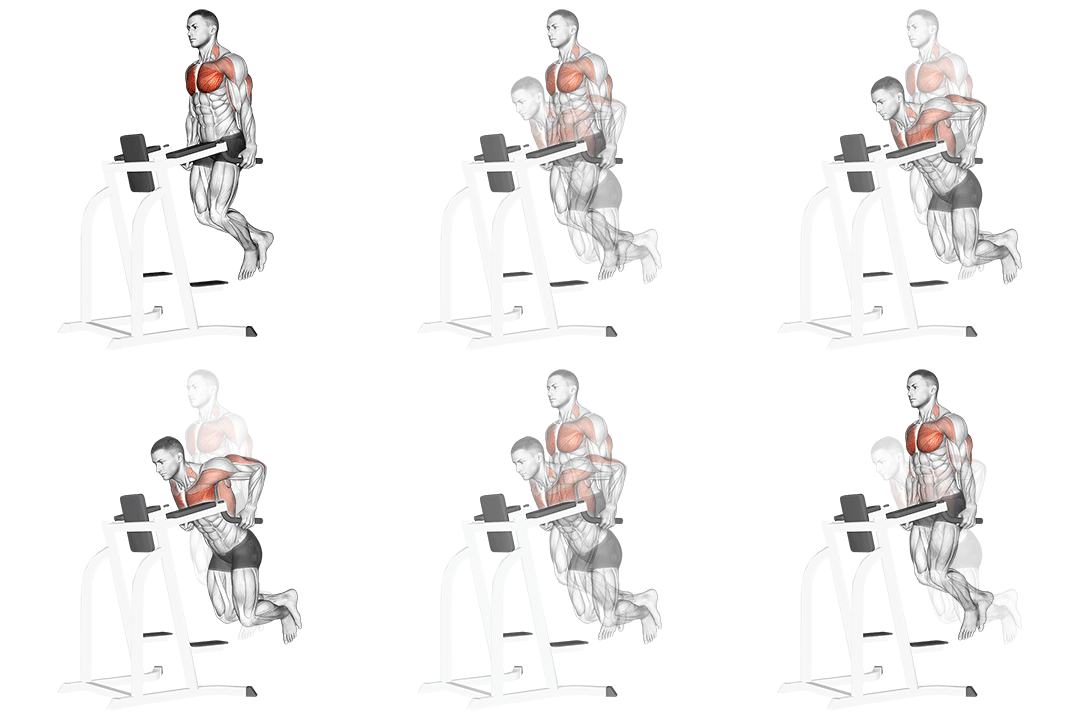
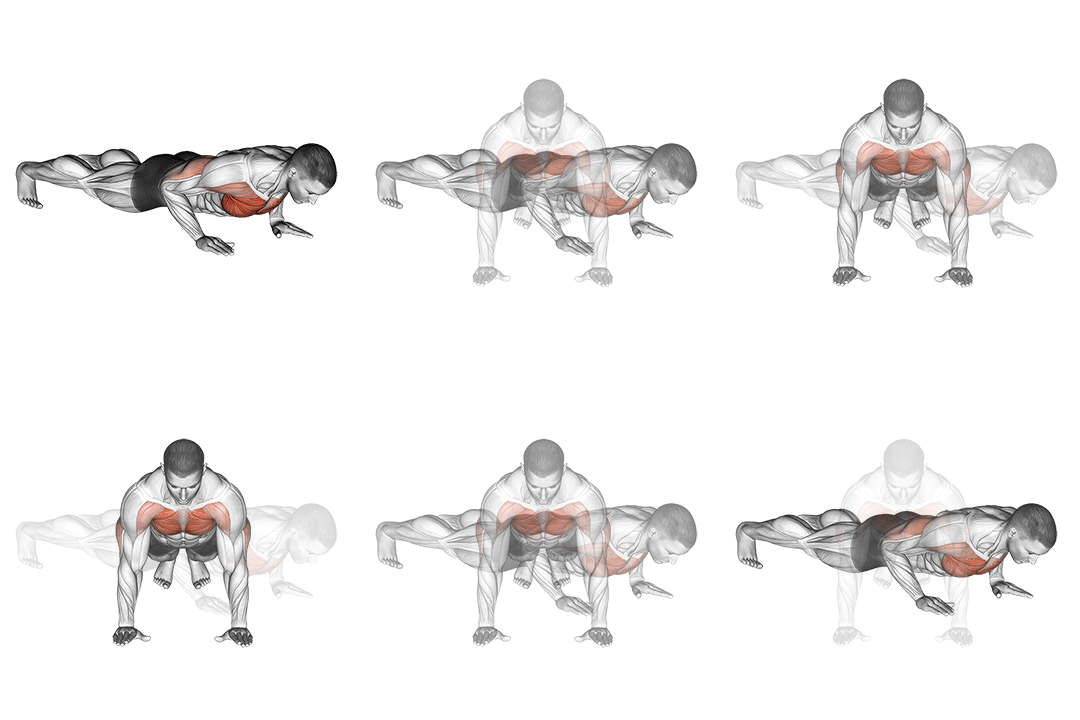
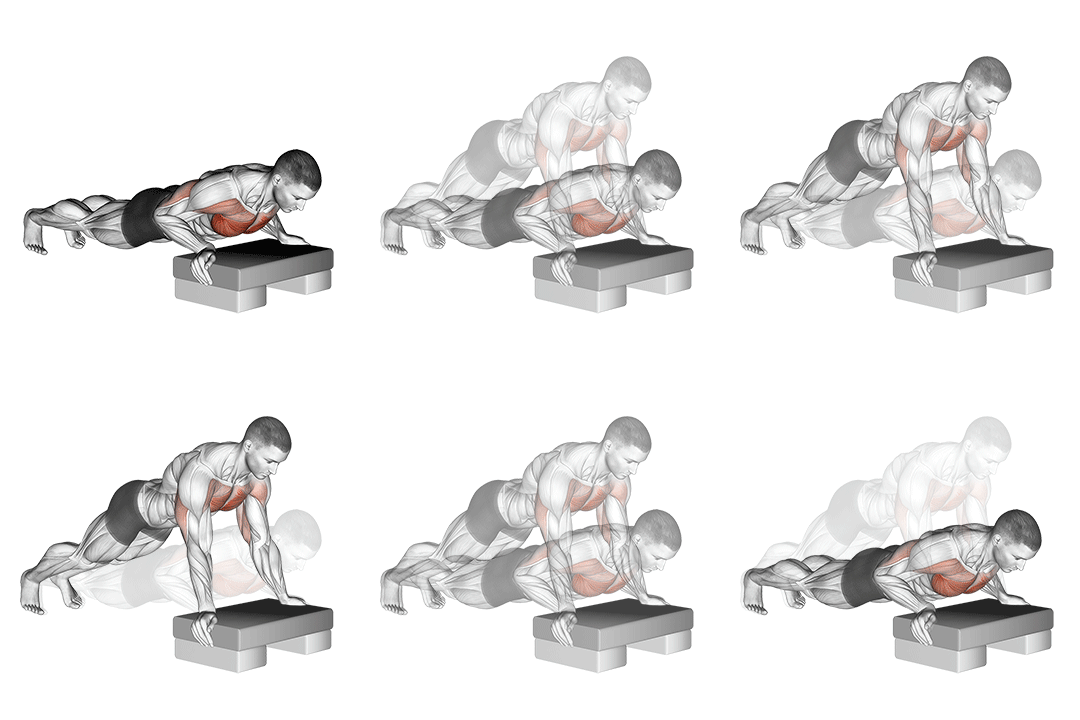
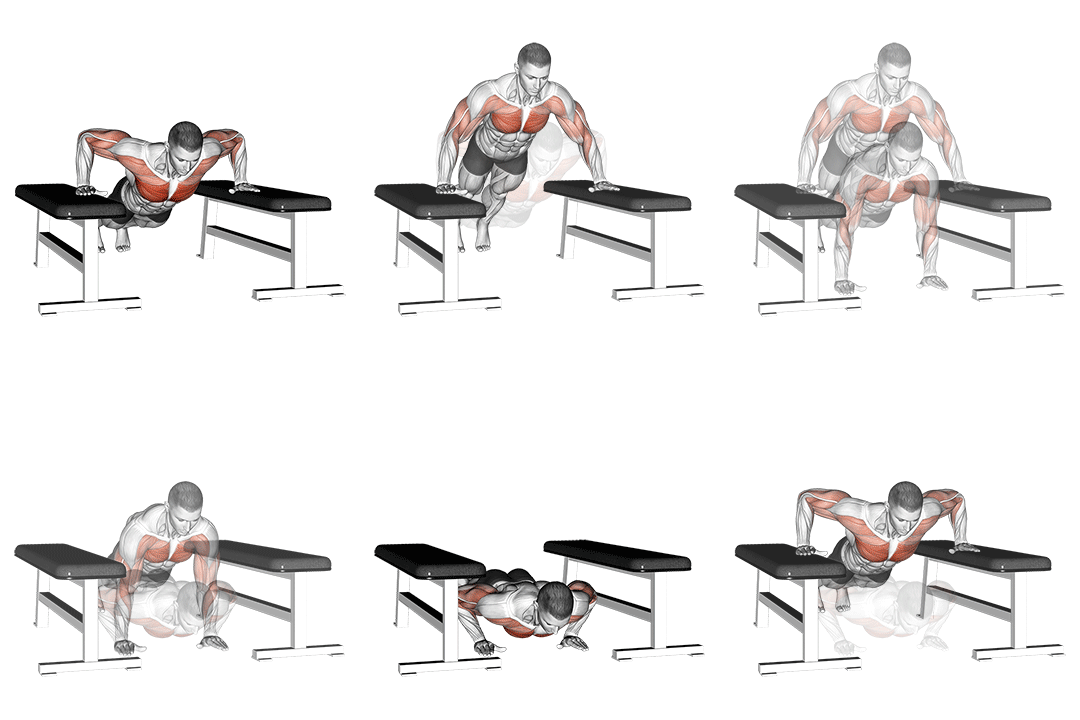
The drop push-up is a hybrid bodyweight exercise that combines a standard push-up with a dynamic transition to a knee-supported position partway through the rep. From a high plank, you lower your chest toward the ground, then drop your knees to the floor at the bottom of the rep before pushing back up to a knees-supported position. The drop creates a brief moment of complete unloading at the bottom, followed by a knee-assisted press that's significantly easier than a full push-up. This variation lives in an interesting niche. It's not a hardcore strength builder — the knee drop reduces the work required at the bottom of the rep — but it's also not a pure regression to knee push-ups. The starting position is the full plank, which still demands core control, shoulder stability, and the basic strength to lower the body controlled. Where it earns its place is as a high-rep finisher at the end of a session when push-up form is breaking down, or as a transitional exercise for trainees building from knee push-ups to full push-ups. For most general-fitness trainees, this isn't a primary push-up choice. Either commit to full push-ups or commit to clean knee push-ups; the hybrid sits awkwardly between the two. But for specific contexts — building back from injury, accumulating push-up volume after primary sets, or as a learning drill for the lowering phase of a push-up — the drop push-up has its uses. Used thoughtfully, it provides a useful tool for managing fatigue and form across long upper-body sessions.
Why train the Drop Push Up?
- Allows extended push-up volume by reducing load through the knee drop on each rep.
- Provides a useful transitional exercise for trainees building from knee push-ups to full push-ups.
- Trains the eccentric (lowering) phase of the push-up at full bodyweight while making the concentric (pressing) phase easier.
- Works as a high-rep finisher when full push-up form is breaking down due to fatigue.
- Useful for accumulating volume in deload or recovery contexts where full push-ups would be too demanding.
- Builds the core control needed to maintain plank position before the knee drop.
How to do the Drop Push Up: step by step
- 1Start in a high plank position with your hands slightly wider than shoulder-width apart.
- 2Lower your chest towards the ground, keeping your elbows close to your body.
- 3Once your chest is just above the ground, quickly drop your knees to the ground.
- 4Push yourself back up to the starting position by extending your arms.
- 5Repeat for the desired number of repetitions.
Muscles worked
Primary
pectorals
Secondary
triceps, shoulders
Common mistakes to avoid
Dropping the knees too early
If the knees drop before the chest descends close to the ground, the exercise becomes a knee push-up with extra steps. The knee drop should happen at the bottom of the descent, after the chest is within a few inches of the floor. Dropping early skips the demanding eccentric phase and reduces the training stimulus.
Hips sagging during the plank phase
Before the knee drop, the body is in a full plank position and must hold a straight line. Many trainees let the hips sag as fatigue builds across long sets, which collapses the position and stresses the lower back. Brace the abs and glutes throughout — the body should travel as one unit until the deliberate knee drop.
Using the knee drop as a momentum-generating motion
Some trainees use the knee drop almost like a spring, bouncing into the press-up. This stresses the kneecaps and trains nothing useful. The knee drop should be controlled, with the knees touching the ground gently before the press initiates.
Reverting to knee push-ups for the entire set
After the first knee drop, some trainees stay on their knees for subsequent reps rather than returning to the plank position. This collapses the exercise into knee push-ups and abandons the original purpose. Each rep should start in the full plank position, even when fatigue makes the plank harder.
Treating it as a primary push-up exercise
If you can do full push-ups, do full push-ups. The drop push-up is a finisher or transitional exercise, not a primary movement. Replacing standard push-ups with this variant slows progress without much benefit.
Easier and harder variations
Easier
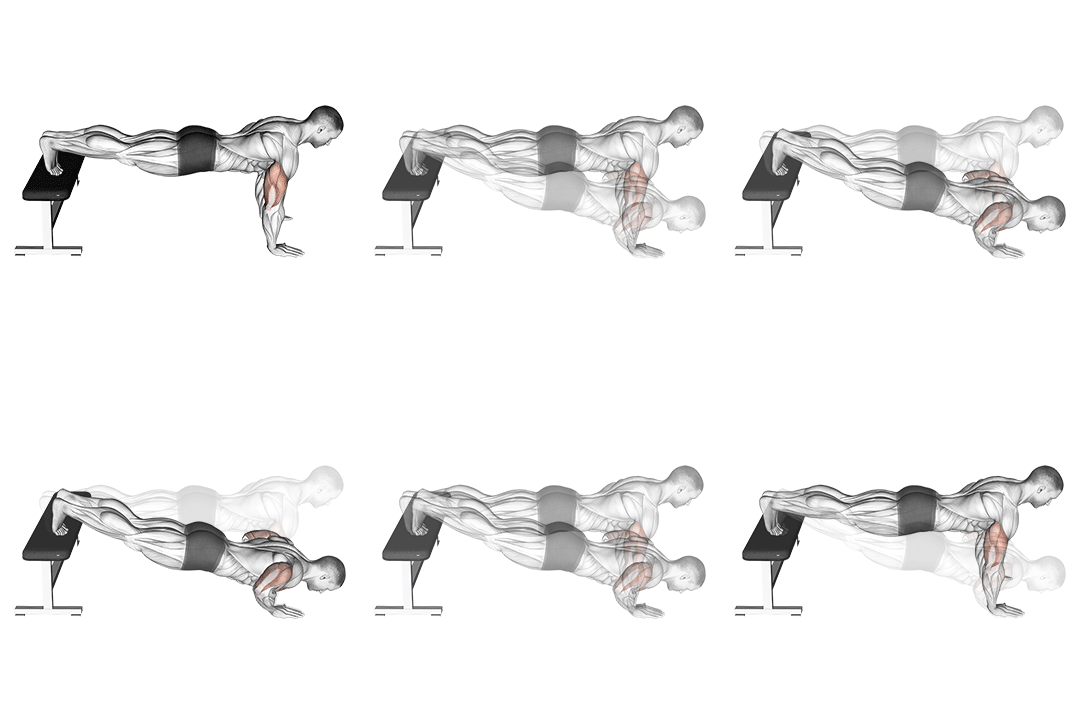
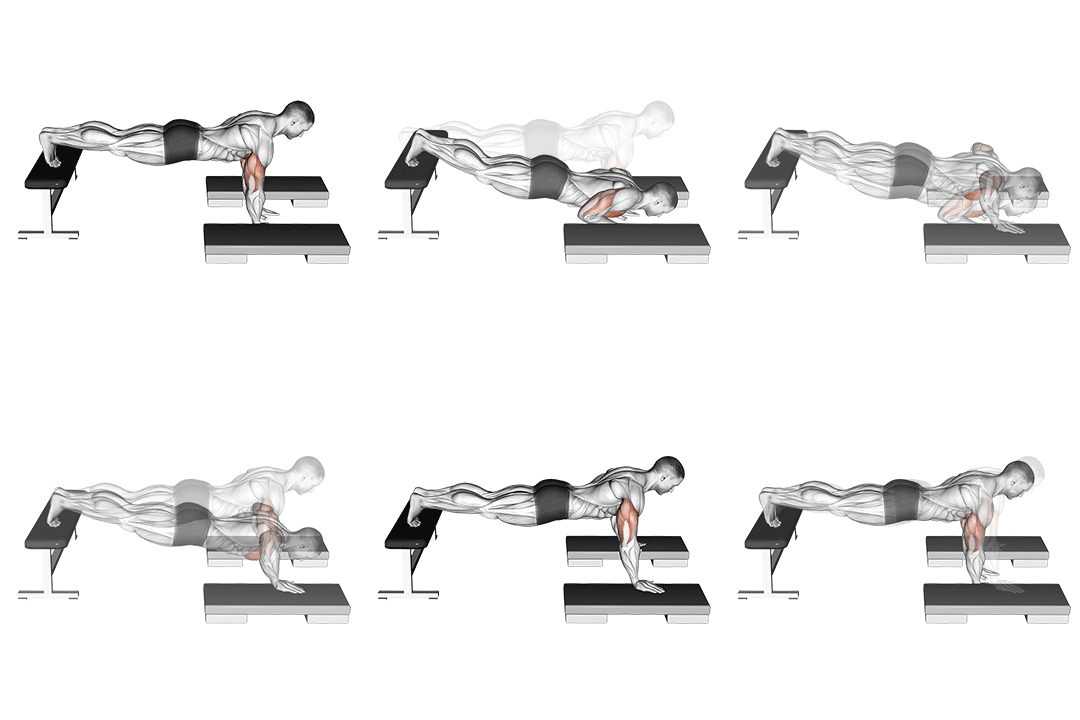
Start with elevated push-ups (hands on a bench) for the lowering phase, then drop to knees for the press. The reduced load makes the eccentric phase manageable for trainees who can't yet do full push-ups. Or perform with hands on a wall, dropping to a quarter-squat lean before the press.
Harder
Skip the knee drop and perform full push-ups. Or progress to slow-tempo full push-ups (3 seconds down, 1-second pause at the bottom, 1 second up) — this trains the same eccentric strength the drop push-up emphasizes, but at full bodyweight throughout.
Alternative exercises
Eccentric push-up
Lowers under control with the knees down for the press-up phase. Same general goal but cleaner execution. Useful for building push-up strength.
Knee push-up
Standard regression of the push-up. Cleaner than the drop version when full push-ups are too demanding. Use this if you can't yet hold a full plank.
Negative push-up
Slow descent to the floor, then reset to the top from the knees. Trains pure eccentric strength and is a common path from knee push-ups to full push-ups.
How to program the Drop Push Up into your training
The drop push-up sits in a narrow programming niche — useful as a finisher or transitional drill, not as a primary push-up exercise. As a finisher: 2-3 sets of 8-15 reps at the end of an upper-body session, after primary push-up volume is complete. The reduced load lets you accumulate additional pressing volume without breaking form. Total weekly volume of 30-60 reps in this context. As a transitional drill (knee to full push-up bridge): 3 sets of 6-10 reps, 2-3 times per week, alongside other progression work like negative push-ups and elevated push-ups. The combined approach builds strength faster than any single variation alone. In deload weeks: 3 sets of 8-12 reps as the only push-up work for the week. The reduced load matches the deload purpose, maintaining stimulus without taxing recovery. For those new to push-ups: don't lead with this exercise. Start with elevated push-ups (hands on a bench), build to knee push-ups, then introduce drop push-ups as a transition tool, then progress to full push-ups. The drop variant is one step in the progression, not a destination. Avoid programming this as a primary push-up variant when full push-ups are accessible. If you can do clean full push-ups, those build strength faster. Frequency: 2-3 times per week is appropriate when used as a finisher or transition drill. The reduced load makes more frequent training tolerable, but more isn't necessarily better.
Recovery and frequency
Drop push-ups have lower recovery cost than full push-ups due to the reduced load on the press-up phase. 24-48 hours between sessions is sufficient for most trainees. The main warning signs are knee discomfort from the drop motion and lower back soreness from sagging during the plank phase. Knee discomfort suggests softer dropping or progressing to a different push-up variation. Lower back soreness indicates poor plank control and warrants slowing down to maintain alignment. Standard chest, shoulder, and triceps soreness fades within 24-48 hours and indicates appropriate stimulus. The exercise rarely produces overuse issues when programmed at moderate volume; its lower intensity makes it a relatively safe accumulation tool.
Frequently asked questions
How many sets and reps of drop push-ups should I do?
2-3 sets of 8-15 reps as a finisher, 3 sets of 6-10 reps as a transitional drill. Total weekly volume of 30-60 reps is reasonable. Higher volumes don't add much value when full push-ups are accessible.
How often should I do drop push-ups?
2-3 times per week is appropriate for finisher use. Daily is fine in transitional contexts where the load is modest. The reduced intensity makes recovery easier than full push-up training.
When should I use drop push-ups instead of regular push-ups?
Three contexts: as a finisher when push-up form has degraded, as a bridge between knee push-ups and full push-ups, or in deload weeks. Don't replace standard push-ups with these if you can do clean full push-ups.
Will this build chest muscle?
Less effectively than full push-ups due to the reduced load on the press-up phase. The eccentric (lowering) component still drives some hypertrophy, but for pure chest building, full push-ups and progressive variations are better.
Drop push-up vs negative push-up: which is better?
Negative push-ups train pure eccentric strength more cleanly — slow descent to the floor, then reset to the top from the knees. Drop push-ups have a less controlled bottom position. For most trainees, negative push-ups are the better tool.
Why do my knees hurt after drop push-ups?
Usually because the knee drop is too aggressive or the floor surface is too hard. Drop more gently, use a yoga mat or folded towel for cushioning, and avoid this exercise if knee discomfort persists. Switching to negative push-ups eliminates the issue entirely.
Useful tools for this exercise
Build a workout with the Drop Push Up
Puna gives you guided bodyweight workouts you can do anywhere — no equipment, no gym, just structured progressions that build real strength.